
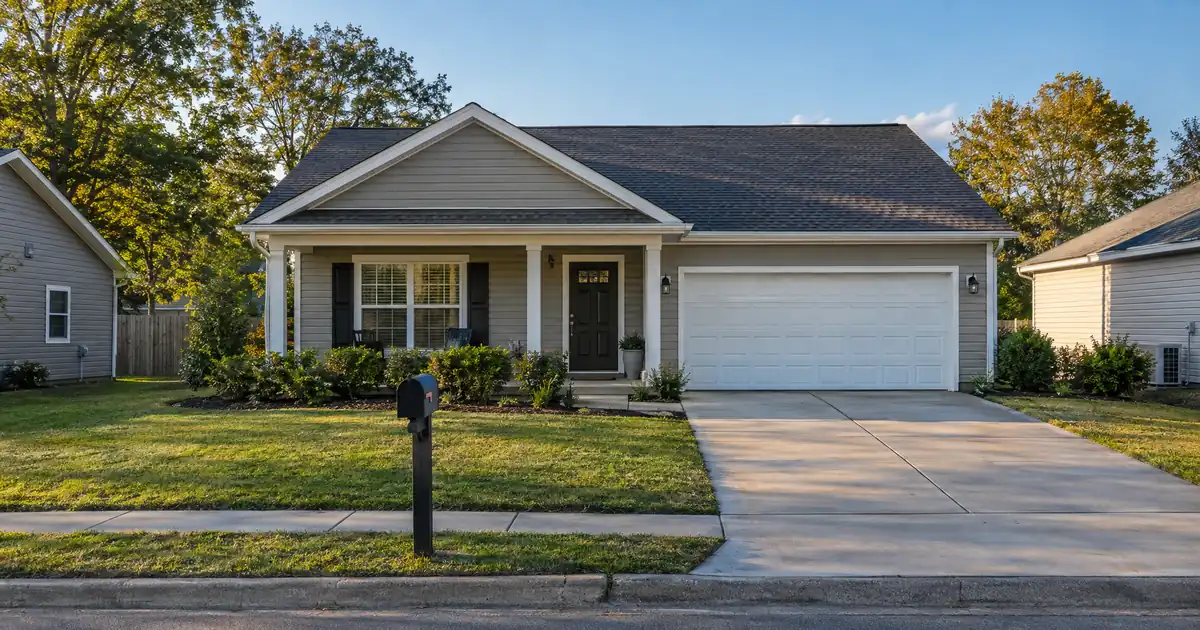
The Quick Read: A VA cash-out refinance is a home loan on the house you live in, and you can direct the cash toward a business if the lender allows it. A veteran small-business loan is different: it is business debt underwritten on the company’s cash flow. The VA does not make business loans. The right choice depends on what you are willing to put at risk and how strong the business is.
Each option has a different job. The cash-out suits a veteran with real home equity, steady personal income, and a need for a one-time lump sum. The business loan suits a company that can show repayment from its own earnings and wants the debt kept off the mortgage. Neither is a shortcut, and both can reach your home equity in different ways.
Side-by-Side
| Factor | VA Cash-Out Refinance | Veteran Small-Business Loan |
|---|---|---|
| What it is | Consumer mortgage on your home | Business-purpose loan (SBA 7(a) with veteran fee relief) |
| Who lends | Mortgage lender | SBA-approved lender |
| Leverage | Up to 100% of appraised value | Based on business need and collateral |
| Credit floor | 580 decision score at the wholesale programs Lendmire uses | Set by the lender and the business profile |
| Mortgage insurance | None | Not applicable |
| Occupancy | You must live in the home | No home occupancy rule |
| Underwriting focus | Your income, credit, residual income, equity | Business cash flow, use of proceeds, collateral |
| Documentation | Personal returns, plus business income if you own the company | Business financials and owner documents |
| Personal exposure | Home secures the loan | Owner guaranty is common; home equity may be pulled in |
What Each Option Really Is
The VA describes its cash-out loan as replacing your current loan with a new one on different terms. You take cash from equity, or you refinance a non-VA loan into a VA-backed one. You need a Certificate of Eligibility (COE, VA’s proof that you qualify), you must meet credit and income standards, and you must live in the home.
The business side has no separate “veteran loan.” VA’s news service points veterans to the SBA 7(a) program, where Veterans Advantage and Veterans Express offer reduced fees. SBA’s own program comparison lists the 7(a) at up to $5 million for working capital, inventory, equipment, starting or buying a business, and refinancing certain debt. Real estate can run up to 25 years. Most other uses run 10 years or less.
That is a different animal. One is a mortgage. The other is business credit with a veteran fee break on top.
When the VA Cash-Out Is the Better Fit
It fits when you own meaningful equity and your personal finances are strong. Across the wholesale programs we place files with, the VA cash-out reaches 100% of the appraised value, including the financed funding fee. It carries no mortgage insurance and no VA loan limit on full entitlement. The VA cash-out refinance program also lets you refinance any existing loan type into VA.
It also fits when the business is new or thin. A startup has no track record for a business lender to underwrite. Your paycheck, credit, and home equity carry the file instead. Residual income, the money left each month after major obligations and living costs, is the controlling test. The 41% debt-to-income figure is a guideline, not a cap, though a higher ratio needs residual income well above the table.
The funding fee is a real factor. It runs from 1.25% to 3.3% depending on use and down payment. On a cash-out, it is 2.15% for first use and 3.3% for later use. It can be financed, and veterans who receive compensation for a service-connected disability are exempt. For that group, the cost picture changes materially.
Here is the part people miss: using the money for a business does not take the business out of underwriting. If you own the company, the lender analyzes its income. VA’s credit underwriting chapter calls for two years of employment history and signed returns. Self-employed borrowers are asked for a year-to-date profit-and-loss statement when the latest return is not ready. Bank-statement-only programs do not exist inside a VA guaranty.
Two more rules apply. The new loan must pass a net tangible benefit test, meaning it must be in your financial interest. Under the federal rule, a VA-to-VA refinance also has a seasoning period: the later of 210 days after the first payment and the sixth payment. VA’s circular 26-18-30 separates Type I refinances (no cash out) from Type II (cash out). Cash to you arises in Type II.
One lender-policy point matters. VA does not restrict the cash to home purposes, but individual lenders set their own rules on use of proceeds. Ask before you apply. Availability can also vary by state and lender.
When the Veteran Small-Business Loan Is the Better Fit
It fits when the company can repay from its own earnings and you want the debt kept separate from your mortgage. The SBA does not lend directly in the 7(a) program. An approved lender underwrites the business: repayment from cash flow, size standards, for-profit status, use of proceeds, and collateral.
It also fits when you need more than your equity can supply, or when the need is recurring or specific. Equipment, inventory, an acquisition, and working capital are all named uses. Larger needs, up to the program maximum, are possible, subject to lender review.
It fits, too, when you want to leave your first mortgage alone. A cash-out replaces the whole loan, including its existing terms. A business loan is a separate obligation with its own schedule.
Veterans Advantage is a fee-relief overlay, not a separate product. Fee thresholds and waivers can change, so confirm the current fee schedule with an SBA lender or on sba.gov. It is generally tied to the business being majority-owned by eligible people, and the lender applies it.
Be honest about personal exposure, though. Owners of 20% or more are generally asked for a personal guaranty, and collateral rules can reach residential equity. That is where the two paths converge: the SBA route can touch the same home equity a VA cash-out would tap. Treat this as general guidance the lender confirms. Business loans also tend to take longer to arrange than a mortgage, and underwriting is heavier.
Where the Risk Actually Sits
With a VA cash-out, the debt is secured by your home. If the business fails, the mortgage still has to be paid. The CFPB’s guide to using home equity says a cash-out refinance can lengthen your payoff time and raise your payment because the new loan is larger. It also warns that failing to pay puts you at risk of foreclosure.
High leverage adds a second risk. At 100% of value, little equity remains as a cushion. A dip in home values, or a few slow business months, leaves you with less room.
With the business loan, the company carries the repayment, but your guaranty means your personal assets can still be exposed. Business assets may secure the loan first. Neither path is “safe.” They allocate the risk differently.
Tax treatment can depend on your situation; borrowers should speak with a qualified tax professional before relying on any deduction or credit.
Which Path Fits Which Situation
| Your situation | Leans toward |
|---|---|
| New business, no track record | VA cash-out |
| Established business with solid financials | Small-business loan |
| Strong equity, steady personal income | VA cash-out |
| Need exceeds your available equity | Small-business loan |
| Want the home kept out of the first line of risk | Small-business loan |
| Disability-compensation funding fee exemption | VA cash-out looks stronger |
| Hold the home as a rental, not your residence | Cash-out is not available |
Occupancy decides that last row. A VA cash-out is only for a home you live in. It cannot be used on a rental or investment property. VA also does not guarantee a refinance on a property with no existing mortgage or lien.
Key Terms Defined
Certificate of Eligibility (COE): VA’s document confirming you qualify for the home loan benefit.
Funding fee: A one-time VA charge on most loans that can be financed. Some veterans are exempt.
Residual income: What is left of your monthly income after taxes, debts, and living costs. For VA loans it is the controlling test.
Net tangible benefit: A test showing the refinance serves your financial interest.
Personal guaranty: Your signed promise to repay a business loan if the company cannot.
Seasoning: The waiting period between loans before a refinance can be guaranteed.
A Balanced Verdict
Choose the VA cash-out if you have equity, a stable personal income profile, and a startup or small need your own finances can carry. Choose the business loan if the company can stand on its own cash flow and you would rather keep the home out of the primary line of fire. Many veterans will find that the honest answer is “neither today,” and staged funding, a smaller amount, or more business history is the better move.
If you are weighing a cash-out refinance against keeping the loan you have, Lendmire can help you compare the programs and the equity each one reaches. Related reading: VA cash-out vs. a HELOC for a veteran with a paid-off home.
Frequently Asked Questions
Does the VA offer business loans?
No. The VA guarantees home loans. For business funding, VA points veterans to SBA programs such as the 7(a), where veterans can get reduced fees.
Can I use a VA cash-out to start a business?
Often yes, if the lender allows it. VA does not restrict what the cash is used for, but lenders set their own policies. The loan is still a mortgage on a home you live in, and your personal income and credit are underwritten.
Is it risky to put home equity into a business?
Yes. The home secures the loan, so a failed business does not cancel the mortgage. High leverage leaves a thin equity cushion. Compare that to what you could lose on a guaranteed business loan before you decide.
Do I need good credit?
Both paths review credit. VA sets no minimum score, and the wholesale programs Lendmire places VA loans with start at a 580 decision score, subject to lender guidelines. Business lenders weigh your credit alongside the company’s finances.
Will the VA cash-out use up my entitlement?
It depends on your remaining entitlement. With full entitlement there is no VA loan limit. With remaining entitlement a down payment may be required, so speak with a loan officer about your own situation.
For your own numbers, request a scenario review with Lendmire.
About Lendmire
Lendmire (NMLS# 2371349) is a mortgage broker licensed for consumer lending in 16 states. Lendmire arranges FHA, VA, conventional and jumbo purchase and refinance loans through wholesale lenders; every file is underwritten by the lender under the applicable program guidelines. Scotsman Guide named Lendmire a Top Mortgage Workplace in both 2025 and 2026.
For current guidelines, see VA loan programs.
Get Started
Ready to find the right loan for you?
In about 30 seconds you can review financing options available for your home or investment property. No commitment required.
Informational only. Not a Loan Estimate, approval, or commitment to lend. Program availability and eligibility are subject to lender guidelines, credit approval, property review, and underwriting.
References
1. VA.gov – Cash-out refinance loan
2. VA News – SBA resources for Veterans
3. SBA – 7(a) program comparison
4. VA Pamphlet 26-7 Ch. 4 Credit Underwriting
5. Federal Register – Revisions to VA Cash-Out Refinance Loans
7. CFPB – Using home equity to meet financial needs
This article is part of Lendmire’s VA Loans series — every loan program’s qualification details, guidelines, and scenarios live on the loan options page.
Related reading: Can a Retired Veteran on a Pension Get a VA Cash-Out? · VA Cash-Out Occupancy Requirements for a VA Jumbo Loan · VA Cash-Out vs Jumbo Cash-Out for a Veteran With a High-Value Home
Brandon Miller
Founder & CEO, Mortgage Loan Originator, Lendmire LLC
- Mortgage Loan Originator · NMLS# 1129696 · Verify on NMLS Consumer Access
- North Carolina Real Estate Broker · License# 343312 · Verify on NCREC
- North Carolina Insurance Producer · License# 19053198 · Property, Casualty, Life, Health · Verify on NAIC SBS
- Lendmire LLC · Firm NMLS# 2371349 · Verify firm licensure
Disclosure information. Lendmire is a state-licensed mortgage brokerage under NMLS# 2371349. Lendmire is not a depository institution, direct lender, or financial advisor — all loans referenced are placed through wholesale lender partners and are subject to each lender's underwriting standards. This article is provided for general informational purposes and is not a commitment to lend, nor does it constitute financial, legal, or tax advice. Loan programs, terms, rates, and qualification standards change without notice and depend on borrower profile, property type, and the state in which the subject property is located. Equal Housing Opportunity provider. NMLS Consumer Access: nmlsconsumeraccess.org.