
The Quick Read: Reserves on a duplex cash-out are a separate test from the project budget. The lender wants liquid money left after closing, apart from the cash you take out to build. A two-unit home you live in carries a reserve requirement that a one-unit home does not, and the leverage cap is lower too. One more catch: the conventional rules for an accessory dwelling unit (ADU) are written for single-family homes, so a duplex owner has to check the collateral question before anything else. Final terms depend on lender guidelines, property type, leverage, and the borrower’s complete credit picture.
Key Takeaways
- Reserves are liquid assets you still hold after closing, counted in months of your housing payment. They are not the renovation fund.
- A conventional cash-out on a two- to four-unit principal residence tops out at 75% LTV. A one-unit home reaches 80%.
- Seasoning applies: the first mortgage being paid off must be at least 12 months old, and a borrower must have been on title for 6 months, with exceptions.
- Cash you plan to spend on construction does not count as reserves.
- Adding a detached ADU to a duplex lot is a collateral problem under Fannie Mae’s rules. Renovating the existing units is a different, simpler question. These specifics are subject to lender guidelines and a full review of property, leverage, and credit.
Key Terms Defined
Reserves: Liquid assets you still own after closing, measured in months of your full housing payment.
PITIA: Principal, interest, taxes, insurance and any association dues. Reserves are counted in months of this payment.
Cash-out refinance: A new first mortgage larger than the loan it pays off, where you receive the difference in cash.
Limited cash-out (rate-and-term) refinance: A new loan that pays off the first mortgage and costs, with only incidental cash back.
Seasoning: The minimum time you have owned the home and held the current loan before a cash-out is allowed.
Contingency reserve: Extra money set aside inside a renovation loan to cover cost overruns.
ADU: A secondary dwelling on the same lot as a primary home, such as a garage conversion, basement unit or backyard cottage.
What a Duplex Cash-Out Actually Is
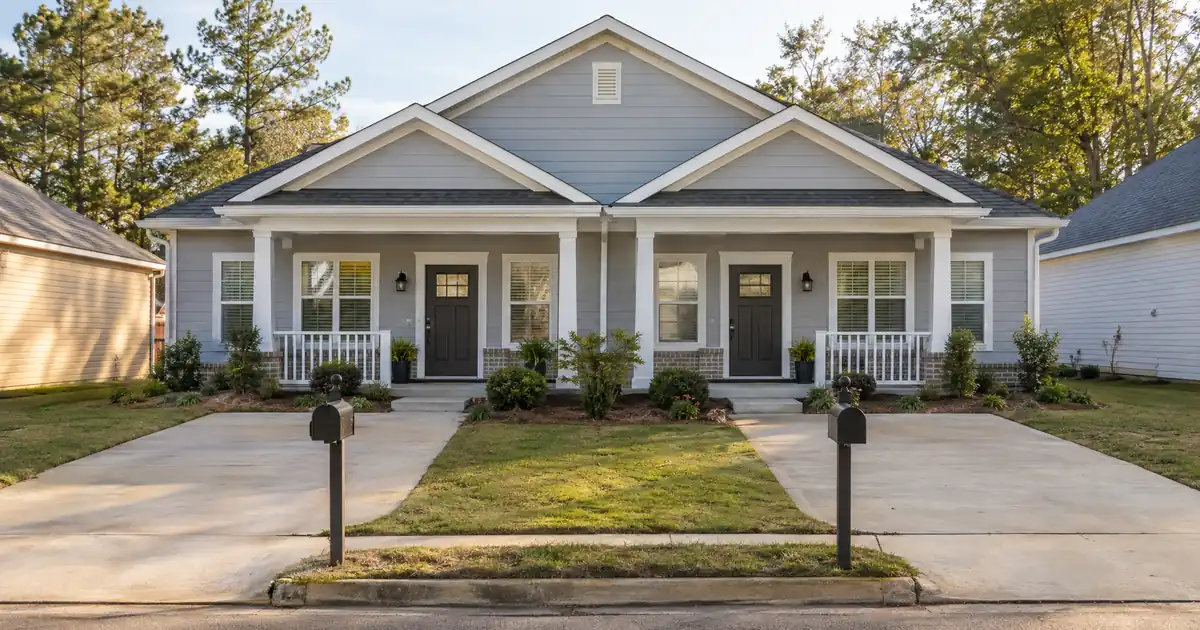
A duplex cash-out is a new first mortgage that pays off your current loan and puts the extra equity in your hands. You live in one unit. The other is rented or available to rent. Lenders treat the home as a principal residence, but the two-unit structure changes several rules.
Lendmire arranges these through wholesale lenders, and the structure follows the agency rules. Lendmire’s cash-out refinance programs cover single-family homes and two- to four-unit principal residences. The leverage ceiling is the first thing that differs. A conventional cash-out reaches 80% LTV on a one-unit principal residence and 75% on a two- to four-unit principal residence. On a duplex, you leave a quarter of the value in the home. Terms depend on the lender’s guidelines, the property type, the leverage, and a full review of the credit profile.
Funding an ADU or renovation with cash in hand puts you on the standard cash-out path. It does not matter that the money is for the house. Cash received is what classifies the loan. That is why the seasoning and reserve rules apply.
How the File Is Underwritten, Step by Step
Here is the order a duplex cash-out file moves through.
1. Classify the transaction. Real cash to you means cash-out. A payoff-plus-costs loan with only incidental cash back is limited cash-out. Most ADU and renovation plans need the first.
2. Check seasoning. The first mortgage being paid off must be at least 12 months old, measured note date to note date. At least one borrower must have been on title for 6 months. Exceptions exist, including delayed financing for cash purchases, inheritance and legal awards. A recent refinance is the usual snag. Run this check first.
3. Measure leverage. The appraised value sets the LTV. Cash-out on a duplex caps at 75%. Because that is below 80%, mortgage insurance is not triggered at the cash-out ceiling. It applies above 80% on programs that go higher.
4. Underwrite income and debts. Your wages count, and part of the rent from the second unit can count too. The full housing payment stays in your obligations. More on that below.
5. Document the rent. The appraiser reports market rent on the multi-unit appraisal form. The file also needs proof the lease is real, such as rent receipts or a deposit and first payment.
6. Verify reserves. Liquid assets after closing, in months of PITIA, with statements to match.
7. Disclose and close. The Loan Estimate and Closing Disclosure apply to this consumer loan. Every figure remains subject to lender guidelines and full file review.
Reserves, Renovation Budget, Contingency: Three Different Pots
Reserves, the project budget and contingency each have a different job. Mixing them up is the most common planning error on these files.
| Pot | Purpose | Who sets it | Where the money sits |
|---|---|---|---|
| Reserves | Cushion after closing | Lender guidelines | Your own liquid accounts |
| Project budget | Pay for the work | You and your contractor | Cash-out proceeds |
| Contingency | Cover cost overruns | You, or the renovation program | Held in escrow or your own funds |
The Fannie Mae Selling Guide ties required reserves to the transaction, the occupancy, the number of units and the number of other financed properties. The result is plain. A one-unit principal residence has no minimum reserve requirement. A two- to four-unit principal residence does. A cash-out with a high debt ratio can trigger one too. The exact numbers vary by lender and program and follow a full review of property, leverage, and credit.
So the duplex owner starts with a requirement that a single-family owner never sees. These reserve triggers can stack. If your file hits more than one, the lender applies the requirement that governs. The exact month counts vary by file, so confirm yours with a loan officer rather than a forum post.
Do Cash-Out Proceeds Count as Reserves?
Proceeds you plan to spend do not count as reserves. That is the working answer.
Think about what reserves are for. They show you can keep paying the mortgage if something goes wrong. Money earmarked for an ADU foundation will be gone in a few months. A lender looking at the file treats it that way. The Selling Guide also reduces counted assets by cash back received on a refinance in certain situations.
Files go wrong here. A borrower shows a healthy savings balance, plans to dump it into the build, and then closes with less than the reserve target. Or the borrower counts the cash-out as a reserve and the file stalls at review.
The clean approach is to hold two numbers. One is the project budget, funded by proceeds. The other is the reserve target, funded by assets you keep. Confirm with your loan officer how a given lender treats any overlap before you size the loan.
Rent From the Second Unit: Helpful, Not Free
On a duplex you live in, rent from the other unit can help you qualify. Fannie Mae’s rental income rules for the subject property let a lender count a portion of the gross rent, not all of it. The haircut covers vacancy and upkeep. The full housing payment still counts against you.
Two consequences follow.
- Rent helps the debt ratio, but the loan you are taking is bigger. A larger loan means a larger payment. No rate change offsets that automatically.
- If you take the second unit offline for a renovation, the rent you counted may disappear for the months it sits empty. Underwrite the file on the income you will actually have.
Where the ADU Plan Hits a Wall
The duplex-ADU combination is the sharpest edge case in this topic. Fannie Mae’s special property eligibility rules allow one ADU per parcel and do not permit an ADU with a two- to four-unit dwelling. A duplex is a two-unit dwelling. Add a detached cottage in the back and the collateral no longer fits the standard conventional box.
Do not treat that as a final answer for your property. Local zoning, how the structure is classified and the lender’s overlays all matter. Bring the plan to a loan officer before you hire a designer. Lendmire’s team can check whether a given plan fits a conventional program or points toward a different structure.
ADU rental income has its own rules. Fannie Mae’s ADU income policy applies to a one-unit principal residence, on purchase and limited cash-out transactions, and caps how much of your qualifying income can come from the ADU. That route does not help a duplex owner. It also means a finished ADU’s rent typically cannot be used to qualify for the loan that pays for it. The sequence is build, lease, then refinance again later if you want that income counted.
Also worth knowing: Freddie Mac applies its own ADU income rules, again for one-unit primary residences. Neither agency writes this for a duplex.
Renovation Instead of an ADU
Work inside the existing structure is a simpler path. Updating a kitchen, rebuilding a unit’s bathrooms or fixing a roof keeps the property a duplex.
You have two broad ways to fund it.
Standard cash-out. You receive the money at closing and spend it as you choose. There is no inspection schedule. The lender does not hold your funds. The 75% leverage cap and the reserve requirement apply as described above. Final terms depend on the lender’s guidelines, the property type, and the borrower’s complete credit picture.
HomeStyle Renovation. This Fannie Mae product rolls the purchase or refinance and the renovation into one loan on a one- to four-unit principal residence. The refinance side is limited cash-out, so it does not put extra cash in your pocket beyond reimbursing documented contractor deposits. Under the Selling Guide’s renovation cost rules, funds sit in escrow and are released as work is inspected. A contingency reserve, set as a percentage of renovation cost, is required on a two- to four-unit property, though not on a one-unit home. A lender may release only part of the money at closing as an initial draw. Loan size also leans on the as-completed value, not just today’s value.
The tradeoff is control. Standard cash-out gives you freedom. HomeStyle gives you structure and, in some cases, a larger project than your current equity alone would support. Lendmire’s piece HELOC vs Renovation Loan vs Cash-Out Refinance for an ADU walks through that choice in more detail.
Do-it-yourself labor generally cannot be financed on the renovation product. A licensed contractor and a written scope are the norm.
A Scenario in Percentages
Take an owner-occupant of a duplex with substantial equity who wants to add a unit and refresh the existing ones. The home has been owned for several years, the current mortgage is well past 12 months old, and the borrower plans to rent the second unit.
The maximum loan sits at 75% of the appraised value. The borrower wants cash for the work, so the new loan is larger than the payoff. The file carries a six-figure scope of work, a reserve requirement for a two-unit principal residence, and a debt ratio that now includes a bigger payment and only part of the rent. Each figure is subject to lender guidelines and a complete review of property type, leverage, and credit.
Three things can go wrong.
- The scope includes a detached ADU, so the collateral question comes up before the appraisal is even ordered.
- The borrower’s savings are earmarked for the build. Reserves after closing come up short.
- The renovation takes the rented unit offline, so the income used in the file does not match reality.
None of these is a dead end. Each is a planning problem you can fix on paper before the application, whether by trimming the scope, keeping more liquid assets or choosing a different structure.
How to Document Reserves
Lenders want to see liquid assets, not promises. Preparing the items below makes that easier to show.
- Recent statements for checking, savings or brokerage accounts that you will still own after closing.
- A paper trail for any large deposit that is not payroll.
- A plan showing which accounts fund the project and which stay untouched.
- Gift funds, if any, handled the way the lender requires. A gift can supplement reserves, though gifts of equity are different.
Keep two tidy lists, one for reserves and one for the project. When a loan officer sees them separate, the file reads cleanly.
If You Are Short on Reserves
You have options. None is automatic, and each is subject to lender guidelines.
- Reduce the cash-out. A smaller loan can lower the payment and leave more assets in your accounts.
- Phase the project. Do the renovation first and the ADU later, after your savings recover.
- Wait out seasoning. If a recent loan blocks cash-out, time may solve it.
- Switch structure. A HomeStyle loan, a home equity line or a separate construction loan each treats reserves and sizing differently.
- Look at the existing loan. If you hold an FHA or VA loan, the Streamline and IRRRL are rate-and-term tools. They cannot fund a renovation. A cash-out on those loans is a separate product.
Comparing the Funding Options
| Option | How you get the money | Fit for a duplex |
|---|---|---|
| Cash-out refinance | Lump sum at closing | Works, capped at 75% LTV |
| HomeStyle Renovation | Escrowed, drawn on inspection | One- to four-unit homes, limited cash-out |
| Home equity line | Draw as needed | Adds a second lien to keep |
| FHA Streamline / VA IRRRL | No cash back | Cannot fund a project |
If you are weighing how far to stretch, Lendmire also has an article on whether to max out a cash-out refinance for a renovation or ADU. Borrowing every available dollar and holding thin reserves is rarely the safest plan on a home you also live in.
Remember what is at stake. A cash-out converts equity into debt, and your home is the collateral. Taking out equity means you own less of the house, and rebuilding it takes time. Tax treatment can depend on your situation; borrowers should speak with a qualified tax professional before relying on any deduction or credit.
Frequently Asked Questions
How many months of reserves does a duplex cash-out need?
It depends on the lender and the file. A two- to four-unit principal residence carries a reserve requirement under Fannie Mae’s guide, while a one-unit principal residence has no minimum. A high debt ratio on a cash-out can add its own trigger. Ask your loan officer for the exact count on your file.
Can I use the cash-out money as my reserves?
Generally no, not if you plan to spend it. Reserves are assets you still hold after closing. Proceeds earmarked for construction will be gone, and the guide reduces counted assets by cash back received in some situations. Keep reserve funds and project funds as separate lists.
Can I build a detached ADU on a duplex lot with a conventional loan?
Often not under the standard rules. Fannie Mae permits one ADU per parcel but does not permit an ADU with a two- to four-unit dwelling. Local zoning and lender overlays also matter. Check the plan with a loan officer before you commit to design work.
Will the rent from the other unit help me qualify?
Yes, in part. Lenders count a portion of the gross rent from the non-owner unit, supported by an appraisal rent schedule and lease evidence. The full housing payment still stays in your obligations. Rent from a future ADU generally cannot be counted for the loan that builds it.
Can an FHA Streamline or VA IRRRL pay for a renovation?
No. Both are rate-and-term streamlines with no cash back beyond minor adjustments. An FHA or VA borrower who wants cash for a project needs the separate cash-out product or a different structure.
If you are weighing a cash-out refinance against keeping the loan you have, Lendmire can help you compare the programs and the equity each one reaches.
For your own numbers, request a scenario review with Lendmire.
For current guidelines and terms, see Lendmire’s refinance programs page.
About Lendmire
Lendmire (NMLS# 2371349) is a mortgage broker licensed for consumer lending in 16 states. Lendmire arranges FHA, VA, conventional and jumbo purchase and refinance loans through wholesale lenders; every file is underwritten by the lender under the applicable program guidelines. Scotsman Guide named Lendmire a Top Mortgage Workplace in both 2025 and 2026.
Get Started
Ready to find the right loan for you?
In about 30 seconds you can review financing options available for your home or investment property. No commitment required.
Informational only. Not a Loan Estimate, approval, or commitment to lend. Program availability and eligibility are subject to lender guidelines, credit approval, property review, and underwriting.
References
1. Fannie Mae Selling Guide: Minimum Reserve Requirements
2. Fannie Mae Selling Guide: Rental Income, Subject Property
3. Fannie Mae Selling Guide: Special Property Eligibility Considerations
4. Fannie Mae Selling Announcement: ADU Rental Income Policy
5. Fannie Mae Selling Guide: HomeStyle Renovation Costs and Escrow Accounts
This article is part of Lendmire’s Refinance series — every loan program’s qualification details, guidelines, and scenarios live on the loan options page.
Related reading: How to Size a Cash-Out Refinance for a Home Addition or ADU · How to Do a Texas Homestead Cash-Out Refinance Step by Step · How to Compare Cash-Out Refinance Quotes on a Texas Homestead
Brandon Miller
Founder & CEO, Mortgage Loan Originator, Lendmire LLC
- Mortgage Loan Originator · NMLS# 1129696 · Verify on NMLS Consumer Access
- North Carolina Real Estate Broker · License# 343312 · Verify on NCREC
- North Carolina Insurance Producer · License# 19053198 · Property, Casualty, Life, Health · Verify on NAIC SBS
- Lendmire LLC · Firm NMLS# 2371349 · Verify firm licensure
Disclosures. The information presented in this article is general market commentary, not financial, legal, or tax advice. Lendmire is a mortgage brokerage (NMLS# 2371349) — not a direct lender or depository institution — and loan placement is subject to lender underwriting. Nothing in this content represents a commitment to lend. Loan terms, pricing, and program availability vary based on borrower qualifications, property characteristics, and state of subject property, and are subject to change at any time. Lendmire complies with Equal Housing Opportunity requirements. Consumer access: nmlsconsumeraccess.org.