
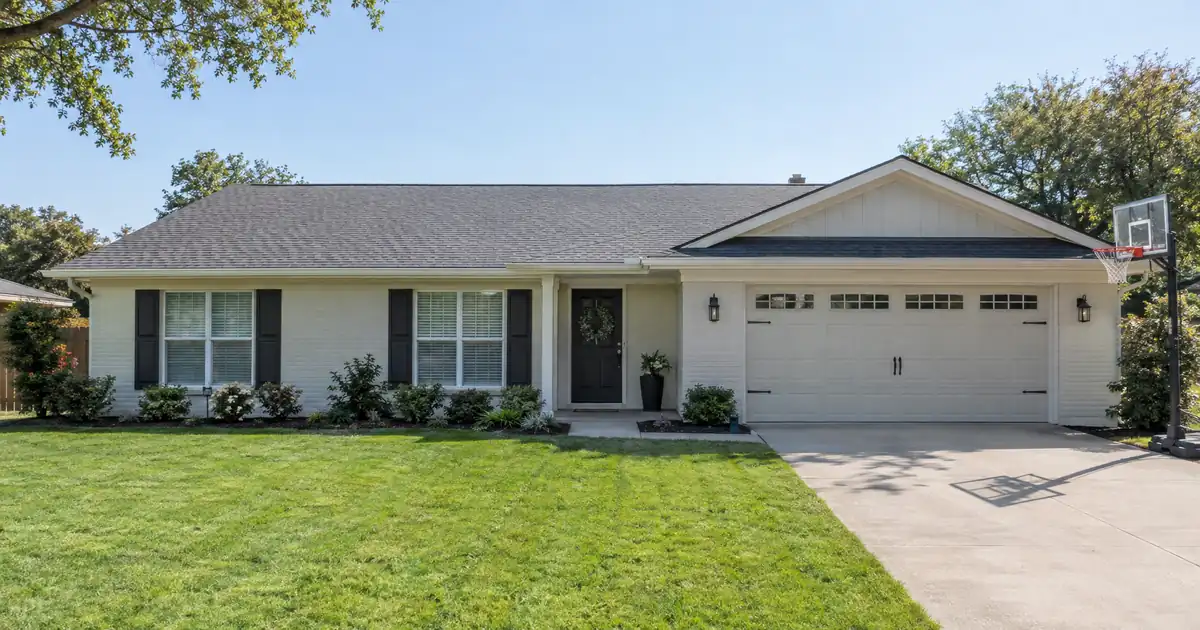
The Quick Read: An FHA cash-out refinance can pay off the other heirs, but only if you hold recorded title, live in the home, and qualify on your own. The new loan reaches up to 80% of the home’s appraised value and covers any existing mortgage plus the buyout. Recorded title, a signed buyout agreement and no rental history decide most files.
Key takeaways
- Title must be in your name before a lender can move. Being named in a will is not enough.
- You qualify alone, on your own credit, income and debts. The estate’s value does not count.
- The cash-out ceiling is 80% LTV (loan-to-value, the loan as a percentage of the appraised value). Your payoff, the buyout and the financed costs all have to fit under it.
- Renting the home after you inherit it can cost you the inheritance exception to the occupancy waiting period.
- Every figure here is subject to lender guidelines and full file review. None of it is a commitment to lend.
What Does a Buyout Look Like When You Live in the Home?
A buyout means you keep the house and pay the other heirs for their shares. You fund it with a new, larger mortgage that pays off any existing loan and sends the rest to your siblings or co-heirs at one closing. Lenders treat it as a refinance of your home, not a purchase from the heirs.
Picture three siblings who inherit a house. One lives there. The other two want cash, not a share of a house they will never use. The sibling in the house borrows against it and pays the other two out.
The program that fits is the FHA cash-out refinance program. Lendmire is a mortgage broker. It arranges these loans through wholesale lenders, and the lender makes the credit decision.
Across the wholesale programs Lendmire places FHA files with, cash-out is the standard way to fund an heir buyout. It works only when the numbers fit under the leverage cap. That cap is the first thing to check.
How Is the Loan Underwritten, Step by Step?
Underwriting runs in a fixed order. Each step has to hold before the next one matters. Skipping ahead is the most common way a buyout file stalls.
1. Title. You must hold title to the home. Probate, a trust transfer or an executor’s deed each produce title through a different paper trail. Until the deed is recorded in your name, you are an heir, not yet the owner.
2. Document the inheritance. The lender needs proof the home came to you by inheritance. Expect a death certificate, estate or probate papers and the recorded deed.
3. Confirm occupancy and no investment use. You live in the home. You have not treated it as an investment property since you inherited it. The occupancy section below explains why that matters.
4. Set the value and the shares. An appraisal sets the value. A written agreement among the heirs sets what each person receives. Lenders want that agreement signed and clear, not a handshake.
5. Qualify on your own. The base ratio pair is 31/43. That means housing costs up to 31% of gross income and total debts up to 43%. Documented compensating factors can stretch the pair as far as 40/50 at the top tier. The automated underwriting finding governs most files. On the wholesale programs Lendmire places with, FHA starts at a 580 decision score.
6. Apply the leverage cap. The new loan can reach 80% LTV on a cash-out. The home must generally be owned and occupied for 12 months before the case number, subject to the inheritance exception below. County loan limits also apply.
7. Close and record. One closing pays off the old lien, pays the departing heirs and records the deeds. If any heir refuses to sign, the file generally cannot move.
Where Does the 80% Cap Come From?
HUD, the agency behind FHA, lowered the maximum cash-out LTV to 80% in an effort to align FHA with the rules for conventional loans. HUD’s press release on cash-out risk reduction announced the change. Older articles still describe a higher limit. Ignore them. Each figure is subject to lender guidelines and a complete review of property type, leverage, and credit.
For a buyout, that cap does the real work. You must keep at least 20% of the home’s value as equity. That limits how much can go to the other heirs.
What Is the Inheritance Exception to the Occupancy Rule?
The general rule says a cash-out applies only to an owner-occupied principal residence. The borrower must have owned and lived in it for the prior 12 months. Inheritance changes the ownership clock, not the rest of the rules.
HUD’s own text on a related program says an heir does not need to occupy the home for a minimum period before a cash-out. The condition is that the borrower has not treated the property as an investment property since inheriting it. That wording appears in HUD’s Section 184 chapter on additional requirements. Section 184 is a different HUD program from FHA, so treat it as corroboration, not the FHA rulebook. Industry summaries quote the FHA handbook with matching language. Confirm the current wording in the live FHA handbook before you rely on it.
The follow-on rule is the catch. If you rent the home after inheriting it, the exception is gone. You then generally need to live there as your principal residence for 12 months before you can take cash out.
HUD’s older reference guide framed this more strictly. It required the heir to have occupied the home as a primary residence since the inheritance, and it required the lender to document the inheritance. That archived guide is superseded, so use it for history, not for current rules. It also shows why lenders still ask for inheritance paperwork.
How Does the Math Work in Percentages?
Run the numbers on a modeled home, using percentages of its appraised value. These are assumptions, not market data.
Say the appraisal sets the home’s value at 100%. The existing mortgage payoff is about 35% of that value. The agreed buyout to your two siblings is about 40%. Together that is 75% of value.
The cap is 80%. That leaves about 5% of value for closing costs and the financed upfront premium. The upfront premium is 1.75% of the base loan, and it is added to the balance.
It fits, but barely. A slightly lower appraisal, or a buyout that rounds up, would push the total over 80%.
Now change one input. Suppose the home is owned free and clear. The payoff drops to zero, so a buyout of up to roughly three-quarters of value would still leave room under the cap. Free-and-clear homes have been eligible for cash-out on FHA.
Now go the other way. Suppose the existing loan is 55% of value and the siblings want 40%. That is 95% of value, far above the cap. The heir would need other funds, a smaller buyout, or a different structure.
What Structures and Variations Exist?
Heirs buy each other out in a few common ways. The funding source decides which rules apply.
- Cash-out refinance with an existing loan. The new loan pays off the old one and funds the buyout. Most FHA heir buyouts look like this.
- Cash-out on a free-and-clear home. No payoff step, so more of the 80% is available for the buyout.
- Keep the current loan and pay heirs from savings. No new loan, no new qualification.
- Staged buyouts. Heirs sometimes agree on one share now and another later. A lender needs the agreement to match what actually closes.
- Two- to four-unit homes. The archived HUD guide required a self-sufficiency test and reserves for three- and four-unit properties. Current requirements should be confirmed, because that guide is old.
Whether a buyout of co-heirs is classed as cash-out or as no-cash-out under current rules is not always clear-cut. Lender treatment can vary by file, and that classification changes the leverage you can reach. Ask the lender early how it will treat the buyout on your specific loan.
The older handbook said that a spouse’s or co-borrower’s equity to be paid out is treated as property-related debt. It required a bona fide equity agreement to document it. That retired handbook is history, but the habit of documenting the buyout in writing carried forward.
Where Does the General Rule Break?
These edge cases come up often. Each one changes the answer.
You rented the home after inheriting. The exception is lost. A 12-month principal-residence clock applies, as described above.
The estate is still open. Title is still in the decedent’s name. A cash-out is generally not possible until title moves to you.
The home still has a mortgage. Federal protections can help you keep the existing loan. They do not give you a right to cash out. The Consumer Financial Protection Bureau explains that a servicer may ask for proof of your right to the home, such as the executed will, a death certificate or a letter from the estate’s executor, in its guidance on getting information about an inherited mortgage. Taking cash out means a new loan with new underwriting.
You want to keep the old loan. Keeping the current mortgage generally avoids new qualification. That is a real alternative to compare against a refinance. If the existing loan is manageable and you have savings, it may be the cleaner path.
An heir refuses to sign. The buyout cannot close without every heir’s signature on the agreement and the deed. This is a legal question for the heirs and an attorney. A lender cannot solve it.
A non-occupant helper. Plan to qualify alone. FHA historically did not allow a non-occupant co-borrower to help on a cash-out, and Lendmire advises confirming the current treatment with the lender.
Other loan types. Conventional programs treat co-owner buyouts differently. Some conventional programs offer a special-purpose cash-out for buying out a co-owner, as Freddie Mac describes on its cash-out page. The rules differ from FHA. If you have thin equity or a lower score, it can be worth comparing both.
Lendmire’s piece Can an Heir Who Inherited the Home Get an FHA Cash-Out Refinance? covers the eligibility question in more depth.
What Does the Buyout Do to Your Budget?
A cash-out replaces your current loan with a larger one. The monthly payment generally rises.
FHA mortgage insurance applies to the whole new loan. There are two parts. The upfront premium is 1.75% of the base loan, and it is financed into the balance. The annual premium runs between 0.15% and 0.75% of the balance, depending on term, loan amount and LTV. On a thirty-year loan above 90% LTV, the annual premium lasts for the full term. At or below 90% LTV, it ends after eleven years. A cash-out at the 80% ceiling would sit below that line. Leverage, reserves, and pricing vary by lender and program; the final terms follow the full file review.
Expect title, appraisal and recording costs too. Your Loan Estimate and Closing Disclosure show the actual figures for your file. Compare them line by line.
Tax treatment can depend on your situation; borrowers should speak with a qualified tax professional before relying on any deduction or credit.
What Paperwork Will You Need?
Gathering documents early keeps the file from stalling on a missing page. Here is the usual list.
| Item | Why it’s needed | Who supplies it |
|---|---|---|
| Death certificate | Proves the inheritance | Estate or family |
| Probate papers or trust documents | Shows how title passes | Attorney or executor |
| Recorded deed in your name | Proves you own the home | County recorder |
| Signed buyout agreement | Documents each heir’s share | Heirs and attorney |
| Payoff statement | Shows the existing loan balance | Current servicer |
| Appraisal | Sets value for the 80% cap | Ordered through the lender |
| Income and credit documents | Prove you qualify alone | You |
| Proof of occupancy and no rental use | Supports the exception | You |
A lender may also ask for a short letter explaining the cash-out. That is routine.
How Do the Options Compare?
If the cash-out does not fit, other paths exist. Here is how they compare.
| Option | What it needs | Main tradeoff |
|---|---|---|
| FHA cash-out | 80% LTV cap, your own qualifying | Larger loan, mortgage insurance |
| Keep existing loan, pay from savings | Cash on hand | Drains savings |
| Conventional buyout program | Its own equity and credit rules | Different guidelines |
| Sell and split | Agreement among heirs | You lose the home |
| Smaller or staged buyout | Heirs willing to wait | Takes cooperation |
No row is best for everyone. The right choice depends on how much equity is in the home, how much the heirs want and what you can carry.
Key Terms Defined
Cash-out refinance: A new, larger mortgage that pays off the old one and gives you the difference in cash.
Heir buyout: One heir pays the others for their shares of a home so one person keeps it.
LTV (loan-to-value): The loan balance as a percentage of the home’s appraised value.
Title: Legal ownership of the home, recorded in public records.
Principal residence: The home you live in as your main address.
Upfront premium: The one-time FHA mortgage insurance charge, financed into the loan.
Frequently Asked Questions
Do I need to wait 12 months after inheriting before I can cash out?
Not necessarily. An heir may not need a minimum occupancy period, provided you have not treated the home as an investment property since inheriting it. If you rented it out, you generally need to live there 12 months first. Confirm the current wording in the live FHA handbook.
Can the estate’s value help me qualify?
No. A standard FHA cash-out is underwritten on you. Your credit, income and debts decide approval, not the inheritance or the estate’s size.
What if the buyout is larger than the 80% cap allows?
You will need another source of funds, a smaller or staged buyout, or a different structure. The cap limits the total loan, and the payoff, the buyout and the financed costs all count against it.
Does a successor-in-interest letter let me refinance or cash out?
No. It gives you rights on the existing loan, such as getting information from the servicer. It is not new credit.
Can I do a buyout if I do not live in the home?
The rules here are for an heir who lives there. An absent heir faces occupancy limits on an FHA cash-out. Ask a loan officer about other programs.
Weighing Your Next Move
If you are weighing a cash-out refinance against keeping the loan you have, Lendmire can help you compare the programs and the equity each one reaches. Start by gathering your title documents and the heirs’ written agreement.
For your own numbers, request a scenario review with Lendmire.
About Lendmire
As a mortgage broker (NMLS# 2371349), Lendmire helps homeowners and home buyers in 16 states with FHA, VA, conventional and jumbo purchase and refinance loans arranged through wholesale lenders. Lendmire is never the lender; program terms are set by the lender and the agency guidelines. Scotsman Guide named Lendmire a Top Mortgage Workplace in both 2025 and 2026.
For the program’s current guidelines, see FHA loan programs.
Get Started
Ready to find the right loan for you?
In about 30 seconds you can review financing options available for your home or investment property. No commitment required.
Informational only. Not a Loan Estimate, approval, or commitment to lend. Program availability and eligibility are subject to lender guidelines, credit approval, property review, and underwriting.
References
1. HUD press release, cash-out risk reduction
2. HUD Section 184 Chapter II.F, Additional Requirements
3. HUD Archives, Reference Guide, page 2-19
4. HUD 4155.1, Chapter 3, Section B (retired handbook)
5. CFPB, how to get mortgage information about an inherited home
6. Freddie Mac cash-out refinance page
This article is part of Lendmire’s FHA Loan series — every loan program’s qualification details, guidelines, and scenarios live on the loan options page.
Related reading: FHA Cash-Out Ownership Requirements on a Texas Homestead · FHA Cash-Out Buyout Requirements for a Divorce Decree · How to Document an Inherited Home for an FHA Cash-Out
Brandon Miller
Founder & CEO, Mortgage Loan Originator, Lendmire LLC
- Mortgage Loan Originator · NMLS# 1129696 · Verify on NMLS Consumer Access
- North Carolina Real Estate Broker · License# 343312 · Verify on NCREC
- North Carolina Insurance Producer · License# 19053198 · Property, Casualty, Life, Health · Verify on NAIC SBS
- Lendmire LLC · Firm NMLS# 2371349 · Verify firm licensure
Required disclosures. Lendmire (NMLS# 2371349) operates as a licensed mortgage broker, not a direct lender or depository. The discussion in this article is general in nature and should not be relied upon as financial, legal, or tax advice — every investment scenario is unique and should be reviewed by a qualified professional. Any loan inquiry is subject to lender underwriting, and this article is not a commitment to lend or a guarantee of approval. Mortgage rates, loan terms, and program guidelines vary by borrower, property, and state, and may change without notice. Equal Housing Opportunity. Verify licensure at NMLS Consumer Access.