
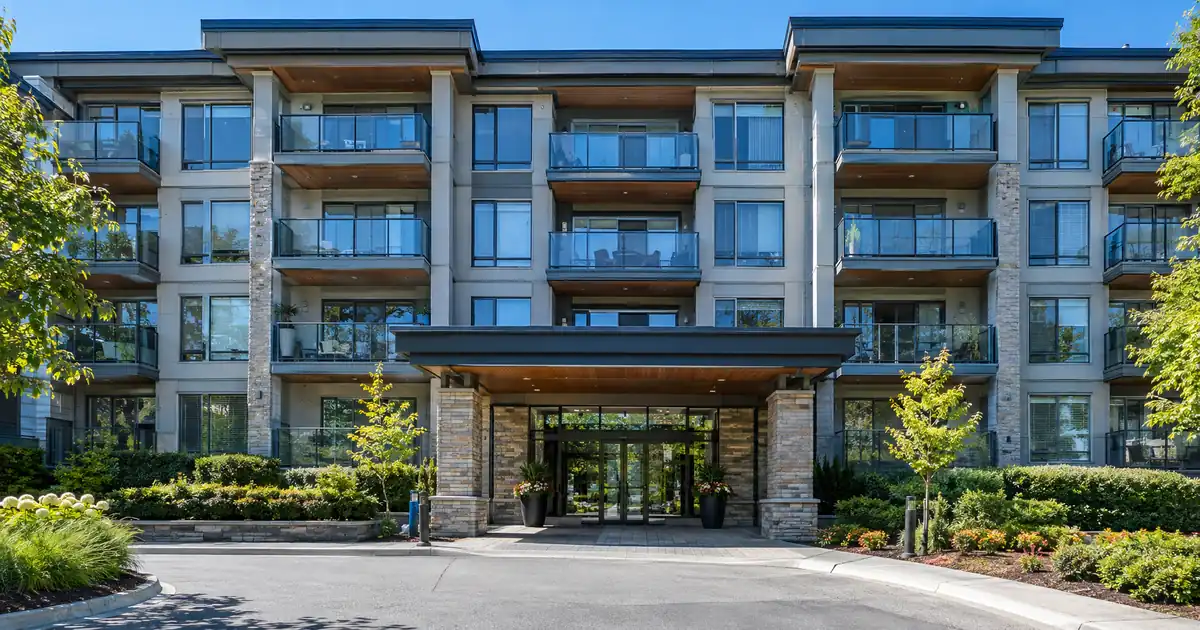
The Quick Read: Yes, as long as the condo is FHA-eligible and you have owned and lived in it for 12 months before the case number. FHA has no “first-time equity borrower” category, so never having tapped equity neither helps nor hurts you. Three things decide the outcome: the occupancy history, the equity, and whether the building clears FHA’s condo project rules. All of it is subject to lender guidelines and full file review.
FHA cash-out estimate
Seeded with an example value, a balance to match, and a round cash request; change any field.
Editable benchmark: 7.40% as of October 15, 2026 · Freddie Mac 30-year average via FRED®. A conventional market reference, not an FHA cash-out refinance quote.
Illustrative starting assumptions: a $350,000 home value, a $193,000 current balance, the FHA cap on a principal residence with the upfront premium financed, a thirty-year term at the current Freddie Mac benchmark, and property taxes and insurance estimated at typical national rates. Every field is editable.
An illustration, not a Loan Estimate, an approval, a quote, or a commitment to lend. The rate shown is the weekly Freddie Mac thirty-year conventional benchmark, used as a market reference; an FHA cash-out is priced by the lender at lock, and this is not an FHA cash-out refinance quote. HUD’s cap limits the base loan; the upfront premium is financed on top of the capped base loan; the monthly premium for the first year follows the snapshot’s schedule. Cash available means the base loan the cap permits less the balances retired, before closing costs, which this calculator leaves out. The line figure applies the line program’s combined loan-to-value ceiling to the same value and balance. Taxes and insurance are estimates you can edit. Licensed in sixteen states for consumer mortgages.
What Counts as a “First-Time Equity Borrower”?
Here is the plain version: a first-time equity borrower is a homeowner who has never taken cash out of the home. That is not a loan category. It is just a description of you.
FHA does not test for it. The program does not ask whether this is your first cash-out, and you do not need an existing FHA loan to apply. Someone sitting on a conventional mortgage can refinance into an FHA cash-out. The gates are occupancy, equity, credit, income, and the condo itself.
A common myth says FHA is only for first-time home buyers. It isn’t. FHA insures loans for buyers and existing owners alike. The “first-time” worry usually hides a better question: Have I owned this place long enough, and is the building acceptable?
How Does an FHA Cash-Out on a Condo Work?
An FHA cash-out refinance replaces your current mortgage with a new, larger one. The difference, after paying off the old loan and costs, comes to you as cash. Across the wholesale programs Lendmire places files with, the FHA cash-out reaches up to 80% loan-to-value (LTV). LTV is the new loan divided by the home’s appraised value.
You can read the program basics on Lendmire’s FHA cash-out refinance program page. For a condo, the sequence usually runs like this:
1. Confirm ownership and occupancy. The home must be your principal residence. You must have owned and lived in it for 12 months before the FHA case number is assigned.
2. Check the building. The lender looks up whether the condo project is FHA-approved.
3. Order the appraisal. The appraised value sets the ceiling on how much equity you can reach.
4. Underwrite the file. The lender reviews credit, income, and the debt-to-income ratios.
5. Receive disclosures. You get a Loan Estimate, then a Closing Disclosure, before signing.
Step two is where condo files get derailed. A single-family home never faces it.
Why Does the Building Matter More Than You?
Because FHA insures the loan against the project as well as the borrower. HUD’s FHA condominium page says a project must meet approval requirements covering insurance coverage, financial condition, title, pending legal action, physical condition, and other factors that affect viability and marketability.
You can be a strong borrower and still lose the deal on the building. Ask early whether your complex is on the approved list. Your loan officer can search it.
Approval is handled through one of two review routes. HUD’s FHA Connection help page describes the HUD Review and Approval Process and the lender-run version. Approved projects receive a seven-character Condo ID. That page is older, so the lender confirms the current process.
What If Your Building Isn’t on the Approved List?
Not on the list does not always mean you’re out. There is a second path called Single-Unit Approval (SUA). It lets FHA insure one unit in a project that was never fully approved.
Per HUD’s condominium page, the unit must sit in a project that is complete and ready for occupancy, has at least five dwelling units, and is not a manufactured home. The project also has to pass a subset of the approval tests, including FHA insurance concentration, owner-occupancy percentage, and financial condition.
In practice, many condo buildings have never been through approval, so SUA becomes the realistic route. Two cautions:
- SUA is a review, not a shortcut. Getting a case number is not the same as getting approved. The lender still checks whether the project meets the single-unit tests.
- Small buildings struggle. A project under five units cannot use SUA at all.
For the lender, the process includes a questionnaire, Form HUD-9991, submitted when requesting the case number. The same help page notes it is not required for FHA-to-FHA streamline refinances.
Some thresholds are flexible. The Federal Register final rule on condominium project approval explains that HUD sets ranges for owner-occupancy, FHA-insured share, and commercial space, and allows case-by-case exceptions. Lenders can also be stricter than HUD, so two lenders may read the same building differently.
Key Terms Defined
Cash-out refinance: A new mortgage that pays off your old one and gives you the leftover equity in cash.
Equity: The home’s appraised value minus what you owe.
LTV (loan-to-value): The new loan amount as a percentage of appraised value. The FHA cash-out tops out at 80%.
Principal residence: The home where you actually live most of the year.
Single-Unit Approval (SUA): A route for insuring one unit in a condo project that is not on FHA’s approved list.
Case number: The FHA identifier assigned to your loan file. Ownership and occupancy are measured back from this date.
Mortgage insurance premium: The cost of FHA’s insurance, charged as an upfront amount and an annual amount.
What Are the Eligibility Gates, Side by Side?
| Gate | What it means | How it’s checked |
|---|---|---|
| Occupancy | Principal residence only | Occupancy history, documents |
| Ownership | 12 months owned and lived in | Title and payment records |
| Project status | Approved, or passes SUA | HUD list or lender review |
| Equity | Up to 80% LTV on appraised value | Appraisal |
| Credit and income | Ratios from 31/43 up to 40/50 with documented factors | Automated and manual underwriting |
On credit, the wholesale programs Lendmire places FHA loans with start at a 580 decision score. HUD has a lower tier, but the network does not reach below 580. Ratios are housing cost over income, then total debt over income. The base pair is 31/43 with no compensating factors. Documented factors can stretch it to 40/50 at the top tier, and the automated finding governs most files. Every figure is subject to lender guidelines.
For condo owners, remember that HOA dues count in your housing payment. They push your ratios up, so a building with high dues eats into your room even if the loan itself is modest.
How Much Equity Can You Actually Reach?
Less than you might think. The cap is 80% of appraised value, and old articles still quote higher numbers. HUD lowered the cap on FHA cash-out refinances, per a law-firm summary of the HUD change. If you see a figure higher than 80%, the page is out of date.
Think in percentages. Say your condo appraises at 100 units of value. The new loan can reach 80 of them. Subtract your current payoff and the closing costs, and what’s left is your cash. The more you still owe, the smaller that sliver gets.
Two other realities:
- The appraisal decides everything. A low appraisal shrinks the cash directly. If you think it came in light, Lendmire’s piece Can a First-Time Equity Borrower Challenge a Low FHA Cash-Out Appraisal? walks through the options.
- FHA adds mortgage insurance. There is an upfront premium of 1.75% of the base loan, usually financed into the balance. There is also an annual premium between 0.15% and 0.75% of the balance, depending on term, amount, and LTV. On a thirty-year loan above 90% LTV, the annual premium lasts for the term. At or below 90%, it ends after eleven years. These are program mechanics, not a quote.
Mortgage loan limits also apply. FHA limits are set by county, so county loan limits apply to your new loan.
What Does a First-Timer’s Timeline Look Like?
Order matters, because some steps can sink a condo file late.
1. Count your months. Have you owned and lived in the unit for 12 months? If not, the cash-out is not available yet. A quick equity gain cannot cure that.
2. Ask about the building. Find out if the project is approved. If not, find out if it has five or more units and could pass SUA.
3. Gather HOA information. The lender will usually want HOA financial and insurance details. Having the management contact ready helps.
4. Run your numbers. Estimate your equity at 80% of value, minus your payoff.
5. Apply and appraise. An FHA-roster appraiser values the unit.
6. Underwrite and sign. After the Loan Estimate and Closing Disclosure, you review and close.
If you have recently come out of a forbearance plan, expect more scrutiny. A HUD handbook update called for manual underwriting on a cash-out when the borrower has made fewer than three consecutive monthly housing payments since finishing forbearance. The lender confirms the current rule.
FHA Cash-Out vs. the Alternatives
| Option | Replaces your first mortgage? | Condo note |
|---|---|---|
| FHA cash-out | Yes | Project must be approved or pass SUA |
| FHA streamline | Yes, existing FHA loan only | No cash out; no appraisal |
| Conventional cash-out | Yes | Separate project standards |
| HELOC or home equity loan | No, adds a second lien | Keeps your current first mortgage |
An FHA streamline is a different product. It refinances an existing FHA loan with no appraisal, a limited credit review, and a net tangible benefit. You cannot take cash out through it.
The CFPB warns that a cash-out may extend your payoff time and raise your monthly payment, because a larger loan replaces your current one. It also notes that none of the equity options turn 100% of your equity into cash. Closing costs often apply too.
When Will This Not Work?
Be honest with yourself about these.
- Second home or rental condo. Cash-out is for principal residences only. Occupancy decides the leverage, and a unit you don’t live in does not qualify.
- Under 12 months. The ownership and occupancy test has no workaround.
- Unapproved building that fails SUA. Weak finances, too many investor-owned units, or too few units end the file.
- Fewer than five units, unapproved. SUA is off the table.
- Not enough equity. At 80% LTV, a recent purchase with a small down payment may leave little or nothing to take.
- Recent credit events. HUD’s waiting periods apply, including two years from a Chapter 7 discharge and three years from a foreclosure. Those are HUD’s rules, not a network promise.
- A credit score below 580. The wholesale programs Lendmire works with start there. Final terms depend on lender guidelines, property type, leverage, and the borrower’s complete credit picture.
If the building is the blocker, the realistic alternatives are a home equity loan or HELOC that leaves your first mortgage alone, or a conventional program with its own project rules. Neither is guaranteed. Both are reviewed on their own terms.
One more thing to watch. The CFPB’s research on cash-out borrowers found that paying off other bills or debts is the most common reason people take cash out. Swapping unsecured debt for mortgage debt can raise your foreclosure risk. Run that choice with open eyes.
Tax treatment can depend on your situation; borrowers should speak with a qualified tax professional before relying on any deduction or credit.
Frequently Asked Questions
Do I need an existing FHA loan to get an FHA cash-out?
No. A homeowner with a conventional mortgage can refinance into an FHA cash-out. What matters is that you owned and lived in the home for 12 months before the case number, and that the condo qualifies. An existing FHA loan only opens the separate streamline option, which gives no cash.
How soon after buying a condo can I take cash out?
Not until you have owned it and lived in it for 12 months before the case number. Rapid appreciation does not shorten that. If you are close, start gathering documents and checking the building’s status now so you are ready when the date arrives.
Does my condo have to be on the FHA-approved list?
Not necessarily. If the project is not approved, Single-Unit Approval may apply. The project must be complete, have at least five units, and pass a subset of the project tests. The lender reviews it, so a case number alone does not mean approval.
Will HOA dues affect how much I can borrow?
Yes. Dues are part of your housing cost, so they raise your housing ratio. Compared with a similar single-family home, a condo with high dues can leave less room under the 31/43 base ratios, though documented compensating factors can raise the limits to as high as 40/50.
What if I took out a conventional loan first, then want FHA?
That works. Moving from a conventional loan to an FHA cash-out is allowed when you meet the occupancy, equity, credit, and condo requirements. Expect FHA mortgage insurance, which a conventional loan may not carry the same way. Everything remains subject to lender guidelines.
If you are weighing a cash-out refinance against keeping the loan you have, Lendmire can help you compare the programs and the equity each one reaches. For how the loan sizes against your value, see Lendmire’s explainer How CLTV Tiers Size an FHA Cash-Out for a First-Time Equity Borrower.
For your own numbers, request a scenario review with Lendmire.
About Lendmire
Lendmire (NMLS# 2371349) is a mortgage broker licensed for consumer lending in 16 states. Lendmire arranges FHA, VA, conventional and jumbo purchase and refinance loans through wholesale lenders; every file is underwritten by the lender under the applicable program guidelines. Scotsman Guide named Lendmire a Top Mortgage Workplace in both 2025 and 2026.
Get Started
Ready to find the right loan for you?
In about 30 seconds you can review financing options available for your home or investment property. No commitment required.
Informational only. Not a Loan Estimate, approval, or commitment to lend. Program availability and eligibility are subject to lender guidelines, credit approval, property review, and underwriting.
References
2. HUD FHA Connection – Condominiums Help
3. Federal Register – Project Approval for Single-Family Condominiums
4. Consumer Finance Monitor (law-firm blog) on ML 2019-11
5. CFPB – Using Home Equity Guide
6. CFPB: CFPB Report Finds Cash Out Mortgage Refinance Borrowers Improve Credit Scores
This article is part of Lendmire’s FHA Loan series — every loan program’s qualification details, guidelines, and scenarios live on the loan options page.
Related reading: How to Prepare a Condo for an FHA Cash-Out Appraisal · Should an Adjustable First Mortgage Be Replaced With an FHA Cash-Out? · Can a First-Time Equity Borrower Challenge a Low FHA Cash-Out Appraisal?
Brandon Miller
Founder & CEO, Mortgage Loan Originator, Lendmire LLC
- Mortgage Loan Originator · NMLS# 1129696 · Verify on NMLS Consumer Access
- North Carolina Real Estate Broker · License# 343312 · Verify on NCREC
- North Carolina Insurance Producer · License# 19053198 · Property, Casualty, Life, Health · Verify on NAIC SBS
- Lendmire LLC · Firm NMLS# 2371349 · Verify firm licensure
Compliance and disclosures. Lendmire (NMLS# 2371349) is a licensed mortgage broker and is not a direct lender, depository institution, financial advisor, or tax professional. Content in this article is general market analysis and educational information — not financial, legal, or tax advice for any specific situation. Lendmire does not guarantee loan approval; every transaction is subject to underwriting by the funding lender. Mortgage pricing and loan program guidelines are subject to change at any time without notice and vary by borrower characteristics, property type, and state regulations. Lendmire complies with Equal Housing Opportunity. Licensure verification: NMLS Consumer Access.