
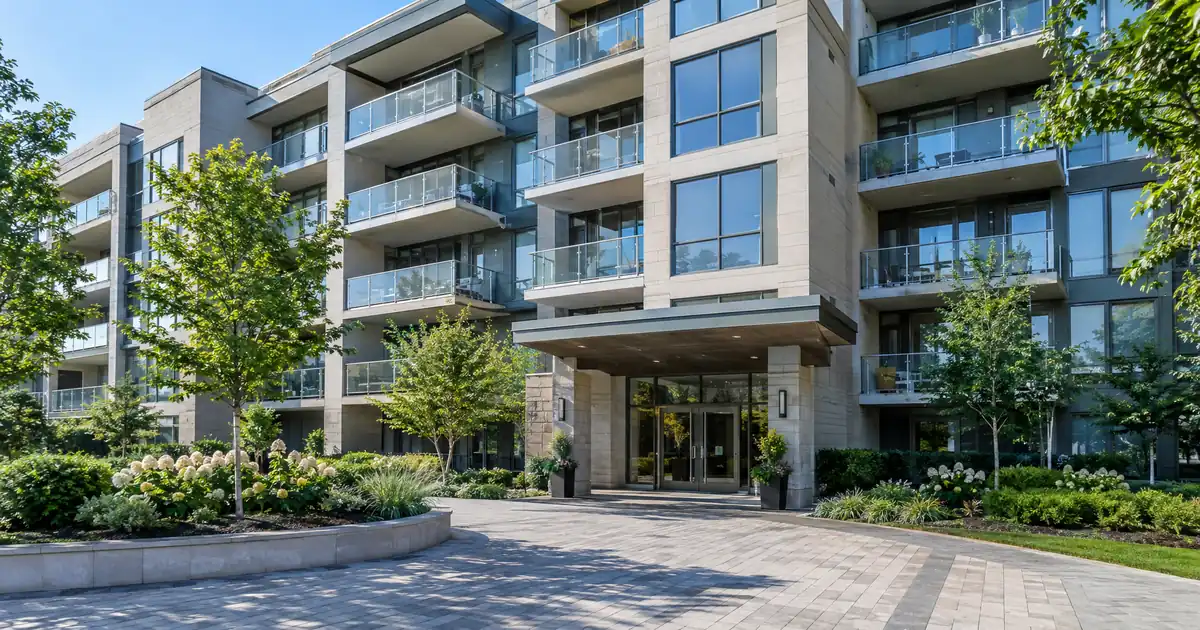
The Quick Read: Single-unit approval lets a lender get FHA financing on one condo unit when the building is not on the FHA-approved list. It can be used on a cash-out refinance, but the building still has to pass a set of project tests, and the loan itself has to meet the cash-out rules: a home you have owned and lived in for 12 months, and financing up to 80% of value. The lender submits the request, and your HOA has to cooperate. Everything here is subject to lender guidelines and full file review, and nothing is a commitment to lend.
FHA cash-out estimate
Seeded with an example value, a balance to match, and a round cash request; change any field.
Editable benchmark: 7.40% as of October 15, 2026 · Freddie Mac 30-year average via FRED®. A conventional market reference, not an FHA cash-out refinance quote.
Illustrative starting assumptions: a $350,000 home value, a $193,000 current balance, the FHA cap on a principal residence with the upfront premium financed, a thirty-year term at the current Freddie Mac benchmark, and property taxes and insurance estimated at typical national rates. Every field is editable.
An illustration, not a Loan Estimate, an approval, a quote, or a commitment to lend. The rate shown is the weekly Freddie Mac thirty-year conventional benchmark, used as a market reference; an FHA cash-out is priced by the lender at lock, and this is not an FHA cash-out refinance quote. HUD’s cap limits the base loan; the upfront premium is financed on top of the capped base loan; the monthly premium for the first year follows the snapshot’s schedule. Cash available means the base loan the cap permits less the balances retired, before closing costs, which this calculator leaves out. The line figure applies the line program’s combined loan-to-value ceiling to the same value and balance. Taxes and insurance are estimates you can edit. Licensed in sixteen states for consumer mortgages.
What Single-Unit Approval Is
Single-unit approval (SUA) is a one-time, loan-level approval of a single condo unit in a building FHA has not approved. It is sometimes called spot approval. It does not approve the building. It does not approve your neighbor’s unit. It covers your unit and your loan.
HUD’s FHA condominium page says FHA insures condo loans on units in approved projects, and also on units in projects that are not approved but meet the single-unit requirements. To be eligible for SUA, the project must be complete and ready for occupancy, have at least five dwelling units, and not be a manufactured home. It also has to meet a subset of the project-approval tests: FHA insurance concentration, owner-occupancy percentage and the project’s financial condition.
That last part matters. SUA is not a loophole that skips condo review. The building gets reviewed. It just gets reviewed for your loan instead of for every loan.
A condo can qualify for FHA in three ways, per HUD’s own standard: the unit is in an FHA-approved project, it is a site condominium (a detached single-family unit with no shared buildings), or it completes the SUA process. Site condominiums need neither project approval nor SUA.
Does SUA Work for a Cash-Out Refinance?
Yes. SUA applies to refinances as well as purchases, and a cash-out is a full refinance, so the condo has to be eligible one of the three ways above. Most search results treat SUA as a purchase topic. On a cash-out, two reviews run side by side: one on the building, one on you.
The table below shows how the three common transactions differ. Streamline details are general; the lender confirms how the condo rules apply to your file.
| Factor | Purchase | FHA cash-out | FHA Streamline |
|---|---|---|---|
| Condo must be eligible | Yes | Yes | Lender confirms |
| Appraisal | Yes | Yes | None |
| Occupancy history | Not applicable | 12 months owned and lived in | Existing FHA loan |
| Maximum financing | 96.5% | 80% | Existing loan, net benefit |
An FHA-to-FHA Streamline has no appraisal and a limited credit review. If you already hold an FHA loan on your condo and only want a different term, the Streamline may avoid the condo question. Cash-out takes equity out, so it gets the full treatment.
The details of the program are on Lendmire’s FHA cash-out refinance program page.
The Borrower Side: What You Have to Meet
The cash-out rules stack on top of the condo rules. Across the wholesale programs Lendmire places FHA files with, these are the pieces that matter most.
- Owner-occupied principal residence. The unit must be your home. Second homes and rentals are out. Occupancy decides the leverage, and this program is for the home you live in.
- 12 months of ownership and occupancy. The case number is assigned after you have owned and lived in the unit for 12 months. Employment records or utility bills can document it.
- Up to 80% loan-to-value. The cash-out reaches 80% of the unit’s appraised value. A second lien or HELOC on the unit counts against that limit, so it reduces the cash you can take.
- Credit and ratios. The wholesale programs start at a 580 decision score. The base ratio pair is 31/43 (housing to total debt). Documented compensating factors can reach 40/50 at the top tier. The automated finding governs most files.
- Mortgage insurance. FHA carries an upfront premium of 1.75% of the base loan, which can be financed, and an annual premium of 0.15% to 0.75% of the balance depending on term, amount and LTV. Above 90% LTV on a thirty-year loan, the annual premium lasts for the term. At 90% or below, it ends after eleven years. On a cash-out, which stops at 80%, that second case usually applies.
- Payment history. HUD expects the mortgage payments to have been made within the month due over the prior 12 months.
County loan limits apply and change every year. The lender confirms your county’s limit.
How the deal works, Step by Step
Here is the sequence a lender follows on an SUA cash-out.
1. Check the building’s HUD status. HUD’s condo search shows Approved, Rejected or Expired. A rejected or expired status does not rule out SUA. If the building is already approved, the file uses the standard condo path instead.
2. Screen the borrower. The lender confirms the 12-month occupancy, the payment history, the credit and ratios, and the 80% cap. Doing this first avoids paying for an appraisal on a file that will not work.
3. Request the case number as an SUA case. FHA’s instructions for SUA case numbers sit in HUD Mortgagee Letter 19-13. The letter was interim guidance, so the lender checks current procedures.
4. Start Form HUD-9991. This is the Condominium Loan Level / Single-Unit Approval Questionnaire. The lender completes Section 1. The HOA or its management company completes Section 2 and any other sections the lender marks. HUD’s form reserves Section 4 for units in projects that are not FHA-approved.
5. Collect the HOA documents. HUD’s SUA required documentation list is the minimum. It includes recorded legal documents and CC&Rs, the current board-approved budget, and insurance evidence such as walls-in (HO-6) coverage. A financial-distress resolution is included if one applies. Expect follow-up requests.
6. The lender reviews and certifies. The lender analyzes the documents and confirms the project meets FHA requirements. The lender carries responsibility for that call, which is why some lenders do not offer SUA at all.
7. Appraisal and underwriting. The appraisal sets the adjusted value, and the value sets the maximum loan. The project has to clear SUA before closing.
8. Close and endorse. FHA endorsement needs the HUD-9991 data. You receive the Loan Estimate and Closing Disclosure like any consumer mortgage.
What Decides the Outcome
Most failed SUA files fail on the building, not the borrower. A strong borrower in a weak project still gets turned down.
The questionnaire collects the project facts the lender tests:
- FHA insurance concentration (the share of units already carrying FHA loans)
- Owner-occupancy percentage
- Individual owner concentration
- Units in arrears on dues
- Reserve balance and operating funds
- Commercial space
- Dues, special assessments, insurance and litigation
On concentration, HUD’s Mortgagee Letter 19-13 refers to a 10 percent limit on single-unit approvals. The exact limit, and how it treats very small projects, should be confirmed in Handbook 4000.1. Cap treatment differs by project size, so the lender gives you the figure that applies to your building.
Owner-occupancy is another test. The 2019 final rule kept the 50% owner-occupancy floor with some flexibility, as NCSHA’s summary explains. The rule itself is in the Federal Register. Reserves also count: the standard is tied to a share of monthly assessments unless a reserve study supports a lower amount.
The third factor is HOA cooperation. The board or management company must fill out its part of the form. A slow or unwilling board can stall the file or end it.
Where the General Rule Breaks
A few cases change the answer.
- Manufactured homes. Not eligible for SUA.
- Small projects. Projects need at least five units, and the concentration limit works differently at the small end.
- New construction. SUA is aimed at existing projects. HUD’s glossary defines existing construction for condos as all phases 100% complete for over one year. A newly finished building may not qualify.
- Site condominiums. No approval is needed at all.
- An approved project. If the building is already approved, you do not need SUA.
- Project approval instead. If the HOA wants every unit to be eligible, it can pursue full project approval, which is a separate path run by the association.
- Second lien. A HELOC or second mortgage counts toward the 80% combined cap.
A Borrower Scenario
Picture a homeowner who has lived in a condo for several years. The building is not on the HUD list. The owner wants to pull cash out of the unit and has a first mortgage plus a small second lien.
The lender starts with the borrower screen. Occupancy is long past 12 months. Payments are on time. Credit clears the 580 floor. The combined loans, including the new one, need to stay at or under 80% of appraised value. Because of the second lien, the cash available is smaller than the owner expected.
Next, the lender checks HUD’s list. The building shows Expired. That does not end the file. The lender sends the HUD-9991 to the management company. Two weeks of silence from the board is the point where many of these files stall, so the owner calls the manager directly and asks for the budget, the CC&Rs and the insurance certificate.
The questionnaire comes back showing owner-occupancy well above the floor, a funded reserve and no commercial space. The FHA concentration is within the limit. The lender certifies the project and orders the appraisal. The deal works to underwriting. Had the concentration been over the limit, the file would have stopped there, and the owner would have been weighing a conventional cash-out instead.
If SUA Does Not Work
Denial usually points to the building. Options:
- Ask whether the HOA is willing to pursue full project approval.
- Look at a conventional cash-out, which has its own condo review.
- Wait and retry if the problem is fixable, such as a reserve shortfall or too many units behind on dues.
- Keep the current loan.
Lendmire’s article Can a Condo Owner Get an FHA Cash-Out Without Project Approval? covers the no-approval question in more detail.
Common Mistakes
- Treating a Streamline and a cash-out as the same thing.
- Checking only the association name on the HUD list and missing a rejected or expired status.
- Assuming you can request SUA yourself. The lender submits it.
- Forgetting a second lien counts toward the 80% cap.
- Asking the HOA for documents late, after the appraisal is ordered.
- Assuming SUA is a permanent approval of the building. It is not.
Key Terms Defined
Single-unit approval (SUA): An FHA approval of one condo unit and one loan in a building that is not FHA-approved.
Project approval: An FHA approval of the whole condo building, requested by the HOA, that makes every unit eligible.
Form HUD-9991: The questionnaire the lender and the HOA complete to document the project’s facts.
FHA concentration: The share of units in the project that carry FHA-insured loans.
Site condominium: A detached single-family unit with no shared buildings, which needs no condo approval.
Cash-out refinance: A new loan that replaces your current one and pays out part of your equity.
Frequently Asked Questions
Can I use SUA if my building shows as Expired or Rejected on HUD’s list?
Often, yes. Those statuses do not block SUA. The project still has to meet the SUA tests on its own facts, including concentration, owner-occupancy and finances.
Does SUA approve my whole building?
No. It approves one unit and one loan. Other owners cannot rely on it. Full approval is a separate request made by the HOA.
Can I apply for SUA myself?
No. An FHA lender submits it, and your HOA or management company supplies the project information. Your job is to push the board for documents.
Do I need SUA for an FHA Streamline on a condo?
It depends on how the lender applies the condo rules to your file. A Streamline of an existing FHA loan has no appraisal and a limited review, so it can avoid the condo question that a cash-out cannot. Confirm the treatment with the lender before you decide.
Can I take cash out on a condo I rent out?
No. The FHA cash-out is for an owner-occupied principal residence you have lived in for the prior 12 months.
If you are weighing a cash-out refinance against keeping the loan you have, Lendmire can help you compare the programs and the equity each one reaches. Lendmire’s piece FHA vs Conventional Cash-Out for a Condo With Project Approval Issues compares FHA with a conventional path.
Tax treatment can depend on your situation; borrowers should speak with a qualified tax professional before relying on any deduction or credit.
For your own numbers, request a scenario review with Lendmire.
About Lendmire
Lendmire (NMLS# 2371349) is a mortgage broker licensed for consumer lending in 16 states. Lendmire arranges FHA, VA, conventional and jumbo purchase and refinance loans through wholesale lenders; every file is underwritten by the lender under the applicable program guidelines. Scotsman Guide named Lendmire a Top Mortgage Workplace in both 2025 and 2026.
Get Started
Ready to find the right loan for you?
In about 30 seconds you can review financing options available for your home or investment property. No commitment required.
Informational only. Not a Loan Estimate, approval, or commitment to lend. Program availability and eligibility are subject to lender guidelines, credit approval, property review, and underwriting.
References
2. HUD – Mortgagee Letter 19-13
3. HUD’s form
4. HUD: FHA Sua Condo Required Docs
5. NCSHA – FHA Issues New Review Requirements
6. Federal Register – Project Approval for Single-Family Condominiums
7. HUD – Condo Project Approval Required Docs
This article is part of Lendmire’s FHA Loan series — every loan program’s qualification details, guidelines, and scenarios live on the loan options page.
Related reading: Can a Condo Owner Get an FHA Cash-Out Without Project Approval? · How to Get a Condo Project Onto the FHA List for a Cash-Out · How a Low Appraisal Cuts Cash on an FHA Condo Cash-Out
Brandon Miller
Founder & CEO, Mortgage Loan Originator, Lendmire LLC
- Mortgage Loan Originator · NMLS# 1129696 · Verify on NMLS Consumer Access
- North Carolina Real Estate Broker · License# 343312 · Verify on NCREC
- North Carolina Insurance Producer · License# 19053198 · Property, Casualty, Life, Health · Verify on NAIC SBS
- Lendmire LLC · Firm NMLS# 2371349 · Verify firm licensure
Important disclosures. Lendmire (NMLS# 2371349) is a licensed mortgage brokerage. Lendmire is not a direct lender, depository institution, or financial advisor. All loan inquiries are subject to lender underwriting; this article does not constitute a commitment to lend. Rates, terms, and program guidelines are subject to change without notice and vary by borrower profile, property type, and state. Information in this article is general in nature and is not financial, legal, or tax advice. Equal Housing Opportunity. NMLS Consumer Access: nmlsconsumeraccess.org.