
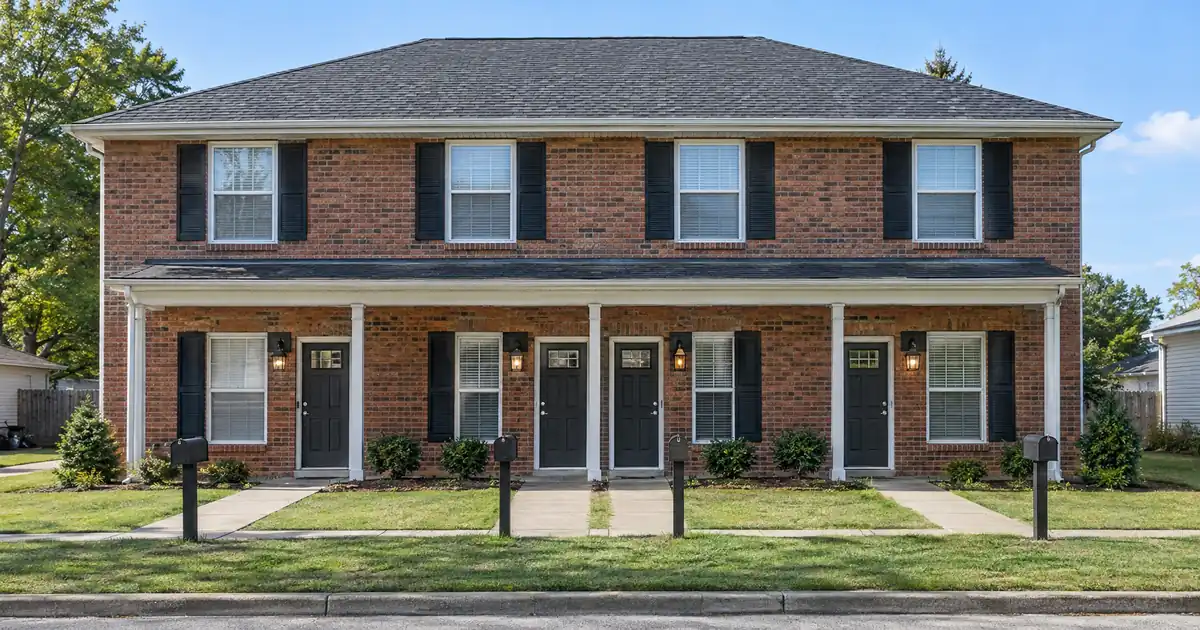
The Quick Read: The new loan can reach 100% of the appraised value, but the cash you receive is smaller than that. The new loan first pays off your existing mortgage and any other liens. The funding fee and any closing costs you finance come out next. What remains is your cash. A duplex, triplex, or fourplex follows the same formula as a single-family home, as long as you live in one of the units.
Key Takeaways
- The ceiling is 100% of the value the VA appraisal sets, and the financed funding fee sits inside that ceiling.
- Cash to you equals the new loan minus the payoff, the funding fee, and any closing costs you roll in.
- Unit count does not change the formula. It changes the appraisal, the occupancy rules, and how rent is counted.
- The money you pull out cannot be used as the reserves a 2-4 unit file may require.
- Borrowing at the full ceiling leaves no equity cushion after closing.
VA cash-out estimate
Seeded with an example value, a typical balance, and a round cash request at the first-use fee; change any field.
Editable benchmark: 7.40% as of October 15, 2026 · Freddie Mac 30-year average via FRED®. A conventional market reference, not a VA cash-out refinance quote.
Illustrative starting assumptions: a $350,000 home value, a $193,000 current balance, the full-value VA cap with the first-use funding fee financed, a thirty-year term at the current Freddie Mac benchmark, and property taxes and insurance estimated at typical national rates. Every field is editable.
Illustrative estimate only — not a Loan Estimate, approval, quote, or commitment to lend. The rate field carries the weekly Freddie Mac thirty-year conventional benchmark, a market reference and not a VA cash-out refinance quote; a VA loan is priced by the lender at lock. The total loan, funding fee included, is capped at the program leverage on the reasonable value; the fee follows the tier chosen. The cash available is what the cap allows less the balances paid off and the fee, before closing costs, which are not included. The HELOC line is the line program’s combined loan-to-value ceiling applied to the same value and balance. Taxes and insurance are editable estimates. The debt-to-income figure is a guideline; residual income decides a VA file. Licensed in sixteen states for consumer mortgages.
What Does “Equity Released” Actually Mean?
Equity released is the gap between the new loan and what that loan must pay off. It is not the same as the equity you own. You might own a large slice of the building, but the new loan has several jobs before any cash reaches you.
Here is the formula in plain words:
1. Take the appraised value of the whole building. 2. Multiply by the ceiling (100% at the VA maximum). 3. Subtract the payoff of your current first mortgage and any other liens you are clearing. 4. Subtract the funding fee if you finance it. 5. Subtract any closing costs you choose to roll into the loan. 6. What is left is your cash.
VA’s own program page says you may refinance up to 100 percent of the appraised value of the home you own and occupy. That is the ceiling. It is not the check amount.
Across the wholesale programs Lendmire places VA files with, this is where borrowers’ expectations most often drift. They hear “100%” and picture a check for the full equity. The payoff and the fee always come off the top first.
Why a 2-4 Unit Is Treated Like Any Other Home Here
A duplex, triplex, or fourplex is still your primary residence if you live in one unit. The VA cash-out math does not care how many doors the building has. The ceiling is a percentage of the appraised value, and the appraisal covers the whole structure.
Unit count does change three other things.
- Occupancy. You must live in one unit. Active-duty borrowers can meet occupancy through a spouse or dependent. If you plan to rent every unit and live elsewhere, this is the wrong program.
- Appraisal. A VA-approved appraiser sets the value, and VA’s own guidance requires an appraisal on a cash-out. Each unit also has to meet VA’s minimum property standards.
- Income. The rent from the other units can help you qualify, but only under VA’s rules, covered below.
So a duplex and a fourplex of equal appraised value, with the same payoff, release the same cash. The larger building usually costs more to qualify for. It does not release more per dollar of value.
How a Lender Underwrites This Loan, Step by Step
Wholesale lenders work through the same sequence on most files. Each step can stop the loan.
1. Eligibility. You need a Certificate of Eligibility (COE). VA decides it, and service requirements are VA’s rules. The existing loan can be a VA loan or a non-VA loan. A VA cash-out refinances any loan type into VA.
2. Credit and income screen. VA sets no minimum credit score. The wholesale programs Lendmire places VA loans with start at a 580 decision score. Residual income is the controlling test. That is the money left each month after your debts and living costs are met.
The 41% debt-to-income figure is a guideline, not a cap. A ratio above it needs residual income well above the table.
3. Appraisal and Notice of Value. The appraiser sets the reasonable value of the whole building. That number drives the ceiling. Your own estimate does not.
4. Net tangible benefit. The lender must show the refinance helps you in a measurable way. VA’s rule lists several ways to pass, including a lower payment or higher monthly residual income. It also lists a new loan at or below 90 percent of reasonable value. A loan taken at the full 100% cannot use that 90% route. It has to pass another way, such as higher residual income.
5. Seasoning. The cash-out carries the same seasoning as the streamline. The later of 210 days from your first payment and your sixth payment must have passed. VA’s circular on cash-out refinances sets this test.
6. Disclosures and closing. This is a consumer mortgage, so you receive a Loan Estimate and a Closing Disclosure. The funding fee can be financed up to the ceiling.
Everything above is subject to lender guidelines and a full file review. Nothing here is a commitment to lend.
The Waterfall: From Appraised Value to Cash
The funding fee is the line that surprises people. Here are the program figures. A cash-out refinance carries a 2.15% fee on first use and 3.3% on later uses. Veterans who receive compensation for a service-connected disability, and other exempt groups, do not pay it.
Now the fee sits inside the 100% ceiling. VA’s rule says any part of the fee that would push the loan above 100% of reasonable value must be paid in cash at closing. So a full-ceiling loan has a smaller base loan under it.
The table below uses modeled assumptions, not market data. It assumes a payoff equal to 60% of the appraised value and no financed closing costs. All figures are percentages of the appraised value.
| Line item | First use | Later use | Exempt |
|---|---|---|---|
| Appraised value | 100% | 100% | 100% |
| Total loan at ceiling | 100% | 100% | 100% |
| Payoff (assumed) | 60% | 60% | 60% |
| Funding fee, financed | about 2.1% | about 3.2% | 0% |
| Cash to you | about 37.9% | about 36.8% | 40% |
Notice the pattern. Each extra point of fee comes straight out of your cash. Any closing costs you roll in come out the same way, dollar for dollar.
Nothing in this table depends on the number of units. A duplex, a triplex, and a fourplex all follow it.
What If a Second Lien Is Also Paid Off?
A home equity loan or line on the building has to be paid off if it is not being kept. The payoff then counts the second lien as well. Say the first mortgage is 60% of value and a second lien is another 10%. The payoff becomes 70%, and the cash drops by 10 points. The ceiling stays the same.
What If the Appraisal Comes In Low?
This is the case that hurts most. Suppose you expected 100 and the appraiser returns 95. Every line moves. Hold the payoff at the same 60 (measured on your original expectation), and a first-use fee takes about 2 points. Cash falls to roughly 33 on the same scale, against about 38 before. A five-point value miss cost nearly five points of cash.
Which Limit Actually Stops You?
The 100% ceiling is the number everyone quotes. It is rarely the one that binds. Four things can hold your cash below the headline.
| Constraint | What it limits | How it shows up |
|---|---|---|
| The ceiling | Total loan | 100% of reasonable value, fee included |
| The appraisal | The value itself | A low Notice of Value shrinks everything |
| Residual income | The payment you can carry | A bigger loan means a bigger payment |
| Lender limits | How far a lender will go | Some lenders set a cap below VA’s maximum |
Here is how to read the table. VA allows 100%, but some lenders choose to stop lower. Others set a higher credit floor or tighter rules on multi-unit files. Those are lender choices, not VA rules. That is why the same file can get different answers from different lenders.
Residual income deserves special attention. A larger loan raises the payment, and the payment is no longer tied to your old balance. For some borrowers the loan amount that clears the residual income test sits below the ceiling. In that case the income test, not the appraisal, sets your cash.
What a Multi-Unit Changes (and What It Doesn’t)
Rent from the other units. VA’s underwriting guidance counts prospective rent only if you show a reasonable likelihood of success as a landlord and hold cash reserves. VA’s Chapter 4 on underwriting sets the reserve figure at six months of the full housing payment. It counts 75 percent of the lease or rental agreement amount unless a greater share is documented. If you choose not to use rental income, the full payment is treated as debt.
The reserves trap. Those reserves must be your own funds. Equity cannot be used, and gifts do not count. Proceeds from a VA regular cash-out cannot be counted either. So you cannot pull cash out and use it to satisfy the reserve test on the same file. This catches borrowers who plan their cash around the check they expect.
Your own unit. Rent on the unit you live in is not income. You are the occupant, not the tenant.
Leases and vacancies. A vacant unit or a month-to-month tenant can affect how much rent a lender will count. It does not change the ceiling. The ceiling depends on value, not on who is in the building.
Legal unit count. The appraisal assumes the building is legally what it says it is. A unit added without permits can cause trouble at the appraisal stage.
For a worked fourplex, see Lendmire’s article How Much a VA Cash-Out Releases on a Fourplex at Full Value.
Where the General Rule Breaks
The 100% formula holds for most owner-occupied files. These situations bend it.
- A non-VA payoff. A conventional or FHA loan can be refinanced into VA. You might take no cash at all, and the loan simply converts.
- The streamline. The VA interest rate reduction refinance loan, or IRRRL, is VA-to-VA only. It carries a 0.5% fee unless exempt, needs no VA appraisal, and cannot pay out cash. It is not a cash-out.
- Partial entitlement. With full entitlement there is no VA loan limit. With remaining entitlement, a down payment may be required. Speak with a loan officer about your specific numbers.
- Type I versus Type II. VA labels a cash-out by whether the loan exceeds the payoff. A loan above the payoff is Type II. That is the kind that puts money in your pocket, and it needs the net tangible benefit and seasoning checks above.
- State rules. A few states cap cash-out on homesteads. Check your own state’s rule.
- Properties outside VA. A second home, an investment property, or a building with five or more units falls outside VA cash-out. Occupancy decides which program applies.
What the Decision Looks Like in Practice
Borrowing at 100% means no equity cushion remains. If values slip, you can owe more than the building is worth. That is a real cost of the full ceiling.
So the practical question is not “how much can I take?” It is “how much do I need, and what does the larger loan do to my residual income?” Some borrowers choose to stop short of the ceiling. A smaller loan can also satisfy the 90% net tangible benefit route. Lendmire’s piece How Much Equity to Keep on a VA Cash-Out at the Full Value Cap covers that tradeoff.
Before you apply, check these items:
- Your Certificate of Eligibility is in hand.
- You know your current payoff, including any second lien.
- You have reserves in your own funds if you plan to count rent.
- You know whether the loan is a first use of the benefit or a later one.
- You can explain how the refinance helps you under the net tangible benefit test.
Tax treatment can depend on your situation; borrowers should speak with a qualified tax professional before relying on any deduction or credit.
The VA cash-out refinance program page lays out how Lendmire arranges these files through wholesale lenders.
Key Terms Defined
Appraised value: The reasonable value a VA-approved appraiser assigns to the whole building. It sets the ceiling.
Payoff: The total you owe on the loans the new mortgage will clear, including any second lien.
Funding fee: A one-time VA charge on the loan. It can be financed or paid at closing, and exempt veterans do not pay it.
Entitlement: The amount of your VA benefit available to guarantee a loan.
Residual income: The money left each month after debts and household costs. It is the controlling VA test.
Reserves: Your own savings held after closing. On a 2-4 unit, they must not come from equity or the cash-out.
Net tangible benefit: The measurable gain VA requires from a refinance, such as higher residual income.
Lender limit: A cap a lender sets below VA’s maximum.
Frequently Asked Questions
Does a fourplex release more cash than a duplex at the same value?
No. The formula depends on appraised value, payoff, and fees, not on door count. A fourplex may take more work to qualify for, since more rent and more reserves enter the picture. The cash itself follows the same math.
Is the funding fee added on top of the 100% ceiling?
No. It sits inside the ceiling. A financed fee reduces the base loan, and any part that would push the loan past 100% of reasonable value must be paid in cash. Exempt veterans skip the fee entirely.
Can I use my cash-out proceeds as reserves for the rental units?
No. VA’s underwriting guidance says proceeds from a VA regular cash-out cannot count toward required reserves. Equity cannot be used either, and gifts do not count. Reserves must be your own funds.
Do I have to live in the building?
Yes. You must occupy one unit as your home. Active-duty borrowers can meet this through a spouse or dependent. If you move out and rent every unit, the loan is outside the VA program.
Will every lender go to 100%?
No. VA sets the maximum, but individual lenders can set lower limits or add their own credit and reserve rules. That is why two lenders can respond differently to the same file. Everything is subject to lender guidelines and full file review.
If you are weighing a cash-out refinance against keeping the loan you have, Lendmire can help you compare the programs and the equity each one reaches.
For your own numbers, request a scenario review with Lendmire.
About Lendmire
As a mortgage broker (NMLS# 2371349), Lendmire helps homeowners and home buyers in 16 states with FHA, VA, conventional and jumbo purchase and refinance loans arranged through wholesale lenders. Lendmire is never the lender; program terms are set by the lender and the agency guidelines. Scotsman Guide named Lendmire a Top Mortgage Workplace in both 2025 and 2026.
For the program’s current guidelines, see VA loan programs.
Get Started
Ready to find the right loan for you?
In about 30 seconds you can review financing options available for your home or investment property. No commitment required.
Informational only. Not a Loan Estimate, approval, or commitment to lend. Program availability and eligibility are subject to lender guidelines, credit approval, property review, and underwriting.
References
1. VA Purchase & Cash-Out Refinance Home Loans
4. VA News: Funding fee — who pays, who is exempt
5. VA Lenders Handbook, Chapter 4
This article is part of Lendmire’s VA Loans series — every loan program’s qualification details, guidelines, and scenarios live on the loan options page.
Related reading: Can a VA Cash-Out Reach Full Value After Big Appreciation? · Can You Do a VA Cash-Out on a 2-4 Unit Home After Moving Out? · How Much a VA Jumbo Cash-Out Releases on a High-Value Home
Brandon Miller
Founder & CEO, Mortgage Loan Originator, Lendmire LLC
- Mortgage Loan Originator · NMLS# 1129696 · Verify on NMLS Consumer Access
- North Carolina Real Estate Broker · License# 343312 · Verify on NCREC
- North Carolina Insurance Producer · License# 19053198 · Property, Casualty, Life, Health · Verify on NAIC SBS
- Lendmire LLC · Firm NMLS# 2371349 · Verify firm licensure
Legal disclosures. Lendmire (NMLS# 2371349) is a state-licensed mortgage brokerage that arranges financing through wholesale lender relationships. Lendmire is not a direct lender, depository institution, or registered financial advisor. The discussion above is general informational content about real estate financing — it is not financial, legal, or tax advice, and readers should consult licensed professionals for guidance on their individual circumstances. Loan inquiries are subject to lender underwriting; this article does not represent a commitment to lend. Loan terms, rates, and qualification standards vary by borrower, property, and state, and are subject to change at any time. Equal Housing Opportunity. NMLS Consumer Access: nmlsconsumeraccess.org.