
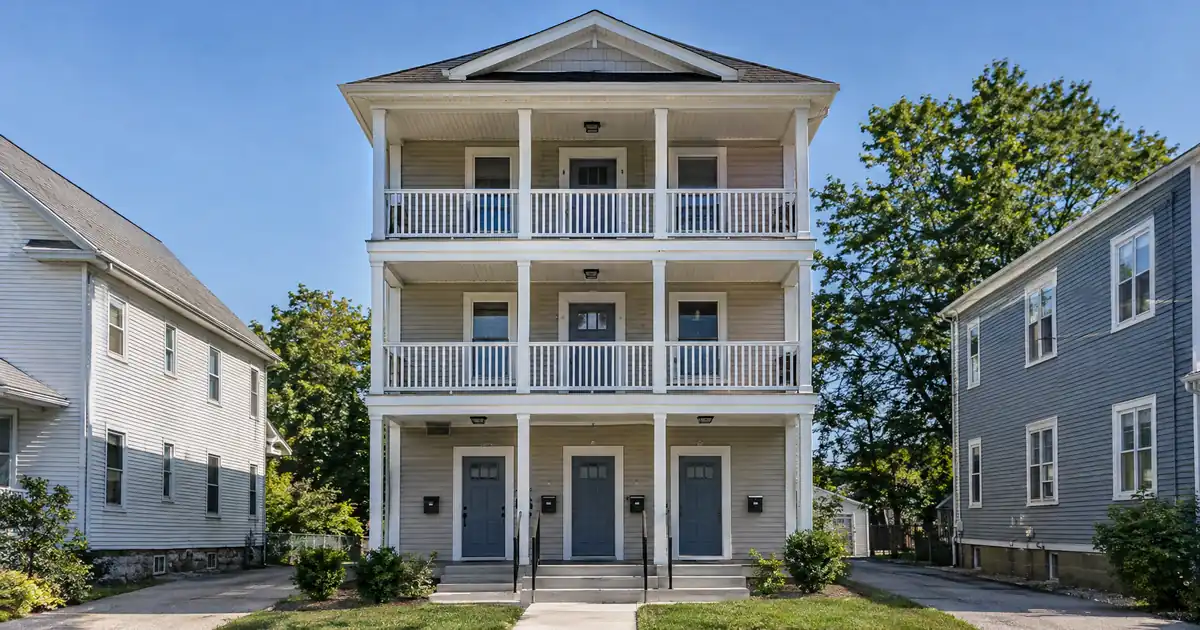
The Quick Read: Yes, if you live in one of the units. A conventional cash-out refinance is allowed on a two- to four-unit home you occupy, and leases on the other units can help you qualify. The leases don’t lift the limits. Leverage tops out at 75% of appraised value, and only part of the rent counts as income. Subject to lender guidelines and full file review.
Cash-out refinance estimate
The starting figures are an example value with a balance and a cash request in proportion. Replace them with yours.
Editable benchmark: 7.40% as of October 15, 2026 · Freddie Mac 30-year average via FRED®. A conventional market reference, not a cash-out refinance quote.
Illustrative starting assumptions: a $350,000 home value, a $193,000 current balance, the agency cap on a one-unit principal residence, a thirty-year term at the current Freddie Mac benchmark, and property taxes and insurance estimated at typical national rates. Every field is editable.
Illustrative estimate only — not a Loan Estimate, approval, quote, or commitment to lend. The rate field carries the weekly Freddie Mac thirty-year conventional benchmark, a market reference and not a cash-out refinance quote; a cash-out loan is priced by the lender at lock. The cash available is the loan the program cap allows less the balances paid off, before closing costs, which are not included. The HELOC line is the program’s combined loan-to-value ceiling applied to the same value and balance. Taxes and insurance are editable estimates. Licensed in sixteen states for consumer mortgages.
What Does “All Other Units Leased” Actually Prove?
It proves the rent exists. It does not unlock a bigger loan.
A lender looking at a duplex, triplex or fourplex asks three things. Do you live in one unit? How much rent can be counted from the others? Does the property fit the leverage limit for its type? Full leases help with the second question and do nothing for the first or third.
Leases are also not required. If your own income carries the loan, a lender may not need the rent at all. Leases matter when you want rent to count toward qualifying, and a clean rent roll makes the appraisal and underwriting smoother.
Here is the part that trips people up. The rent from the unit you live in does not count as income. Only units rented to others can contribute.
Live-In or Not: Which Rules Apply?
Occupancy decides the rulebook. If you live in one unit, you are on the owner-occupied lane. If every unit is rented to someone else and you live elsewhere, the property is an investment property. That is a different loan with different leverage.
Across the wholesale conventional programs, the cash-out leverage limits look like this:
| Property and occupancy | Max cash-out leverage |
|---|---|
| One unit, principal residence | 80% |
| Two to four units, principal residence | 75% |
| Second home | 75% |
| Investment property | 75% |
The limit applies to the appraised value, and the appraiser’s number sets the test. The agency’s Eligibility Matrix lists the same caps by unit count and occupancy, and it shows a higher cap for limited cash-out refinances on two- to four-unit homes.
That gap surprises many owners. Purchase loans on a two- to four-unit principal residence can go as high as 95%. Cash-out stops at 75%. Same building, very different leverage, because pulling equity out is treated as higher risk than buying.
Lendmire’s cash-out refinance programs follow this same occupancy logic. A borrower who lives in one unit and rents the rest stays in the owner-occupied lane. Renting extra units does not turn the loan into an investment loan.
How Do Lenders Count Rent From the Leased Units?
Lenders count rent from the units you don’t occupy, and they count only a portion of it. The reduction covers vacancy and upkeep. Your own housing payment stays in the ratios at full weight, and the counted rent comes in as income rather than as a discount on your payment.
Here is the sequence on a typical file:
1. Confirm occupancy. You live in one unit as your principal residence.
2. Order an income-property appraisal. It includes a rent schedule, not just a value opinion.
3. Gather the leases. Each unit’s rent is stated separately.
4. Calculate rent used for lender review. The lender takes a share of the gross monthly rent from the leased units.
5. Add your full housing payment to your debts. That payment is a full obligation.
6. Check the total ratio. The wholesale programs run a ceiling of 50% on the automated finding, and manually underwritten files use tighter ratios.
The Fannie Mae rental-income rules cover this exact setup: a two- to four-unit principal residence where the borrower occupies one unit. They also require the lender to report the property’s gross monthly rent in the loan data, whether or not that rent is used to qualify. Freddie Mac’s rental-income section credits only a portion of gross lease rent, which is the haircut described above. It also allows market rent from the appraisal when no lease exists, and it asks for a written analysis if the lease and market rent diverge.
A scenario in percentages
Picture a fourplex you bought and live in, with the other three units leased. Say it appraises at the same value you expect. The most you can borrow on a cash-out is 75% of that value, and the new loan must also pay off your existing mortgage. Whatever is left after that payoff and closing costs is your cash.
On the qualifying side, the lender counts a portion of the rent from three units. It adds your full housing payment to your debts and checks the total against the ratio ceiling. If the rent is strong and your other debts are light, the ratio can work comfortably. If the rent is modest, your W-2 or business income carries more of the load.
Notice what did not happen. The fourth unit, yours, contributed nothing. And leases on the other three did not raise the 75% cap.
On files like this, the surprise is usually the combination of the lower leverage cap and the rent haircut. Owners often expect both to behave like a purchase loan, and they don’t.
Which Proof of Rent Fits Your Situation?
The right evidence depends on what each unit looks like today. A signed lease is the cleanest proof, but it is not the only one.
| Unit status | Typical evidence | What to expect |
|---|---|---|
| Leased, long-term tenant | Signed lease, appraisal rent schedule | Rent can count in part |
| Newly leased | Signed lease, deposit proof | Lender may ask for more support |
| Month-to-month | Appraisal market rent, tenant statement | Treatment varies by lender |
| Vacant | Appraisal market rent only | Lender policy decides if it counts |
| Under renovation | Usually none | Often left out of income |
| Rent not needed | Little or none | Your income carries the loan |
For refinances, lenders may also look at tax-return history on units you’ve owned a while, and at a lease plus a rent schedule on units placed in service recently. The details differ by agency and by lender, so ask which path applies to your building before you spend on paperwork.
Two things make a lease stronger. First, the rent should sit close to what the appraisal calls market rent. A big gap invites questions. Second, the lease should name the tenant, the term and the rent unit by unit. Leases with relatives or related parties may draw closer review.
What If One Unit Is Vacant?
A vacant unit usually still allows the loan. It simply means that unit’s rent may not count, or it counts only on market-rent evidence from the appraisal, depending on the lender.
The practical effect is on your ratios, not on eligibility. With one fewer counted rent, your income side gets thinner. If the file was close, that can matter. If your own income carries the loan, it may not matter at all.
Month-to-month tenants sit in the middle. A lender may accept market rent from the appraisal, or may want a recent lease. A unit under renovation is the weakest case, because there is no rent to document yet.
One sequencing note from the file desk: sign leases before the appraisal, not after. The appraiser’s rent schedule and your leases should tell the same story.
What’s on the Rent Roll Checklist?
A tidy rent roll is the single most useful document you can hand your loan officer. Build one grid, one row per unit:
| Item | What to include |
|---|---|
| Unit | Unit number and bed/bath count |
| Occupant | Tenant name, or “owner-occupied” |
| Monthly rent | Current lease rent |
| Lease dates | Start and end, or month-to-month |
| Deposit | Amount held and where it sits |
| Payment history | How rent is paid and received |
| Appraisal rent | Market rent from the rent schedule |
Add the supporting documents: signed leases, proof of security deposits, and traditional personal-income documentation showing rental history if you’ve owned the property a while. Keep the owner’s unit on the grid, labeled as owner-occupied, so the lender sees the whole building at once.
Seasoning, Equity and Reserves
Cash-out has waiting periods, and they apply no matter how many leases you hold.
Across the conventional wholesale programs, at least one borrower must have been on title for 6 months. The first mortgage you’re paying off must also be at least 12 months old, measured note date to note date. The agency’s cash-out guidance lists the title exceptions: inheritance, a divorce award and delayed financing for cash buyers. Delayed financing waives the title wait but not the other cash-out rules. If the property was listed for sale, it must come off the market by the loan’s disbursement date.
The loan-age test comes from Fannie Mae’s cash-out eligibility update. Those two clocks can push a refinance back by months, so check your note date before you plan around a cash-out.
Reserves are your liquid savings left after closing. Multi-unit homes and cash-out loans can both call for more reserves than a one-unit rate-and-term refinance, and the cash you take out is subtracted from what counts. Your lender sets the final number through the automated finding or manual guidelines.
On credit, the wholesale conventional programs generally start at a 620 decision score. That is a floor, not a promise, and the automated finding can ask for more depending on leverage and ratios.
If you’re in Texas, the homestead cap is its own wrinkle. Lendmire’s piece on how a VA cash-out compares with a conventional cash-out under Texas homestead rules walks through it.
When Conventional Isn’t the Fit
Conventional cash-out is not always the best path for an owner-occupied multi-unit home. A few situations change the answer:
| Your situation | Option to weigh |
|---|---|
| You need more than the 75% cap allows | Smaller cash amount, or wait for more equity |
| You only want a better term on your existing loan | Limited cash-out (rate-and-term) refinance |
| Title or loan age is under the clocks | Wait, or ask about the exceptions |
| You no longer live in any unit | Investment-property rules at 75% apply |
The limited cash-out route has higher leverage on two- to four-unit homes, but the cash back is only incidental. It pays off your first mortgage, closing costs and any purchase-money second lien. That works if your goal is a different term, not big cash.
Occupancy is the line to watch. If you move out and rent every unit, the loan moves to investment-property rules from your lender’s perspective.
Before You Apply: A Short Plan
- Confirm you live in one unit. This keeps you on the owner-occupied lane.
- Check your clocks. Title time, first-mortgage age and any listing history.
- Build the rent roll. One row per unit, leases attached.
- Sign leases before the appraisal. Match the rent schedule.
- Know your reserves. Count what stays in the bank after closing.
- Decide your cash target. Remember the 75% cap applies to the full new loan, not just the cash.
Tax treatment can depend on your situation; borrowers should speak with a qualified tax professional before relying on any deduction or credit.
If you are weighing a cash-out refinance against keeping the loan you have, Lendmire can help you compare the programs and the equity each one reaches. Lendmire arranges conventional loans through wholesale lenders in 16 states.
Key Terms Defined
Cash-out refinance: A new mortgage larger than the one you owe, with the difference paid to you as cash.
Limited cash-out refinance: A refinance that pays off your first mortgage and closing costs, with only small cash back.
Seasoning: The waiting period on title or on your existing loan before a cash-out is allowed.
Rent roll: A unit-by-unit list of tenants, rents and lease dates.
Market rent: The rent the appraiser says a unit would earn, shown on the rent schedule.
Reserves: Liquid savings left after closing that a lender can count toward your payments.
Frequently Asked Questions
Do all the other units have to be leased to get a conventional cash-out?
No. The loan does not require full occupancy by tenants. Leases matter only when you want rent counted as income. A vacant unit may simply not count, or may count through appraisal market rent, depending on the lender.
Can I count the rent from the unit I live in?
Generally no. Rent from the unit you occupy cannot be used to qualify, apart from narrow exceptions such as boarder income. Only units rented to others can add income.
Is the leverage cap the same as on a purchase?
No. A purchase on a two- to four-unit principal residence can reach 95%, but cash-out is capped at 75%. A one-unit home gets 80% on cash-out. Limited cash-out sits higher than full cash-out on multi-unit homes.
What if I move out and lease every unit?
Then the property becomes an investment property, not a principal residence. Cash-out on a two- to four-unit investment property is also capped at 75% on the conventional programs, but the occupancy label changes how the file is reviewed.
Will leases lower my monthly housing payment in the lender’s eyes?
No. Your full housing payment counts as a debt. The counted rent comes in as income, not as an offset, so strong leases help your ratios without erasing the payment.
For your own numbers, request a scenario review with Lendmire.
About Lendmire
Lendmire (NMLS# 2371349) is a mortgage brokerage serving homeowners and home buyers in 16 states. FHA, VA, conventional and jumbo purchase and refinance loans are arranged through wholesale lending channels; Lendmire brokers the financing and the lender underwrites each application. Scotsman Guide named Lendmire a Top Mortgage Workplace in both 2025 and 2026.
Get Started
Ready to find the right loan for you?
In about 30 seconds you can review financing options available for your home or investment property. No commitment required.
Informational only. Not a Loan Estimate, approval, or commitment to lend. Program availability and eligibility are subject to lender guidelines, credit approval, property review, and underwriting.
References
1. Fannie Mae Eligibility Matrix
2. Fannie Mae Selling Guide: General Rental Income Information
3. Freddie Mac Seller/Servicer Guide: Rental Income
4. Fannie Mae Selling Guide: Cash-Out Refinance Transactions
5. Fannie Mae Capital Markets: Cash-Out Refinance Eligibility Update
This article is part of Lendmire’s Conventional Loans series — every loan program’s qualification details, guidelines, and scenarios live on the loan options page.
Related reading: How to Get a Conventional Cash-Out After a Quitclaim From a Parent · How to Apply for a Conventional Cash-Out Refinance Step by Step · Can a Home Still in Probate Get a Conventional Cash-Out?
Brandon Miller
Founder & CEO, Mortgage Loan Originator, Lendmire LLC
- Mortgage Loan Originator · NMLS# 1129696 · Verify on NMLS Consumer Access
- North Carolina Real Estate Broker · License# 343312 · Verify on NCREC
- North Carolina Insurance Producer · License# 19053198 · Property, Casualty, Life, Health · Verify on NAIC SBS
- Lendmire LLC · Firm NMLS# 2371349 · Verify firm licensure
Important disclosures. Lendmire (NMLS# 2371349) is a licensed mortgage brokerage. Lendmire is not a direct lender, depository institution, or financial advisor. All loan inquiries are subject to lender underwriting; this article does not constitute a commitment to lend. Rates, terms, and program guidelines are subject to change without notice and vary by borrower profile, property type, and state. Information in this article is general in nature and is not financial, legal, or tax advice. Equal Housing Opportunity. NMLS Consumer Access: nmlsconsumeraccess.org.