
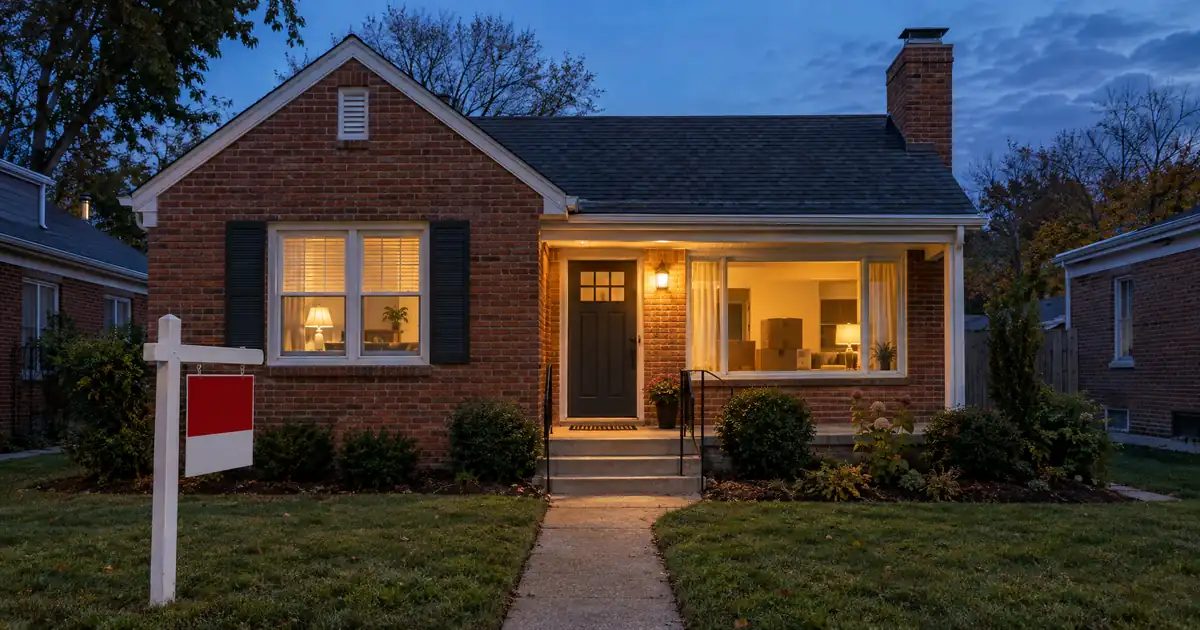
The Quick Read: Generally, no. A VA cash-out is a refinance, so it replaces an existing loan or lien. A home with no lien gives the new loan nothing to pay off. Confirm your situation with a VA-approved lender, because a lien of any kind changes the answer.
VA cash-out estimate
Seeded with an example value, a typical balance, and a round cash request at the first-use fee; change any field.
Editable benchmark: 7.40% as of October 15, 2026 · Freddie Mac 30-year average via FRED®. A conventional market reference, not a VA cash-out refinance quote.
Illustrative starting assumptions: a $350,000 home value, a $193,000 current balance, the full-value VA cap with the first-use funding fee financed, a thirty-year term at the current Freddie Mac benchmark, and property taxes and insurance estimated at typical national rates. Every field is editable.
Illustrative estimate only — not a Loan Estimate, approval, quote, or commitment to lend. The rate field carries the weekly Freddie Mac thirty-year conventional benchmark, a market reference and not a VA cash-out refinance quote; a VA loan is priced by the lender at lock. The total loan, funding fee included, is capped at the program leverage on the reasonable value; the fee follows the tier chosen. The cash available is what the cap allows less the balances paid off and the fee, before closing costs, which are not included. The HELOC line is the line program’s combined loan-to-value ceiling applied to the same value and balance. Taxes and insurance are editable estimates. The debt-to-income figure is a guideline; residual income decides a VA file. Licensed in sixteen states for consumer mortgages.
Why Does the Existing Loan Matter So Much?
The existing loan matters because the VA cash-out is built around paying off a lien. The new VA-backed loan pays the old lien at closing. Any amount left over goes to you as cash. No old lien means no payoff step, and the transaction has nothing to anchor to.
VA’s own cash-out page describes the product as replacing your current loan with a new one. It lists three basic requirements:
- A VA Certificate of Eligibility (COE).
- Credit and income that meet VA and lender standards.
- Living in the home you are refinancing.
Equity is not the trigger. Plenty of veterans own a home outright and hold more equity than anyone. But the program refinances debt. It does not hand out equity as a benefit.
One honest caveat. VA does not publish a sentence that says “free-and-clear homes are ineligible.” The conclusion comes from how the rule is built, which is why you will hear “generally” instead of “never” from careful loan officers.
Why Do Some Sources Say Yes?
Some websites say a paid-off home can use the program, and others say it can’t. The disagreement usually traces back to the phrase “cash-out,” which sounds like “pull cash from equity.” That reading ignores the refinance mechanics underneath.
Another source of confusion is the term “cash-out” in general. Conventional lenders do offer cash-out products on homes with no mortgage. Those are different loans with different rules. A veteran searching for “paid-off home cash-out” may land on a page about one of those products and assume it applies to VA.
Across the wholesale programs Lendmire places VA files with, the practical picture is consistent. A VA cash-out needs something to refinance. If a page promises one on a truly lien-free home, ask the lender to show you the program rule that allows it. Lender policy and VA rules are not the same thing, and the file is reviewed against the stricter of the two.
How a VA Cash-Out Works When a Lien Does Exist
Here is the normal sequence. The numbered list shows how it fits together.
1. Certificate of Eligibility. VA decides your eligibility. The lender can often help you pull the COE.
2. Full underwriting. Credit, income and your ability to repay are reviewed. Residual income, meaning what is left of your monthly income after major obligations, is the controlling test. The common 41% debt-to-income figure is a guideline, not a cap.
3. VA appraisal. The appraised value sets the ceiling for the new loan.
4. Net tangible benefit. The refinance has to leave you better off in a way the rules recognize.
5. Payoff and cash. Closing proceeds pay the old lien. What remains, after costs, comes to you.
On the loan size, the VA cash-out across the wholesale programs Lendmire works with reaches 100% of the appraised value, including the financed funding fee. It can refinance any loan type into a VA loan. That includes a conventional or FHA loan. A VA-to-VA refinance that takes cash out follows the same cash-out path, not the streamline.
Speaking of which, the VA streamline (the IRRRL) refinances only an existing VA loan, and it does not give cash out. If someone told you a streamline can pull equity, they were mistaken.
The rulemaking behind all this is public. VA’s cash-out rulemaking in the Federal Register splits cash-outs into two types and requires full underwriting with an ability-to-repay review. In a Type I loan, the new loan does not exceed the payoff. In a Type II loan, it does, and the difference goes to the borrower. VA Circular 26-19-05 lays out the same definitions.
What the Rule Itself Says
The governing regulation is titled “Refinancing of mortgage or other lien indebtedness.” You can read the text of 38 CFR 36.4306, which carries out the statute for these loans. The title tells you most of what you need. The subject is indebtedness: a mortgage or another lien.
That wording is also why edge cases exist. “Other lien” is broad. Liens can be current or delinquent, and they can come from a VA, FHA or conventional mortgage, or from a tax or judgment lien. If your home carries a modest lien of some kind, a lender can evaluate it case by case. A small lien is different from none at all.
Please don’t treat that as a loophole to engineer. The point is simply this: if you are unsure whether anything is recorded against your title, find out before you assume you are lien-free.
Short Answers by Situation
| Your situation | VA cash-out? |
|---|---|
| Home owned outright, no lien | Generally no |
| Home with a VA or non-VA mortgage | Yes, if you meet the rules |
| Home with a small lien of another type | Lender reviews case by case |
| Home you do not live in | No, occupancy is required |
| Existing VA loan, lower rate only | IRRRL, but no cash out |
A Scenario in Plain Words
Picture a veteran who paid off the mortgage years ago. The home is worth far more than they paid. They want cash for a major repair and some savings.
They call a VA-approved lender and ask for a cash-out. The loan officer pulls the title and finds no lien. There is nothing for the new loan to pay off. The VA route does not fit.
The loan officer then walks through other ways to reach the equity. Each has a different structure, and the veteran’s choice depends on how much cash is needed, whether they want a first or second lien, and how they feel about a new monthly payment.
That last point matters most. An outright owner has no mortgage payment today. Any new loan creates one. Because VA underwriting tests residual income, moving from no payment to a payment is a real qualifying event. It deserves a hard look before you commit.
What Are Your Options Instead?
If the VA cash-out does not fit, you have other ways to use home equity. Here is how they compare in general terms. Terms vary by lender, and this table is qualitative only.
| Option | Lien position | Structure | Mortgage insurance or VA fee? |
|---|---|---|---|
| HELOC | Second lien | Revolving credit line | Typically no |
| Home equity loan | Second lien | One lump sum | Typically no |
| Conventional cash-out | New first lien | Replaces any loan, lump sum | Depends on leverage |
| VA cash-out | New first lien | Needs a lien to refinance | Funding fee unless exempt |
Lendmire’s piece VA Cash-Out vs HELOC for a Veteran With a Paid-Off Home goes deeper on the tradeoffs. A related piece covers how a second lien compares to a VA cash-out for the same kind of home.
A second lien leaves no first mortgage in place, but it does put a loan against your house. A new first lien resets your whole loan. Neither is better in every case.
What Does the Funding Fee Look Like?
When a VA cash-out does apply, the VA funding fee is a one-time charge that takes the place of mortgage insurance. VA explains the funding fee and closing costs on its site. The fee can be financed, and veterans who receive compensation for a service-connected disability, along with other exempt groups, do not pay it.
Across the wholesale programs Lendmire works with, the cash-out refinance funding fee is 2.15% for first use and 3.3% for later use. Those are program figures, subject to lender guidelines and full file review. They are not a quote.
There is no separate mortgage insurance on a VA loan. That is a real difference from many conventional loans at high leverage. But “no mortgage insurance” does not mean “no cost.” Closing costs on a refinance can add up, and VA warns about that directly. Look at your Loan Estimate and your Closing Disclosure and compare the total cost of the loan, not only one line.
Special Situations
A few situations come up often enough to mention.
- Inherited or gifted home. Title and occupancy questions get reviewed by the lender. A lien-free inherited home faces the same structural issue as any other.
- Trust or shared title. Some titling arrangements need extra review. Ask before you apply.
- Surviving spouse. Eligibility depends on VA’s rules and your COE. A lender can help you sort out what applies.
- Partly used entitlement. With remaining entitlement, a down payment may be required on a purchase. For a refinance, speak with a loan officer about how it applies to you.
- State rules. Some states add their own limits on cash-out lending against a home. Ask the lender what applies where you live.
When Not to Go After Cash
Tapping equity is not always the right move, even when it is available.
- You trade a paid-off home for a payment. That is permanent unless you pay the loan back down.
- The funding fee and closing costs reduce the cash you keep.
- A new first lien on a home that currently has none changes your risk.
- Spending equity on something that loses value, like a vacation, leaves you with debt and no asset.
If the cash is for a repair that protects the home or for debt that costs more than the new loan would, the math can look better. Get the numbers in writing first.
Documents to Gather
Before you talk to a lender, collect these items:
- Your Certificate of Eligibility, or your discharge papers to request one.
- Recent pay or income records, and tax documents as the lender requests.
- Proof of homeowners insurance.
- Your most recent property tax bill.
- A copy of your deed, and anything on file about liens against the property.
- A list of current monthly debts.
Having these ready makes the conversation about the loan, not the paperwork.
Key Terms Defined
Certificate of Eligibility (COE): The VA document that shows you qualify for a VA-backed loan.
Lien: A legal claim against a property, usually a mortgage, that must be paid when the home is sold or refinanced.
Residual income: The money left each month after taxes, major debts and living costs, which VA treats as the controlling test.
Net tangible benefit: A requirement that the refinance leave the borrower with a clear, measurable gain.
Type II cash-out: A refinance where the new loan is larger than the payoff, with the difference paid to the borrower.
Funding fee: A one-time VA charge that stands in for mortgage insurance and can be financed.
Frequently Asked Questions
Can I get a VA cash-out if my house is paid off?
Generally no. The program refinances an existing lien, so a home with no lien has nothing for the new loan to replace. If your title shows any recorded lien, a lender can review whether it changes the picture. A non-VA equity product may fit better.
Does a streamline refinance give me cash?
No. The IRRRL refinances only an existing VA loan and does not release equity. If you want cash out of a home with a VA loan, that is the cash-out refinance, which is fully underwritten and appraised.
Do I have to live in the home?
Yes. VA requires you to live in the home you are refinancing. A rental or second home does not fit this product.
Does VA lend me the money?
No. VA guarantees loans made by private lenders. The lender sets its own overlays on top of VA’s rules, which is why one lender may say no where another says maybe. Always compare the full terms on your Loan Estimate.
Will a VA cash-out cost me mortgage insurance?
No, VA loans carry no mortgage insurance. The funding fee takes its place, and it is waived if you receive compensation for a service-connected disability or fall in another exempt group.
Where to Go From Here
If you are weighing a cash-out refinance on a home you own outright, Lendmire can help you compare the programs and the equity each one reaches. Lendmire’s VA cash-out refinance program page explains how the product works when a loan exists. As a mortgage broker, Lendmire arranges these loans through wholesale lenders and does not lend directly. Program figures are subject to lender guidelines and full file review, and nothing here is a commitment to lend.
For your own numbers, request a scenario review with Lendmire.
About Lendmire
Lendmire (NMLS# 2371349) is a mortgage broker licensed for consumer lending in 16 states. Lendmire arranges FHA, VA, conventional and jumbo purchase and refinance loans through wholesale lenders; every file is underwritten by the lender under the applicable program guidelines. Scotsman Guide named Lendmire a Top Mortgage Workplace in both 2025 and 2026.
Get Started
Ready to find the right loan for you?
In about 30 seconds you can review financing options available for your home or investment property. No commitment required.
Informational only. Not a Loan Estimate, approval, or commitment to lend. Program availability and eligibility are subject to lender guidelines, credit approval, property review, and underwriting.
References
1. VA.gov: Cash-out refinance loan
2. Federal Register: Loan Guaranty, Revisions to VA-Guaranteed or Insured Cash-Out Home Refinance Loans
4. 38 CFR 36.4306, Refinancing of mortgage or other lien indebtedness
5. VA.gov: Funding fee and closing costs
This article is part of Lendmire’s VA Loans series — every loan program’s qualification details, guidelines, and scenarios live on the loan options page.
Related reading: VA IRRRL vs VA Cash-Out for a 2-4 Unit Primary Home · Can a Veteran Get a VA Cash-Out in an Irrevocable Trust? · Can You Do a VA Cash-Out on a 2-4 Unit Home After Moving Out?
Brandon Miller
Founder & CEO, Mortgage Loan Originator, Lendmire LLC
- Mortgage Loan Originator · NMLS# 1129696 · Verify on NMLS Consumer Access
- North Carolina Real Estate Broker · License# 343312 · Verify on NCREC
- North Carolina Insurance Producer · License# 19053198 · Property, Casualty, Life, Health · Verify on NAIC SBS
- Lendmire LLC · Firm NMLS# 2371349 · Verify firm licensure
Legal disclosures. Lendmire (NMLS# 2371349) is a state-licensed mortgage brokerage that arranges financing through wholesale lender relationships. Lendmire is not a direct lender, depository institution, or registered financial advisor. The discussion above is general informational content about real estate financing — it is not financial, legal, or tax advice, and readers should consult licensed professionals for guidance on their individual circumstances. Loan inquiries are subject to lender underwriting; this article does not represent a commitment to lend. Loan terms, rates, and qualification standards vary by borrower, property, and state, and are subject to change at any time. Equal Housing Opportunity. NMLS Consumer Access: nmlsconsumeraccess.org.