
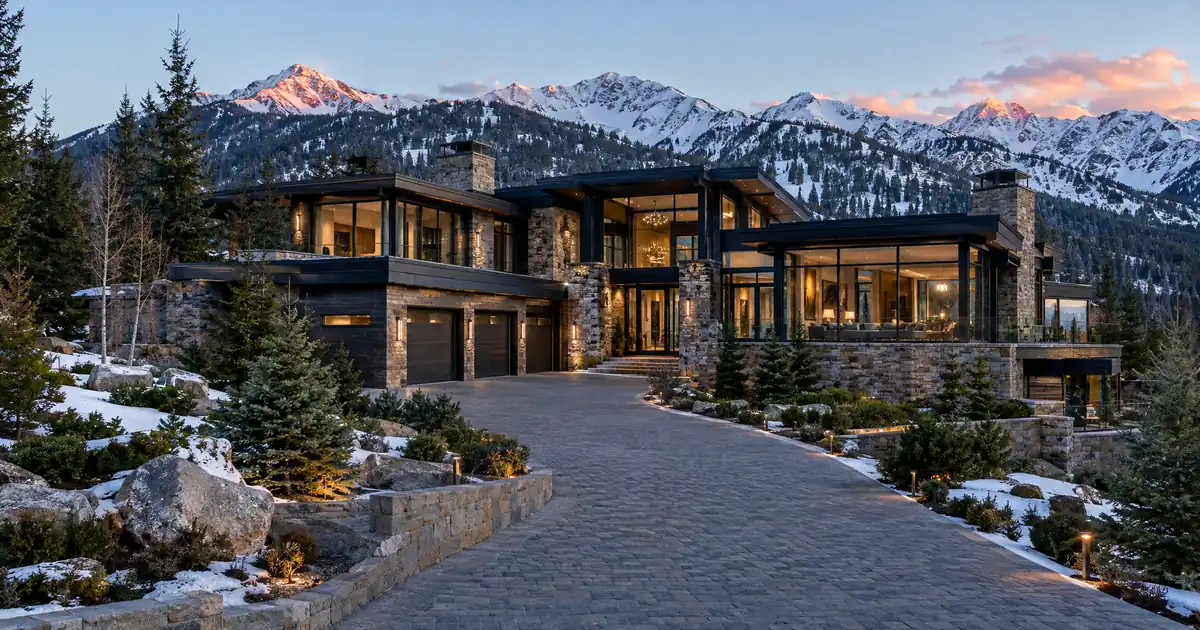
The Quick Read: Often yes, if the lender sees a home that sits on land rather than a farm that happens to have a house. A high-cost state changes how big your loan can be before it counts as a jumbo. It does not change how the land is judged. Acreage, outbuildings and appraisal support decide how much cash you can pull and which lenders will say yes.
What Actually Decides Whether Acreage Works?
The deciding question is whether the property is primarily residential. A home on 12 wooded acres with a detached garage reads as a residence. A home next to a working dairy barn and a crop operation reads as a farm. Lenders lend on the first and usually pass on the second.
Notice what is missing from that test: a magic acreage number. Many lenders set their own caps on acreage, and those caps differ from lender to lender. Across the wholesale jumbo programs a broker places files with, acreage limits show up as lender policy, not as a law. One lender may be comfortable with a large parcel in a market where big lots are normal. Another may balk at the same file.
Here is what lenders look at on an acreage file:
- Use. Is the land lived on, or is it earning its keep through crops, grazing or livestock?
- Fit with the neighborhood. Are large lots and outbuildings normal in the area?
- Buildings. A barn, shop or guest cottage is fine in many places. Silos, animal facilities and commercial-scale structures are red flags.
- Access and utilities. Roads, wells and septic all have to work.
- Zoning. The home has to be a legal use of the land.
Minor farming usually does not sink a file. A roadside produce stand is not a farm operation. Hay leases, grazing leases and orchard income are where lenders start to question the property’s primary use.
Why Does a High-Cost State Still Produce a Jumbo?
A jumbo is simply a loan above your county’s conforming limit. In a high-cost county that limit is higher, so fewer loans cross it. A cash-out refinance can still push you over, because the new loan has to cover your payoff plus the cash you take.
Compare the new loan amount to the limit, not your home’s value. Say your current balance sits well under the county limit. After you add cash-out proceeds, the new balance may land above it. That is the moment the file becomes a jumbo and the lender’s own property rules take over.
The limit itself is set by formula. The Federal Housing Finance Agency sets a national baseline. In high-cost counties the limit rises to 115% of the local median home value, capped at 150% of the baseline. Alaska, Hawaii, Guam and the U.S. Virgin Islands follow separate statutory limits. Look up your exact county limit on the agency’s site instead of trusting a number you read last year. The limit moves.
One more point: the limit tells you which rulebook applies, not whether your acreage is acceptable. Under the limit, public agency guidelines govern. Above it, the lender and its investor write their own overlays.
What Does a Jumbo Cash-Out Look Like in Practice?
Lendmire’s jumbo cash-out refinance program gives a sense of the envelope. Subject to lender guidelines and full file review, the wholesale lanes it draws on work like this:
| Feature | What to expect |
|---|---|
| Headline credit floor | 660 decision score |
| Maximum leverage | Up to 90% on some lanes |
| Other lanes | Several reach 89.99% CLTV; the rest stop at 80% |
| Loan size | Up to $5,000,000 on the largest lanes |
| Ratio ceiling | 50% fixed; 45% adjustable |
| Cash-out | Lower leverage than purchase; a cash cap on the largest lanes |
Pricing and available terms vary by lender, borrower profile, property type and full underwriting review.
Those are ceilings, not promises. A cash-out refinance sits at lower leverage than a purchase. The largest loans carry the strictest overlays. Reserves, meaning months of your full payment kept in savings, rise with the loan amount. Above a lane’s threshold amount, expect two appraisals.
Occupancy matters too. A primary residence gets the best leverage, while a second home gets lane-specific limits. This article covers the home you live in.
Picture a Cash-Out on a Home With Extra Land
Consider a homeowner whose house sits on a large parcel. To keep the math simple, call the value they expect 100 index points. Their mortgage payoff is 50 points, and it stays fixed no matter what the appraisal says. Assume a lane that caps cash-out at 80% of value. Each figure is subject to lender guidelines and a complete review of property type, leverage, and credit.
At the full expected value, the lender allows a new loan equal to 80% of that value. After the payoff of the existing mortgage, the remaining cash is the difference.
The lender orders an appraisal. The appraiser reports the site size, zoning and highest and best use. If the extra land is typical for the area and supports value, it stays in. If the acreage is far bigger than nearby comparables, the lender may give it little or no credit, treating the home site as the real collateral.
Now suppose the appraisal comes in 10% lower because some land earned no credit. Value drops to 90 points. The allowed loan falls to 72 points. The payoff is still 50, so the cash is only 22 points.
A 10% drop in value cut your cash by about 27%. That is why a low appraisal hurts cash-out harder than it hurts a purchase. It also explains a common surprise: a price paid for a property bundled with extra land may not come back at that value when the lender looks at it as a residence.
A practical response: before you apply, ask the lender how it treats land beyond the home site. If a second opinion or stronger comparables are possible, ask what the lender accepts.
How Do Appraisals Work on Rural Land?
Rural appraisals are harder, and jumbo lenders tend to be stricter than the agency benchmark. Comparable sales may sit far apart. Jumbo investors often want tighter comparables, a second appraisal, or a review product on top. Expect that to be the rule on large loans, not the exception.
Appraisal support matters most when:
- The lot is much larger than the neighborhood norm.
- Few comparable sales exist, so the appraiser must reach.
- Outbuildings add value that the market has to support.
- The property mixes a home with income-producing land.
Ask your broker for a written list of the lender’s appraisal requirements before you order anything. Rural files can need extra steps such as a survey, well and septic inspections and added title work. Those pieces are cheaper to plan for than to discover midstream.
What Are the Red Flags and Edge Cases?
Agency rules offer the best public benchmark, even though jumbo lenders set their own. Fannie Mae’s guide will not buy loans on vacant land, land-development properties or agricultural properties such as farms and ranches. It also rules out properties without adequate road access. A property used mainly for farming or ranching is ineligible.
Jumbo lenders borrow that logic and often tighten it. Edge cases to watch:
- Income from the land. Crop sales, grazing leases and orchard income push a property toward “agricultural.” Jumbo lenders decide this case by case.
- Multiple parcels. Under Fannie Mae’s special-property rules, parcels generally must adjoin, share basic zoning, hold only one dwelling and sit under one first lien. A jumbo lender may be stricter.
- A guest house. Under the agency benchmark, a one-unit home with an accessory dwelling still counts as one unit. A jumbo lender may view it differently.
- Road access. A property not reachable by roads that meet local standards is a problem under the agency benchmark.
- Second home. If the acreage property is a second home rather than your primary residence, the leverage limits change. Occupancy decides the leverage.
Splitting off excess land can sometimes fix an over-limit file. Whether that works depends on the lender, local rules and the survey. A broker can tell you early whether a given lender would even consider it.
How Do the Waiting Periods Work?
Cash-out has clocks that a limited refinance does not. As a conforming benchmark, Fannie Mae’s cash-out rules require the existing first mortgage to be at least 12 months old. At least one borrower must have been on title for at least six months. A few narrow exceptions exist, such as inherited property, and lenders apply them differently.
Many jumbo lenders follow similar clocks, though each sets its own. If you bought the acreage recently, check the clocks before you plan around the cash. Your broker can tell you where each lender stands on seasoning for your title history.
Is a Jumbo the Only Way to Tap Acreage Equity?
No. Jumbo cash-out replaces your first mortgage with a larger one. Some owners prefer to keep a low-balance first mortgage and borrow against equity another way, such as a second lien or a home equity line. Others stay under the conforming limit by taking less cash. The trade-off is simple.
| Option | What changes | Watch for |
|---|---|---|
| Jumbo cash-out | New, larger first mortgage | Lender overlays on acreage |
| Cash-out under the limit | Smaller new loan | Less cash available |
| Second lien or equity line | First mortgage stays | Two payments; separate terms |
Compare total cost across all three, not just the loan size. The right choice depends on your current loan, how much cash you need and how the lender views your land. A broker can run the options side by side.
Tax treatment can depend on your situation; borrowers should speak with a qualified tax professional before relying on any deduction or credit.
Key Terms Defined
Jumbo loan: A mortgage larger than the conforming limit for your county.
Leverage, reserves, and pricing vary by lender and program; the final terms follow the full file review.
Cash-out refinance: A new mortgage larger than your current payoff, with the difference paid to you.
Overlay: A lender’s own rule that is stricter than the agency guideline.
Seasoning: How long you have held the title or the current loan before a refinance counts.
Reserves: Savings, measured in months of your full payment, that a lender wants to see after closing.
Excess land: Acreage beyond what the lender treats as the home site, often given little or no value.
What Should You Do Before You Apply?
Get your documents in order first. A jumbo file usually needs income, asset and credit documentation, plus the appraisal, survey and title work. Lenders must make a reasonable, good-faith judgment that you can repay, so expect them to verify what they rely on.
Then work through this list:
1. Check whether your loan amount, after cash-out, crosses your county limit.
2. Confirm your title history and the age of your current mortgage.
3. Gather deeds, survey, zoning information and well and septic records.
4. List every outbuilding and any income the land produces.
5. Ask the broker how each lender treats acreage, outbuildings and excess land.
6. Ask for the appraisal requirements in writing.
If you are weighing a cash-out refinance against keeping the loan you have, Lendmire can help you compare the programs and the equity each one reaches. A call to 828-256-2183 starts that comparison.
Frequently Asked Questions
Is there a maximum acreage for a jumbo cash-out?
No universal cap exists. The real test is whether the property is primarily residential. A lender can approve one parcel size and decline another based on use, zoning and local norms.
Will a barn or shop stop the loan?
Not by itself. Outbuildings are acceptable in many markets when the primary use is residential and they are typical for the area. Large animal facilities, silos and commercial-scale buildings raise questions. Your lender decides based on size, use and local comparables.
Does the lender count all my land in the appraisal?
Not always. When a site is far larger than nearby comparables, the lender may give excess land little or no credit. That lowers the appraised value and shrinks the cash you can take, often by a bigger share than the value drop itself.
Does a high-cost state make acreage easier?
No. A higher county limit means fewer loans qualify as jumbos, but it does not change how acreage is judged. Under the limit, public agency guidelines apply. Above it, the lender’s overlays decide.
Can I use a jumbo cash-out on a second home with acreage?
Sometimes, at lane-specific leverage. Occupancy sets the limits, and a second home gets different terms than a primary residence. Everything is subject to lender guidelines and full file review, and nothing here is a commitment to lend.
For your own numbers, request a scenario review with Lendmire.
About Lendmire
Lendmire — NMLS# 2371349 — is a mortgage broker that arranges FHA, VA, conventional and jumbo home purchase and refinance financing in 16 states through wholesale lenders. Every option is subject to the lender’s guidelines and full underwriting. Scotsman Guide named Lendmire a Top Mortgage Workplace in both 2025 and 2026.
For the program’s current guidelines, see jumbo loan programs.
Get Started
Ready to find the right loan for you?
In about 30 seconds you can review financing options available for your home or investment property. No commitment required.
Informational only. Not a Loan Estimate, approval, or commitment to lend. Program availability and eligibility are subject to lender guidelines, credit approval, property review, and underwriting.
References
1. FHFA – 2026 Conforming Loan Limit announcement
2. Fannie Mae Selling Guide – General Property Eligibility
3. Fannie Mae Selling Guide – Special Property Eligibility Considerations
4. Fannie Mae Selling Guide – Cash-Out Refinance Transactions
This article is part of Lendmire’s Jumbo Loans series — every loan program’s qualification details, guidelines, and scenarios live on the loan options page.
Related reading: How to Get Past a Jumbo Cash-Out Cap on a High-Value Home · Jumbo Cash-Out HOA Litigation Rules for an Owner in a High-Cost State · How to Prepare for a Jumbo Cash-Out Closing in an Attorney State
Brandon Miller
Founder & CEO, Mortgage Loan Originator, Lendmire LLC
- Mortgage Loan Originator · NMLS# 1129696 · Verify on NMLS Consumer Access
- North Carolina Real Estate Broker · License# 343312 · Verify on NCREC
- North Carolina Insurance Producer · License# 19053198 · Property, Casualty, Life, Health · Verify on NAIC SBS
- Lendmire LLC · Firm NMLS# 2371349 · Verify firm licensure
Legal disclosures. Lendmire (NMLS# 2371349) is a state-licensed mortgage brokerage that arranges financing through wholesale lender relationships. Lendmire is not a direct lender, depository institution, or registered financial advisor. The discussion above is general informational content about real estate financing — it is not financial, legal, or tax advice, and readers should consult licensed professionals for guidance on their individual circumstances. Loan inquiries are subject to lender underwriting; this article does not represent a commitment to lend. Loan terms, rates, and qualification standards vary by borrower, property, and state, and are subject to change at any time. Equal Housing Opportunity. NMLS Consumer Access: nmlsconsumeraccess.org.