
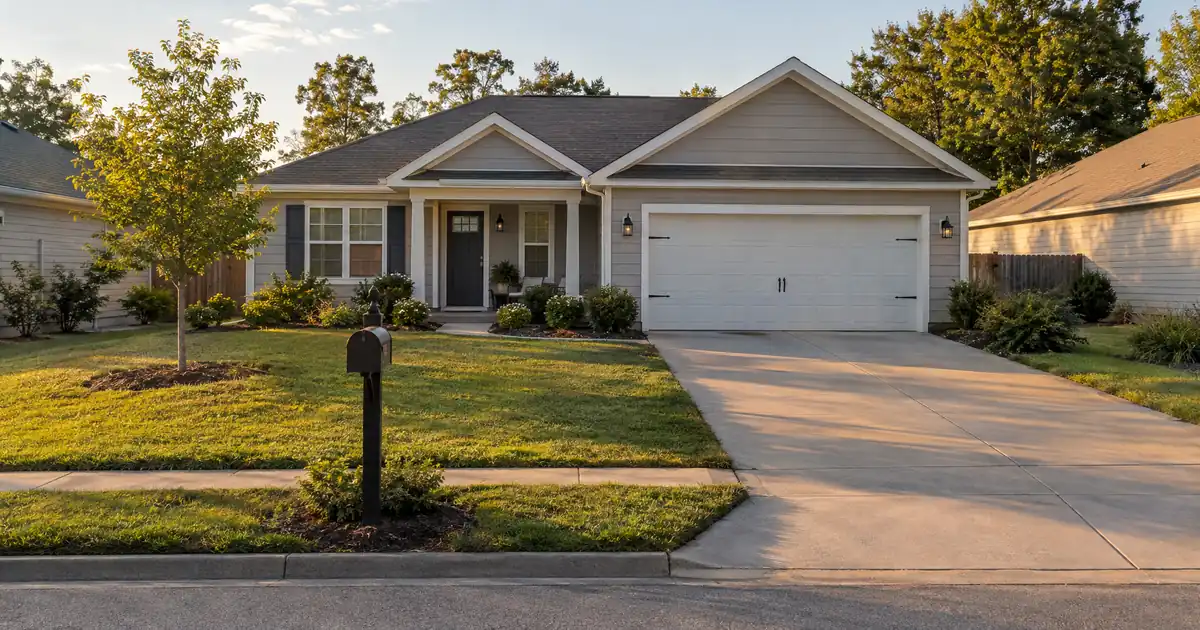
The Quick Read: You qualify when four things line up: enough equity, enough time owning the home, a credit and income file that fits, and a home you actually live in. On a standard conventional loan for a one-unit primary home, the new loan can reach 80% of the home’s value. That cap covers the whole new loan, not just the cash you receive. Every test below is subject to lender guidelines and a full file review, and none of it is a commitment to lend.
Key Takeaways
- The 80% cap applies to the total new loan. Your old mortgage, closing costs and any other liens come out before you see cash.
- Two separate clocks apply: how long you have been on title, and how old your current first mortgage is.
- Credit score and total debt-to-income ratio decide whether the file fits. A lower-than-expected appraisal shrinks your cash.
- Occupancy matters. The home has to be your primary residence.
- Meeting the minimums does not mean you should proceed. The new terms apply to your entire balance, not just the new money.
Cash-out refinance estimate
The starting figures are an example value with a balance and a cash request in proportion. Replace them with yours.
Editable benchmark: 7.40% as of October 15, 2026 · Freddie Mac 30-year average via FRED®. A conventional market reference, not a cash-out refinance quote.
Illustrative starting assumptions: a $350,000 home value, a $193,000 current balance, the agency cap on a one-unit principal residence, a thirty-year term at the current Freddie Mac benchmark, and property taxes and insurance estimated at typical national rates. Every field is editable.
Illustrative estimate only — not a Loan Estimate, approval, quote, or commitment to lend. The rate field carries the weekly Freddie Mac thirty-year conventional benchmark, a market reference and not a cash-out refinance quote; a cash-out loan is priced by the lender at lock. The cash available is the loan the program cap allows less the balances paid off, before closing costs, which are not included. The HELOC line is the program’s combined loan-to-value ceiling applied to the same value and balance. Taxes and insurance are editable estimates. Licensed in sixteen states for consumer mortgages.
What Does “Qualifying” Mean for a Cash-Out Refinance?
Qualifying means two things at once. The loan has to fit the program, and you have to fit the loan. The loan side covers value, leverage and timing. The borrower side covers credit, income and debt.
A cash-out refinance replaces your current first mortgage with a new, larger one. The new loan pays off the old balance and the costs of closing. You keep the difference. A refinance does the same payoff but gives you only incidental cash back.
That difference matters because lenders cap the two products at very different leverage. This is a different lane from the rate-and-term refinance. A one-unit primary home can go to 95% loan-to-value on a rate-and-term refinance. Loan-to-value (LTV) is the new loan divided by the home’s appraised value. A cash-out loan on that same home stops at 80%.
Across the wholesale programs Lendmire works with, the files that run into trouble usually miss one clock, not the equity. The borrower has plenty of equity but bought the home too recently. Or the borrower paid off a first mortgage that is too new.
Lendmire’s cash-out refinance programs are arranged through wholesale lenders. The tests below are the ones those lenders apply.
The Qualification Tests at a Glance
Each test has a lender question and a fix. This table is the quick version. The sections after it explain each one.
| Test | What the lender checks | What you can do |
|---|---|---|
| Equity | New loan vs. appraised value | Wait for value or pay down |
| Title clock | Time on title | Wait, or use an exception |
| Loan-age clock | Age of current first mortgage | Wait, or confirm an exception |
| Credit | Decision score, recent events | Pay down cards, fix errors |
| Debt-to-income | Total monthly debts vs. income | Pay off debts, add income |
| Occupancy | Borrowers live in the home | Document your residence |
Equity and the Cap
Equity is what the home is worth minus what you owe. But the cap is what drives the math. On a one-unit primary home, conventional cash-out reaches 80% LTV. On a two- to four-unit primary home, it is 75%. Second homes also sit at 75%. The Fannie Mae Eligibility Matrix publishes the conventional cash-out and limited cash-out caps side by side. Terms depend on the lender’s guidelines, the property type, the leverage, and a full review of the credit profile.
So you need more equity than the cash you want. If you owe 75% of the home’s value today, an 80% cap leaves a small sliver. If you owe 50%, there is a lot more room.
Credit Score and Ratios
The wholesale conventional programs we place files with start at a 620 decision score. A decision score is the middle score the lender relies on across the borrowers on the loan. Some lenders set a higher floor on cash-out, and some score bands change the leverage.
An automated underwriting finding governs most files. The total ratio ceiling is 50%. That ratio compares all your monthly debt payments, including the new mortgage, to your gross monthly income. Manually underwritten loans run tighter, at 36% or 45%, with reserve and score factors from the Eligibility Matrix.
Reserves are cash or liquid assets you keep after closing. Higher ratios can trigger reserve requirements on cash-out files. The exact numbers vary by lender and program and follow a full review of property, leverage, and credit.
Credit events carry waiting periods set by the agencies. These are four years from a chapter 7 discharge, seven from a foreclosure, and four from a short sale or deed-in-lieu. They run shorter with documented extenuating circumstances.
Occupancy
Every borrower on the loan has to occupy the home as a primary residence. Lenders verify it through the documents you sign, the address on your credit file, your income documents and the property itself.
The Two Seasoning Clocks
Seasoning is the waiting period a lender wants before it will let you refinance. Two different clocks run at once.
- Time on title: at least one borrower must have been on title for six months.
- Loan age: the first mortgage being paid off must be at least 12 months old, counted from note date to note date.
These are separate tests. You can pass one and fail the other. Fannie Mae’s SEL-2023-01 announcement sets out both periods.
There are exceptions. Inheritance and a home legally awarded in a divorce carry no ownership waiting period. A delayed financing rule covers homes bought with cash. It allows a cash-out soon after purchase, but only up to your documented original investment plus financing costs. Paying off a home equity line of credit (HELOC) can also change how the loan-age clock is counted.
How Much Cash Can You Actually Take?
You can take the cap on the new loan, minus everything the new loan has to pay first. The cap is not your cash. This is where most borrowers misjudge the deal.
Here is a modeled example using percentages only. Say the home appraises at 100% of value and the cap is 80%. Your current first mortgage is 60% of value. That leaves 20% of value of room. Then closing costs and prepaids come out of that room. Prepaids are items like insurance and tax deposits collected at closing. Any other lien being paid off comes out too.
| Step | Modeled figure |
|---|---|
| Appraised value | 100% |
| Maximum new loan at the cap | 80% |
| Minus current first mortgage | 60% |
| Room before costs and other liens | 20% |
| Net cash to you | Less than 20% |
If the appraisal comes in low, every line shifts. The cap is a percentage of the appraised value, not the value you hoped for. A lower number can cut your cash or push you under the minimum you needed.
Costs can be paid in cash or rolled into the new loan. Rolling them in raises the loan amount, which eats into the cap. The Loan Estimate lists the estimated cash to close, and the Closing Disclosure should match it. Compare the two, and ask your loan officer about any change.
The Different Loan Types
Conventional is the most common route, but FHA and VA each have their own cash-out rules.
| Program | Cash-out feature | The catch |
|---|---|---|
| Conventional | 80% LTV, one-unit primary | Seasoning clocks apply |
| FHA | Cash-out with full appraisal | Cap sits below full value |
| VA | Type 1 and Type 2 cash-out | Tests differ by type |
FHA. A regular FHA refinance requires a full appraisal, and the cash-out cap sits below the full value of the home. HUD’s archived refinance reference describes the FHA Streamline as a lower-payment tool for an existing FHA loan, with only minor cash back. That is a different product from a cash-out.
VA. VA’s cash-out page describes taking cash from equity or refinancing a non-VA loan into a VA-backed one. VA splits cash-out into two types. A Type 1 new loan does not exceed the payoff. A Type 2 new loan exceeds the payoff. Each type needs at least one net tangible benefit, meaning the refinance has to help you in a measurable way. VA-to-VA loans add a seasoning test, and Type 1 loans add a recoupment test, which asks whether you earn back the costs.
If you have a VA loan and just want a lower payment, the VA IRRRL is a streamline, not a cash-out. It carries a 0.5% funding fee unless you are exempt, no VA appraisal, a net tangible benefit, and seasoning of the later of 210 days and six payments.
Where the General Rule Breaks
The standard path has edge cases. These are the ones that come up most.
A paid-off home. A home with no mortgage still counts as cash-out when you borrow against it. The cap and the credit tests apply the same way.
A recent cash purchase. The delayed financing exception covers this. It lets you recover the cash you put in without waiting out the clock. The new loan is limited to your documented investment plus costs, and you need the original settlement statement.
Inheritance or divorce. No ownership waiting period applies to a home you inherited or were legally awarded. The loan-age clock may still matter if there is an existing mortgage.
A second mortgage or HELOC. If you have one, it usually has to be paid off or handled at closing. That reduces your net cash. The loan-age clock may not apply the same way when the first lien is a HELOC.
A multi-unit home you live in. The cap drops to 75%. Lendmire’s walkthrough for how to qualify for a cash-out refinance on a 2-4 unit primary home covers that case in detail.
Manufactured homes. The cash-out cap is far lower than the one-unit cap. Single-width homes may be limited to purchase and limited cash-out.
Trust title. Time held in a revocable trust, where you are the primary beneficiary, may count toward the six months on title.
Delinquent property taxes. A new loan that finances seriously delinquent real estate taxes can be ineligible unless an escrow account is set up. State law can change this.
Texas homestead. A cash-out on a Texas homestead is capped by the state constitution at the agency figure. The wholesale lane described below is not written there.
What About the 89.99% Lane?
One wholesale lane reaches 89.99% LTV with no mortgage insurance on a cash-out. It is narrow. It requires a 680 score and a 50% ratio on a thirty-year fixed loan. The home must be a primary residence with a conforming balance, and the lane carries its own six months of seasoning. If you fit all of that, it can get you more of your equity than the standard 80% cap. If you miss any piece, the standard cap applies. Final terms depend on the lender’s guidelines, the property type, and the borrower’s complete credit picture.
Mortgage insurance matters on other products. It is required above 80% LTV. You can ask for cancellation at 80% of the original value if you have a good payment history, no subordinate liens and no decline in value. The servicer must end it automatically at 78%. This is the Homeowners Protection Act. Each figure is subject to lender guidelines and a complete review of property type, leverage, and credit.
Documents to Gather
Expect to hand over the same kinds of papers on any conventional file.
- Everyone: photo ID, your deed or title paperwork showing when you took title, and current mortgage statements.
- W-2 employees: recent pay stubs and the tax forms the lender requests.
- Self-employed borrowers: the personal and business income documentation the lender asks for, plus a year-to-date profit-and-loss statement if requested.
- Assets: recent bank and investment statements for any reserves.
- Cash purchase: the original settlement statement, if you rely on delayed financing.
Why Applications Fail (and the Fix)
Most failures trace to the same few causes. Here is how each one usually plays out.
| Problem | Typical fix |
|---|---|
| Home bought too recently | Wait, or check for an exception |
| First mortgage too new | Wait out the loan-age clock |
| Low appraisal | Request a review with better comps |
| Debt-to-income too high | Pay down debts first |
| Score below the floor | Lower card balances, fix errors |
| Recent credit event | Wait out the agency period |
Fixing a weak profile takes planning. Credit usually improves as card balances come down. Debt ratios improve when you pay off installment loans or add documented income. Equity improves slowly, through principal payments and value growth. None of these produce a result on a set schedule, so start early.
How the Process Runs, Step by Step
1. Check your numbers. Estimate value, your balance and your seasoning dates.
2. Apply. The lender pulls credit and collects income and asset documents.
3. Appraisal. A full appraisal is the norm for a cash-out. It sets the value that your cap applies to.
4. Underwriting. The lender runs the file through automated underwriting and reviews the documents.
5. Disclosures. You receive a Loan Estimate. It is not an approval or denial. You later receive a Closing Disclosure.
6. Closing. The new loan pays off the old first lien and any required liens. What remains is your cash.
Should You Do It Even If You Qualify?
Qualifying and deciding are different questions. A cash-out replaces your whole first mortgage, so the new terms apply to the entire balance, not just the cash you take. Compare the Loan Estimate’s projected payment with your current one. A good test is whether the new payment still fits your budget after you roll in costs.
There is a risk to weigh. CFPB research on cash-out refinances notes that turning other debt into mortgage debt puts your home at risk if payments become unsustainable. Missing a credit card payment is unlikely to cost you the house. Missing a mortgage payment can.
“No-closing-cost” offers deserve a close look. They typically work by building the costs into the rate or the balance. Tax treatment can depend on your situation; borrowers should speak with a qualified tax professional before relying on any deduction or credit.
Alternatives exist. A home equity loan or HELOC leaves your original first mortgage in place. That can make sense if your current loan has terms you want to keep.
Key Terms Defined
Cash-out refinance: A new first mortgage that pays off your old one and gives you the leftover equity as cash.
Loan-to-value (LTV): The new loan amount divided by the home’s appraised value.
Seasoning: The waiting period a lender requires before you can refinance, counted from the purchase or the current loan’s start.
Debt-to-income (DTI) ratio: Your total monthly debt payments divided by your gross monthly income.
Reserves: Cash or liquid assets you hold after closing, which lenders may require on higher-ratio files.
Net tangible benefit: A measurable gain, required on government refinances, that shows the new loan helps you.
Self-Check Before You Apply
- Do I live in this home as my primary residence?
- Have I been on title for at least six months, or do I fit an exception?
- Is my current first mortgage at least 12 months old, or do I fit an exception?
- Does my new loan, after payoff and costs, fit under the cap for my home type?
- Does my credit score meet the program floor?
- Does my total debt-to-income ratio fit the program?
- Do I have a reason to take the cash that justifies a bigger first mortgage?
Frequently Asked Questions
How much equity do I need for a cash-out refinance on my primary home?
You need to owe less than the cap allows, with room left after payoff and costs. On a one-unit primary home, a standard conventional cash-out reaches 80% LTV. That means you need well over 20% equity to have meaningful cash left, because costs come out of the room under the cap. Leverage, reserves, and pricing vary by lender and program; the final terms follow the full file review.
Can I do a cash-out refinance right after buying my home?
Usually not, but there are exceptions. Conventional rules ask for six months on title and a first mortgage at least 12 months old. A home bought with cash may qualify under delayed financing. Inherited homes and homes awarded in a divorce carry no ownership waiting period.
Does a paid-off home count as a cash-out refinance?
Yes. A new mortgage on a home with no lien is treated as cash-out under conventional rules. The same cap, seasoning, credit and occupancy tests apply. Some government programs, including VA, generally expect an existing lien.
Will a low appraisal stop my cash-out?
It can shrink the cash or stop the deal. The cap is a percentage of appraised value, so a lower value lowers the maximum loan. You may be able to ask the lender for a review with better comparable sales, but there is no guarantee of a changed value.
Is a Loan Estimate the same as an approval?
No. It shows estimated costs and cash to close, and it is not an approval or a denial. Compare it with your current mortgage and ask about anything that looks different from what you expected.
Next Step
If you are weighing a cash-out refinance against keeping the loan you have, Lendmire can help you compare the programs and the equity each one reaches. Whether the new first mortgage serves your goals longer than the old one did is the question that matters most.
For your own numbers, request a scenario review with Lendmire.
About Lendmire
As a mortgage broker (NMLS# 2371349), Lendmire helps homeowners and home buyers in 16 states with FHA, VA, conventional and jumbo purchase and refinance loans arranged through wholesale lenders. Lendmire is never the lender; program terms are set by the lender and the agency guidelines. Scotsman Guide named Lendmire a Top Mortgage Workplace in both 2025 and 2026.
Get Started
Ready to find the right loan for you?
In about 30 seconds you can review financing options available for your home or investment property. No commitment required.
Informational only. Not a Loan Estimate, approval, or commitment to lend. Program availability and eligibility are subject to lender guidelines, credit approval, property review, and underwriting.
References
1. Fannie Mae Eligibility Matrix
3. HUD’s archived refinance reference
5. CFPB research on cash-out refinances and non-mortgage debt paydown
This article is part of Lendmire’s cash-out refinance program — full qualification details, guidelines, and scenarios live on the program page.
Related reading: How to Get the Most From a Cash-Out Refinance on Your Home · Can You Sell Your Home After a Cash-Out Refinance? · How Much Cash a Cash-Out Refinance Can Release From Your Home
Brandon Miller
Founder & CEO, Mortgage Loan Originator, Lendmire LLC
- Mortgage Loan Originator · NMLS# 1129696 · Verify on NMLS Consumer Access
- North Carolina Real Estate Broker · License# 343312 · Verify on NCREC
- North Carolina Insurance Producer · License# 19053198 · Property, Casualty, Life, Health · Verify on NAIC SBS
- Lendmire LLC · Firm NMLS# 2371349 · Verify firm licensure
Important disclosures. Lendmire (NMLS# 2371349) is a licensed mortgage brokerage. Lendmire is not a direct lender, depository institution, or financial advisor. All loan inquiries are subject to lender underwriting; this article does not constitute a commitment to lend. Rates, terms, and program guidelines are subject to change without notice and vary by borrower profile, property type, and state. Information in this article is general in nature and is not financial, legal, or tax advice. Equal Housing Opportunity. NMLS Consumer Access: nmlsconsumeraccess.org.