
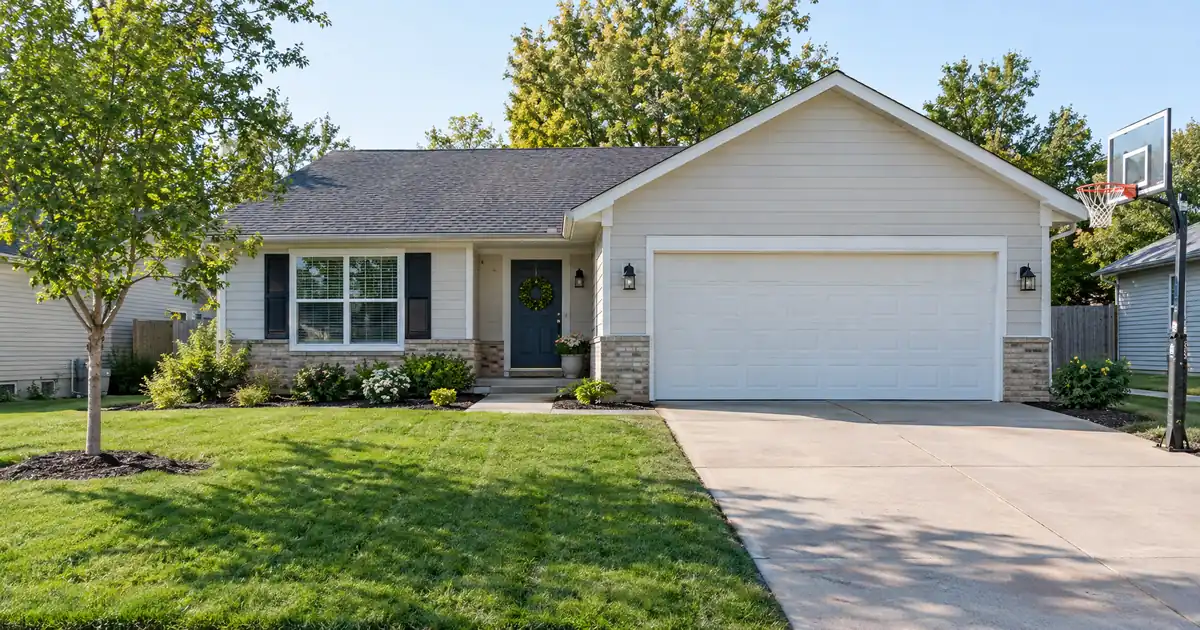
The Quick Read: Start with your goal, because the goal decides which loan fits. If you want a lower payment or a shorter term, you likely need a rate-and-term refinance, not a cash-out. If you need real cash, you move into cash-out territory, where the leverage cap is lower and the waiting periods are longer. Everything below is subject to lender guidelines and full file review.
Most people shop the wrong way around. They ask what they can borrow, then look for a use for it. The better order runs the other way: name the goal, size the cash to match, then find the loan that does that job at the lowest leverage.
What Is a Cash-Out Refinance, Really?
A cash-out refinance replaces your current first mortgage with a new, larger one. The new loan pays off the old balance, covers closing costs, and sends you the difference.
Two things follow from that. The new terms apply to your whole balance, not just the new cash. And your home secures every dollar of it.
That is a different animal from a home equity loan or a HELOC (a home equity line of credit, a revolving line you draw on as needed). Those sit behind your first mortgage as a second loan. Your first mortgage stays as it is. A cash-out refinance rewrites the whole thing.
Lendmire’s cash-out refinance programs cover the conventional version of this loan, and the rules below track how those files are structured across the wholesale lenders Lendmire works with.
Where the Line Falls: Rate-and-Term vs. Cash-Out
Lenders draw a hard line between two kinds of refinance. A refinance known as a rate-and-term refinance (the industry also calls it “limited cash-out”) changes your rate, your term, or both. A cash-out refinance puts real money in your hands. Which side of the line you land on sets the leverage cap, the waiting periods, and the pricing.
Here is how that looks on a conventional loan for a home you live in:
| Goal | Loan type | Max LTV, home you live in |
|---|---|---|
| Change the loan structure or shorten the term (one unit) | Rate-and-term | 95% (97% in some cases) |
| Pull out meaningful cash (one unit) | Cash-out | 80% |
| Pull out meaningful cash (two to four units) | Cash-out | 75% |
LTV, or loan-to-value, is your loan balance divided by your home’s appraised value. At 80% LTV, the entire new loan can be no more than 80% of the value. That includes the balance you are paying off.
This is the most common misread in the whole process. An 80% cap does not mean you can take 80% of your value as cash. The payoff of your current mortgage uses up most of it first.
Rate-and-term loans allow only small incidental cash back. Fannie Mae’s Selling Guide announcement SEL-2025-08 sets the current limit at the greater of 1% of the new loan balance or $2,000. Older lender pages still show a smaller cap, so check the date on anything you read.
One trap sits right on that line. Paying off a second loan that was not used to buy the home can turn a rate-and-term refinance into a cash-out. Fannie Mae’s limited cash-out rules allow only second loans used to purchase the property to be rolled in.
How a Cash-Out Refinance Is Underwritten, Step by Step
Underwriting is the lender’s review of your file. Here is the sequence a conventional cash-out follows.
1. You pick the goal and the amount. This is your step, not the lender’s. Write down what the cash is for and what it costs. Borrow that, plus a cushion for closing costs.
2. The lender checks what you are replacing. The old first mortgage gets paid off in full. If it has not been in place long enough, you wait. Across the wholesale programs Lendmire places files with, the first mortgage being paid off must be at least 12 months old, counted from the old note date to the new one. A borrower must also have been on title for six months, with exceptions for delayed financing, inheritance, and legal awards.
3. You apply and receive a Loan Estimate. The Loan Estimate is a standard form that lays out the loan terms and costs. It is not an approval. Ask for one from more than one lender on the same loan type so you can compare line by line.
4. The home is appraised. Value sets the ceiling on the loan. A cash-out nearly always needs a fresh appraisal, so a soft value can shrink your cash or erase it.
5. Income, assets, and credit get reviewed. On conventional files, the wholesale programs generally start at a 620 decision score, and the automated underwriting finding governs most files. The total debt-to-income ratio (your monthly debts as a share of gross monthly income) can run as high as 50% on an automated approval. Manually underwritten loans use tighter ratios of 36% or 45%.
6. Any other liens get counted. If a second loan stays in place, it counts against your leverage limit. This catches people who plan to keep a HELOC and still hit 80%.
7. Payoff and funding. The proceeds pay the old loan, the costs, and any liens you are clearing. You get what remains. Net cash is always less than gross cash.
On a primary home, a cash-out refinance carries a right of rescission, a short window after closing when you can cancel.
Match the Structure to Your Goal
This is the part most explainers skip. The right loan depends on what the money is for.
| Your goal | Best-fit structure | Main caution |
|---|---|---|
| Lower payment, no cash | Rate-and-term refinance | Costs vs. how long you will stay |
| Shorter term | Rate-and-term | Higher monthly payment |
| Remove mortgage insurance | Rate-and-term or cash-out, by equity | Needs enough value to hit 80% |
| Home renovation | Cash-out, sized to the project | Spend must add or protect value |
| Pay off high-cost debt | Cash-out, only with a spending plan | Debt moves onto your home |
| Buy out a co-owner or ex-spouse | Cash-out (seasoning waived in some cases) | Buyout terms must be documented |
| Small, short-term cash need | Often a HELOC or second loan | Keeps your first mortgage intact |
Let’s walk through the common ones.
Lower payment or shorter term. Skip cash-out entirely. A rate-and-term refinance reaches 95% LTV on a one-unit home you live in, so you need far less equity. It also avoids the lower cash-out cap. Each figure is subject to lender guidelines and a complete review of property type, leverage, and credit.
Renovation. Cash-out works well here because the money goes back into the asset that secures it. Size it to the project bid. Padding the number adds interest on cash you never needed.
Debt payoff. This one needs honesty. The Consumer Financial Protection Bureau notes that paying non-mortgage debt with mortgage debt can raise foreclosure risk. Credit card debt is unsecured. Fold it into your mortgage and it becomes secured by your home. Its own research found borrowers’ credit scores jump after a cash-out, then slip over time, though they stayed above pre-refinance levels.
The payment usually falls too. Stretching short-term debt over a long mortgage term cuts the monthly bill but tends to raise total interest. That is a trade-off to weigh, not a free win.
Buying out a co-owner. The 12-month seasoning test does not apply to a buyout under a legal agreement, per Fannie Mae’s cash-out refinance rules. That page is an archived version, so confirm the current text with your loan officer.
When the General Rule Breaks
The 80% rule and the 12-month wait hold for most files. These cases bend them.
A home you bought with cash. Delayed financing lets a cash buyer pull money out soon after closing. The purchase must be arm’s length, the settlement statement must show no mortgage was used, and the new loan is limited to the documented investment. It is still treated as cash-out.
A paid-off home. Owning free and clear does not skip the cash-out rules. A new loan on a home with no mortgage is typically treated as cash-out, and the same occupancy-based limits generally apply.
Two- to four-unit homes. The cash-out cap drops to 75% when you live in a multi-unit property. Second homes and investment properties carry lower caps as well. Occupancy decides leverage.
The no-mortgage-insurance lane. One wholesale lane reaches 89.99% LTV with no mortgage insurance. It requires a 680 score, a 50% ratio, a thirty-year fixed rate, a primary residence, a conforming loan balance, and its own six months of seasoning. It is not available everywhere, and it is not written in Texas. Leverage, reserves, and pricing vary by lender and program; the final terms follow the full file review.
Texas. Some states, Texas among them, set special rules for cash-out on a homestead. Check your state before you plan around a number.
Government-backed loans. The rules change if you already have an FHA or VA loan, and here a cash-out is often the wrong tool.
- FHA. The FHA Streamline is a lighter-documentation refinance of an existing FHA loan. It pays no cash out. It generally skips the appraisal, reviews credit lightly, and requires a net tangible benefit, meaning the refinance must measurably help you. FHA’s own cash-out cap sits at 80% of adjusted value, per HUD Mortgagee Letter 2019-11.
- VA. The VA IRRRL (interest rate reduction refinance loan) works only on an existing VA loan. It carries a 0.5% funding fee unless exempt, needs no VA appraisal, requires a net tangible benefit, and has a seasoning requirement of the later of 210 days and six payments. It cannot hand you cash. VA Circular 26-18-30 separates cash-out refinances into Type I (loan does not exceed the payoff) and Type II (loan exceeds it). For the full comparison, see Lendmire’s VA IRRRL vs. VA cash-out piece.
Above the conforming limit. Jumbo lanes take over there. The wholesale jumbo lanes start at a 660 decision score, reach 90% leverage on some files, and go to $5,000,000 in loan size, with a 50% ratio ceiling on the fixed lanes. Cash-out jumbo terms are set lender by lender. Terms vary by lender guidelines, property type, leverage, credit profile, and full file review.
Right-Size the Cash
Borrow what the goal needs, not what the lender allows. That one habit protects you more than any other.
Here is a picture of it. Say your home appraises at a figure that supports 80% leverage, and your current balance already uses most of that. The room left for cash may be modest. A lender will let you take all of it. You do not have to.
Three reasons to take less:
- Every extra dollar accrues interest for the whole loan term.
- Mortgage insurance applies above 80% LTV, so staying under that line avoids it.
- The CFPB’s home equity guide notes that lenders typically want you to keep 10-20% of your home’s value as equity. A cushion also protects you if prices dip.
Mortgage insurance, when it applies, can be removed. You can request cancellation at 80% of the original value with a good payment history and no second liens. The servicer must end it automatically at 78%. Published typical annual premiums run from 0.58% to 1.86% of the balance, which is a range and never a quote.
Cash-Out vs. the Alternatives
Cash-out is one of four common tools. The right one turns on what you do with your current mortgage.
| Factor | Cash-out refinance | Home equity loan | HELOC | Rate-and-term |
|---|---|---|---|---|
| First mortgage | Replaced | Kept | Kept | Replaced |
| Cash | Lump sum | Lump sum | Draw as needed | Little to none |
| Best for | One-time large need | One-time, keep current loan | Ongoing or uncertain costs | Lower payment or term |
| Main risk | Resets whole balance | Second payment | Variable draws | Closing costs |
The decision rule is simple. If your existing mortgage is one you want to keep, lean toward a second loan. If your existing loan is one you want to leave, a cash-out gets you both changes in a single transaction. Only you can see which you feel more strongly about.
This is a genuine toss-up for plenty of borrowers. A cash-out resets the term on your whole balance, while a second loan leaves your first mortgage alone but adds a second payment. Compare the full cost of each path over the time you expect to hold the home.
When Not to Do It
Skip a cash-out if any of these fit:
- You plan to sell or move in the near term, so closing costs will not pay back.
- The need is uncertain or may never materialize.
- The new payment would stretch your monthly budget.
- Your income is unstable.
- You would use the cash to pay off cards, then run the cards up again.
- You are close to the 12-month mark on your current loan and could simply wait.
That last one costs people more than they expect. A few months of patience can open a cheaper or simpler route.
Special Situations
Self-employed borrowers. Income is averaged from your documented returns, and a lower-than-expected figure can shrink the loan. Plan the amount around the documented number.
Second homes. Occupancy decides the leverage. A second home is capped lower than your primary residence.
Near retirement. Stretching a new thirty-year loan into your retirement years raises the stakes. Think through the payment at the income you will have then.
Thinner credit. Credit sets your eligibility and also your costs. Some lenders set higher score floors than the wholesale programs described here.
What Your Decision Looks Like in Practice
Work through it in this order:
1. Write the goal and the amount it needs.
2. Estimate your home’s value and subtract your current balance. That is your rough room.
3. Check the cap for your occupancy and unit count.
4. Confirm your loan is old enough and your time on title qualifies.
5. Decide whether you want to keep or replace your first mortgage.
6. Request Loan Estimates for the same loan type from more than one lender.
7. Compare the cash you net after closing costs, not the headline amount.
Tax treatment can depend on your situation; borrowers should speak with a qualified tax professional before relying on any deduction or credit.
If you are weighing a cash-out refinance against keeping the loan you have, Lendmire can help you compare the programs and the equity each one reaches. Call 828-256-2183 or request a quote to talk through your goal. Lendmire is a mortgage broker, not a lender, and every program is subject to lender guidelines and full file review.
Key Terms Defined
LTV (loan-to-value): Your total loan balance divided by your home’s appraised value.
Rate-and-term refinance: A refinance that changes your rate or term and gives back only small incidental cash.
Seasoning: The waiting period a loan or ownership must meet before you can refinance.
Net tangible benefit: A measurable gain, such as a lower payment, that a government streamline must show.
Delayed financing: A cash-out allowed soon after an all-cash purchase, under set conditions.
Debt-to-income ratio: Your monthly debt payments as a share of gross monthly income.
Frequently Asked Questions
Can I use the cash for anything I want?
Generally yes. Spending that builds value, like a renovation, holds up better than spending that only relieves short-term pressure.
Is a cash-out refinance better than a HELOC?
It depends on your first mortgage. A cash-out replaces it, which suits you if you want to change its terms anyway. A HELOC leaves it alone and works better for ongoing or uncertain costs.
Why is my cash-out limit lower than a regular refinance?
Lenders treat cash-out as higher risk. On a one-unit home you live in, cash-out tops out at 80% LTV, while a rate-and-term refinance reaches 95% and, in some cases, 97%. Exact terms depend on the lender’s guidelines, property type, leverage, and a full review of the borrower’s file.
Can I do a cash-out right after buying my home?
Usually not. The first mortgage being paid off must be at least 12 months old, and a borrower needs six months on title. Delayed financing is the narrow exception for cash buyers.
Will a cash-out refinance hurt my credit?
Not necessarily. CFPB research on cash-out borrowers found scores rose sharply at first, then eased, while staying above pre-refinance levels. Missed payments on the larger loan would do real damage.
About Lendmire
Lendmire is a mortgage brokerage (NMLS# 2371349) licensed for consumer mortgage lending in 16 states, arranging FHA, VA, conventional and jumbo purchase and refinance loans through a wholesale lending network. Eligibility is determined by the lender on each file. Scotsman Guide named Lendmire a Top Mortgage Workplace in both 2025 and 2026.
Get Started
Ready to find the right loan for you?
In about 30 seconds you can review financing options available for your home or investment property. No commitment required.
Informational only. Not a Loan Estimate, approval, or commitment to lend. Program availability and eligibility are subject to lender guidelines, credit approval, property review, and underwriting.
References
1. Fannie Mae Selling Guide Announcement SEL-2025-08
2. Fannie Mae Selling Guide B2-1.3-02, Limited Cash-Out Refinance Transactions
3. Consumer Financial Protection Bureau
4. Fannie Mae Selling Guide B2-1.3-03, Cash-Out Refinance Transactions (archived)
5. HUD Mortgagee Letter 2019-11
This article is part of Lendmire’s cash-out refinance program — full qualification details, guidelines, and scenarios live on the program page.
Related reading: Is a Cash-Out Refinance More Expensive Than a Standard Refinance? · Is a Cash-Out Refinance Right After Buying a Home a Good Idea? · Can You Borrow From Family for a Cash-Out Refinance?
Brandon Miller
Founder & CEO, Mortgage Loan Originator, Lendmire LLC
- Mortgage Loan Originator · NMLS# 1129696 · Verify on NMLS Consumer Access
- North Carolina Real Estate Broker · License# 343312 · Verify on NCREC
- North Carolina Insurance Producer · License# 19053198 · Property, Casualty, Life, Health · Verify on NAIC SBS
- Lendmire LLC · Firm NMLS# 2371349 · Verify firm licensure
Compliance and disclosures. Lendmire (NMLS# 2371349) is a licensed mortgage broker and is not a direct lender, depository institution, financial advisor, or tax professional. Content in this article is general market analysis and educational information — not financial, legal, or tax advice for any specific situation. Lendmire does not guarantee loan approval; every transaction is subject to underwriting by the funding lender. Mortgage pricing and loan program guidelines are subject to change at any time without notice and vary by borrower characteristics, property type, and state regulations. Lendmire complies with Equal Housing Opportunity. Licensure verification: NMLS Consumer Access.