
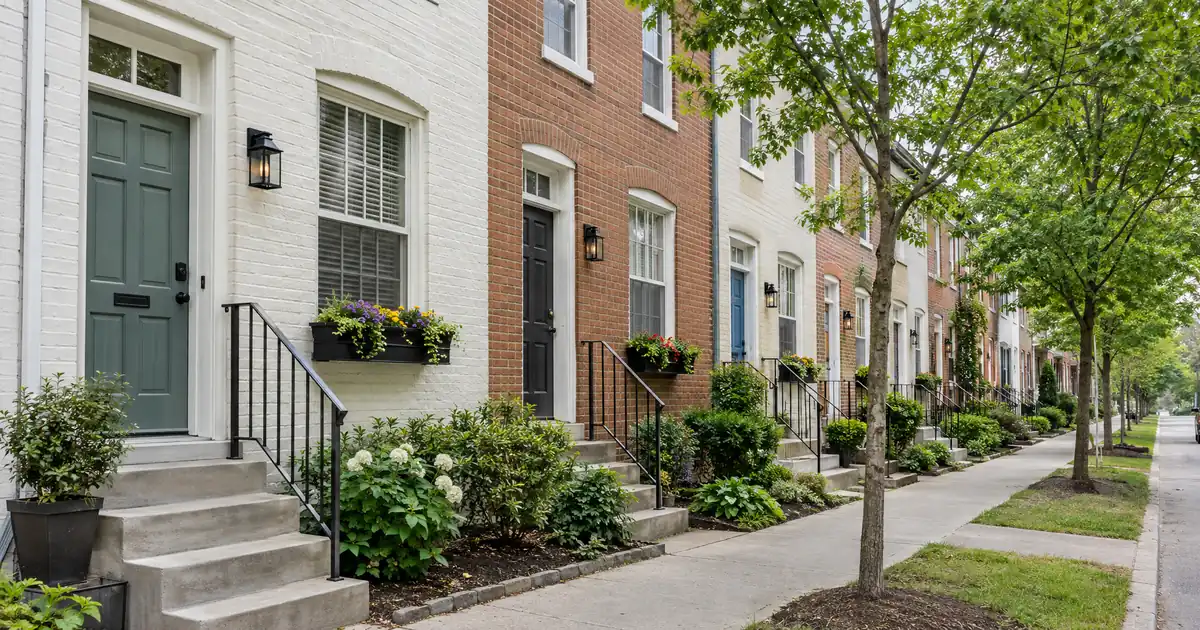
The Quick Read: Sometimes, but only if the numbers hold up with a cushion. Lenders allow you to spend the cash on another property. The catch is that your own home becomes the collateral for the bigger loan. If the third house falls short, the house you live in carries the risk. It is rarely a more affordable option, and it fits best when equity is large and income is steady.
What You’re Really Signing Up For
A cash-out refinance replaces your current mortgage with a new, larger one. The difference, after payoff and costs, comes to you as cash. You can use that cash for a down payment, closing costs, or the whole purchase.
Here is the part that gets skipped. The new loan is secured by the home you live in. You are not borrowing against the third house. You are borrowing against the first one, then buying the third on a separate loan with its own rules.
That means you end up with three housing obligations, and one of them is the new, bigger mortgage on your primary home. A missed payment on the third house does not stay on the third house.
Lendmire’s cash-out refinance programs are built around this exact tradeoff. You get access to equity, and you give up the terms of the loan you have now. Whether that trade is worth it depends on four things: how much equity is left after the new loan, whether your income carries three payments, whether you hold enough reserves, and what the cash costs compared with other ways to get it.
How Much Cash Can You Actually Pull Out?
Less than most people expect. On a conventional cash-out refinance, the new loan on a one-unit primary residence is generally capped at 80% of the home’s appraised value. On two- to four-unit primary residences, second homes, and investment property, the cap drops to 75%.
Do the math in percentages. Say your home appraises at 100 units of value and your current mortgage is 50% of that. An 80% cap leaves room for 30% of value in gross cash. Closing costs and any liens that must be paid off come out of that first. What lands in your account is smaller.
Now compare that to what the third house needs. Buying a second home on a conventional purchase loan reaches up to 90% LTV, so you put down at least 10%. Occupancy decides the leverage, and an investment property takes a larger down payment still. Add closing costs and reserves on top. Your cash from the first house has to cover all of it. Leverage, reserves, and pricing vary by lender and program; the final terms follow the full file review.
Across the wholesale programs these files get placed with, there is one lane that reaches further. It goes up to 89.99% LTV with no mortgage insurance on a thirty-year fixed loan. It requires a 680 score and a 50% ratio on a primary residence with a conforming balance, and it has its own six months of seasoning. In Texas, a cash-out on the homestead is capped by the state constitution, and that wholesale lane is not written there. Exact terms depend on lender and investor guidelines, credit profile, reserves, and property review.
Mortgage insurance matters whenever you borrow above 80% on a standard loan. It is required above that line. You can request cancellation at 80% of the original value with good payment history, and the servicer must end it automatically at 78%. Staying at or below 80% avoids it altogether.
The CFPB’s home equity guide makes the same point in plain terms. No option lets you convert 100% of your equity to cash, and lenders typically expect you to keep 10% to 20% of the home’s value as equity.
The Payment Question (Where This Plan Usually Breaks)
Your monthly payment may rise after a cash-out refinance, because a larger loan replaces the current one. The terms reset too, and these loans are usually repaid over thirty years, according to that same CFPB guide. A lower interest rate does not mean a lower payment when you borrow more.
Lenders measure this with your debt-to-income ratio, or DTI. That is your total monthly debt payments divided by your gross monthly income. On the wholesale conventional programs, the automated underwriting finding governs most files, with a total ratio ceiling of 50%. Manually underwritten loans use 36% or 45%, with extra score and reserve requirements.
The third house adds to this. If you buy it with a mortgage, that payment counts. So does the larger payment on your primary home, plus the existing loan on any second property. For a conventional cash-out loan run through Fannie Mae’s automated underwriting, a DTI above 45% requires six months of reserves, per the Fannie Mae Selling Guide. Reserves are money left in the bank after closing, enough to keep paying the mortgages if income stops.
Lenders also count how many financed properties you hold. Fannie Mae counts properties, not mortgages. A first and second mortgage on one house count as one property. A multi-unit building counts as one. Second homes and investment properties carry extra reserves tied to the balances on your other financed properties. The more you own, the more cash a lender wants you to hold.
Here is the catch most people miss. The refinance approval does not carry over to the purchase. Two separate loans, two separate reviews. You can clear the refinance and still stall on the third house because of reserves or ratios.
Cash-Out vs. the Alternatives
A cash-out refinance is one tool. Two others pull equity without touching your first mortgage.
| Option | First mortgage | Best fit | Main risk |
|---|---|---|---|
| Cash-out refinance | Replaced by a new loan | Current loan terms are not worth keeping | Whole balance resets; bigger loan on your home |
| Home equity loan | Stays in place | You want to keep your current loan | Second payment; home is collateral |
| HELOC | Stays in place | You need flexible access to cash | Variable terms; home is collateral |
The CFPB notes that home equity loans and HELOCs leave the original mortgage in place. That distinction drives most of the decision.
Think about it this way. If your current mortgage has terms you like, replacing it just to reach equity means giving up something you cannot buy back. A second loan on top of a good first loan can make more sense than resetting the whole balance.
Honestly, this one is a toss-up in many files. A cash-out wins when your current loan has no terms worth protecting. A home equity loan or HELOC wins when it does. The larger the cash need, the more the math favors the cash-out. The smaller the need, the more it favors leaving the first loan alone.
Seasoning: How Soon Can You Do This?
You cannot refinance for cash right after you buy. Seasoning is the waiting period a lender requires before cash-out is allowed. On a conventional cash-out, the first mortgage being paid off must be at least 12 months old, measured note date to note date. At least one borrower must have been on title for six months.
There are named exceptions. Buying out a co-owner under a legal agreement is one. Inheritance and legal awards are others. Delayed financing is the one investors ask about most. It allows cash-out within the six-month window on a home bought with cash, under defined conditions. The purchase must have been arm’s-length. A settlement statement must show that no mortgage financing was used. Certain trusts and wholly owned LLCs can qualify. Those conditions come from a Fannie Mae guide version that predates the current one, so confirm the present wording with your loan officer.
A free-and-clear home is treated as a cash-out too. A new mortgage on a property with no lien counts as a cash-out refinance, even though there is nothing to pay off.
Government Loans Mostly Don’t Fit
If you hold an FHA or VA loan, the streamline programs sound appealing. They are not cash tools. The FHA Streamline allows no cash out, as the FDIC’s summary of the program states. The VA IRRRL is built to reduce the cost of an existing VA loan. Cash-out options exist on the VA side, but they require that you occupy the home. Those are rules for the home you live in, which fits a primary-residence refinance but not a plan to tap equity on a rental.
So for most homeowners with an agency-insured loan, the conventional route is the one that reaches cash.
Which House Do You Tap?
For a third-house plan, the home you live in is usually the one with the equity, and the one that gets the lowest leverage penalty. Primary residences get the 80% cap. Second homes and investment properties get 75%. The tradeoff runs the other way for risk. Tapping the primary home puts your own housing on the line.
Tapping a second property for cash means a lower leverage cap and different occupancy rules. If you will live in the new house, that changes how the purchase is classified. If you will not, it is a second home or an investment property, and occupancy decides the leverage, as covered above. One practical reminder: use of proceeds is generally unrestricted on a true cash-out, but the third house still has to qualify on its own merits.
Stress-Test the Plan Before You Sign
Before you ask whether the deal is worth it, ask what happens when it goes wrong. Run these four checks on paper.
- The third house sits empty for a stretch. Can your income carry all three payments without it? If not, you are relying on the third property to pay for itself, and that is a thin cushion.
- A repair shows up. Do you have reserves beyond what the lender requires? Lender reserves protect the lender. Your cushion protects you.
- Your income dips. Three payments leave little room. A single job change tests the whole structure.
- Values soften. If your home’s value slips, the equity you pulled out does not come back. You owe the same, against a smaller asset.
The CFPB cites cash-out refinances as one mechanism that worsened the 2008 financial crisis. That is a reminder that borrowing against your home magnifies bad outcomes. It is not a prediction, and it is not a reason to avoid the loan. It is a reason to size the plan with room to spare.
A useful rule of thumb here: if the plan only works when everything goes right, it does not work yet.
Is It Worth It? A Short Decision Checklist
It tends to be worth considering when these things line up:
1. You hold meaningful equity after the 80% cap, with a margin left over.
2. Your current mortgage has no terms worth protecting.
3. Your DTI stays comfortable with all three payments counted, ideally well under 45%.
4. You hold reserves beyond the lender’s minimum.
5. The third house has a purpose you can explain without relying on rosy assumptions.
It tends to fall short when you would give up a strong first mortgage for a modest amount of cash, or when the plan needs the new property to cover itself from day one.
Costs matter too. Closing costs on a cash-out include origination, appraisal, and title fees, among others, and they are charged against the new, larger loan. That reduces your net cash. The Loan Estimate shows estimated closing costs and the “Estimated Cash to Close.” Compare it across offers. Lenders often pick from a small group of settlement providers and pass those costs along, so shopping around matters.
Tax treatment can depend on your situation; borrowers should speak with a qualified tax professional before relying on any deduction or credit.
Key Terms Defined
Cash-out refinance: A new mortgage that pays off your current loan and gives you the leftover equity as cash.
LTV (loan-to-value): The loan amount divided by the home’s appraised value, shown as a percentage.
Seasoning: The waiting period before a lender allows a cash-out, such as 12 months on the loan being paid off.
DTI (debt-to-income): Your total monthly debt payments divided by your gross monthly income.
Reserves: Money left in your accounts after closing, which a lender may require so you can keep paying if income stops.
Delayed financing: A way to take cash out of a home bought with cash, within the normal waiting period, under set conditions.
Frequently Asked Questions
Can I use cash-out refinance money as a down payment on another house?
Yes. A true cash-out generally places no restriction on how you use the proceeds. The third house still needs its own approval, with its own occupancy rules, leverage limit, and reserves. Approval on the refinance does not carry over to the purchase.
How much equity do I need to leave in my current home?
On a conventional cash-out for a one-unit primary residence, the new loan is generally capped at 80% of value, so you keep at least 20% as equity. Two- to four-unit primary homes, second homes, and investment properties are capped at 75%. One wholesale lane reaches 89.99% on a qualifying primary residence, subject to lender guidelines and full file review.
Will owning two homes already hurt my chances?
It can affect reserves and ratios. Lenders count your financed properties, and each additional one can raise the cash you need to hold in reserve. Multi-unit buildings count as one property, and debt held only in an LLC where you are not personally obligated is not counted. Your DTI must also hold up with every payment included.
Is a HELOC better than a cash-out refinance for this?
It depends on your first mortgage. A HELOC leaves your current loan in place, which matters if those terms are worth keeping. A cash-out replaces the whole loan, which can make sense when the current loan has nothing to protect. For a smaller cash need, the HELOC often looks stronger.
How soon after buying my home can I do a cash-out?
The loan being paid off must generally be at least 12 months old, and one borrower must have been on title for six months. Exceptions exist for co-owner buyouts, inheritance, legal awards, and delayed financing on cash purchases.
Comparing Your Options
If you are weighing a cash-out refinance against keeping the loan you have, Lendmire can help you compare the programs and the equity each one reaches. Program figures are subject to lender guidelines and full file review, and nothing here is a commitment to lend. You can request a quote or call 828-256-2183 to talk through the numbers before you make a move.
For current guidelines and terms, see Lendmire’s refinance programs page.
About Lendmire
Lendmire is a mortgage brokerage (NMLS# 2371349) licensed for consumer mortgage lending in 16 states, arranging FHA, VA, conventional and jumbo purchase and refinance loans through a wholesale lending network. Eligibility is determined by the lender on each file. Scotsman Guide named Lendmire a Top Mortgage Workplace in both 2025 and 2026.
Get Started
Ready to find the right loan for you?
In about 30 seconds you can review financing options available for your home or investment property. No commitment required.
Informational only. Not a Loan Estimate, approval, or commitment to lend. Program availability and eligibility are subject to lender guidelines, credit approval, property review, and underwriting.
References
1. CFPB, Using Home Equity guide
2. Fannie Mae Selling Guide B2-1.3-03, Cash-Out Refinance Transactions
3. Fannie Mae Selling Guide B2-2-03, Multiple Financed Properties for the Same Borrower
4. CFPB Office of Research blog, cash-out refinance mortgages and their borrowers
5. Fannie Mae Selling Guide B2-1.3-03 archived (02/01/2023)
6. FDIC, FHA Streamline Refinance summary
This article is part of Lendmire’s Refinance series — every loan program’s qualification details, guidelines, and scenarios live on the loan options page.
Related reading: Cash-Out Refinance and Stay vs Sell and Buy the Next Home · How to Buy Out a Spouse With a Cash-Out Refinance on One Income · Can a Cash-Out Refinance Buy Your Next Home Before You Sell?
Brandon Miller
Founder & CEO, Mortgage Loan Originator, Lendmire LLC
- Mortgage Loan Originator · NMLS# 1129696 · Verify on NMLS Consumer Access
- North Carolina Real Estate Broker · License# 343312 · Verify on NCREC
- North Carolina Insurance Producer · License# 19053198 · Property, Casualty, Life, Health · Verify on NAIC SBS
- Lendmire LLC · Firm NMLS# 2371349 · Verify firm licensure
Required disclosures. Lendmire (NMLS# 2371349) operates as a licensed mortgage broker, not a direct lender or depository. The discussion in this article is general in nature and should not be relied upon as financial, legal, or tax advice — every investment scenario is unique and should be reviewed by a qualified professional. Any loan inquiry is subject to lender underwriting, and this article is not a commitment to lend or a guarantee of approval. Mortgage rates, loan terms, and program guidelines vary by borrower, property, and state, and may change without notice. Equal Housing Opportunity. Verify licensure at NMLS Consumer Access.