
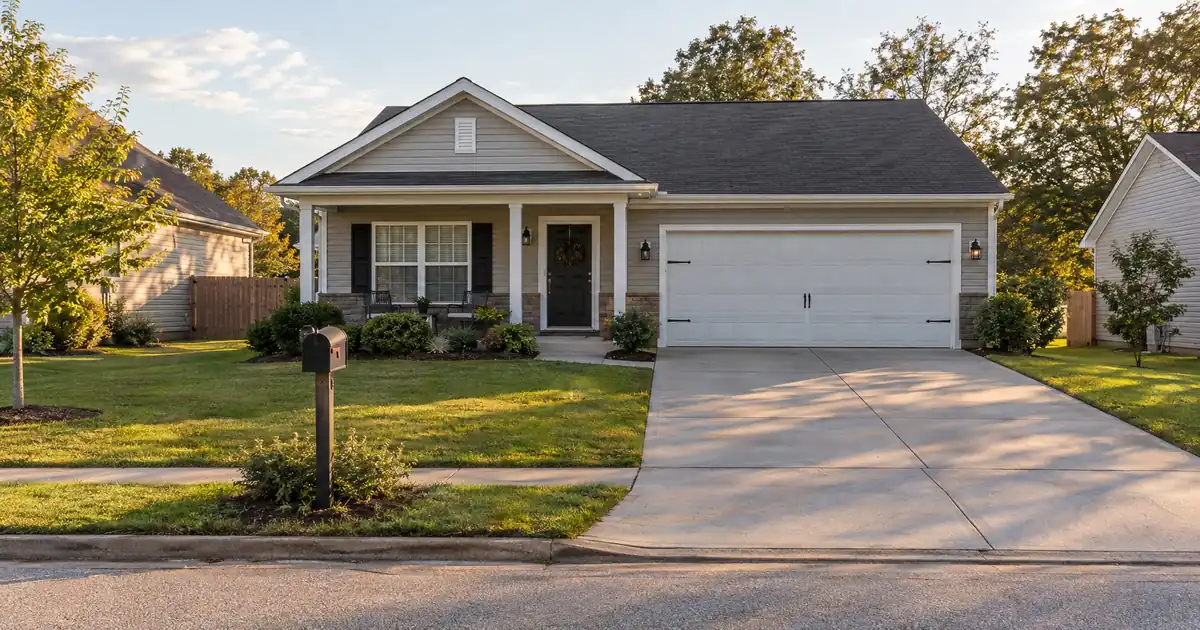
The Quick Read: Yes, usually. A conventional cash-out refinance works on the home you live in, and in many cases you can sign at your kitchen table with a mobile notary or through remote online notarization. Three parties decide whether that works for you: your lender, the title or settlement company, and your state’s notary law. No agency rule says you must sign at a title office.
That answer has two halves, because the title can be read two ways. One is whether the loan type fits a home you live in. The other is whether the signing can happen at your house.
Does a Cash-Out Refinance Work on the Home You Live In?
Yes. A primary residence is the most standard cash-out case there is. Fannie Mae’s Selling Guide defines a cash-out refinance as a new first mortgage that pays off your existing first mortgage on the same property. It also covers a new mortgage on a home you own free and clear. You can take the extra equity as cash for any purpose.
The key limits are leverage, age of the loan, and how long you have owned the home. Across the conventional programs we place files with, here is how the numbers run:
- One-unit primary residence: up to 80% loan-to-value (LTV). LTV is the loan amount divided by the home’s appraised value.
- Two- to four-unit primary residences, second homes and investment property: up to 75%.
- Existing loan age: the first mortgage being paid off must be at least 12 months old, counted from note date to note date.
- Time on title: at least one borrower has owned the home for 6 months.
Those figures are subject to lender guidelines and a full file review. Fannie Mae’s Eligibility Matrix shows the same 80% and 75% caps for a principal residence. A cash-out refinance caps well below the leverage you can reach on a purchase or a rate-and-term refinance, because the lender wants you to keep a real equity cushion.
Say your home appraises for a price you know well. At 80%, you must leave 20% of that value untouched. Everything else, minus your current payoff and financed costs, is the room you have for cash. A lower appraisal shrinks that room directly.
If you want to compare programs and the equity each reaches, Lendmire’s cash-out refinance programs page lays out the conventional options.
Can You Sign at Home?
Usually, but nobody can promise it in advance. The signing location is not set by Fannie Mae or Freddie Mac. It comes from three places: state notary law, the settlement agent handling your closing, and the investor’s rules for electronic notarization.
Here are the four signing paths you may be offered:
| Option | How it works | Who must support it | Common hang-up |
|---|---|---|---|
| Mobile notary at home | A notary brings printed documents to you | Lender and settlement agent | Notary availability |
| Title or attorney office | You sign in person at the closer’s office | Settlement agent | Travel and scheduling |
| Remote online notarization (RON) | You sign on video with a commissioned notary | State law, lender, investor | State or platform limits |
| Mail-away or hybrid | Some documents signed digitally, others on paper | Lender and settlement agent | Paper timing, return shipping |
The hybrid path is more common than people expect. Fannie Mae’s eClosing FAQ explains that a closing can mix methods. The security instrument (the mortgage or deed of trust that pledges your home) can be printed and signed in ink while other documents are signed electronically. You only get a fully electronic mortgage if the note itself is signed electronically.
Remote online signing carries extra conditions. Fannie Mae accepts a remotely notarized security instrument only when the property’s state expressly permits it, or when an out-of-state notarization was performed lawfully. Freddie Mac treats remote notarization as a permitted-state matter, not a nationwide default. So an RON closing that works in one state may not be offered in another.
Who Decides Whether Closing at Home Is Allowed?
Three parties each have a veto. If any one says no, you move to another option.
| Decider | What it controls |
|---|---|
| State law | Whether mobile or remote notarization is valid for a mortgage |
| Settlement or title company | Whether its closers and notaries will travel or use RON |
| Your lender | Which signing methods its investor accepts |
Some terms help here. The closing agent (also called the settlement agent) runs the closing, collects signed documents and handles funds. The notary verifies your identity and witnesses signatures. A notary generally cannot explain your loan terms or give legal advice. If you have questions about the documents, ask your loan officer or an attorney before the signing, not during it.
Wholesale lenders place these requirements on the file, and the wording varies from one to the next. That is why a flat “yes, always” would be wrong. Ask early, and ask in writing if you can.
What Happens at the Table, Step by Step
A cash-out closing follows a fixed sequence, whether you sign at home or at an office.
1. Review the Closing Disclosure. You must receive this final cost statement ahead of closing, per the CFPB. Read it against your Loan Estimate.
2. Sign. You sign the note (your promise to repay), the security instrument and the other loan documents.
3. Start the right to cancel. On a refinance of your own home, you generally have three business days to cancel. The CFPB says that clock starts only after three things have happened: you sign the note, you receive the accurate Truth in Lending disclosure, and you receive two copies of the notice of the right to rescind.
4. Funding. Cash is generally released after the cancellation window ends. That is why you never walk out of a cash-out closing with money in hand.
5. Payoffs and recording. Your old first mortgage is paid off, and the new lien is recorded.
Signing location does not change any of this. The cancellation window protects you whether the notary sits at your table or on a video call.
How a Cash-Out Closing Differs From a Rate-and-Term Closing
The signing looks the same. The difference is in the paperwork and the file behind it.
A rate-and-term refinance pays off your existing loan and closing costs, with only incidental cash back. Leverage can run as high as 95% on a one-unit primary residence. A cash-out refinance caps at 80%, adds loan-level price adjustments (Fannie Mae’s term) or credit fees (Freddie Mac’s term), and checks the age of the loan being paid off and your time on title.
Pricing for cash-out is higher than for a no-cash-out refinance. That is how the agencies price the added risk. We never quote the numbers here because they shift by borrower and file.
The new loan amount can include more than your cash. Fannie Mae allows these items in it:
- Paying off the first mortgage
- Financing closing costs, points and prepaid items
- Paying off subordinate liens of any age
- Paying taxes more than 60 days delinquent, which triggers an escrow account unless law prohibits one
A Worked Example: One Household, One Co-Borrower Snag
Picture a married couple who have lived in their one-unit home for several years. Their existing first mortgage is well past 12 months old. They want cash for a renovation.
They ask their loan officer for a cash-out refinance. At 80% of appraised value, the appraisal sets their ceiling. The appraisal comes in a bit under what they hoped, so the cash available shrinks, but the loan still works.
They ask to sign at home. The loan officer checks with the settlement company, which uses mobile notaries in their state. Both spouses are on the loan and on title, so both must sign. One spouse is traveling that week.
Their options are to reschedule so both sign together, or to ask whether remote online notarization is available in their state and accepted by the investor. If neither works, they sign at the title office when both are in town. The same three business days of cancellation follow either way, and the cash arrives after that window.
The lesson: the loan was never the obstacle. The signing logistics were, and one early phone call would have flagged it.
Pre-Closing Checklist: Questions to Ask Early
Ask these as soon as you have a closing date in sight:
- Does my lender allow a mobile notary signing for this loan?
- Does the settlement company offer it, and in my county?
- Is remote online notarization available in my state, and does my investor accept it?
- Who must be present or sign? Include co-borrowers, spouses and any trustee.
- What ID do I need, and does everyone’s name match the documents?
- If the home signing falls through, what is the fallback?
At home, prepare a clear table, a working printer if the notary does not bring documents, a quiet room and proof of insurance if requested. Then verify the notary. Ask the settlement company for the notary’s name, and confirm the appointment came from them. Be cautious of any notary who contacts you unprompted or asks you to sign blank pages.
When Closing at Home Does Not Work
Sometimes the office is simply better. Common reasons:
- State rules. Some states limit mobile or remote signing on certain loans. Texas, for example, adds homestead rules on cash-out loans.
- Lender or investor conditions. The investor may not accept RON or may require paper on the security instrument.
- Complicated parties. A trust, a power of attorney or an out-of-state co-borrower can push you to an office or a coordinated remote signing. Temporary pandemic-era flexibilities on powers of attorney explicitly did not cover cash-out refinances, so don’t assume one will work.
- Document problems. If last-minute corrections come in, an office lets you fix them on the spot.
An office also helps if you want a closer who can walk you through the Closing Disclosure in person. Convenience matters, but not more than a clean signing.
Edge Cases That Change the Answer
Free and clear homes. A new mortgage on a home you own outright still counts as a cash-out refinance. You are pulling equity from a home with no loan, so the cash-out rules and caps apply.
Recent buyers. The 12-month and 6-month clocks block quick cash-out after a purchase, with exceptions. Delayed financing is one. It lets a cash buyer borrow against a home soon after purchase when the original purchase was at arm’s length and the source of funds is documented. Inheritance and legal awards are others. Freddie Mac’s Guide §4301.5 lists these exceptions.
Occupancy. On a one-unit home you live in, the cap is 80%. Second homes and investment property cap at 75%, so occupancy decides your leverage.
Manufactured homes. Cash-out limits are lower on manufactured homes than on site-built homes, and the rules for single-width homes can differ from those for multi-width homes. Ask your loan officer which limits apply to your property before you plan a cash-out.
Waiving the cancellation window. The CFPB says you can waive it only for a bona fide personal financial emergency, with a dated statement signed by everyone who shares ownership. Treat that as a last resort.
Key Terms Defined
Cash-out refinance: A new first mortgage that pays off your old one and gives you the extra equity as cash.
LTV (loan-to-value): Your loan balance divided by the home’s appraised value.
Seasoning: The waiting period a loan or ownership must meet before it qualifies, such as 12 months on the loan being paid off.
Security instrument: The mortgage or deed of trust that pledges your home as collateral.
Remote online notarization (RON): Notarizing documents over live video with a commissioned notary.
Right of rescission: Your right to cancel certain refinances on your home after signing, within a window set by federal rules; whether it applies depends on the loan and the property, and timing varies by file and lender.
What It Means for Your Budget
A cash-out refinance swaps your old loan for a larger one. The balance rises by the cash you take plus any financed costs. Your payment then moves with the new balance, the interest rate and the term. Your equity falls by the same amount. Weigh that against what the cash will do for you.
Mortgage insurance matters too. Conventional loans above 80% LTV require it. A standard cash-out stops at 80%, so most borrowers do not carry mortgage insurance on that loan. Tax treatment can depend on your situation; borrowers should speak with a qualified tax professional before relying on any deduction or credit.
If you are weighing a cash-out refinance against keeping the loan you have, Lendmire can help you compare the programs and the equity each one reaches. All program figures are subject to lender guidelines and full file review, and nothing here is a commitment to lend.
Frequently Asked Questions
Does signing at home change the three-day cancellation window?
No. The window runs from signing, once you have your disclosures and notice, wherever the signing happens. You must cancel in writing. A phone call is not enough. If you cancel, you still owe your original loan.
Do both spouses have to sign?
Generally yes, if both are borrowers or both are on title. The settlement company can tell you exactly who must sign. If one is away, ask about a remote signing or a rescheduled date.
What happens if the mobile notary cancels?
You fall back to the title office, a rescheduled home visit, or remote notarization if your state and lender allow it. Ask your settlement company about its backup plan before closing day.
Can I cash out right after buying my home?
Usually not. The 12-month age on the loan being paid off and the 6-month time on title apply, with exceptions such as delayed financing, inheritance and legal awards. Ask your loan officer which exception fits.
Is a free-and-clear home treated differently?
Not for the rules. It still counts as a cash-out refinance, so the 80% cap on a one-unit primary residence applies, and the same closing and cancellation steps follow.
For your own numbers, request a scenario review with Lendmire.
About Lendmire
As a mortgage broker (NMLS# 2371349), Lendmire helps homeowners and home buyers in 16 states with FHA, VA, conventional and jumbo purchase and refinance loans arranged through wholesale lenders. Lendmire is never the lender; program terms are set by the lender and the agency guidelines. Scotsman Guide named Lendmire a Top Mortgage Workplace in both 2025 and 2026.
For the program’s current guidelines, see conventional loan programs.
Get Started
Ready to find the right loan for you?
In about 30 seconds you can review financing options available for your home or investment property. No commitment required.
Informational only. Not a Loan Estimate, approval, or commitment to lend. Program availability and eligibility are subject to lender guidelines, credit approval, property review, and underwriting.
References
1. Fannie Mae Selling Guide B2-1.3-03
2. Fannie Mae Eligibility Matrix
3. Fannie Mae: eClosings and eMortgages FAQ
4. CFPB
7. CFPB: waive right to rescind
This article is part of Lendmire’s cash-out refinance program — full qualification details, guidelines, and scenarios live on the program page.
Related reading: Conventional Cash-Out Refinance Requirements for a Primary Home · Can You Cash Out Refinance a Vacation Home Under Conventional Rules? · Is a Conventional Cash-Out Refinance Worth It for Your Home?
Brandon Miller
Founder & CEO, Mortgage Loan Originator, Lendmire LLC
- Mortgage Loan Originator · NMLS# 1129696 · Verify on NMLS Consumer Access
- North Carolina Real Estate Broker · License# 343312 · Verify on NCREC
- North Carolina Insurance Producer · License# 19053198 · Property, Casualty, Life, Health · Verify on NAIC SBS
- Lendmire LLC · Firm NMLS# 2371349 · Verify firm licensure
Compliance and disclosures. Lendmire (NMLS# 2371349) is a licensed mortgage broker and is not a direct lender, depository institution, financial advisor, or tax professional. Content in this article is general market analysis and educational information — not financial, legal, or tax advice for any specific situation. Lendmire does not guarantee loan approval; every transaction is subject to underwriting by the funding lender. Mortgage pricing and loan program guidelines are subject to change at any time without notice and vary by borrower characteristics, property type, and state regulations. Lendmire complies with Equal Housing Opportunity. Licensure verification: NMLS Consumer Access.