
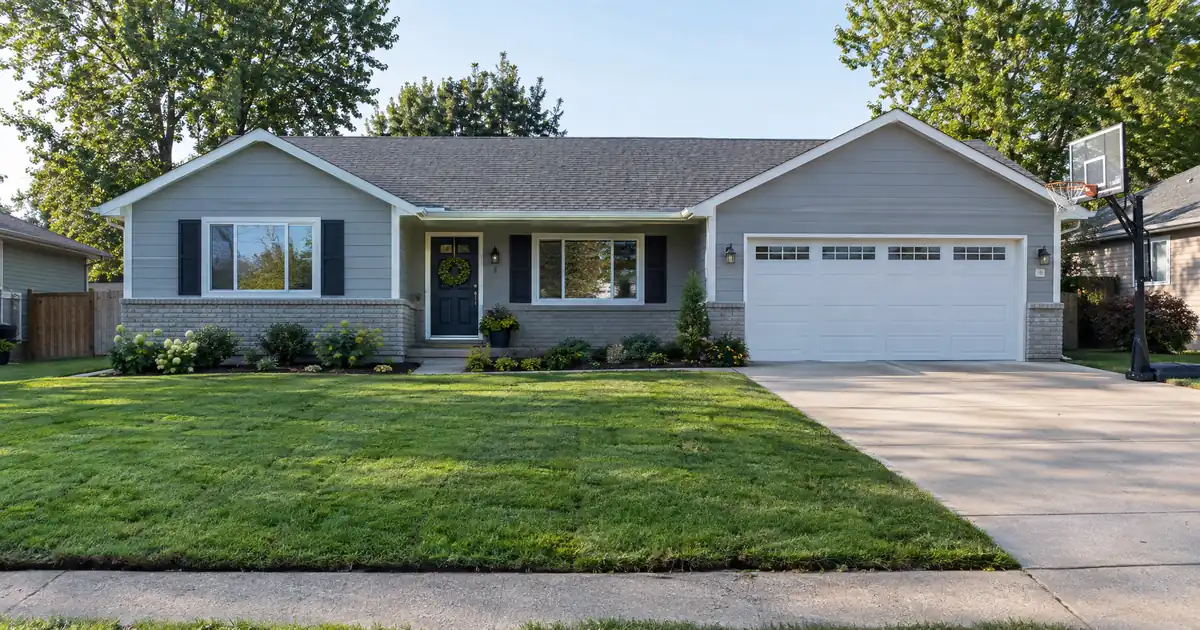
The Quick Read: Yes. A cash-out refinance replaces your current mortgage with a new, larger one on the same home, and you receive the difference in cash. You never sell, and the house stays yours. What changes from program to program is how much equity must stay in the home, how long you must have owned it, and whether you still live there. Everything below is subject to lender guidelines and full file review, and none of it is a commitment to lend.
What Actually Happens to the House?
Nothing moves. You keep the title, you keep living there, and you keep making one mortgage payment. The only thing that changes is the loan sitting on the property.
Here is the sequence. A new first mortgage pays off your old one. Closing costs come out of the new loan or are paid at the table. Whatever is left over comes to you as cash. Fannie Mae’s Selling Guide describes it the same way: a new first mortgage that pays off existing loans on the same property.
Think of it as swapping the loan, not the home. You are borrowing against equity, which is the part of the home’s value you own outright.
Cash-Out vs. Rate-and-Term: Why the Label Matters
A refinance changes the interest rate, the loan term, or both. It pays off the old loan and the closing costs, with only small, incidental cash back. Agencies call this a limited cash-out refinance.
A cash-out refinance is a different transaction. You deliberately borrow more than the payoff so you can walk away with money. Because the lender takes more risk, the leverage cap is lower.
Across the wholesale programs I place files with, rate-and-term can reach 95% of the home’s value on a one-unit primary residence. Cash-out on the same home tops out at 80%. That gap is a common reason borrowers get surprised. They assume “refinance” means one set of rules. It doesn’t.
| Factor | Rate-and-term | Cash-out |
|---|---|---|
| Main purpose | Change rate or term | Take equity as cash |
| Cash back | Small, incidental | Any amount within the cap |
| Max LTV, 1-unit primary | 95% | 80% |
| Max LTV, 2-4 unit primary | 95% | 75% |
LTV stands for loan-to-value: the new loan balance divided by the appraised value of the home. The conventional cash-out limits above match Fannie Mae’s Eligibility Matrix, which also sets 75% for second homes.
How Much Cash Can You Actually Take Out?
At 80% LTV, you keep at least 20% of the home’s value as equity after closing. The new loan has to cover your old payoff, your closing costs, and the cash you want, all within that cap. These specifics are subject to lender guidelines and a full review of property, leverage, and credit.
Here is the arithmetic in words. Take the appraised value and multiply it by 80%. That is the most the new loan can be. Subtract what you owe now and the costs of closing. The remainder is your ceiling.
The appraisal sets the whole calculation. If the appraisal comes in lower than you hoped, the cash drops with it.
Location can matter too. In Texas, a cash-out on the homestead is capped by the state constitution at the agency figure. Terms depend on the lender’s guidelines, the property type, the leverage, and a full review of the credit profile.
Who Qualifies? The Gates Lenders Check
Five things decide the outcome: equity, time, credit, income, and occupancy.
Equity. You need enough value left after the new loan to stay inside the cap above. The practical test is the appraisal, not your own estimate.
Time. Seasoning is the waiting period a lender requires before you can refinance. For conventional cash-out, the mortgage being paid off must be at least 12 months old, measured from the old note date to the new note date. At least one borrower must also have been on title for 6 months. Both rules come from the Fannie Mae Selling Guide.
Credit. Wholesale conventional programs generally start at a 620 decision score. The automated underwriting finding governs most files, and the total debt-to-income ratio ceiling is 50%. Manually underwritten loans run tighter, at 36% or 45%, depending on score and reserves. Debt-to-income, or DTI, is your monthly debts divided by your monthly gross income.
Income and reserves. Lenders document income, employment, and assets. Fannie Mae adds a reserves rule: for loans run through its automated system with a DTI above 45%, six months of reserves are required. Reserves are cash you could use to make payments after closing.
Own a second home or a rental instead? Occupancy sets the leverage. Second homes and investment properties cap at 75% on cash-out.
What If You Own the Home Free and Clear?
It still counts as a cash-out refinance.
This surprises people who assume no existing loan means no refinance. The lender sees a new loan against a home that had none. That is cash-out, with the same 80% cap on a one-unit primary residence and the same appraisal.
Exceptions to the Waiting Periods
The clocks are firm, but several situations bend them.
- Inherited or awarded homes. Fannie Mae allows no waiting period if you inherited the property or were legally awarded it, including through divorce. Confirm the exact wording on your file.
- Buying out a co-owner. The 12-month first-mortgage rule does not apply when you buy out a co-owner under a legal agreement.
- Recent cash buyers. Fannie Mae has a delayed financing exception. It lets someone who bought with cash take equity out soon after purchase, under specific conditions.
- Recently listed homes. If the property was listed for sale, it must be off the market on or before the disbursement date of the new loan.
Any of these can change the answer for you. They also add paperwork, so raise them early.
Government Loans: FHA, VA, and the Streamline Trap
If your current loan is FHA or VA, the details shift.
FHA cash-out. HUD lowered the maximum loan-to-value on FHA cash-out refinances to 80% for case numbers assigned on or after September 1, 2019, per HUD Mortgagee Letter 2019-11. FHA also expects you to have owned and lived in the home for a minimum period first.
VA cash-out. VA is the only program that allows more. Per VA Circular 26-19-05, VA will not guaranty a refinance when the loan-to-value exceeds 100%. A VA cash-out can also move a non-VA loan into a VA-backed one. Eligibility requires satisfactory credit, enough income, and a valid Certificate of Eligibility. For a closer look at documentation choices, see Lendmire’s piece VA Cash-Out Refinance Without Tax Returns vs. Full Documentation.
The streamline trap. The FHA Streamline and the VA IRRRL are not cash-out products. Streamlines exist to lower your payment on an existing government loan. VA states plainly that with an IRRRL you may not receive any cash from the loan proceeds. Borrowers who ask for a “streamline with cash” are asking for something that does not exist. If you want cash, you need a true cash-out loan.
What It Costs and What Changes Afterward
A bigger loan means a bigger balance, and that usually means a higher payment and more total interest over the life of the loan. Your payment also includes any mortgage insurance and escrow for taxes and insurance. Mortgage insurance is a premium that protects the lender when you borrow above 80% of the home’s value.
Closing costs are real. Typical ones include the appraisal, title insurance, and prepaid items. You may hear the term “lender credit,” which is not free money: the lender typically raises your loan amount or charges a higher interest rate in exchange, according to the CFPB. The same goes for “no-cost” refinance offers: the costs are built into the rate or the balance.
You also reset the clock. If you were ten years into a thirty-year loan, a new thirty-year loan starts the term over. Ask what a shorter term would do to the payment before you decide.
Mortgage insurance, if it applies, can come off later. You may request cancellation at 80% of the original value with good payment history. The servicer must end it automatically at 78%.
The Risk Nobody Likes to Talk About
Your home secures this loan. Miss enough payments and you can lose it.
That matters most when the cash pays off credit cards. CFPB research notes that converting non-mortgage debts into mortgage debt can put the home at risk of foreclosure if payments become unsustainable, while defaulting on a credit card is unlikely to cost you the house. The CFPB’s earlier credit study found scores improved sharply at first, then gradually worsened, though they generally stayed above pre-refinance levels.
The pattern many brokers see is simple. A borrower clears the cards, feels the relief, and runs the balances back up. Now there is a bigger mortgage and new card debt. Decide before closing what the cash is for, and whether the habit that created the debt has changed.
When Cash-Out Is the Wrong Tool
Cash-out is a bad fit in a few common situations. Here is an honest read.
- Your current loan is a keeper. If your existing mortgage carries terms you would not want to give up, replacing the entire balance to reach a small amount of equity is a poor trade. A home equity loan or HELOC leaves the first mortgage alone.
- You only need a small amount. Full refinance costs on the whole balance can outweigh the benefit.
- You may sell soon. Closing costs need time to pay for themselves.
- Your income is shaky. A larger payment on uncertain income is the setup for the foreclosure risk above.
| Option | First mortgage | How you get funds | Payment type |
|---|---|---|---|
| Cash-out refinance | Replaced | Lump sum | One new payment |
| Home equity loan | Kept | Lump sum | Second payment |
| HELOC | Kept | Line you draw on | Second payment, varies |
| Selling | Paid off | Sale proceeds | None, but you move |
The CFPB’s home equity guide groups these together as ways to use equity, and notes that lenders typically want you to keep 10% to 20% of your home’s value as equity. That is general guidance, not any one program’s rule.
Key Terms Defined
LTV (loan-to-value): The loan balance divided by the home’s appraised value.
Seasoning: The waiting period required before you can refinance or take cash out.
Limited cash-out refinance: A rate-and-term refinance that allows only small, incidental cash back.
Equity: The home’s value minus what you owe.
DTI (debt-to-income): Your monthly debts divided by your monthly gross income.
Reserves: Cash or liquid assets you hold after closing to cover payments.
Frequently Asked Questions
Can I do a cash-out refinance on a home I just bought?
Usually not right away. Conventional cash-out generally needs the existing mortgage to be at least 12 months old and a borrower on title for 6 months. Delayed financing is an exception for recent cash purchases. Inherited and legally awarded homes also have exceptions.
Is a streamline refinance a way to get cash?
No. The FHA Streamline and the VA IRRRL exist to lower payments on an existing government loan. VA states you may not receive cash from IRRRL proceeds. For cash, you need a true cash-out loan.
Can I borrow 100% of my home’s value?
Only VA allows that, and only for eligible veterans and service members. On a conventional or FHA primary residence, the cap is 80%. Two- to four-unit homes, second homes, and investment property carry lower conventional caps of 75%.
Do I need an appraisal?
Yes. A cash-out refinance requires a new appraisal, and the appraised value sets how much equity you can reach. A lower appraisal means less cash.
Is the cash taxable?
Tax treatment can depend on your situation; borrowers should speak with a qualified tax professional before relying on any deduction or credit.
Next Steps
Start by deciding exactly how much cash you need and what it is for. Then compare Loan Estimates side by side, looking at the total monthly payment, including principal and interest, mortgage insurance, and escrow. If a cash-out looks right, Lendmire’s cash-out refinance programs give you a way to see which options reach the equity you need. If you are weighing a cash-out refinance against keeping the loan you have, Lendmire can help you compare the programs and the equity each one reaches.
For your own numbers, request a scenario review with Lendmire.
About Lendmire
As a mortgage broker (NMLS# 2371349), Lendmire helps homeowners and home buyers in 16 states with FHA, VA, conventional and jumbo purchase and refinance loans arranged through wholesale lenders. Lendmire is never the lender; program terms are set by the lender and the agency guidelines. Scotsman Guide named Lendmire a Top Mortgage Workplace in both 2025 and 2026.
Get Started
Ready to find the right loan for you?
In about 30 seconds you can review financing options available for your home or investment property. No commitment required.
Informational only. Not a Loan Estimate, approval, or commitment to lend. Program availability and eligibility are subject to lender guidelines, credit approval, property review, and underwriting.
References
1. Fannie Mae Selling Guide B2-1.3-03, Cash-Out Refinance Transactions
2. Fannie Mae Eligibility Matrix
3. HUD Mortgagee Letter 2019-11
5. CFPB
This article is part of Lendmire’s cash-out refinance program — full qualification details, guidelines, and scenarios live on the program page.
Related reading: Cash-Out Refinance for Homeowners Who Cashed Out Before · Can You Use a Cash-Out Refinance to Buy Another House? · Can a Streamlined Refinance Become a Cash-Out Refinance?
Brandon Miller
Founder & CEO, Mortgage Loan Originator, Lendmire LLC
- Mortgage Loan Originator · NMLS# 1129696 · Verify on NMLS Consumer Access
- North Carolina Real Estate Broker · License# 343312 · Verify on NCREC
- North Carolina Insurance Producer · License# 19053198 · Property, Casualty, Life, Health · Verify on NAIC SBS
- Lendmire LLC · Firm NMLS# 2371349 · Verify firm licensure
Required disclosures. Lendmire (NMLS# 2371349) operates as a licensed mortgage broker, not a direct lender or depository. The discussion in this article is general in nature and should not be relied upon as financial, legal, or tax advice — every investment scenario is unique and should be reviewed by a qualified professional. Any loan inquiry is subject to lender underwriting, and this article is not a commitment to lend or a guarantee of approval. Mortgage rates, loan terms, and program guidelines vary by borrower, property, and state, and may change without notice. Equal Housing Opportunity. Verify licensure at NMLS Consumer Access.