
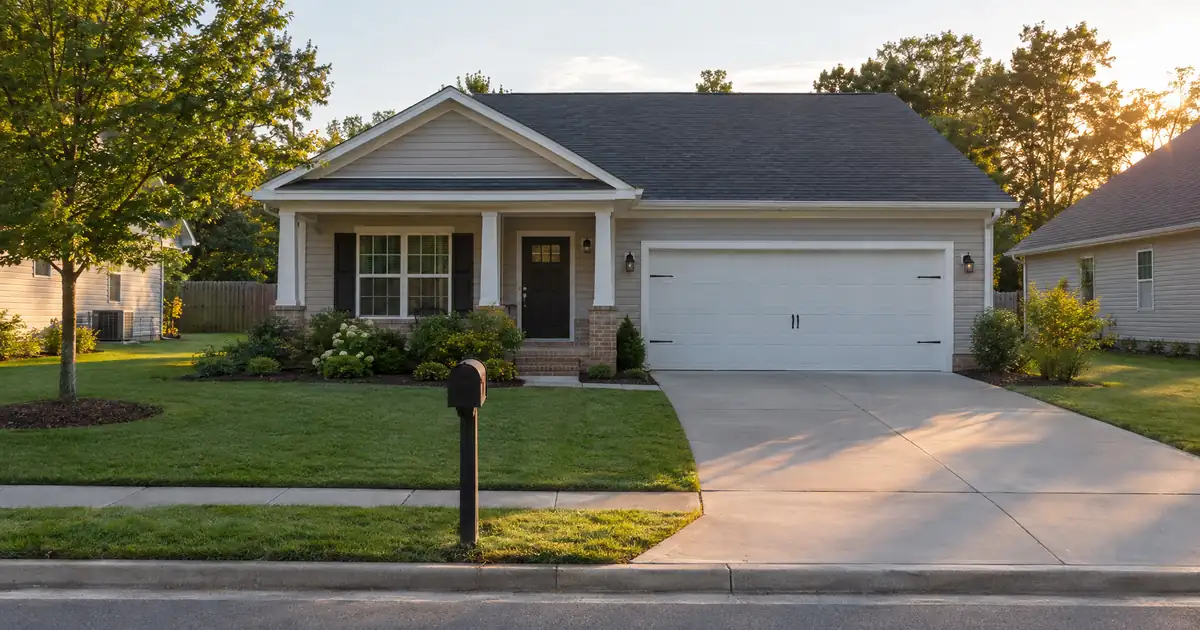
The Quick Read: Yes, on a conventional loan. FHA and VA cash-out loans are limited to the home you live in.
What Does a Cash-Out Refinance Mean on a Second Home?
A cash-out refinance replaces your current mortgage with a larger one. The new loan pays off the old balance, and you keep the difference as cash. On a second home, the same idea applies to the vacation house or part-time residence you own.
The contrast is a rate-and-term refinance, which only swaps one loan for another. Lenders treat a refinance that returns only a small amount of cash as a “limited cash-out” loan. Limited cash-out generally allows a higher leverage ceiling than a full cash-out loan on a second home.
Lendmire’s cash-out refinance programs run through wholesale lenders, and the conventional lane is where second-home cash-out lives. A few questions tend to shape these files. Is the property truly a second home? Is there enough equity under the lower ceiling? Does the loan meet the waiting-period rules?
Which Loan Types Allow It?
Only conventional loans reach a second home with cash back. Here is how the main programs line up.
| Program | Cash out on a second home? | Why |
|---|---|---|
| Conventional cash-out | Yes | Second homes are eligible property |
| Conventional limited cash-out | Small, capped cash back | Rate-and-term style loan |
| FHA cash-out | No | Principal residence only |
| FHA Streamline | No | Needs existing FHA loan, no cash |
| VA cash-out | No | Primary residence required |
| VA streamline refinance | No | VA-to-VA only, no cash |
HUD’s FHA handbook limits cash-out refinances to owner-occupied principal residences, with a carve-out for homes owned free and clear. The older HUD handbook excerpt states the rule, and the current handbook is HUD 4000.1, so a loan officer should confirm the present wording.
VA cash-out needs a primary residence too. The VA streamline refinance (VA’s interest rate reduction loan) is a different animal. VA says it is only available if you have an existing VA-guaranteed loan on the property, and it does not pay out cash.
Switching a second home into a government program is generally not an option. If you want cash from a second home, conventional is the lane.
What Counts as a “Second Home”?
A second home is a one-unit property you occupy for part of the year, suitable for year-round use, and under your exclusive control. It is not a timeshare or part of a rental pool. Fannie Mae’s occupancy rules separate principal residence, second home, and investment property, and the category drives both eligibility and pricing.
Rental income, if you have any, generally cannot be used to qualify for a second-home loan. A property run by a management firm that controls when you can use it, or one that sits in a rental pool, can lose second-home status.
Here is the catch. Occupancy is something you certify at application. A vacation house rented out most of the year may be classified as an investment property instead, and that category has its own, tighter terms. Occupancy decides the leverage, so call the property what it is. Fannie Mae has flagged misrepresented occupancy as a real risk, and no loan structure is worth blurring that line.
How Much Can You Actually Borrow?
On a conventional cash-out loan, a second home tops out at 75% LTV. Fannie Mae’s eligibility matrix shows the same 75% for a one-unit second home, against a much higher ceiling for a limited cash-out refinance. A one-unit primary residence goes higher, to 80% on a conventional cash-out. Terms depend on the lender’s guidelines, the property type, the leverage, and a full review of the credit profile.
The simple version: the new loan, including your cash, has to fit under 75% of the appraised value. That leaves a quarter of the value as your equity. The appraisal sets the number, not what you paid or what you hope the house is worth.
Picture a second home appraised at a round, hypothetical value, with an existing first mortgage at about half of that value. You could borrow up to 75% of value. The first mortgage comes out of that, closing costs come out too, and what remains is your cash. A higher existing balance, or an appraisal that comes in light, shrinks the check fast.
Three things cut into your net cash:
- The payoff of your existing first mortgage, plus any second lien on the property.
- Closing costs, which can be financed into the new loan if you wish.
- An appraisal below your expectation.
If you carry a HELOC on the second home, it generally must be paid off or kept in place under the lender’s rules. Ask early, because it changes the structure.
Cash-out on a second home also tends to be priced above a rate-and-term refinance, because loan-level price adjustments apply. Pricing shows up on your Loan Estimate, not here.
What Does the Lender Look For?
Lenders review a second-home cash-out file in four areas: waiting periods, credit and debt ratios, reserves, and the property itself. The details sit in the Fannie Mae Selling Guide section on cash-out refinances.
Seasoning. The first mortgage being paid off must be at least 12 months old, measured from note date to note date. At least one borrower must also have been on title for six months. Exceptions exist for paying off a subordinate lien or buying out a co-owner under a legal agreement.
Credit and ratios. The automated underwriting finding governs most files. Second homes generally call for a stronger credit profile than a primary residence, subject to lender guidelines. You will be qualified on the new loan plus your other housing payments, which include your primary home.
Reserves. Reserves are the cash and liquid assets left after closing. Lenders may ask for more of them on a second home, and Fannie Mae ties extra reserves to higher debt ratios on cash-out files.
The property. If the home was listed for sale, it must come off the market on or before the disbursement date. You will also need the existing mortgage statement, insurance and tax information, an occupancy certification, and the usual income, asset, and credit documents.
What If You Own the Second Home Free and Clear?
A second home with no mortgage can still be a cash-out loan. Fannie Mae’s eligibility text covers a new mortgage on a property with no lien, and that counts as cash-out. In practice, many people with a paid-off second home are surprised to learn it is not treated like a simple “new mortgage.”
If you recently bought the home with cash, a delayed-financing exception may apply instead of the standard waiting period. The conditions are specific, including documenting where the purchase money came from. Ask your loan officer to confirm the current parameters before you plan around it.
What Does It Do to Your Monthly Budget?
It makes the loan bigger, and the new loan’s terms apply to the whole balance, not only the cash you pulled. The CFPB‘s guide to using home equity explains it this way: you take a larger mortgage, pay off the current one, and keep the rest. Because you are getting a new loan, the interest rate and other terms change. The same guide warns that the payment may rise and the payoff may take longer.
Think about what you give up. If your current loan has terms you like, refinancing replaces them. And a larger balance means a thinner equity cushion if values soften. Your home secures the loan.
Tax treatment can depend on your situation; borrowers should speak with a qualified tax professional before relying on any deduction or credit.
Cash-Out Refinance or Another Way to Tap Equity?
If the 75% ceiling is too tight, or you want to keep your current first mortgage, you have other options. The CFPB describes a second mortgage as a loan secured by your house while another loan is still secured by it.
| Option | Existing first mortgage | Best fit |
|---|---|---|
| Cash-out refinance | Replaced | Want one new loan and a lump sum |
| Home equity loan | Stays in place | Fixed amount, keep current loan |
| HELOC | Stays in place | Flexible draws over time |
| Limited cash-out | Replaced | Mostly changing terms, little cash |
The trade-off is plain. A cash-out refinance resets the whole loan. A second mortgage leaves your first loan alone but adds a separate payment. If your current first mortgage terms are worth protecting, that points toward a second mortgage. If you want to consolidate into one payment, it points toward the cash-out refinance.
Which Equity Should You Tap?
Use this short if/then list.
- If the second home has equity and the first mortgage is 12 months or older: a conventional cash-out refinance is worth pricing.
- If you like your current first mortgage: compare a home equity loan or HELOC.
- If you only need a small amount of cash, or mainly want better terms: ask about limited cash-out, which allows a small, capped amount of cash back. The official limited cash-out guide has the current cap.
- If your primary home has the larger equity cushion: compare that path, since a primary residence reaches a higher conventional cash-out ceiling.
- If you may not need the money: leave things alone.
One related scenario deserves a note. Some borrowers pull equity from their main home to buy a second one. That is a different loan with its own sequencing and debt-ratio math, and Lendmire’s article How Much a Texas Homestead Cash-Out Refinance Funds for a Second Home covers it. The trap is closing order: the larger primary-home payment counts against you when the second-home loan is qualified.
Key Terms Defined
Cash-out refinance: A new, larger mortgage that pays off your current one and gives you the difference in cash.
Limited cash-out refinance: A refinance that pays off your first mortgage and costs, with only a small, capped amount of cash back.
LTV (loan-to-value): The loan amount divided by the home’s appraised value.
Seasoning: The waiting period a loan or ownership must meet before you can refinance.
Free and clear: A property with no mortgage lien on it.
Reserves: Money left in verified assets after closing.
Rescission: A short right-to-cancel window after closing on certain loans. It generally applies to a principal residence, not a second home, so ask how it applies to you.
Frequently Asked Questions
Can I use an FHA or VA loan to pull cash out of a vacation home?
No. FHA cash-out is limited to owner-occupied principal residences, and VA cash-out needs a primary residence. The FHA Streamline and VA IRRRL are for existing government loans and do not pay out cash. Conventional is the lane for a second home.
How much equity do I need in a second home?
You need enough that the new loan, with your cash included, stays at or under 75% of the appraised value on a conventional cash-out. That leaves about a quarter of the value as your equity. Your lender confirms the limit that applies to your file.
Does renting the house part-time change the loan?
Yes, it can. Rental pools and management-firm control can disqualify second-home status, and a heavily rented home may be classified differently, with tighter terms. Answer the occupancy questions truthfully, because they drive eligibility and pricing.
Can I do this if I just bought the home?
Usually you need to wait. The first mortgage being paid off must be at least 12 months old, and one borrower must have been on title for six months. A delayed-financing exception exists for recent cash purchases, so ask your loan officer about it.
Is a HELOC better than a cash-out refinance for a second home?
It depends on your current first mortgage. A HELOC leaves it in place and adds a separate line. A cash-out refinance replaces it with one new loan, new terms included. Compare both on a Loan Estimate.
Next Step
If you are weighing a cash-out refinance against keeping the loan you have, Lendmire can help you compare the programs and the equity each one reaches. Program figures are subject to lender guidelines and full file review, and nothing here is a commitment to lend. On a second home, the occupancy certification and the 75% ceiling decide most of the answer.
For your own numbers, request a scenario review with Lendmire.
About Lendmire
As a mortgage broker (NMLS# 2371349), Lendmire helps homeowners and home buyers in 16 states with FHA, VA, conventional and jumbo purchase and refinance loans arranged through wholesale lenders. Lendmire is never the lender; program terms are set by the lender and the agency guidelines. Scotsman Guide named Lendmire a Top Mortgage Workplace in both 2025 and 2026.
Get Started
Ready to find the right loan for you?
In about 30 seconds you can review financing options available for your home or investment property. No commitment required.
Informational only. Not a Loan Estimate, approval, or commitment to lend. Program availability and eligibility are subject to lender guidelines, credit approval, property review, and underwriting.
References
1. HUD 4155.1 Ch. 3 Sec. B (older handbook excerpt)
3. Fannie Mae Selling Guide B2-1.1-01 Occupancy Types
4. Fannie Mae Eligibility Matrix
5. Fannie Mae Selling Guide B2-1.3-03, Cash-Out Refinance Transactions
6. CFPB
7. Fannie Mae Selling Guide B2-1.3-02 Limited Cash-Out Refinance
This article is part of Lendmire’s Refinance series — every loan program’s qualification details, guidelines, and scenarios live on the loan options page.
Related reading: Cash-Out Refinance vs Selling the Home for a Divorcing Spouse · Can a Paid-Off Home Support a Large Cash-Out Refinance? · How a Lender Counts Reserves on a Second Home Cash-Out Refinance
Brandon Miller
Founder & CEO, Mortgage Loan Originator, Lendmire LLC
- Mortgage Loan Originator · NMLS# 1129696 · Verify on NMLS Consumer Access
- North Carolina Real Estate Broker · License# 343312 · Verify on NCREC
- North Carolina Insurance Producer · License# 19053198 · Property, Casualty, Life, Health · Verify on NAIC SBS
- Lendmire LLC · Firm NMLS# 2371349 · Verify firm licensure
Disclosures. The information presented in this article is general market commentary, not financial, legal, or tax advice. Lendmire is a mortgage brokerage (NMLS# 2371349) — not a direct lender or depository institution — and loan placement is subject to lender underwriting. Nothing in this content represents a commitment to lend. Loan terms, pricing, and program availability vary based on borrower qualifications, property characteristics, and state of subject property, and are subject to change at any time. Lendmire complies with Equal Housing Opportunity requirements. Consumer access: nmlsconsumeraccess.org.