
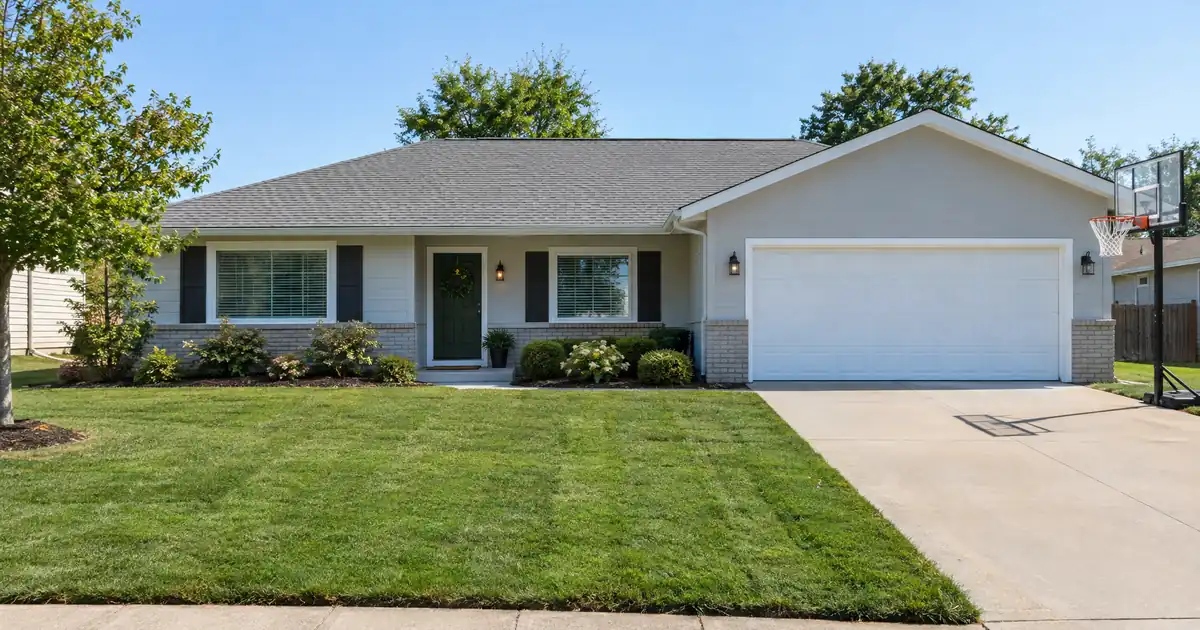
The Quick Read: No, but plan as if it does. Most conventional cash-out refinances get an appraisal. Fannie Mae and Freddie Mac each keep a narrow path for eligible, lower-leverage loans that skips a traditional appraisal. Their automated underwriting systems decide whether a file gets that path. You cannot request it, and the lender can still order an appraisal anyway.
Why Does a Cash-Out Refinance Usually Need a Valuation?
A cash-out refinance makes a loan larger than the one it replaces, so the lender needs an independent opinion of what the home is worth. The new balance is tested against that value. Loan-to-value (LTV) sets how much you can borrow, and the value on the file drives it.
Cash-out refinance estimate
The starting figures are an example value with a balance and a cash request in proportion. Replace them with yours.
Editable benchmark: 7.40% as of October 15, 2026 · Freddie Mac 30-year average via FRED®. A conventional market reference, not a cash-out refinance quote.
Illustrative starting assumptions: a $350,000 home value, a $193,000 current balance, the agency cap on a one-unit principal residence, a thirty-year term at the current Freddie Mac benchmark, and property taxes and insurance estimated at typical national rates. Every field is editable.
Illustrative estimate only — not a Loan Estimate, approval, quote, or commitment to lend. The rate field carries the weekly Freddie Mac thirty-year conventional benchmark, a market reference and not a cash-out refinance quote; a cash-out loan is priced by the lender at lock. The cash available is the loan the program cap allows less the balances paid off, before closing costs, which are not included. The HELOC line is the program’s combined loan-to-value ceiling applied to the same value and balance. Taxes and insurance are editable estimates. Licensed in sixteen states for consumer mortgages.
Compare that with a rate-and-term refinance, where the new loan mostly pays off the old one. The lender is not adding much risk, so the agencies allow more flexibility there. Cash-out is different. You are pulling equity out, and the equity cushion is exactly what the lender is protecting.
Across the wholesale programs Lendmire places files with, conventional cash-out on a one-unit principal residence is generally written to 80% LTV. Two- to four-unit principal residences, second homes and investment property generally top out at 75%. All of that is subject to lender guidelines and full file review. Lendmire’s cash-out refinance programs page lays out the program basics.
Here is the catch in the word “always.” No federal consumer rule says a cash-out refinance must have an appraisal. The CFPB’s ECOA valuations factsheet says that if no appraisal or other written valuation was developed, there is nothing to deliver, and the creditor is not required to develop one. The requirement comes from investor and lender policy. That is why a narrow exception can exist.
What Is the Exception to the Appraisal Rule?
The exception is value acceptance, which Fannie Mae offers on eligible loans. Freddie Mac’s version is called Automated Collateral Evaluation (ACE). In both, the automated underwriting system accepts the value submitted by the lender, and no appraisal is required for that loan.
Fannie Mae’s value acceptance page lists cash-out refinances of one-unit principal residences, condos included, with a maximum LTV of 70%. Freddie Mac’s Seller/Servicer Guide likewise lists cash-out refinances as eligible for ACE on one-unit homes, with a maximum LTV of 70% on a primary residence. Freddie’s guide also says a loan is ineligible for ACE if an appraisal or property data report has already been obtained for it. Leverage, reserves, and pricing vary by lender and program; the final terms follow the full file review.
Notice the gap between 70% and the standard 80% cash-out maximum. Borrow between those two numbers and a traditional appraisal is the only route. Take a smaller amount of cash, stay at or below 70%, and the file may be offered the exception. Only the automated system can tell you.
You may also see the older phrase “appraisal waiver.” Fannie Mae has since dropped that term from its Selling Guide and kept “value acceptance.” Same idea, new name.
Who Decides Whether You Get It?
The automated system decides. The borrower cannot request the offer, and a loan officer cannot force it. Here is how it typically flows:
1. Your lender submits the loan to Desktop Underwriter or Loan Product Advisor, along with an estimated property value.
2. The system compares that estimate to the agency’s data on past appraisals and applies its own analytics.
3. If the file is eligible, the system returns an offer. If not, it sets the level of collateral review the lender must follow.
4. The lender chooses whether to use the offer. Declining is allowed. The lender then follows the system’s appraisal recommendation.
Fannie Mae’s property valuation FAQs describe the same sequence for refinances: the value is an estimate, and the system’s database does the rest.
One more trigger matters. Fannie Mae will not offer value acceptance when an appraisal on the property has been uploaded to its appraisal portal within the prior 120 days from any lender. Freddie’s guide has a similar block. If you shopped lenders and one already ordered an appraisal, the no-appraisal path may be gone before you pick a lender.
Why would a lender take the offer? When Fannie Mae’s offer is exercised, the lender gets relief from enforcement of certain representations and warranties on value and related items. That is the main reason lenders like it. For a borrower, the practical upside is usually no appraisal fee and fewer steps. Treat any savings as a possibility, not a promise.
What Does Skipping the Appraisal Not Skip?
Skipping the appraisal removes one document. It does not remove the rest of the file. Income, credit, assets and the cash-out eligibility rules all still apply.
The cash-out rules are their own gate. Per Fannie Mae’s cash-out refinance requirements, at least one borrower generally needs to have been on title for six months before disbursement, with exceptions for things like inheritance and delayed financing. The mortgage being paid off generally needs to be at least 12 months old, measured note date to note date. Those timing rules apply whether or not there is an appraisal.
Cash-out loans are also priced with loan-level adjustments. A larger cash-out amount means a larger balance and a higher monthly payment. Those are costs to weigh, and the lender’s Loan Estimate shows them.
Neither does “no appraisal” mean “no property check.” Fannie Mae has a middle tier, value acceptance plus property data, where someone collects interior and exterior details on site and no appraisal is required. Freddie Mac has a similar tier called ACE+ PDR. The property is still looked at. It just isn’t appraised.
Also, the credit score does not earn you the offer. The decision rests on property and collateral data, not borrower strength. A strong file with a higher LTV still gets an appraisal.
Does the Answer Change by Situation?
Yes. Occupancy, property type and how much cash you take all shift the answer. Here is how the pieces line up for a homeowner:
| Situation | Typical appraisal outcome |
|---|---|
| One-unit primary home, cash-out at or below 70% LTV | May be offered no appraisal; system decides |
| One-unit primary home, cash-out above 70% up to 80% | Appraisal needed |
| Two- to four-unit primary home | Appraisal needed |
| Condo, one unit, within the LTV limits | May be eligible; same system test |
| Manufactured home or leasehold | Excluded from ACE |
| Prior appraisal in the last 120 days | No offer; appraisal path |
A few notes on that table. A paid-off home still counts as cash-out when you borrow against it, so the same rules apply. For second homes the agencies list lower thresholds, and occupancy sets the leverage, so those files tend to need an appraisal at higher requests. After a disaster, property eligibility is still checked, and the lender may not use the shortcut.
There is one more wrinkle. If any detail on the file changes, such as the loan amount, property address or occupancy, the lender generally re-runs the file through the system. The earlier offer may not carry over.
Policy has also moved over time. Freddie Mac shifted its cash-out path toward property data reports at one point and later resumed broader waivers, according to an AEI infographic. Because current rules can change again, ask your loan officer what applies to your file today.
How Does the Valuation Change the Cash You Can Take?
Value is the whole game. The cash you can take is capped by the LTV applied to the value on the file, minus what you owe. Run it in percentages. Say you owe 50% of the home’s value. At an 80% cap, you can borrow up to another 30% of value. At a 70% cap, only another 20%.
Now say the appraisal comes in below your estimate. Your payoff stays the same while the value shrinks, so the cap shrinks too, and the cash available falls faster than the value does. A small miss on value can erase a large share of your proceeds.
This is where a no-appraisal path cuts both ways. It accepts the lender’s estimate, so there is no independent appraiser’s opinion to correct an overly optimistic number. The Appraisal Institute has argued that the term “value acceptance” is not clear to consumers. A waiver can spare you a low appraisal. It can also leave you without an independent check on what you are borrowing against.
There is one wholesale lane worth knowing about. It reaches 89.99% LTV with no mortgage insurance at a 680 score and a 50% ratio on a thirty-year fixed, primary residence, conforming balance, with its own six months of seasoning. That lane relies on an appraisal, and it is not written in Texas, where state law caps cash-out on a homestead. Subject to lender guidelines, as always.
What If the Appraisal Comes in Low?
A low appraisal does not end the deal, but it changes it. You generally have these options:
- Take less cash. Reduce the request until the new loan fits the LTV cap on the appraised value.
- Ask for a reconsideration of value. If the appraiser missed relevant sales or details, your lender can submit more support. There is no guarantee the number moves.
- Wait. Hold off and revisit when value or your payoff balance has improved.
- Switch the plan. Compare keeping your current loan, a smaller cash-out, or a different product.
Know the downside before you order. Mortgage insurance is generally required on conventional loans above 80% LTV, and the standard cash-out cap sits at that line, so the main exception is the wholesale lane described above, which is written without it. Where mortgage insurance does apply, you can generally ask for cancellation at 80% of original value, and the servicer must end it automatically at 78%, under the Homeowners Protection Act. That is why a lower LTV is worth comparing against a bigger cash-out.
What Are My Rights When an Appraisal Is Done?
If a lender develops an appraisal or other written valuation, you are entitled to a free copy. Under the rule summarized in the CFPB factsheet, the lender must send you written notice of that right after you apply. The copy is due promptly on completion, with exact timing depending on the file and the lender. The right holds even if the loan is denied or withdrawn.
You may be charged for the appraisal itself. The free part is the copy. And the rule does not force a lender to order one. It governs delivery, not whether a valuation happens.
Common Misconceptions
“Every cash-out refinance requires an appraisal.” Not always. Value acceptance and ACE apply to some eligible loans.
“I can ask for a waiver.” The system issues the offer, and even then the lender can say no.
“No appraisal means no property check.” The property data tiers still send someone to look at the home.
“Good credit gets me the offer.” Collateral data drives it, not borrower strength.
“Enough equity and a 12-month-old loan are all I need.” Six months on title, the LTV cap and the credit and ratio limits also apply. Wholesale conventional programs generally start at a 620 decision score, and the automated finding governs most files, with a 50% total ratio ceiling.
“The federal government requires it.” The CFPB rule covers notice and copies. It does not mandate an appraisal.
Key Terms Defined
Value acceptance: Fannie Mae’s offer to accept the lender’s submitted value on an eligible loan, with no appraisal requirement.
Automated Collateral Evaluation (ACE): Freddie Mac’s equivalent, which can replace an appraisal on eligible loans.
Property data report (PDR): A set of property details collected on site by a trained data collector instead of a full appraisal.
Loan-to-value (LTV): The loan amount divided by the home’s value, shown as a percentage.
Seasoning: The minimum time you have held title and the time the loan being paid off has been in place.
Practical Next Steps
Before you apply, decide how much cash you really need. Stay under the 70% line if you want the shortcut to be possible, knowing it is never certain. Hold off on authorizing an appraisal through several lenders, since a recent one can close the no-appraisal path. Then compare the cash-out against simply keeping your current loan.
Tax treatment can depend on your situation; borrowers should speak with a qualified tax professional before relying on any deduction or credit.
If you are weighing a cash-out refinance on the home you live in against keeping the loan you have, Lendmire can help you compare the programs and the equity each one reaches.
Frequently Asked Questions
Can I ask my lender to waive the appraisal?
No. The automated underwriting system decides whether a file gets the offer, and the lender decides whether to use it. A loan officer can submit the file and tell you what the system returns. Nothing more.
Can I reuse an appraisal from a recent application?
Sometimes, but it can also hurt. Fannie Mae will not offer value acceptance if an appraisal was uploaded to its portal within the prior 120 days. Whether a different lender can use an existing appraisal depends on that lender’s policy and the investor’s rules.
Does no appraisal mean no one looks at the property?
Not necessarily. Some paths replace the appraisal with a property data report, where someone collects interior and exterior details on site. The lender must still verify that the property is eligible.
What if my cash-out request is above 70% LTV?
Expect an appraisal. The no-appraisal limits for principal residences sit at 70% for both agencies, while the standard cash-out maximum on a one-unit principal residence is 80%. Borrowing between the two means a traditional valuation. Terms vary by lender guidelines, property type, leverage, credit profile, and full file review.
Does a conventional cash-out refinance have any other timing rules?
Yes. A borrower generally needs to be on title for six months, and the mortgage being paid off generally needs to be at least 12 months old, with exceptions for delayed financing, inheritance and legal awards. These apply with or without an appraisal, subject to lender guidelines and full file review.
For your own numbers, request a scenario review with Lendmire.
About Lendmire
Lendmire — NMLS# 2371349 — is a mortgage broker that arranges FHA, VA, conventional and jumbo home purchase and refinance financing in 16 states through wholesale lenders. Every option is subject to the lender’s guidelines and full underwriting. Scotsman Guide named Lendmire a Top Mortgage Workplace in both 2025 and 2026.
Get Started
Ready to find the right loan for you?
In about 30 seconds you can review financing options available for your home or investment property. No commitment required.
Informational only. Not a Loan Estimate, approval, or commitment to lend. Program availability and eligibility are subject to lender guidelines, credit approval, property review, and underwriting.
References
1. CFPB ECOA Valuations Rule transaction coverage factsheet
2. Fannie Mae – Value Acceptance
3. Freddie Mac Seller/Servicer Guide 5602.3 (ACE)
4. Fannie Mae FAQs: Property Valuation
5. Fannie Mae Selling Guide B2-1.3-03 Cash-Out Refinance Transactions
6. AEI – GSE Appraisal Waiver Infographic
7. Appraisal Institute / Working RE (DiBiasio)
This article is part of Lendmire’s cash-out refinance program — full qualification details, guidelines, and scenarios live on the program page.
Related reading: Is an Appraisal Required for a Conventional Cash-Out Refinance? · Can You Get a Conventional Cash-Out Refinance on a Home With No Mortgage? · Should You Use a Conventional Cash-Out Refinance to Fund a Renovation?
Brandon Miller
Founder & CEO, Mortgage Loan Originator, Lendmire LLC
- Mortgage Loan Originator · NMLS# 1129696 · Verify on NMLS Consumer Access
- North Carolina Real Estate Broker · License# 343312 · Verify on NCREC
- North Carolina Insurance Producer · License# 19053198 · Property, Casualty, Life, Health · Verify on NAIC SBS
- Lendmire LLC · Firm NMLS# 2371349 · Verify firm licensure
Important disclosures. Lendmire (NMLS# 2371349) is a licensed mortgage brokerage. Lendmire is not a direct lender, depository institution, or financial advisor. All loan inquiries are subject to lender underwriting; this article does not constitute a commitment to lend. Rates, terms, and program guidelines are subject to change without notice and vary by borrower profile, property type, and state. Information in this article is general in nature and is not financial, legal, or tax advice. Equal Housing Opportunity. NMLS Consumer Access: nmlsconsumeraccess.org.