
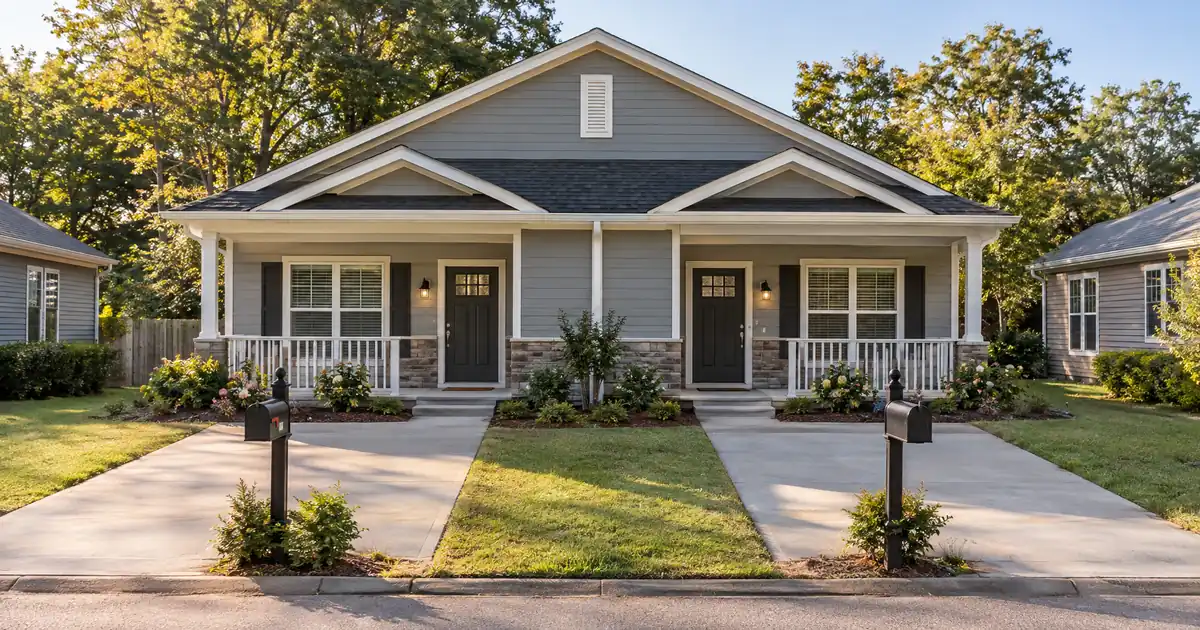
The Quick Read: Usually yes, in part. When you live in one unit of a duplex, many jumbo programs let a reduced share of the other unit’s rent help you qualify, backed by a lease, traditional personal-income documentation or the appraiser’s market rent estimate, depending on the lender. The rent from the unit you live in does not count. Whether any rent counts at all is the individual lender’s call, and it never replaces the strength of your paycheck.
What Does “Count” Actually Mean?
Count can mean three different things, and the difference matters more than a simple yes or no.
- Ignored. The lender reviews your file on your salary alone. The duplex payment sits in your housing costs in full.
- Offset. The counted rent is subtracted from the payment on the property. A positive result can add to your income. A negative result counts as a debt.
- Added to income. The counted rent goes straight into your qualifying income.
Jumbo payment estimate
The starting figures are an example price in the jumbo range with ten percent down on a thirty-year fixed. Replace them with yours.
Editable benchmark: 7.40% as of October 15, 2026 · Freddie Mac 30-year average via FRED®. A conventional market reference, not a jumbo loan quote.
Illustrative starting assumptions: a $1,000,000 price in the jumbo range, ten percent down on the top-leverage lane, a thirty-year fixed structure at the current Freddie Mac conforming benchmark, and property taxes and insurance estimated at typical national rates. Every field is editable.
Illustrative estimate only — not a Loan Estimate, approval, quote, or commitment to lend. The rate field carries the weekly Freddie Mac thirty-year conforming benchmark, a market reference and not a jumbo loan quote; jumbo rates are set by the lender and the lane at lock and differ from the conforming benchmark. An adjustable-rate scenario is shown at the benchmark for the whole term; the rate after the initial period is unknown. Reserve months and appraisal counts follow the lane sheet for the amount band; the automated finding may require more. Taxes, insurance and dues are editable estimates; closing costs are not included. On most lanes the conforming limit for the county decides whether a loan is jumbo at all; two lanes start at a stated dollar floor instead. Licensed in sixteen states for consumer mortgages.
Many lenders borrow the offset method from the template Fannie Mae uses for conforming loans. Jumbo loans are not sold to Fannie Mae, so each lender sets its own rules. Many say “follow Fannie Mae’s rental guidelines” and then add their own overlays. An overlay is simply a stricter rule layered on top.
Which Rent Counts and Which Doesn’t?
Only the rent from the unit you don’t live in can count. The Fannie Mae Selling Guide says rent from the unit a borrower occupies in a two- to four-unit property generally can’t be used to qualify. It carves out narrow exceptions for boarder income and for an accessory unit on a one-unit home.
So the picture looks like this:
- The unit you live in: no rent counted.
- The second unit, leased or rentable: a reduced share can count, if the lender’s guide allows it.
- A vacant second unit: the appraiser’s market rent estimate may stand in for a lease.
Some jumbo guides are stricter. A few bar rent from certain property types or occupancies altogether. That’s why you ask first and shop second.
How Do Lenders Reduce the Rent?
They count 75% of the gross rent, then subtract the property’s full housing payment. That 75% is a standard haircut. It covers vacancy, repairs and the gap between a lease and real market rent.
The steps run like this:
1. Take the monthly rent from the lease or the appraiser’s rent schedule.
2. Multiply it by 75%.
3. Subtract the full monthly housing payment on the property (principal, interest, taxes, insurance and any association dues).
4. Treat a positive result as added income and a negative result as a monthly debt.
The housing payment is netted once. It is not counted a second time as your own obligation.
Here is a plain-words example. Say the second unit rents for a little under half of the whole property’s payment. After the 75% haircut, the counted rent covers only part of the payment. The leftover shortfall is a debt, and you still carry most of the cost on your salary. In a typical duplex, rent rarely wipes out the payment on paper.
That haircut is an underwriting convention, not a forecast. Vacancy and repairs still hit your household even when the file qualifies.
Lease, Tax Return or Appraisal: What Proves the Rent?
The lender picks the evidence based on the unit’s status and your history as a landlord.
| Situation | Typical rent evidence | How it’s treated |
|---|---|---|
| Existing tenant | Signed lease, proof of deposit | 75% of gross rent, less payment |
| Landlord history | Rental schedule on traditional personal-income documentation | Net figure from returns |
| Vacant second unit | Appraiser’s rent schedule, or a lease | Often 75% method, lender-specific |
| First-time landlord | Lease or appraisal | Often capped by the lender |
For a duplex, the appraiser typically uses a multi-unit report that includes a market rent analysis. It is a more involved report than a single-family appraisal. Larger loan amounts can also trigger two appraisals, depending on the lane’s threshold.
First-time landlords face an extra wrinkle. A mortgage-insurer training handout shows that, for a two- to four-unit primary residence without rental history, counted rent can be limited to the property’s own payment and added to gross income. That handout is dated, so treat it as illustrative. Ask your loan officer how the specific lender handles it.
Is My Loan Even Jumbo on a Duplex?
Possibly not. The FHFA conforming loan limit varies by county and by unit count. A duplex has a higher limit than a single-family home, so a loan amount that would be jumbo on a house can be conforming on a duplex. A jumbo loan begins one dollar above your county’s limit for the number of units. Check the FHFA county lookup for the current figure.
If your loan lands above that line, the jumbo lanes apply. Across the wholesale programs Lendmire places files with, the headline lane starts at a 660 decision score and reaches 90% leverage, with loans up to $5,000,000 on the largest lanes. Fixed lanes cap the debt ratio at 50%, while the adjustable and interest-only lanes cap it at 45% and 43%. Several lanes top out at 89.99% combined leverage and the rest stop at 80%. Reserves are measured in months of the full payment and rise with the loan amount. Every figure is subject to lender guidelines and full file review, and none is a commitment to lend.
Occupancy decides the leverage. A duplex you live in is a primary residence and gets the primary-residence terms. A duplex you don’t live in is a different lane at lane-specific leverage.
If you want to see how those lanes compare, start with Lendmire’s jumbo loan programs.
Why Counting Rent Is the Lender’s Call
No federal rule tells a jumbo lender how to treat duplex rent. The CFPB’s ability-to-repay guide requires a lender to consider and verify income, debts and either debt-to-income or residual income, among eight factors. It allows rental income to be considered but sets no formula. Whether duplex rent counts is the investor’s underwriting policy.
That also kills a common myth. The old 43% debt cap is not a federal hard limit on general loans anymore. Individual lenders may still set their own ceilings, and on some jumbo lanes they do.
When Does Rent Help a High Earner?
Rent helps when your debt ratio is the tight spot, not your income. A strong W-2 salary is your primary qualifier. Duplex rent is a secondary add.
Picture a buyer earning well into six figures who also carries a large student loan and a car payment. Their salary clears the loan size easily, but the ratio sits near the lane’s ceiling. Counting 75% of the second unit’s rent can pull that ratio down enough to keep the file inside the limit.
Now flip it. A buyer with low debts and a high salary may clear every ratio with the rent ignored. Counting rent adds paperwork (a lease, a deposit, transcripts) and gains little. In that case, ask whether the lender will let you qualify without the rent at all.
Two more factors weigh on the decision. Larger jumbo files often carry more reserves, and some lenders add reserves for a two-unit property. Also, a lender that counts none of the rent means a bigger share of the housing cost rides on your income and cash. Plan for that outcome before you write the offer.
One more point on loan type. Owner-occupied duplexes are financed on your income. Loans that qualify on a property’s rent alone are built for non-owner-occupied purchases, not a home you live in.
What Paperwork Should You Have Ready?
Gather these before you talk to a loan officer:
- A fully executed lease for the second unit, with the security deposit and first month’s rent documented.
- Two years of traditional personal-income documentation and transcripts, including any rental schedule.
- Mortgage statements for any other property you own.
- Your landlord history, if any, including property management experience.
- The appraiser’s rent schedule, which the lender orders.
Fannie Mae’s process also requires gross monthly rent on the subject to be reported for a two- to four-unit principal residence, even when the lender doesn’t use it to qualify.
Tax treatment can depend on your situation; borrowers should speak with a qualified tax professional before relying on any deduction or credit.
Questions to Ask Your Loan Officer
1. Does this lender count rent from the unoccupied unit of a two-unit primary residence?
2. Do you use the 75% method, or a different factor?
3. Do you want a lease, traditional income documentation, the appraiser’s rent schedule or all three?
4. Is the rent added to income or used to offset the payment?
5. Do first-time landlords get a cap?
6. Do reserves rise for a two-unit property?
7. Does the loan trigger two appraisals?
8. Can I qualify without the rent if I prefer?
Comparing how the same duplex works across lenders is worth the effort. Lendmire’s piece How to Qualify for a Jumbo Loan on a Duplex for a High-Earning W-2 Buyer goes deeper on the file itself.
Key Terms Defined
Overlay: A rule a lender adds on top of the baseline guideline, usually stricter.
Haircut: The reduction applied to gross rent, typically to 75%, before it counts.
PITIA: Principal, interest, taxes, insurance and association dues, the full monthly housing payment.
Debt-to-income ratio (DTI): Your monthly debts divided by your monthly gross income.
Reserves: Cash left after closing, measured in months of the full payment.
Conforming loan limit: The county and unit-count ceiling above which a loan is jumbo.
Frequently Asked Questions
Does the rent from the unit I live in count?
No. Rent from the unit you occupy generally can’t be used to qualify. Only the other unit’s rent can count, and only if the lender’s guide allows it.
Does a vacant second unit mean zero rent counts?
Not necessarily. Many lenders accept the appraiser’s market rent schedule in place of a lease, then apply the same haircut. Some require a signed lease. Ask before you write an offer.
Does landlord experience change the treatment?
Often, yes. Borrowers with rental history can use conventional personal-income paperwork. First-time landlords may rely on a lease or appraisal, and some lenders cap the rent they’ll credit.
Can short-term rental income count?
Usually not the way a long-term lease does. Lenders tend to want a standard lease or a documented rental history, and treatment varies widely. Confirm with the lender before relying on it.
Is FHA treatment the same?
It’s similar but separate. HUD Mortgagee Letter 2023-17 shows FHA using 75% of the lesser of fair market rent or the lease on a two- to four-unit property with no rent history. Jumbo lenders write their own rules.
If you are buying a home and want to see whether a jumbo loan fits your file, Lendmire can help you compare the options and what each one asks of the file. Every program detail here is subject to lender guidelines and full file review, and nothing here is a commitment to lend.
For your own numbers, request a scenario review with Lendmire.
About Lendmire
Lendmire, NMLS# 2371349, is a mortgage brokerage with consumer lending licenses in 16 states. FHA, VA, conventional and jumbo purchase and refinance loans are arranged through wholesale lending partners, and each application is reviewed individually by the lender. Scotsman Guide named Lendmire a Top Mortgage Workplace in both 2025 and 2026.
Get Started
Ready to find the right loan for you?
In about 30 seconds you can review financing options available for your home or investment property. No commitment required.
Informational only. Not a Loan Estimate, approval, or commitment to lend. Program availability and eligibility are subject to lender guidelines, credit approval, property review, and underwriting.
References
1. Fannie Mae Selling Guide: Rental Income
3. CFPB Ability-to-Repay/QM Small Entity Compliance Guide
4. HUD Mortgagee Letter 2023-17
This article is part of Lendmire’s jumbo loan program — full qualification details, guidelines, and scenarios live on the program page.
Related reading: How to Document Gift Funds for a Jumbo Loan as a High-Earning W-2 Buyer · How to Question a Jumbo Lender Before Applying · How to Document Jumbo Loan Income as a High-Earning W-2 Buyer
Brandon Miller
Founder & CEO, Mortgage Loan Originator, Lendmire LLC
- Mortgage Loan Originator · NMLS# 1129696 · Verify on NMLS Consumer Access
- North Carolina Real Estate Broker · License# 343312 · Verify on NCREC
- North Carolina Insurance Producer · License# 19053198 · Property, Casualty, Life, Health · Verify on NAIC SBS
- Lendmire LLC · Firm NMLS# 2371349 · Verify firm licensure
Disclosures. The information presented in this article is general market commentary, not financial, legal, or tax advice. Lendmire is a mortgage brokerage (NMLS# 2371349) — not a direct lender or depository institution — and loan placement is subject to lender underwriting. Nothing in this content represents a commitment to lend. Loan terms, pricing, and program availability vary based on borrower qualifications, property characteristics, and state of subject property, and are subject to change at any time. Lendmire complies with Equal Housing Opportunity requirements. Consumer access: nmlsconsumeraccess.org.