
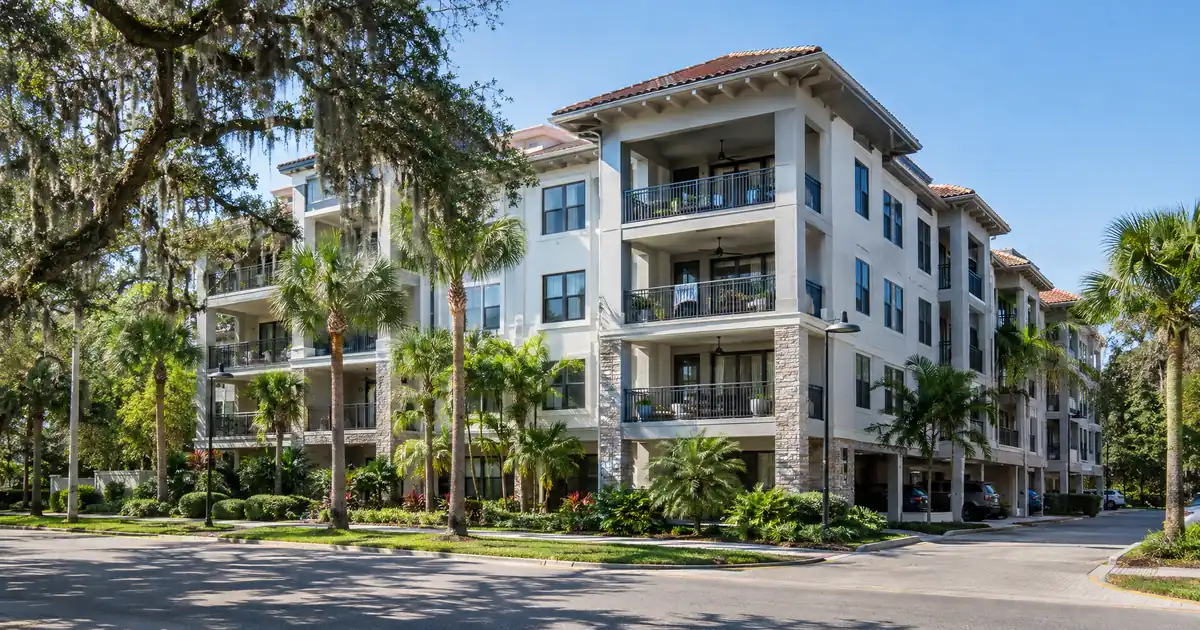
The Quick Read: Yes, through select asset-based mortgage programs, a borrower can qualify for a Florida second home on documented assets instead of paycheck or tax-return income, subject to underwriting, and the property’s Florida location does not change that. Which path fits depends on whether your assets cover the whole loan or need to be turned into monthly income. Either way, the assets are documented with statements, so this is a fully underwritten loan.
- Asset qualifier path: eligible assets must equal or exceed the entire loan, and no employment or income is documented. Leverage runs up to 80% on a purchase.
- Asset depletion path: usable assets divided by 60 months become qualifying income that must pass a debt-to-income test. Leverage on a second home runs up to 80% on a purchase.
- Classification matters: a true second home is one you occupy. A Florida property you plan to rent out routinely is an investment property, and the rules change.
- The building matters: Florida condo and HOA status can decide the file as much as your balance sheet does.
Which Path Fits Your Situation?
Match the path to your balance sheet. If your eligible assets add up to the full loan amount, the asset qualifier path is cleaner. If your assets are large but fall short of the loan, asset depletion converts them into income. A borrower is qualified on one path at a time. The two are never blended.
Both paths suit cash-heavy, income-light borrowers: retirees, people who sold a business, recipients of an inheritance or settlement, early-retired professionals, and households living off a portfolio. Lendmire, a mortgage broker, places these loans through select lenders in its network. The figures below are ceilings and floors, never offers.
| Factor | Asset qualifier | Asset depletion |
|---|---|---|
| How assets are used | Must cover the whole loan | Become monthly income |
| Income documented | None | Derived income, tested on DTI |
| Purchase leverage | Up to 80% | Up to 80% (second home) |
| Loan amounts | Up to $4,000,000 | $125,000 to $3,500,000 |
| Credit floor | 600 | Lender’s matrix |
All figures are available through select programs and subject to underwriting. Programs change, and every file is reviewed individually.
How the Asset Qualifier Path Works
On this path, your eligible assets after credit percentages must equal or exceed the entire loan. You do not document employment or income. You also provide no traditional personal-income documentation, pay stubs or employment verification.
Leverage reaches up to 80% on a purchase and 75% on a refinance, on a principal residence or second home. Reserves are not required at or below 75% loan-to-value. Above that, the lender sets them. The minimum credit score is 600.
Here is how much of each balance counts:
| Asset (qualifier path) | Share that counts |
|---|---|
| Brokerage accounts | 100% |
| Certificates of deposit | 100% |
| Money market | 100% |
| Savings | 100% |
| 401(k) and IRA, under 59½ | 90% |
| 401(k) and IRA, 59½ or older | 100% |
Accounts combine. Consider an illustrative $800,000 loan. You hold $330,000 in brokerage accounts (100% counts, so $330,000), $300,000 in a 401(k) at an age under 59½ (90% counts, so $270,000) and $200,000 in savings (100%, so $200,000). Together that is $800,000 of usable assets. On that arithmetic the borrower is reviewed on assets alone, though the lender’s own calculation governs.
Seasoning is 60 days, with two months of statements for each qualifying account.
How the Asset Depletion Path Works
Asset depletion turns a portfolio into a paycheck on paper. Eligible assets after haircuts are divided by 60 months. The result is monthly qualifying income, and it must carry the full housing payment and other debts through the debt-to-income test. Nothing is sold or pledged.
| Asset (depletion path) | Share that counts |
|---|---|
| Cash accounts | 100% |
| Certificates of deposit | 100% |
| Securities | 80% |
| Private stock | 75% |
| Retirement accounts (any age) | 70% |
| Real-estate equity | 60% |
Take an illustrative portfolio of $1,500,000 in securities (80% counts, so $1,200,000) plus $300,000 in cash (100%). That is $1,500,000 usable, divided by 60 months. The result is $25,000 of monthly qualifying income. That income then has to carry the housing payment and other debts.
Not eligible on this path: custodial accounts, deferred compensation, escrow accounts, foreign funds, cash on hand, stock options, non-vested restricted stock units, and funds from non-regulated financial companies.
Leverage on this path depends on occupancy:
- Second home or principal residence: up to 80% on a purchase and 60% on a cash-out refinance.
- Investment property: up to 65% on a purchase and 60% on a cash-out refinance.
Cash-out proceeds never count as qualifying assets.
The minimum assets are the lesser of $1,000,000 or 1.25 times the loan balance. They are never below $250,000 liquid when depletion is your only income source. If you also have documented income, asset-derived income can supplement it up to a 45% debt-to-income ratio. In that case the minimum-assets rule is waived. A first-time investor needs a 700 score on this path.
Statements must be at least 120 days old at application. You also need the most recent statement within 45 days. Funds from a business sale, inheritance or legal settlement are excused from that seasoning.
Why Assets Are Documented, Not Assumed
Asset-based qualification is a recognized way to prove repayment ability. Under the CFPB’s ability-to-repay rule, a creditor may base its decision on income, assets or both. The assets must be something other than the home securing the loan. Eligible examples include savings, vested retirement funds, stocks, bonds and CDs.
The same rule requires verification. The eCFR text of the rule calls for reasonably reliable third-party records. In practice that means your account statements.
So “no income documentation” never means “no documentation.” The asset-based mortgage is a consumer mortgage. Consumer-mortgage disclosures apply, and the lender’s own review governs the outcome.
Is It a Second Home or an Investment Property?
The classification you choose shapes which path, and which leverage, applies. Lenders generally treat a second home as a single unit you occupy part of the year and control fully. It should sit at a reasonable distance from your primary residence. It is not a full-time rental business.
Several arrangements push a Florida property out of second-home status:
- A rental-management agreement that controls when you can use the home.
- A multi-unit building.
- A plan to rent the home routinely.
- A timeshare structure.
If you won’t live there, it is an investment property. Calling it a second home to get better terms is a misrepresentation that can cost far more than it saves.
For a true rental, asset depletion still exists, at the lower 65% purchase leverage and 60% cash-out leverage above. The other route is a DSCR loan. DSCR loans are designed for non-owner-occupied investment properties. Because they are business-purpose investor loans, they are reviewed differently from a standard owner-occupied mortgage. Final terms depend on lender guidelines, property type, leverage, and the borrower’s complete credit picture.
The practical contrast: DSCR tests the house, asset depletion tests the person. DSCR qualifies primarily on property-level rental income covering the payment, subject to lender guidelines. It also treats your portfolio as reserves rather than income.
Scaling matters too. Asset depletion draws on the same pool for each purchase, so every new loan consumes assets. DSCR evaluates each rental on its own. An investor adding several Florida rentals will usually outgrow the depletion route.
Tax treatment can depend on how the funds are used and how the property is held. Borrowers should keep clear records and speak with a qualified tax professional before relying on any deduction.
What Florida Condos and HOAs Change
In Florida, the building can decide the file. Many second homes here are condos. A condo that fails agency project standards is called non-warrantable. That usually shifts financing to portfolio or non-QM programs, which set their own project rules. It rarely means an automatic denial.
Expect to supply the HOA questionnaire, budget, master insurance and reserve information. On many Florida buildings, that includes a structural reserve study. Project standards differ by program, and lenders may apply their own investor-concentration limits. A Florida condo that looks fine on paper can still stall on a lender’s project review.
One caution on agency news. Recent agency changes loosened some investor-concentration limits while tightening reserve and insurance expectations. Those are agency rules, not rules for asset-based files placed through select lenders. A condo-association trade group tracks the reserve changes. A law-firm analysis notes that reserve-funding pressure may raise assessments or make some projects ineligible.
This is a financing risk and an exit risk. If a building loses broad lender eligibility, your future buyer pool shrinks at resale.
HOA rental restrictions deserve a read before you go under contract. Short-term rental rules can vary by city, county, HOA, and property type, so investors should confirm local rules before relying on projected rental income.
What Doesn’t Count (and the Workaround)
Some holdings don’t carry a published percentage on either path. These include cryptocurrency, precious metals, collectibles, business accounts beyond your ownership share, and pledged or borrowed funds. Do not plan on them counting.
The documented route is converting them to a seasoned cash balance in a regulated account, with the source reviewed by the lender. Plan for that seasoning window before you apply.
Assets used for the down payment and closing costs come out of the pool first. The same dollars cannot count twice. On the depletion path, that shrinks the pool that gets divided by 60. Build that deduction into your math before you shop.
Alternatives Compared
“Assets” can mean borrowing against a portfolio instead of qualifying on it. Each choice trades something different.
| Option | What you give up | Best fit |
|---|---|---|
| Asset-based mortgage | Documented balances, seasoning | Income-light, asset-rich buyer |
| Conventional or full-doc jumbo | Income and tax-return review | Steady documented earners |
| Securities-backed line | Portfolio is pledged | Short-term bridge needs |
| HELOC on another home | Equity at risk on that home | Owners with large equity |
| Pay cash | Liquidity | Buyers with ample reserves left |
Agency, conventional and full-doc jumbo rules belong to those programs, not this one. A bank statement mortgage is for borrowers who document income through deposits, which is a different profile from a retiree living on a portfolio.
Across the wholesale network, the strongest asset files share three traits. Statements are clean and seasoned. The occupancy story is honest. The condo project, if any, is reviewed before the offer, not after. Lendmire’s asset-based mortgage program page lays out the structure in more detail.
Who Should Skip This Route
This is not for every borrower. It tends to fit when your documented income is low but your balances are large. It tends to be the wrong tool in these cases:
- You have strong traditional employment income and one second home. Conventional financing may cost less and carry less friction.
- You plan to rent the home routinely. That points to an investment-property structure.
- You would have to drain your reserves to meet the minimums, leaving little cushion after closing.
- Your wealth sits mostly in assets the programs don’t count.
Other states differ in property rules and project issues. The program figures do not change by state.
Key Terms Defined
Asset qualifier: a path where eligible assets, after credit percentages, must cover the entire loan.
Asset depletion: a path that divides usable assets by 60 months to create monthly qualifying income.
Haircut: the share of an asset’s value a program does not count because the value can fall or carry withdrawal costs.
Seasoning: how long funds have sat in your account, shown by statements.
Non-warrantable condo: a condo project that fails agency project standards and typically needs a non-QM or portfolio program.
Debt-to-income (DTI): monthly debts, including the new housing payment, compared with monthly qualifying income.
Risks to Weigh
Three risks deserve a hard look before you commit. First, your portfolio can drop in value between application and closing, and securities carry haircuts for that reason. Second, the pool shrinks with every purchase, so a second property can limit your options for a third. Third, Florida carrying costs, including HOA dues, condo assessments and insurance, remain your cost after closing, and a derived-income test does not shield you from them.
Frequently Asked Questions
Is asset-based qualification only for retirees?
No. Retirees are common borrowers, but business sellers, inheritance and settlement recipients, early-retired professionals and anyone with large balances and modest documented income also use it. On the depletion path, asset-derived income can supplement documented income up to a 45% debt-to-income ratio.
Do I have to sell my investments to buy the home?
No. The assets are counted, not sold or pledged. On the depletion path, they are converted to qualifying income on paper. Your down payment and closing funds still come from the pool, so those dollars cannot count a second time.
Can my retirement accounts count?
Yes, with limits that depend on the path. On the qualifier path, 401(k) and IRA balances count at 90% under 59½ and 100% at 59½ or older. On the depletion path, retirement accounts count at 70% at any age. All of it is subject to underwriting and documentation.
Can planned Florida rental income help me qualify for a second home?
Generally not. A second home is one you occupy and control, and rental income is not used to qualify it. If you plan routine rentals, the property is an investment, and a DSCR loan, which looks at the property’s rent, may fit better than asset depletion.
Why would a bank turn this down?
Large retail lenders often can’t turn a portfolio into qualifying income, or they rule out the condo project. A broker can compare programs across several lenders. Programs differ on assets, project rules and leverage, so a decline at one place is not a verdict on the file.
If you are qualifying on assets rather than income and want to see how the numbers work, Lendmire can help you compare asset-based mortgage options based on your statements, the property, credit profile, leverage, and your goals. You can reach the team at 828-256-2183. This is informational only and not a commitment to lend.
For Florida buyers, the building often decides the loan before the borrower does, so vet the condo project before you fall in love with the unit.
About Lendmire
Lendmire is a mortgage brokerage (NMLS# 2371349) licensed for consumer mortgage lending in 16 states, arranging bank statement and other alternative-documentation mortgages — P&L-only, 1099-only and asset-based paths — through a wholesale lending network. Eligibility is determined by the lender on each file. Scotsman Guide named Lendmire a Top Mortgage Workplace in both 2025 and 2026.
Get Started
Ready to find the right loan for you?
In about 30 seconds you can review financing options available for your home or investment property. No commitment required.
Informational only. Not a Loan Estimate, approval, or commitment to lend. Program availability and eligibility are subject to lender guidelines, credit approval, property review, and underwriting.
References
1. CFPB Regulation Z § 1026.43
3. CAI Advocacy: condo reserve update
4. Winstead: the condo supply problem
This article is part of Lendmire’s asset-based mortgage program — full qualification details, guidelines, and scenarios live on the program page.
Related reading: Can You Relocate to Georgia and Buy a Home on Assets Before You Have Local Income? · Can You Refinance a Michigan Home on Assets When Your Income Stops? · How Snowbirds Get a Mortgage on a Winter Home Without Income
Guides: Asset-Based Mortgage in Florida
Brandon Miller
Founder & CEO, Mortgage Loan Originator, Lendmire LLC
- Mortgage Loan Originator · NMLS# 1129696 · Verify on NMLS Consumer Access
- North Carolina Real Estate Broker · License# 343312 · Verify on NCREC
- North Carolina Insurance Producer · License# 19053198 · Property, Casualty, Life, Health · Verify on NAIC SBS
- Lendmire LLC · Firm NMLS# 2371349 · Verify firm licensure
Disclosure information. Lendmire is a state-licensed mortgage brokerage under NMLS# 2371349. Lendmire is not a depository institution, direct lender, or financial advisor — all loans referenced are placed through wholesale lender partners and are subject to each lender's underwriting standards. This article is provided for general informational purposes and is not a commitment to lend, nor does it constitute financial, legal, or tax advice. Loan programs, terms, rates, and qualification standards change without notice and depend on borrower profile, property type, and the state in which the subject property is located. Equal Housing Opportunity provider. NMLS Consumer Access: nmlsconsumeraccess.org.