
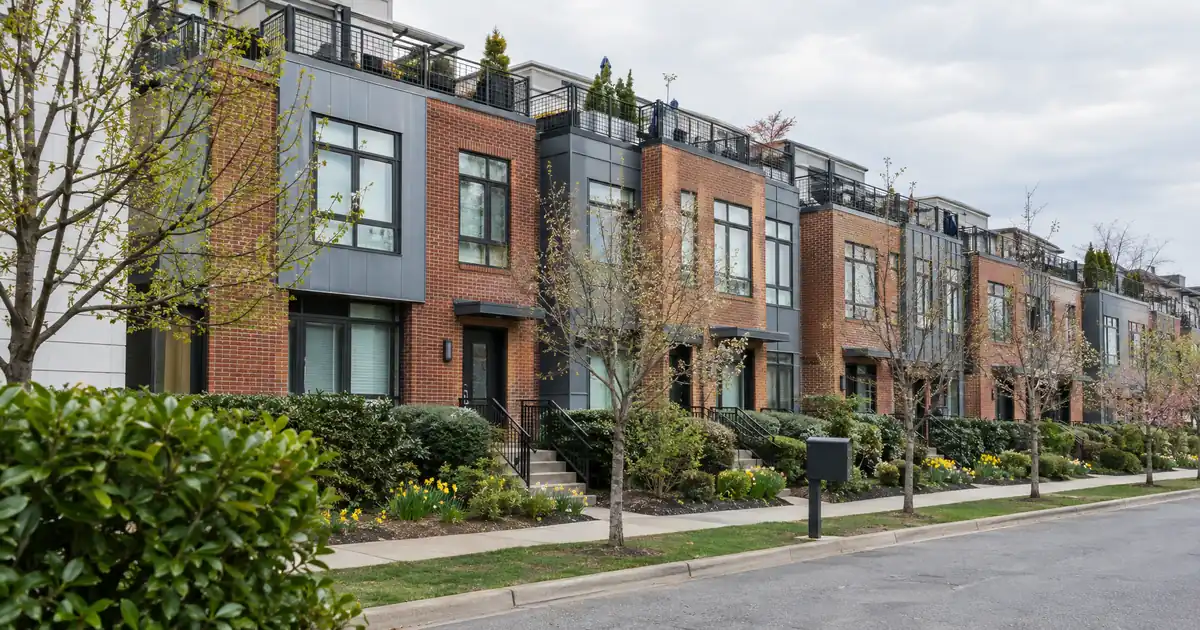
The Quick Read: Two things have to be true for an FHA condo loan: the borrower has to qualify, and the building has to qualify too. The building either sits on HUD’s approved list or the unit gets single-unit approval. On the borrower side, the wholesale programs Lendmire places FHA loans with start at a 580 decision score, with 3.5% minimum investment (96.5% maximum financing). Everything is subject to lender guidelines and full file review.
The building is the part first-time buyers miss. A clean credit file and 3.5% saved can still fail on a condo that has used up its FHA slots or has weak association finances. Check the building before the offer, not after the appraisal is ordered.
FHA payment estimate
Starting assumptions reflect an example price and the FHA minimum investment. Replace them with your own figures.
Editable benchmark: 7.32% as of October 22, 2026 · Freddie Mac 30-year average via FRED®. A conventional market reference, not an FHA loan quote.
Illustrative starting assumptions: a $350,000 price, the FHA minimum investment as the down payment, a thirty-year term at the current Freddie Mac benchmark, and property taxes and insurance estimated at typical national rates. Every field is editable.
Illustrative estimate only — not a Loan Estimate, approval, quote, or commitment to lend. The rate field carries the weekly Freddie Mac thirty-year conventional benchmark, a market reference and not an FHA loan quote; your rate is set by the lender at lock. FHA mortgage insurance follows HUD’s published schedule for the term, leverage and loan size entered; taxes, insurance and dues are editable estimates; closing costs are not included; county loan limits are not checked here. Licensed in sixteen states for consumer mortgages. Lendmire is not affiliated with or acting on behalf of FHA, HUD, or the federal government.
Why Does a Condo Need Approval at All?
A condo is not just a unit. It is a unit plus a shared roof, shared insurance, shared reserves and a board that sets monthly dues. FHA insures the loan, so HUD wants to know the association is stable enough that the collateral holds its value.
HUD’s condominium page says the project must meet the approval requirements in Handbook 4000.1. Those cover insurance coverage, financial condition, nature of title, pending legal action, physical condition, and other factors that affect the viability or marketability of the project.
Think of it as underwriting the building next to underwriting you. Either one can sink the file. On files we see, the borrower side is usually the easy half. The project side is where surprises show up.
The Two Paths: Approved Project or Single-Unit Approval
There are two ways a condo unit becomes FHA-eligible.
Path one: an FHA-approved project. The building has been reviewed and carries a seven-character Condo ID. Per HUD’s FHA Connection help page, a project must be approved before applications for FHA insurance on individual units can be processed. Approval comes through one of two routes: a lender-reviewed process (DELRAP) or an HUD-reviewed one (HRAP). Approvals are not permanent. They require periodic recertification.
Path two: single-unit approval (SUA). This is for a unit in a building that is not approved. Per HUD, the project must be complete and ready for occupancy, have at least five dwelling units, and cannot be a manufactured home. It also has to meet a smaller set of tests: FHA insurance concentration, owner-occupancy percentage, and the project’s financial condition. A building whose approval has expired, or was rejected or withdrawn, can also fall back to SUA.
SUA came out of a HUD final rule. The Federal Register rule on single-family condominium project approval created it, and it is why “not on the list” no longer means “not eligible.”
How the Loan Is Underwritten, Step by Step
Here is the order a condo file moves through. This is the mechanical sequence, and it is where most preventable gaps show up.
1. Check the project’s status. The lender searches FHA Connection for the building. If it is approved, it shows a Condo ID. If it is not, or the status is expired, the file heads toward SUA.
2. Run the loan-level check. For an approved project, the lender completes Form HUD-9991, which HUD says must be completed to verify both loan-level and single-unit approval requirements.
3. Or pursue SUA. For an unapproved building, the lender completes Section 4 of the same form. The HOA or its management company supplies the data the form asks for. The lender submits the form, not the buyer and not the association.
4. Case number and holds. HUD staff handle some holds on SUA case numbers manually. HUD’s FHA INFO messages note that FHA has worked to streamline case-number assignment for SUA, but the practical point stands: a condo file can pick up a hold a house file never would.
5. Appraisal. The appraisal is a standard FHA appraisal on the unit. Appraisal field reviews are now optional for lenders as a quality-control step. That is a lender-side change and not a borrower requirement.
6. Parallel underwriting. The lender underwrites you (credit, income, assets, ratios) and the project at the same time. A strong borrower does not cure a failing building, and a strong building does not cure a thin borrower file.
What the Building Has to Show
Project-level tests are where files stall. HOA questionnaire completeness is a common friction point: missing budget pages, an out-of-date insurance certificate, an unanswered litigation question. Each one sends the lender back to the management company.
| Building test | What it means for you | Can you check it? |
|---|---|---|
| FHA concentration | Share of units already carrying FHA loans | Ask lender or agent |
| Owner-occupancy | Share of units lived in by owners | Ask the HOA |
| Delinquent dues | Share of owners behind on fees | HOA financials |
| Reserves | Budget funds long-term repairs | HOA budget |
| Insurance | Master policy coverage in place | Insurance certificate |
| Litigation | Pending suits against the association | HOA questionnaire |
| Commercial space | Limits on non-residential floor area | Project documents |
Some specifics from HUD sources:
- SUA concentration cap. Per HUD Mortgagee Letter 2019-13, SUAs are limited to 10 percent of the total units in the project. In a project with fewer than 10 units, no more than two units can carry FHA-insured mortgages. HUD can suspend new case numbers once a project exceeds its maximum.
- Owner-occupancy. The Federal Register rule describes the history: a general requirement of 50 percent for existing projects, with lower paths down to 35 percent when specific lower-risk indicators are met or HUD reviews the project. The rule sets 30 percent as the floor of the range HUD can use. Treat anything below 50 percent as an exception that needs HUD review, not a routine fallback.
- Delinquency, commercial space and reserves. HUD’s older condominium processing guide used long-standing thresholds: no more than 15 percent of units behind on association fees, commercial space capped at 35 percent of floor area, and a budget that funds replacement reserves of at least 10 percent. That guide is dated, so read those figures as long-standing FHA benchmarks rather than current Handbook text. Lenders can also add their own overlays on top of HUD’s rules.
FHA Slots Can Close the Door
Here’s the catch. The concentration cap is a building limit, not a borrower limit. If a small building has already used its two FHA slots, the next buyer can be turned away regardless of credit. Same for a larger building at its 10 percent ceiling.
That makes one question worth asking early: how many units in this building already carry FHA loans? The listing agent may not know. The lender can usually tell you once the building is looked up.
The Borrower Side for a First-Time Buyer With Little Down
Across the wholesale programs Lendmire places FHA loans with, the borrower envelope looks like this, subject to lender guidelines and full file review:
- Leverage: maximum financing of 96.5%, which means a 3.5% minimum investment, measured against the lesser of price or appraised value.
- Credit: a decision score of 580 or higher. HUD has a lower tier with a bigger required investment, but the network does not reach below 580.
- Ratios: the base pair is 31/43 (housing and total debt to income) with no compensating factors. Documented compensating factors can reach 40/50 at the top tier, and the automated finding governs most files.
- Occupancy: principal residence only. A non-occupant co-borrower is allowed. Seller or interested-party contributions are allowed up to 6% of the price.
- Loan limits: set by county and updated each year, so the limit that applies depends on where the home is.
“First-time buyer” is a loose label for FHA. The program does not require you to be one. That matters for a buyer who owned years ago and is coming back.
HOA Dues Count in Your Ratios
The housing ratio includes principal and interest, taxes, insurance, FHA mortgage insurance and the monthly HOA dues. Dues are not a side cost. A building with high dues eats into the 31% housing ratio fast, and a buyer who looked fine on a house budget can slip over the line on a condo. Run the dues through the ratios before falling in love with a unit.
Mortgage Insurance, Described Mechanically
FHA charges an upfront premium of 1.75% of the base loan amount, which HUD Mortgagee Letter 2023-05 confirms and which is usually financed into the loan. The annual premium falls between 0.15% and 0.75% of the balance depending on term, loan amount and LTV. On a thirty-year loan above 90 percent LTV, it lasts for the term. At or below 90 percent it ends after eleven years. A buyer putting 3.5% down is above 90 percent LTV, so plan for the premium to stay.
Where the General Rule Breaks
Edge cases that change the answer:
- Under five units. SUA is not available. A small building has to be approved as a project or the unit is out.
- Manufactured-home condos. Not eligible for SUA.
- New construction and young projects. These follow different occupancy and pre-sale paths. HUD’s project form handles new construction and complete-legal-phase projects separately.
- Expired approval. A building that used to be on the list may no longer be. Don’t rely on an old listing sheet. Look it up fresh.
- Rental-heavy buildings. A building with a lot of investor-owned units can miss the owner-occupancy test. This is common in smaller downtown buildings and converted apartment properties.
- Special assessments and litigation. Neither is a bright-line rule in the sources above, but both are project-viability problems the lender has to review. A pending assessment can change your budget as well as your approval.
- Second homes and rentals. FHA is for a primary residence. Occupancy decides the leverage, so a condo bought as an investment is a different loan.
- Refinancing later. The same project eligibility applies when you refinance a condo, so a building that loses approval can complicate the exit as well as the entry.
A Pre-Offer Checklist
Before you write an offer on a condo with FHA financing, get these in order:
1. Ask your loan officer to look up the building’s FHA status and Condo ID.
2. If it is not approved, ask whether it can qualify for single-unit approval and how many FHA loans are already in the building.
3. Ask the listing agent for the HOA budget, most recent financials, insurance certificate and the completed questionnaire.
4. Read the budget for reserve funding, upcoming projects and any special assessment.
5. Add the monthly dues to your ratio math before you commit.
6. Write the financing contingency so it covers project approval, not just your own loan approval.
Down payment help can combine with a condo purchase in some programs, and gift funds can cover part of the minimum investment, though the rules vary by lender.
If the Building Fails
A failed building does not end the search. It sends you to a decision.
| Option | What changes | Trade-off |
|---|---|---|
| Wait for approval | HOA applies for project approval | Out of your control |
| Different building | Choose an approved project | Narrower choice |
| Conventional loan | Different project rules | Different down payment and credit asks |
| Assistance programs | May cover part of the investment | Program rules vary |
Whether to wait depends on how motivated the association is. A board that has already filed a project application is a different bet from one that has never heard of it. Switching buildings is usually the cleaner move for a buyer with a short window.
Resale is the other half of this. A building that is not FHA-eligible shrinks the pool of future buyers who can use low-down financing. That is worth weighing even when you can get your own loan through.
Key Terms Defined
Single-unit approval (SUA): HUD’s path for financing one unit in a condo project that is not FHA-approved.
Condo ID: The seven-character code HUD assigns an approved project, searchable in FHA Connection.
FHA concentration: The share of units in a project already carrying FHA-insured loans.
Owner-occupancy ratio: The share of units lived in by their owners rather than rented out.
Upfront mortgage insurance premium: The one-time FHA charge of 1.75% of the base loan, usually financed.
HOA questionnaire: The building-level form the association or its manager completes for the lender.
How FHA Fits a Condo Buyer’s Decision
For a buyer with limited savings, FHA is often the lowest-cash route into a condo. The cost is a second layer of review. You are asking a building to pass a test as well as yourself, and you don’t control the building.
The practical habit is simple. Check the building first. Treat the HOA paperwork as part of the file from day one. Run the dues through your ratios. Keep a backup building in mind. Buyers who do those four things lose the fewest deals to the project review.
If you are buying a home and want to see whether an FHA loan fits your file, Lendmire can help you compare the options and what each one asks of the file. Details on FHA loan programs are on the program page, or call 828-256-2183.
Frequently Asked Questions
Can I use an FHA loan on any condo?
No. The building must be an FHA-approved project, or the unit must qualify for single-unit approval. SUA needs a completed project of at least five units that is not a manufactured home, plus passing marks on FHA concentration, owner-occupancy and financial condition.
Does the 3.5% minimum investment make any condo eligible?
No. The 3.5% is a borrower figure, tied to a decision score of 580 or higher across the programs Lendmire places loans with. The building has to pass its own tests separately. A strong borrower file does not override a failing project.
What happens if the building already has too many FHA loans?
The file can be turned away. HUD limits single-unit approvals to 10 percent of the units in a project, and to two FHA loans in a project under 10 units.
Do HOA dues affect whether I qualify?
Yes. Dues sit inside the housing payment, so they count in the housing and total ratios. The base pair is 31/43, with documented compensating factors reaching 40/50 at the top tier, all subject to lender guidelines.
Does FHA mortgage insurance ever go away on a condo loan?
It depends on LTV. On a thirty-year loan above 90 percent LTV the annual premium lasts for the term. The upfront premium is 1.75% of the base loan and is usually financed.
For your own numbers, request a scenario review with Lendmire.
About Lendmire
Lendmire — NMLS# 2371349 — is a mortgage broker that arranges FHA, VA, conventional and jumbo home purchase and refinance financing in 16 states through wholesale lenders. Every option is subject to the lender’s guidelines and full underwriting. Scotsman Guide named Lendmire a Top Mortgage Workplace in both 2025 and 2026.
Get Started
Ready to find the right loan for you?
In about 30 seconds you can review financing options available for your home or investment property. No commitment required.
Informational only. Not a Loan Estimate, approval, or commitment to lend. Program availability and eligibility are subject to lender guidelines, credit approval, property review, and underwriting.
References
2. HUD FHA Connection Condominiums Help
3. Federal Register – Project Approval for Single-Family Condominiums
4. HUD Mortgagee Letter 2019-13
5. HUD Mortgagee Letter 2023-05
This article is part of Lendmire’s FHA loan program — full qualification details, guidelines, and scenarios live on the program page.
Related reading: FHA Cash-Out Solar Lien Rules for a First-Time Equity Borrower · Can You Get an FHA Loan With Minimum Down at a Lower Credit Tier? · How Much Cash a Condo Gets at the FHA Cash-Out Cap After Payoff
Brandon Miller
Founder & CEO, Mortgage Loan Originator, Lendmire LLC
- Mortgage Loan Originator · NMLS# 1129696 · Verify on NMLS Consumer Access
- North Carolina Real Estate Broker · License# 343312 · Verify on NCREC
- North Carolina Insurance Producer · License# 19053198 · Property, Casualty, Life, Health · Verify on NAIC SBS
- Lendmire LLC · Firm NMLS# 2371349 · Verify firm licensure
Disclosure information. Lendmire is a state-licensed mortgage brokerage under NMLS# 2371349. Lendmire is not a depository institution, direct lender, or financial advisor — all loans referenced are placed through wholesale lender partners and are subject to each lender's underwriting standards. This article is provided for general informational purposes and is not a commitment to lend, nor does it constitute financial, legal, or tax advice. Loan programs, terms, rates, and qualification standards change without notice and depend on borrower profile, property type, and the state in which the subject property is located. Equal Housing Opportunity provider. NMLS Consumer Access: nmlsconsumeraccess.org.