
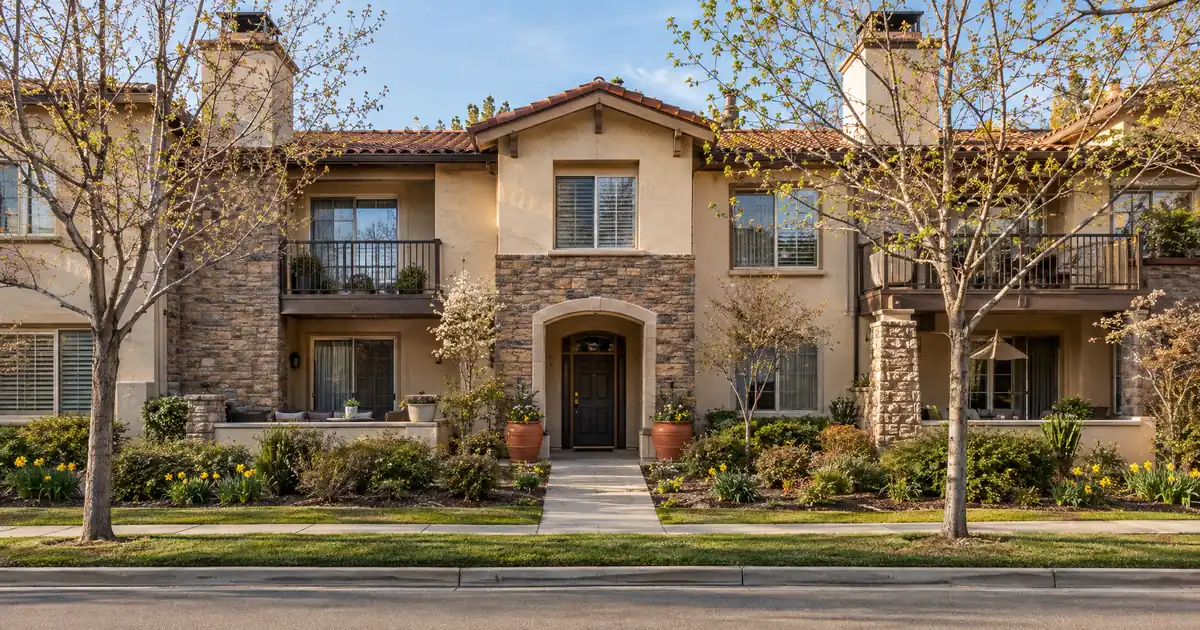
The Quick Read: Yes, as long as the condo itself passes FHA’s building-level test. The borrower side works like any FHA purchase: financing up to 96.5% of the price, which means a 3.5% minimum investment, at a decision credit score of 580 or higher. The catch is that the building has to be eligible too, either as an FHA-approved project or through a single-unit approval. A strong file can still stall on a weak building. Terms vary by lender guidelines, property type, leverage, credit profile, and full file review.
What Does “Minimum Down” Mean on an FHA Condo?
The minimum is 3.5% of the lesser of the purchase price or appraised value, and it applies to condos the same way it applies to houses. Maximum financing is 96.5% of value. There is no zero-down FHA purchase.
FHA payment estimate
Starting assumptions reflect an example price and the FHA minimum investment. Replace them with your own figures.
Editable benchmark: 7.32% as of October 22, 2026 · Freddie Mac 30-year average via FRED®. A conventional market reference, not an FHA loan quote.
Illustrative starting assumptions: a $350,000 price, the FHA minimum investment as the down payment, a thirty-year term at the current Freddie Mac benchmark, and property taxes and insurance estimated at typical national rates. Every field is editable.
Illustrative estimate only — not a Loan Estimate, approval, quote, or commitment to lend. The rate field carries the weekly Freddie Mac thirty-year conventional benchmark, a market reference and not an FHA loan quote; your rate is set by the lender at lock. FHA mortgage insurance follows HUD’s published schedule for the term, leverage and loan size entered; taxes, insurance and dues are editable estimates; closing costs are not included; county loan limits are not checked here. Licensed in sixteen states for consumer mortgages. Lendmire is not affiliated with or acting on behalf of FHA, HUD, or the federal government.
Across the wholesale programs Lendmire places FHA files with, the 3.5% tier starts at a decision score of 580. The FDIC’s summary of the FHA 203(b) program also describes a lower tier for scores of 500 to 579 with a larger required investment. That tier is a HUD rule, and the lenders Lendmire works with do not reach below 580. If your score sits under that line, the condo question is secondary. Fixing the score comes first.
Two other pieces of the borrower picture matter for condos:
- Occupancy. FHA purchase financing is for a home you will live in as your principal residence, one to four units. It is not a second-home or rental product. Occupancy decides the leverage, and a condo you won’t live in is a different loan conversation entirely.
- Seller help. Seller or interested-party contributions can run up to 6% of the price, which can matter in a condo purchase where closing costs add up.
Everything here is subject to lender guidelines and full file review. None of it is a commitment to lend.
Why the Building Matters as Much as the Buyer
An FHA condo loan has two gates: yours and the building’s. You can clear yours and still be declined because the project fails its test. That surprises many first-time buyers.
According to HUD’s FHA condominium guidance, a unit can qualify in one of two ways:
1. The unit sits in an FHA-approved project. The lender then does a loan-level review of your file.
2. The project isn’t approved, but the unit qualifies under Single-Unit Approval (SUA).
Think of the first route as a pre-cleared building and the second as a one-off exception. Neither is a government listing or a home FHA sells. “FHA-approved condo” only means the project met FHA’s tests.
How to Check Whether a Building Is Approved
Start with HUD’s public condo project lookup. Search the building by name or address. Statuses include Approved, Expired, Rejected and Withdrawn.
Here is how to read the result:
| Status | What it usually means for you |
|---|---|
| Approved | Standard loan-level review of the unit |
| Expired | Approval lapsed; SUA may still be an option |
| Rejected or Withdrawn | Not an approved project; SUA may still apply |
| Not listed | Not proof the unit is ineligible; ask your lender |
HUD’s FHA Connection help page confirms that units in non-approved, expired, rejected or withdrawn projects can still be approved as a single unit. So “not on the list” is not the end of the road. It just changes the paperwork.
Approvals also don’t last forever. Projects must be recertified, and a building that was approved when a previous owner bought may not be approved now. Check the status at the start of your search, not after you’ve fallen in love with a unit.
How Single-Unit Approval Works
SUA is the fallback for buildings that aren’t on the approved list. It has limits. Per HUD, the project must be complete and ready for occupancy, have at least five dwelling units, and not be a manufactured home. It must also meet a subset of the full approval tests, including FHA insurance concentration, owner-occupancy and the association’s financial condition.
Your lender completes Form HUD-9991, the condo questionnaire. HUD’s form instructions say the information must be from the last 90 days and can come from the association or its management company, public records and third parties. The form collects things like:
- FHA insurance concentration (how many units already carry FHA loans)
- Owner-occupancy percentage
- Individual owner concentration
- Units in arrears on dues
Concentration limits exist to keep any one building from leaning too heavily on a single program. The 2019 Federal Register rule set the SUA range for FHA concentration and lets HUD suspend new FHA case numbers in a project that goes over the maximum. HUD’s announcement of the rule said approved projects generally need at least 50% owner-occupancy, with a narrow exception for existing projects that can go lower. The operative thresholds live in HUD’s Handbook and change by notice, so your lender’s current numbers are the ones that count. Some lenders also layer on stricter rules of their own, called overlays.
Who Does What
Buyers can’t apply for condo approval directly. It is a division of labor:
- You supply your income, assets and credit, and pick the unit.
- Your lender checks the lookup, completes the HUD-9991 if needed, and submits it when requesting the FHA case number.
- The association or management company supplies the building data and documents.
- Your agent can ask the listing side for building information before you make an offer.
The weak link is often the association. If the management company is slow or uncooperative, your file waits. Delays there can run into your contract’s deadlines, so build in room.
What Condo Costs Do to Your Budget
A condo adds two things a house usually doesn’t: monthly association dues and the chance of special assessments. Dues count toward your housing payment when a lender measures your ratios. That can trim how much home your income supports.
Here is how FHA measures that. The base ratio pair is 31/43, meaning housing costs against income and total debts against income. With documented compensating factors, ratios can stretch as far as 40/50 at the top tier, and the automated finding governs most files. A condo with high dues pushes the first number up fast in the arithmetic, even if the price looks modest. Run your budget with dues included before you fall for a unit.
Mortgage insurance is the other piece. FHA charges an upfront premium of 1.75% of the base loan, which is usually financed, plus an annual premium that runs between 0.15% and 0.75% of the balance depending on term, loan amount and LTV. On a thirty-year loan above 90% LTV, the annual premium lasts for the term. At or below 90% LTV, it ends after eleven years. That matters for a minimum-down buyer, since 96.5% financing sits squarely in the long-premium zone.
County loan limits apply to FHA loans and change every year, so your lender can tell you where your county stands.
A Pre-Offer Checklist for the Building
Ask these before you write an offer, not after:
1. Is the project on HUD’s approved list, and is the status current?
2. If not, is it complete, with at least five units, and not a manufactured-home project?
3. What share of units are owner-occupied?
4. How many units already carry FHA loans?
5. Are many owners behind on dues?
6. Is there pending litigation against the association?
7. Does the association carry adequate insurance and healthy reserves?
8. Are any special assessments planned or approved?
Reserves, insurance, litigation and assessments reveal how stable the building is, and they affect your costs after closing. A building that fails these tests can hurt FHA eligibility and your future resale at the same time.
What Happens If the Building Fails?
You have a few paths, and the right one depends on why it failed.
If the project is simply not approved, SUA may rescue the unit. If it fails the SUA tests, such as too few units, too many FHA loans or too many renters, the unit isn’t eligible for FHA.
At that point, your options are to pick a different unit, move to another loan type, or ask the seller to wait while the association pursues approval. Your agent can write contingencies that let you exit if financing falls through on building eligibility. Add that language before you sign, not after.
Manufactured-home condo projects are a separate case. They are not eligible for SUA, and HUD requires its own review route for them.
FHA or Conventional for a Condo?
This is a genuine toss-up for some buyers, and the flip point is usually the building and the credit profile.
| Factor | FHA condo | Conventional condo |
|---|---|---|
| Minimum investment | 3.5% at 580+ | Varies by program |
| Credit flexibility | Broader | Often tighter |
| Building test | HUD approval or SUA | Different project review |
| Mortgage insurance | Upfront plus annual | Typically ends sooner at lower LTV |
| Occupancy | Primary residence only | More options |
FHA tends to win when credit is thinner, savings are modest and the building is already approved. Conventional may be the better call when your credit is strong and your down payment is larger, since FHA’s annual premium can last for the loan’s term at high LTV. It can also win when the building isn’t on the FHA list and can’t use SUA. Lendmire’s team can compare the options against your file and the specific building.
How Do You Fund the 3.5%?
The minimum investment can come from your own savings, and the program allows a non-occupant co-borrower on the file. Seller or interested-party contributions of up to 6% of the price can help with closing costs, but they are not a substitute for your own required investment. Lenders review the source of your funds, so plan for documentation. Your lender can tell you which sources the file will accept, subject to lender guidelines and full file review.
What FHA Is Doing Behind the Scenes
HUD keeps updating the rules around this lane. Its Mortgagee Letter 2026-11 updates how the minimum decision credit score is determined so that alternative credit score models can be used. The existing minimum thresholds stay unchanged, and a tri-merge credit report is still required. HUD has also trimmed some appraisal requirements in Mortgagee Letter 2025-18 and made appraisal field reviews optional in Mortgagee Letter 2026-10, which HUD says can reduce costs passed to consumers. That is not a promise your own fees will drop. Check the current HUD Handbook 4000.1 with your lender, because details shift.
Key Terms Defined
- Single-Unit Approval (SUA): A route that lets one unit qualify for FHA financing even though its building isn’t FHA-approved.
- Loan-level review: The lender’s check of one unit and borrower inside a project that is already approved.
- Owner-occupancy percentage: The share of units lived in by their owners rather than rented out.
- FHA concentration: The share of units in a building that already carry FHA loans.
- HUD-9991: The condo questionnaire your lender completes for Single-Unit Approval.
- Overlay: A stricter rule a lender adds on top of HUD’s minimum.
Frequently Asked Questions
Can I use an FHA loan for a condo if my credit score is 580?
Yes, 580 is the entry point for the 3.5% minimum investment on the programs Lendmire places files with. Your score only clears your side of the file. The building must still pass HUD’s approval or Single-Unit Approval test, and lender guidelines and full file review apply.
What if my condo isn’t on HUD’s approved list?
Not being listed doesn’t rule it out. Units in non-approved, expired, rejected or withdrawn projects can sometimes be approved as a single unit, if the building has at least five units, is complete and meets the limited tests. Your lender handles the HUD-9991 and the case number request.
Do HOA dues affect how much I can borrow?
Yes. Dues count toward the housing payment used to measure your ratios, so higher dues can reduce the home price you qualify for. Special assessments can add to monthly costs and affect qualification too.
Can I buy a condo with FHA and rent it out?
Not as a purchase. FHA purchase financing is for your principal residence, and occupancy decides the leverage. A unit you don’t plan to live in belongs to a different loan.
Can the building lose approval after I buy?
Yes. Project approvals expire and must be recertified, and a lapse can narrow options for future buyers and refinancers. Check the status of any building you’re considering, and consider how it will look at resale.
If you are buying a home and want to see whether an FHA loan fits your file, Lendmire can help you compare the options and what each one asks of the file. Details on the FHA loan programs are on the site, or reach the team at 828-256-2183.
For your own numbers, request a scenario review with Lendmire.
About Lendmire
Lendmire (NMLS# 2371349) is a mortgage brokerage serving homeowners and home buyers in 16 states. FHA, VA, conventional and jumbo purchase and refinance loans are arranged through wholesale lending channels; Lendmire brokers the financing and the lender underwrites each application. Scotsman Guide named Lendmire a Top Mortgage Workplace in both 2025 and 2026.
Get Started
Ready to find the right loan for you?
In about 30 seconds you can review financing options available for your home or investment property. No commitment required.
Informational only. Not a Loan Estimate, approval, or commitment to lend. Program availability and eligibility are subject to lender guidelines, credit approval, property review, and underwriting.
References
1. FDIC – FHA 203(b) Mortgage Insurance Program Summary
3. HUD – FHA Condo Project Lookup
4. HUD – FHA Connection Condominium Help
5. HUD – Form HUD-9991 Instructions
6. Federal Register – Project Approval for Single-Family Condominiums
7. HUD Archives – 2019 Condo Rule Press Release
8. HUD – Mortgagee Letter 2026-11 (Minimum Decision Credit Score)
9. HUD – Mortgagee Letter 2025-18
10. HUD – Mortgagee Letter 2026-10
11. HUD – Single Family Housing Policy Handbook 4000.1
This article is part of Lendmire’s FHA loan program — full qualification details, guidelines, and scenarios live on the program page.
Related reading: FHA Loan vs Conventional Requirements for a Condo Purchase · Can You Put More Down to Use an FHA Loan on a Home Near the Limit? · Is a Fully Gift-Funded Down Payment Allowed on an FHA Loan?
Brandon Miller
Founder & CEO, Mortgage Loan Originator, Lendmire LLC
- Mortgage Loan Originator · NMLS# 1129696 · Verify on NMLS Consumer Access
- North Carolina Real Estate Broker · License# 343312 · Verify on NCREC
- North Carolina Insurance Producer · License# 19053198 · Property, Casualty, Life, Health · Verify on NAIC SBS
- Lendmire LLC · Firm NMLS# 2371349 · Verify firm licensure
Disclosure information. Lendmire is a state-licensed mortgage brokerage under NMLS# 2371349. Lendmire is not a depository institution, direct lender, or financial advisor — all loans referenced are placed through wholesale lender partners and are subject to each lender's underwriting standards. This article is provided for general informational purposes and is not a commitment to lend, nor does it constitute financial, legal, or tax advice. Loan programs, terms, rates, and qualification standards change without notice and depend on borrower profile, property type, and the state in which the subject property is located. Equal Housing Opportunity provider. NMLS Consumer Access: nmlsconsumeraccess.org.