
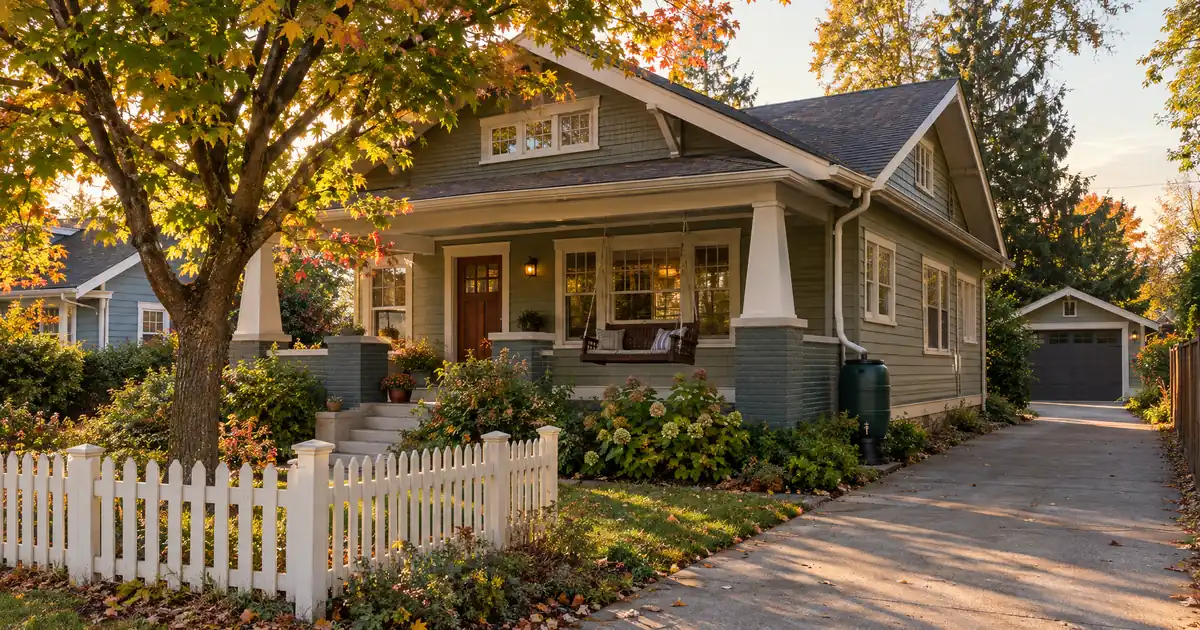
The Quick Read: A VA loan can finance a newly built home, but the home has to pass a VA appraisal and meet VA’s minimum property standards. The builder no longer needs a VA-issued builder ID, because the lender now decides which builders it will accept. VA also does not inspect new homes for defects, so your protection after closing is the builder’s warranty. Terms are subject to lender guidelines and full file review.
Key Takeaways
- A VA appraiser values the home and checks it against minimum property requirements. A home that is still on paper is appraised from plans and specifications.
- The builder ID was dropped for new and proposed construction. Builder acceptance now sits with the lender.
- The warranty you need depends on whether your local building department inspects the foundation, framing and final stages.
- If the appraisal lands below the contract price, you cover the gap from your own funds or renegotiate.
- Full entitlement means 100% financing with no mortgage insurance. A funding fee applies unless you are exempt.
Key Terms Defined
Minimum property requirements: The safety, soundness and sanitation standards a home must meet before VA will guarantee a loan on it.
Notice of Value (NOV): The document VA issues after the appraisal, stating the home’s value. The price cannot exceed it without you paying the difference.
Plans and specifications (“plans and specs”): The drawings and materials list a proposed home is built from. The appraiser values the home “subject to completion” per these documents.
Certificate of occupancy: The local government’s sign-off that a finished home is safe to live in. Its date helps decide how VA classifies the home.
Warranty of completion: The builder’s written promise to fix defects. VA uses a one-year form (VA Form 26-1859) or a ten-year insured plan.
Entitlement: The amount of VA guaranty you have available. Your certificate of eligibility (COE) shows it.
VA payment estimate
Starting assumptions reflect an example price with no down payment and a first-use funding fee. Replace them with your own figures.
Editable benchmark: 7.32% as of October 22, 2026 · Freddie Mac 30-year average via FRED®. A conventional market reference, not a VA loan quote.
Illustrative starting assumptions: a $350,000 price, no down payment with full entitlement, a first-use funding fee financed into the loan, a thirty-year term at the current Freddie Mac benchmark, and property taxes and insurance estimated at typical national rates. Every field is editable.
Illustrative estimate only — not a Loan Estimate, approval, quote, or commitment to lend. The rate field carries the weekly Freddie Mac thirty-year conventional benchmark, a market reference and not a VA loan quote; your rate is set by the lender at lock. The funding fee follows VA’s published table for the use and down payment entered; the residual-income figure is VA’s guideline for the region and family size, and the rough residual shown subtracts only the housing payment and the debts entered, while VA also deducts taxes, maintenance and utilities. Taxes, insurance and dues are editable estimates; closing costs are not included. Licensed in sixteen states for consumer mortgages. Lendmire is not affiliated with or acting on behalf of the Department of Veterans Affairs.
Can You Use a VA Loan on a Newly Built Home?
Yes. The law only asks that the property meet the standards VA sets. Under 38 CFR 36.4351, a loan to buy or build a home is not eligible for a guaranty unless the property meets VA’s planning, construction and general-acceptability standards.
That one rule drives everything else. The appraisal, the warranty and the builder paperwork all exist to prove the home meets it.
The home also has to be your primary residence. A VA loan does not cover a second home or a rental. Occupancy is the dividing line, and the rest of this article assumes you plan to live there.
Lendmire’s VA loan programs are arranged through wholesale lenders, and the same property rules apply on every file.
What Happened to the VA Builder ID?
It is gone for new and proposed construction. VA Circular 26-25-1 rescinded the procedure for builders to obtain a VA builder ID. A VA-issued ID is no longer needed to issue the Notice of Value or to process the loan.
Plenty of websites still say otherwise. Older handbook text required a builder ID in each state before the NOV was issued, and that text lingers online. If a builder tells you they are “not VA-approved,” ask what they mean. Often they are describing an old rule.
The same circular explains why. VA stopped its own compliance inspections of new and proposed construction in February 2006. Since then, VA has relied on local building inspections and one-year or ten-year warranties. Many veterans still assumed VA could force a builder to fix defects. It cannot.
So who vets the builder now? The lender. Across the wholesale programs Lendmire works with, each lender sets its own standards for builders, such as licensing, insurance and track record. Two lenders can treat the same builder differently. That is a lender overlay, not a VA rule.
One more wrinkle: builder registration may still matter for Specially Adapted Housing grants and Native American Direct Loans. If either applies to you, ask your loan officer to check VA’s current guidance.
How Is a New Home Appraised?
VA sorts homes into three categories, and the category changes the process.
| Category | What it means | How it is appraised |
|---|---|---|
| New construction | Never occupied, under one year old by certificate of occupancy date | On the finished home |
| Proposed or under construction | Not finished | From plans and specs |
| Existing | Complete for over a year, or previously occupied | Standard appraisal |
The lender orders the appraisal through VA’s system, and VA assigns the appraiser. A reviewer checks the report, and the NOV comes at the end.
For a home not yet built, the lender uploads the plans and specifications. The appraiser values the home “subject to completion per plans and specs.” Incomplete or inconsistent plans are an easy way to stall a file, so make sure your builder hands over a full set.
The VA Buyer’s Guide adds a useful detail. In a new area with no comparable sales, the lender can ask the appraiser to use a cost approach (what it costs to build) alongside the usual sales comparison.
What if the appraisal comes in low?
Value has to support the price. If the price exceeds reasonable value, you pay the difference from your own funds, or you renegotiate with the builder. Full entitlement lets you finance up to the appraised value with nothing down, but it does not cover a gap above that value.
Picture a builder contract priced a few percent over what the appraiser finds. You can ask the builder to drop the price, split the difference, or bring cash to closing. Some builders will adjust. Others will not, and that is a business decision on their side.
What if the home was finished more than a year ago?
Per Circular 26-18-7, a home finished at least a year ago, shown by its certificate of occupancy, is treated as a refinance-style existing home. It needs a new VA appraisal dated after the certificate of occupancy. That circular is a few years old, so confirm current practice with your loan officer.
What Must the Home Meet?
The home has to satisfy VA’s minimum property requirements. The statutory basis is in the Federal Register: 38 U.S.C. 3704(a) and 3710(b)(4) bar guarantees on properties that fail VA’s minimum acceptability standards. VA keeps the detailed list in Chapter 12 of its Lenders Handbook (VA Pamphlet 26-7). A later VA notice confirms that a home finished within one year of the loan must meet the MPRs.
In plain terms, the appraiser looks for a safe, sound, sanitary home with working systems and local code compliance. Some items a builder may have to certify, such as radon-resistant construction where it applies. Where soil is unstable, the builder supplies a certification or an engineer’s report. A proposed home on septic needs health authority approval of the sewage system.
The MPR list gets revised. Ask your lender which version it is applying.
Two myths are worth clearing up:
- “VA sets a minimum square footage.” For standard site-built homes, the VA handbook does not set one. Minimum sizes you may hear about are usually lender overlays.
- “The VA appraisal is a home inspection.” It is not. It checks value and minimum property requirements. A separate inspection by someone you hire is still smart on a new build.
Which Warranty Does the Home Need?
This is where builder paperwork matters most. The lender confirms whether your local authority inspects the foundation, framing and final stages. The answer sets the warranty path.
| Local inspections? | Type | Warranty needed |
|---|---|---|
| Yes | New construction | One-year VA Form 26-1859 or ten-year insured plan |
| Yes | Proposed construction | One-year VA Form 26-1859 |
| No | Either | Both the one-year warranty and the ten-year insured plan |
That table reflects older handbook mirrors, so your lender should confirm it against current VA text.
The acknowledgments you sign matter too. You acknowledge VA will not step into construction complaints, and that VA help is limited to defects reported during the one-year warranty. After closing, your recourse is the builder and the warranty. Report problems early and in writing.
What Paperwork Does the Builder Provide?
VA’s forms and instructions control, but a typical lender checklist for new construction includes:
- VA Form 26-1859, the warranty of completion
- A builder certification of plans, specifications and site (HUD-92541)
- A building permit and certificate of occupancy
- Builder certifications on energy conservation, lead and water distribution, and off-site improvements
- A termite report
For proposed construction, the appraiser also completes a final inspection report once the home is built. It confirms the home substantially matches the plans and includes exterior photos. On new construction, the lender certifies that on-site and off-site improvements are complete and that the home meets the MPRs.
Little items like floor coverings, appliances and fixtures are called customer-preference items. They can be handled through repair inspections on new construction, but practice varies, so ask.
Where the General Rule Breaks
- Lender-acquired homes. If a lender took title after a builder’s bankruptcy or closure, the home may still be eligible. It is sold as existing construction with no warranty, and you sign an acknowledgment that VA will not help with defects.
- Ineligible sites. Older handbook text lists properties that cannot be appraised, such as airport clear zones and flood hazard areas where flood insurance is unavailable.
- Owner-builders and construction loans. Circular 26-18-7 covers lender construction fees, general contractor rules and your approval of draws. It may have been superseded, and few lenders fund the construction phase at all. If you plan to act as your own builder, ask early whether a lender will take the file.
- Modular and manufactured homes. These have separate Chapter 12 rules. Modular homes must meet state and local codes.
What Does Your Decision Look Like?
The financing side is simple compared with the property side. With full entitlement, a VA purchase loan allows 100% financing as long as the price is not above the appraised value, with no mortgage insurance of any kind and no VA loan limit. With remaining entitlement, a down payment may be required, so speak with a loan officer.
A funding fee applies unless you are exempt, such as veterans receiving compensation for a service-connected disability. On first use it is 2.15% with less than five percent down, 1.5% with five to under ten percent down, and 1.25% with ten percent or more down. The fee can be financed.
VA sets no minimum credit score. The wholesale programs Lendmire places VA loans with start at a 580 decision score and serve amounts to $4,000,000 with full entitlement. Underwriting turns on residual income, which is what is left after your major obligations. The 41% debt-to-income figure is a guideline, not a cap. A ratio above it needs residual income well above the standard VA residual income requirement. Your COE decides eligibility, and all of this is subject to lender guidelines and full file review.
In practice, you will want to settle these questions before signing a builder contract:
1. Does your lender accept this builder?
2. Do local inspections happen, and which warranty applies?
3. Is the plan set complete enough for the appraiser?
4. What is your plan if the appraisal comes in low?
5. Does the contract let you walk away or renegotiate on a low value?
If you are buying a home and want to see whether a VA loan fits your file, Lendmire can help you compare the options and what each one asks of the file. Nothing here is a commitment to lend.
Frequently Asked Questions
Does my builder need a VA builder ID?
No. VA ended that requirement for new and proposed construction. The lender now decides whether it will accept the builder, using its own standards for licensing, insurance and track record.
Will VA inspect the home or make the builder fix problems?
No. VA stopped compliance inspections of new construction in February 2006 and cannot compel a builder to make repairs. Your protection is the builder warranty, and VA’s help is limited to defects reported during the one-year warranty window.
Do I still need a home inspection on a new build?
VA does not require one, and the VA appraisal is not a substitute. An inspector you hire can catch workmanship problems the appraiser is not looking for, and that gives you something to put in writing under the warranty.
What happens if the appraisal is lower than the contract price?
You pay the difference from your own funds or renegotiate with the builder. A VA loan with full entitlement can finance up to the appraised value, but not the gap above it.
Can I use a VA loan to build a second home or a rental?
No. A VA loan is for a primary residence, and occupancy decides eligibility.
For your own numbers, request a scenario review with Lendmire.
About Lendmire
Lendmire — NMLS# 2371349 — is a mortgage broker that arranges FHA, VA, conventional and jumbo home purchase and refinance financing in 16 states through wholesale lenders. Every option is subject to the lender’s guidelines and full underwriting. Scotsman Guide named Lendmire a Top Mortgage Workplace in both 2025 and 2026.
Get Started
Ready to find the right loan for you?
In about 30 seconds you can review financing options available for your home or investment property. No commitment required.
Informational only. Not a Loan Estimate, approval, or commitment to lend. Program availability and eligibility are subject to lender guidelines, credit approval, property review, and underwriting.
References
3. VA Home Loan Guaranty Buyer’s Guide
5. Federal Register: Minimum Property and Construction Requirements (2014)
6. Federal Register: Minimum Property Requirements for VA-Guaranteed and Direct Loans (2023)
This article is part of Lendmire’s VA loan program — full qualification details, guidelines, and scenarios live on the program page.
Related reading: Can You Remodel With a VA Cash-Out on an Existing VA Loan? · VA Cash-Out Seasoning Requirements on a Texas Homestead · How to Handle a VA Cash-Out on a New York Co-Op Without a CEMA
Brandon Miller
Founder & CEO, Mortgage Loan Originator, Lendmire LLC
- Mortgage Loan Originator · NMLS# 1129696 · Verify on NMLS Consumer Access
- North Carolina Real Estate Broker · License# 343312 · Verify on NCREC
- North Carolina Insurance Producer · License# 19053198 · Property, Casualty, Life, Health · Verify on NAIC SBS
- Lendmire LLC · Firm NMLS# 2371349 · Verify firm licensure
Required disclosures. Lendmire (NMLS# 2371349) operates as a licensed mortgage broker, not a direct lender or depository. The discussion in this article is general in nature and should not be relied upon as financial, legal, or tax advice — every investment scenario is unique and should be reviewed by a qualified professional. Any loan inquiry is subject to lender underwriting, and this article is not a commitment to lend or a guarantee of approval. Mortgage rates, loan terms, and program guidelines vary by borrower, property, and state, and may change without notice. Equal Housing Opportunity. Verify licensure at NMLS Consumer Access.