
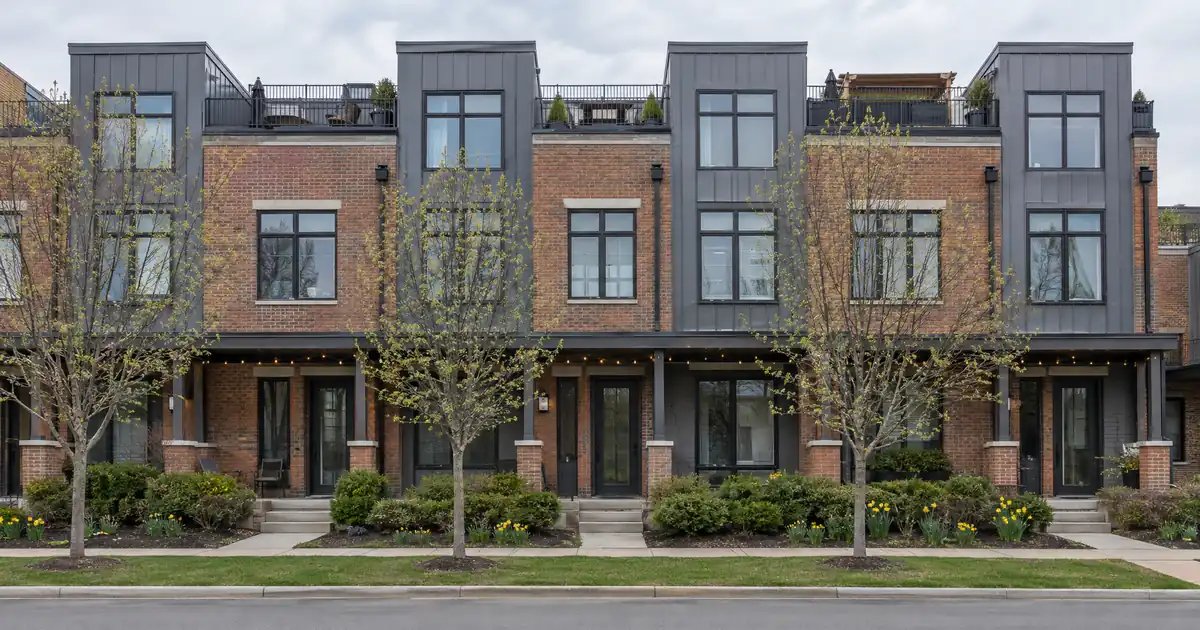
The Quick Read: A condo clears a VA appraisal and earns a Notice of Value (NOV) only when two layers pass: the project is VA-accepted, and the individual unit meets VA’s value and property standards. VA approves projects, not single units. The lender orders the appraisal, and any NOV conditions have to be cleared before the loan can go forward.
What Does “Passing” Actually Mean for a Condo?
Passing means clearing two separate gates, and each gate has a different owner. The project gate is about the building and the association. The unit gate is about the one home you are buying. A condo can pass one and fail the other.
VA payment estimate
Starting assumptions reflect an example price with no down payment and a first-use funding fee. Replace them with your own figures.
Editable benchmark: 7.32% as of October 22, 2026 · Freddie Mac 30-year average via FRED®. A conventional market reference, not a VA loan quote.
Illustrative starting assumptions: a $350,000 price, no down payment with full entitlement, a first-use funding fee financed into the loan, a thirty-year term at the current Freddie Mac benchmark, and property taxes and insurance estimated at typical national rates. Every field is editable.
Illustrative estimate only — not a Loan Estimate, approval, quote, or commitment to lend. The rate field carries the weekly Freddie Mac thirty-year conventional benchmark, a market reference and not a VA loan quote; your rate is set by the lender at lock. The funding fee follows VA’s published table for the use and down payment entered; the residual-income figure is VA’s guideline for the region and family size, and the rough residual shown subtracts only the housing payment and the debts entered, while VA also deducts taxes, maintenance and utilities. Taxes, insurance and dues are editable estimates; closing costs are not included. Licensed in sixteen states for consumer mortgages. Lendmire is not affiliated with or acting on behalf of the Department of Veterans Affairs.
Here is the chain, start to finish:
1. The project must be on VA’s approved list, or be submitted for approval.
2. The lender orders a VA appraisal after the purchase agreement is signed.
3. A VA-approved appraiser reports on the unit’s value and condition.
4. VA issues the NOV, with conditions attached.
5. The lender clears those conditions before closing.
Fail any step and the file stalls. This is the pattern on condo files: the borrower qualifies, the price is fine, and the project status is what holds everything up.
The Project Gate: VA Approves Buildings, Not Units
A VA-guaranteed loan on a condo unit requires the condo project to be approved first. VA Pamphlet 26-7, Chapter 16 states that condominiums, though not planned unit developments, must be approved by VA before any lots or units are eligible for guaranty. The rule behind it sits in 38 CFR Part 36, where §36.4360(c) requires the project’s legal documentation to be approved before VA guaranties an individual unit loan.
Once the project is approved, the regulation text treats a loan to an eligible veteran for a one-family condo unit on the same terms as other loans under 38 U.S.C. 3710, provided the other conditions in the rule are met.
So when a borrower says “VA approved my unit,” that is a misread. What VA approved, if anything, was the project.
How a project gets approved
The lender or the sponsor sends VA’s Office of Jurisdiction a written request, along with the condominium’s organizational documents. VA reviews them for compliance with its regulations. Lenders and sponsors are encouraged to include an attorney’s opinion that the project meets VA requirements.
What does VA look at? In plain terms: occupancy mix, delinquent dues, how much of the project one owner or entity holds, reserves, and insurance. If a project is under review, the lender gets the specifics from VA.
Step One on Every File: Check the Project’s Status
The first move is a status check, before an offer is written. VA keeps a list of approved condos, and VA’s online condo report is where the lender looks. VA’s Home Loan Buyer’s Guide says that if the condo is not on the list, the project must be submitted to VA for review.
The statuses read roughly as: accepted without conditions, accepted with conditions, or accepted on the strength of another agency’s approval. Treat those as general descriptions and have the lender confirm the exact status on the day.
Why this matters in practice: VA publishes no figure for how long a project review takes, so a project that is not accepted adds open-ended delay to the file. Ordering an appraisal on a project that is not accepted can burn time and appraisal money on a file that cannot move. Checking first costs nothing.
One more habit worth having: confirm the status a second time before the appraisal is ordered. Approvals are not always permanent, and a project’s standing can change between offer and closing.
The Unit Gate: What the Appraiser Looks At
After the purchase agreement is signed, the lender, not the borrower, requests the appraisal. A VA-approved appraiser gives an opinion of value on the unit. Two questions get answered:
- Does the value support the contract price?
- Does the unit meet VA’s Minimum Property Requirements?
MPRs cover safety, structural soundness, and adequate utilities and access. Even when the project meets VA’s financial and management tests, each unit still has to meet MPRs. Project approval does not waive them.
On condos, MPR questions get tangled because the association owns pieces of what the borrower is buying into. The roof, the shared systems, and the common areas belong to the HOA, not the unit owner. A visible common-element problem can show up in the appraisal even though the borrower cannot repair it. That is a friction point a buyer’s agent should raise early.
Project versus unit, side by side
| Question | Project gate | Unit gate |
|---|---|---|
| What is reviewed? | Legal documents, finances, insurance, occupancy | Value, safety, condition |
| Who reviews it? | VA | VA-approved appraiser, then VA |
| Who submits? | Lender or sponsor | Lender orders |
| What fails it? | Documents or project health | Value shortfall or MPR issue |
| Who fixes it? | Association or sponsor | Seller, or buyer renegotiates |
What a Condo Notice of Value Carries
The NOV is VA’s statement of value, and it comes with conditions. On condos, the conditions are where files get stuck.
Per VA’s handbook guidance, a condo NOV carries a condition about mandatory HOA membership. The lender is responsible for confirming that title meets VA requirements and that the HOA’s assessment liens sit behind the VA mortgage in priority. Those are lender tasks, not borrower tasks, but the borrower feels the delay if the association’s documents are slow to arrive.
Some sources say VA will not issue an NOV on a condo until the project is accepted. The practical read is the same either way: do not count on an NOV until the project status is settled. VA’s own circular on appraisal processing, Circular 26-22-13, explicitly excludes condos from the single-family scenario it describes, so condo files do not follow the shortcut that applies to a plain detached home.
| NOV condition | What it means | Who acts |
|---|---|---|
| HOA membership | Owners must belong to the association | Lender confirms |
| Assessment lien position | Dues liens sit behind the VA mortgage | Lender confirms |
| Repairs | Unit items fixed for MPRs | Seller or buyer, per contract |
| Project acceptance | Project must be VA-accepted | Lender, with VA |
Where the General Rule Breaks
The rule is simple. The edge cases are where files go sideways.
Single-unit approval. Some websites claim VA allows a single condo unit to be approved on its own. VA condo approval is described at the project level, so treat any claim of a single-unit path as unverified, and ask the lender to confirm in writing before relying on it.
FHA-approved projects. An FHA-approved project is not automatically VA-approved. The handbook has generally accepted another federal agency’s approval without a full VA review, and VA’s practice has shifted over time. The lender has to confirm the project’s current VA standing.
PUDs. A planned unit development does not need project approval the way a condo does. Its units still have to meet VA title and lien requirements.
One unit only. For condos, the regulation limits the dwelling to a single one-family unit, even though non-condo dwellings can run up to four units.
New or converted projects. The regulation separates proposed, new, and existing-resale projects, and treats declarant-controlled projects separately. A building still under construction or newly converted draws more scrutiny than an established one.
Association purchase options and leasing limits. The regulation allows an association right of first refusal only on tight terms: it applies only if an owner chooses to sell, at a price no less than the owner would take from another buyer, and on terms no less favorable to the owner. A leasing restriction on a unit does not by itself disqualify the condo, if it complies with §36.4362(c). Documents with looser or odd terms are what slow a review.
Refinances. The Buyer’s Guide ties the condo-list requirement to purchases. Ask the lender whether a refinance of a VA loan needs the project listed before assuming either way.
A Worked Example: Unit 4B
Picture a buyer under contract on Unit 4B in a mid-rise building. Price is at the appraised value, and the buyer plans 100% financing, which VA purchase loans allow with no mortgage insurance, subject to lender guidelines and full file review.
Pass path. The lender checks VA’s condo report before the appraisal and finds the project accepted. The appraiser values the unit at the contract price and notes no MPR issues. The NOV issues with the standard HOA conditions. The lender clears title and the lien-priority item. The deal works on.
Fail-and-fix path. The lender checks and the project is not listed. The lender submits the organizational documents to VA, with an attorney’s opinion. The buyer waits. The contract needs an extension, or the buyer walks. If the buyer had written the offer with a contingency tied to project approval, the walk costs less.
Second fail path. The project is fine, but the appraiser flags a visible issue with a common element. The unit fails MPRs on a repair the buyer cannot make. The seller has to negotiate with the association, or the buyer moves on.
When Something Fails
| What fails | What usually happens next |
|---|---|
| Project not on the list | Lender submits to VA, or buyer picks another property |
| Unit fails MPRs | Repairs, renegotiation, or a new property |
| Value below price | Renegotiate, pay the gap, or walk |
| Status changes mid-escrow | Lender re-confirms standing before closing |
| Common-element issue | Depends on the association, not the buyer |
A project that fails approval can make the home ineligible for a VA loan even when the buyer is fully qualified. The buyer may need a different property or a different program. When the value comes in under the price, the cash math changes. Lendmire’s piece How Much a Low VA Appraisal Cuts Your Cash at the Full-Value Cap walks through it.
HOA dues count in the housing expense when the file is underwritten. VA publishes no dollar figure for that here, so it stays a line to run with the loan officer. Residual income is the controlling test on VA files, and the 41% debt-to-income figure is a guideline, not a cap.
Pre-Offer Checklist for Buyers and Agents
- Ask the loan officer to check VA’s condo report before you write the offer.
- Confirm whether the status is clean, conditional, or based on another agency’s approval.
- Put a project-approval contingency in the offer if status is unclear.
- Ask for the HOA’s financials, insurance, and governing documents early.
- Confirm status before the appraisal is ordered and once more during escrow.
- Ask the agent about visible common-element issues like roof and shared systems.
How Lendmire Fits
Lendmire arranges VA purchase loans through wholesale lenders in the states where it holds consumer licensing. The VA loan programs the brokerage places files with offer 100% financing with no mortgage insurance and no VA loan limit on full entitlement. The wholesale programs start at a 580 decision score, and VA’s own certificate of eligibility decides eligibility. A funding fee applies, ranging from 1.25% to 3.3% by use and down payment, and it is waived for exempt veterans.
In practice, condo files are won or lost before the appraisal. Project status checked early, documents requested early, and a contingency in the contract are the habits that keep a condo file from stalling.
If you are buying a home and want to see whether a VA loan fits your file, Lendmire can help you compare the options and what each one asks of the file. Call 828-256-2183.
Key Terms Defined
Notice of Value (NOV): VA’s written statement of a property’s value, issued with conditions the lender must clear.
Minimum Property Requirements: VA’s standards for safety, structural soundness, and adequate utilities and access.
Project approval: VA’s acceptance of the condo building and its legal documents, required before any unit is guaranty-eligible.
Approved condo list: The record VA keeps of accepted projects, checked through VA’s online condo report.
Certificate of Eligibility (COE): The VA document that decides whether a veteran is eligible for the benefit.
Frequently Asked Questions
Can VA approve just my one condo unit?
Not on the evidence in the primary sources reviewed. 38 CFR 36.4360(c) and Chapter 16 of the lender handbook describe approval of the project, not the unit. Some websites claim a single-unit route exists. Treat that as unverified and get the lender to confirm in writing.
Who orders the VA appraisal on a condo?
The lender does, after the purchase agreement is signed. The borrower does not order it. Because the appraisal costs money and can stall on an unapproved project, the lender should check project status first.
Does an FHA-approved condo project qualify for a VA loan?
Not automatically. The handbook has generally accepted another agency’s approval, but VA practice has changed over time. The lender must confirm the project’s current VA standing before the appraisal.
What happens if the condo project is not approved?
The lender can submit the organizational documents to VA, and VA publishes no review timeline, so the delay is open-ended. Otherwise the buyer may need a different property or program. A contract contingency tied to project approval limits the damage.
Does a condo need to meet the same property standards as a house?
Yes. Each unit has to meet VA’s Minimum Property Requirements even when the project passes its own review. Condos add a wrinkle because the association owns the roof and common systems.
For your own numbers, request a scenario review with Lendmire.
About Lendmire
Lendmire, NMLS# 2371349, is a mortgage brokerage with consumer lending licenses in 16 states. FHA, VA, conventional and jumbo purchase and refinance loans are arranged through wholesale lending partners, and each application is reviewed individually by the lender. Scotsman Guide named Lendmire a Top Mortgage Workplace in both 2025 and 2026.
Get Started
Ready to find the right loan for you?
In about 30 seconds you can review financing options available for your home or investment property. No commitment required.
Informational only. Not a Loan Estimate, approval, or commitment to lend. Program availability and eligibility are subject to lender guidelines, credit approval, property review, and underwriting.
References
1. VA Pamphlet 26-7, Chapter 16
3. Cornell LII, 38 CFR 36.4360
This article is part of Lendmire’s VA loan program — full qualification details, guidelines, and scenarios live on the program page.
Related reading: How Many Days a VA Loan on a Condo Takes to Close · How to Respond to a Low Appraisal on a High-Cost VA Jumbo Loan · How to Get a Condo Project Approved for a VA Loan Purchase
Brandon Miller
Founder & CEO, Mortgage Loan Originator, Lendmire LLC
- Mortgage Loan Originator · NMLS# 1129696 · Verify on NMLS Consumer Access
- North Carolina Real Estate Broker · License# 343312 · Verify on NCREC
- North Carolina Insurance Producer · License# 19053198 · Property, Casualty, Life, Health · Verify on NAIC SBS
- Lendmire LLC · Firm NMLS# 2371349 · Verify firm licensure
Compliance and disclosures. Lendmire (NMLS# 2371349) is a licensed mortgage broker and is not a direct lender, depository institution, financial advisor, or tax professional. Content in this article is general market analysis and educational information — not financial, legal, or tax advice for any specific situation. Lendmire does not guarantee loan approval; every transaction is subject to underwriting by the funding lender. Mortgage pricing and loan program guidelines are subject to change at any time without notice and vary by borrower characteristics, property type, and state regulations. Lendmire complies with Equal Housing Opportunity. Licensure verification: NMLS Consumer Access.