
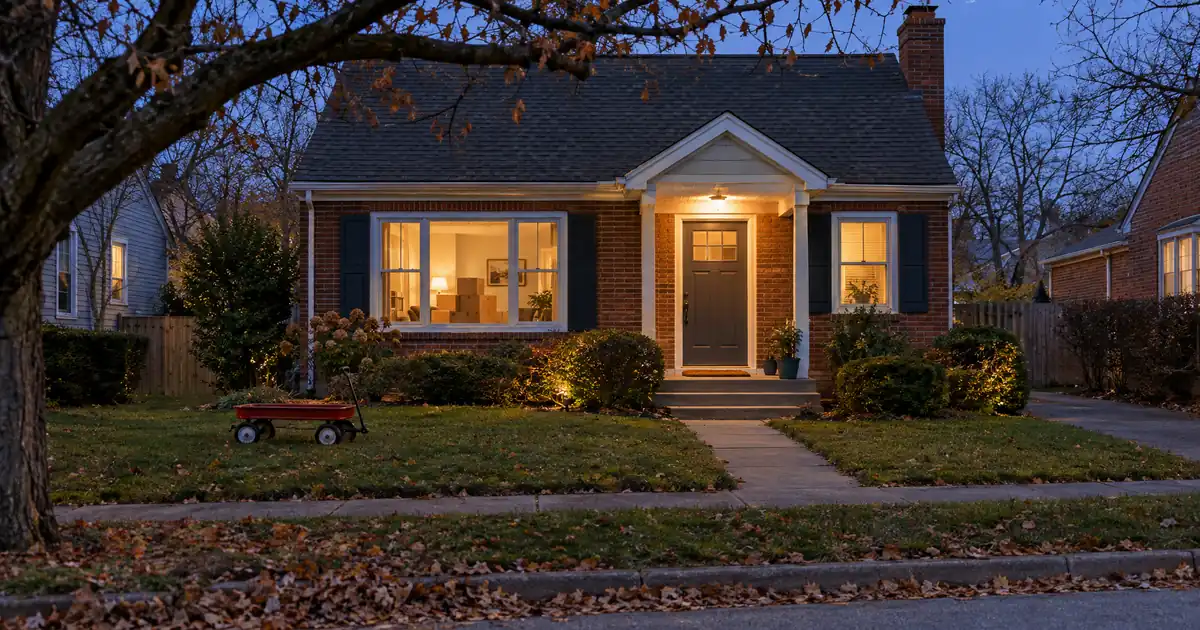
The Quick Read: Yes, on a one-unit primary residence, the entire down payment can come from a gift. That holds at any leverage level, and Fannie Mae requires no minimum contribution from your own funds there. The catches are the donor, the paper trail, and the property type. Two- to four-unit homes and second homes work differently above 80% LTV. Terms depend on the lender’s guidelines, the property type, the leverage, and a full review of the credit profile.
The Rule in Plain English
Fannie Mae’s Selling Guide section on personal gifts lets gift funds cover all or part of the down payment, closing costs, or reserves. A minimum borrower contribution table decides when you must also bring your own money. For a one-unit home you will live in, that table asks for nothing.
Conventional payment estimate
The starting figures are an example price at the first-time buyer’s minimum down payment. Replace them with yours.
Editable benchmark: 7.32% as of October 22, 2026 · Freddie Mac 30-year average via FRED®. A conventional market reference, not a conventional loan quote.
Estimate seeded at the low end of Fannie Mae’s published range (0.58%–1.86% a year); the insurer prices the actual premium on the score and the leverage. Applies only above 80% loan-to-value.
Illustrative starting assumptions: a $350,000 price, the first-time buyer’s minimum down payment, a thirty-year term at the current Freddie Mac benchmark, mortgage insurance at the low end of Fannie Mae’s published range, and property taxes and insurance estimated at typical national rates. Every field is editable.
Illustrative estimate only — not a Loan Estimate, approval, quote, or commitment to lend. The rate field carries the weekly Freddie Mac thirty-year conventional benchmark, a market reference and not a conventional loan quote; your rate is set by the lender at lock. The mortgage insurance figure is an editable estimate seeded from Fannie Mae’s published typical range, not a premium quote; the insurer prices the actual premium, and the cancellation month assumes scheduled payments with no extra principal and no change in value. Taxes, insurance and dues are editable estimates; closing costs are not included. Conforming loan limits apply by county. Licensed in sixteen states for consumer mortgages.
LTV, or loan-to-value, is the loan amount divided by the home’s value. Conventional purchase programs on a principal residence run up to 97% LTV (3% down) when at least one borrower is a first-time buyer with a fixed rate. Otherwise they run to 95% LTV (5% down). Every figure is subject to lender guidelines and full file review. In practice, a fully gifted 3% or 5% is allowed by the agency rule.
Here is the part that surprises people. The size of the gift is not what gets examined. The paper trail is.
When the Answer Changes
Occupancy and unit count decide this. The table below sums up the Fannie Mae rule.
| Property | LTV 80% or less | LTV above 80% |
|---|---|---|
| One-unit primary | No minimum own funds | No minimum own funds |
| Two- to four-unit primary | No minimum own funds | 5% from your own funds |
| Second home | No minimum own funds | 5% from your own funds |
| Investment property | Gifts not allowed | Gifts not allowed |
Freddie Mac follows the same pattern for second homes. Its 5% own-funds rule applies to a second home above 80% LTV. The exact numbers vary by lender and program and follow a full review of property, leverage, and credit.
Two- to four-unit primaries can reach 95% LTV, and second homes can reach 90%. So a duplex you will live in, bought with a thin down payment, needs real money from you before a gift can supplement it. On investment property, occupancy decides the leverage and the gift rules, and gifts are simply not allowed on a rental purchase. Final terms depend on the lender’s guidelines, the property type, and the borrower’s complete credit picture.
A quirk worth knowing. If the donor has lived with you for the past 12 months, the gift can count as your own funds toward the minimum contribution. Both of you must then occupy the home as a principal residence. That rule applies only to the minimum-contribution test, not to everything else.
Lender overlays add one more layer. An overlay is a lender’s own rule that is stricter than the agency’s. A lender can ask for borrower funds even where Fannie Mae does not. Across the wholesale programs Lendmire places files with, a few lenders do this, which is why the first question is always what the specific lender will accept. If you are weighing the program as a whole, Lendmire’s conventional loan programs page lays out the leverage and credit basics.
Who Counts as an Acceptable Donor?
Fannie Mae defines the donor narrowly. Acceptable donors are:
- A relative, meaning someone related by blood, marriage, adoption, or legal guardianship
- A domestic partner
- A fiancé or fiancée
The donor cannot be, or be affiliated with, the builder, developer, real estate agent, or another interested party in the sale. An interested party is anyone with a stake in the deal closing. That is why a gift from your agent is not a gift.
Freddie Mac is broader. Under Bulletin 2022-25, its “Related Person” definition includes unrelated people with close, family-like ties. It also added the estates and trusts of Related Persons as eligible donors. A later update, Bulletin 2026-9, adds a business owned by a Related Person. The gift letter must then state the ownership interest and be signed by the owner.
So a close friend is not automatically out, but whether they work depends on which agency’s guidelines the loan follows. A loan officer can tell you early.
What about a seller who is also family? A seller who is an acceptable donor and is not affiliated with another interested party can give a gift. Freddie Mac exempts these gifts from its interested-party limits in Section 5501.6.
Gift, Loan, or Gift of Equity?
A gift never has to be repaid. That is the whole definition, and it is what the lender is trying to prove.
A disguised loan would add a debt to your file. That changes your debt-to-income ratio, which is your monthly debts compared with your income. It could also change whether you qualify. Wholesale conventional programs generally use an automated finding with a total ratio ceiling of 50%, so a hidden repayment can matter. The signed letter exists to say, in writing, that no repayment is expected. If the donor privately expects to be paid back “someday,” that is a loan, and it does not belong in a gift letter.
A gift of equity is different. A family member selling you their home credits part of the home’s value to you instead of handing over cash. It works like this:
- It is a credit to the buyer in the transaction. Fannie Mae’s gift of equity guidance says it can cover the down payment and closing costs, including prepaids.
- The same donor and minimum-contribution rules apply as for cash gifts.
- The donor is not treated as an interested party, so interested-party contribution limits do not apply.
- It needs a signed gift letter, and the gift of equity must appear on the settlement statement.
- It cannot be used for financial reserves.
The appraisal still sets the home’s value and therefore your LTV. A family sale price below value does not skip the appraisal.
The Paper Trail, Step by Step
The documentation is where deals stall. A sound sequence looks like this.
1. Confirm the donor is acceptable before anything moves. Do it at pre-approval, not at the closing table.
2. Get a signed gift letter. Freddie Mac’s feedback message guidance lists the contents. It shows the donor’s name, address, phone, and relationship to you. It states the gift amount (the actual or the maximum) and says no repayment is required.
3. Verify the donor’s funds. Fannie Mae requires the lender to confirm that the donor’s account holds enough to cover the gift, or that the money has already moved to you.
4. Move the money cleanly. If the gift arrives at settlement, the donor typically gives the closing agent an official check or wire. If it arrives earlier, it lands in your account and must be documented.
5. Keep everything. Statements, transfer confirmations, and the letter all go in the file.
Cash on hand is the common trap. Freddie Mac expects funds to move directly from the donor’s financial-institution account to you or to the closing agent. A stack of bills from a safe is hard to source, and an unexplained deposit has to be explained. Lenders look at large deposits because they need to know the money is a true gift and not a loan.
Timing matters too. A fully gifted down payment can make a purchase possible sooner, but only if the paper trail starts early. Gifts for events like weddings or graduations carry their own deposit-timing limits at Freddie Mac. Those windows vary by source, so ask your loan officer for the current one.
What Changes in Your Budget
A larger gift means a smaller loan. Above 80% LTV, it also changes mortgage insurance. Mortgage insurance protects the lender if you default, and it is required on conventional loans above 80% LTV. You can request cancellation at 80% of the original value (with good payment history, no subordinate liens, and no decline in value). The servicer must end it automatically at 78%. Published typical annual premiums run from 0.58% to 1.86% of the balance, and that is a range, not a quote. Each figure is subject to lender guidelines and a complete review of property type, leverage, and credit.
Picture a buyer with 3% in gifted funds on a one-unit home. That buyer has no savings cushion left and carries mortgage insurance for years. A buyer who adds even a small amount of savings keeps reserves in the bank and a bit more room if the furnace dies. The agency rule says the all-gift version works. Whether it is wise is a separate question.
Reserves are the quiet issue. A gift can cover reserves, but a gift of equity cannot. A file with zero cash left after closing is harder to approve and harder to live in. This is a judgment call: the rules permit it, though a modest personal contribution often makes the file calmer.
Credit still matters. Wholesale conventional programs generally start at a 620 decision score, and the automated finding governs most files. A gift solves the down payment, not the credit review.
Common Misconceptions
- “You must always put in some of your own money.” Not on a one-unit primary at Fannie Mae. That holds at any LTV.
- “Any friend can give a gift.” Fannie Mae wants family ties or a partner. Freddie Mac allows close, family-like relationships.
- “Cash works.” The funds need a traceable path from the donor’s account.
- “A gift of equity can cover reserves.” It cannot.
- “The seller can always give a gift.” Only an acceptable donor with no affiliation to other interested parties.
- “Same rules for second homes.” Above 80% LTV, a second home needs 5% from your own funds. Leverage, reserves, and pricing vary by lender and program; the final terms follow the full file review.
What Can Go Wrong
Most stalled gift files trace back to a few causes. The donor is a friend and the lender follows the narrower definition. The letter leaves out the relationship or the amount. The money arrived as cash. The donor’s account statements show an unexplained transfer. The gift landed before the application and nobody documented it.
Each has a fix, and each is easier before the file is submitted. Run the donor and the transfer plan past your loan officer first. Tax treatment can depend on your situation; borrowers should speak with a qualified tax professional before relying on any deduction or credit. Donors with gift-tax questions should ask the IRS or their own adviser.
Key Terms Defined
Gift funds: money given to you with no expectation of repayment, used toward the down payment, closing costs, or reserves.
Donor: the person or entity giving the gift, who must meet the agency’s definition.
Interested party: anyone with a financial stake in the sale closing, such as the builder or your real estate agent.
Gift of equity: a credit from a family-member seller that covers part of your purchase price.
Overlay: a lender rule that is stricter than the agency guideline.
Reserves: money left in the bank after closing.
Frequently Asked Questions
Can my parents give me the whole down payment on a conventional loan?
Yes, on a one-unit primary residence, parents qualify as acceptable donors. They need to sign a gift letter, and the lender must see where the money came from. Expect the lender to verify the donor’s account or the transfer. Individual lenders may add their own requirements.
Can a friend gift me the money?
It depends on whose guidelines the loan follows. Fannie Mae limits donors to relatives, domestic partners, and fiancé(e)s. Freddie Mac allows unrelated people with close, family-like ties. Ask before you accept the money.
Can gift money pay closing costs and reserves too?
Yes. Gift funds can cover the down payment, closing costs, or reserves, subject to the minimum contribution table. A gift of equity is the exception for reserves, because it cannot be used there.
What if I want to buy a duplex to live in?
Above 80% LTV, a two- to four-unit primary needs 5% from your own funds under Fannie Mae’s rule. Gifts can supplement after that. At 80% LTV or less, no minimum is required. Terms vary by lender guidelines, property type, leverage, credit profile, and full file review.
Can the donor hand me cash?
Cash on hand is the weak point. The money should move from the donor’s account to you or the closing agent so the lender can verify it. If you hold cash from a donor, talk to your loan officer before depositing it.
Next Step
If you are buying a home and want to see whether a conventional loan fits your file, Lendmire can help you compare the options and what each one asks of the file. Program figures are subject to lender guidelines and full file review, and nothing here is a commitment to lend.
For your own numbers, request a scenario review with Lendmire.
About Lendmire
Lendmire (NMLS# 2371349) is a mortgage broker licensed for consumer lending in 16 states. Lendmire arranges FHA, VA, conventional and jumbo purchase and refinance loans through wholesale lenders; every file is underwritten by the lender under the applicable program guidelines. Scotsman Guide named Lendmire a Top Mortgage Workplace in both 2025 and 2026.
Get Started
Ready to find the right loan for you?
In about 30 seconds you can review financing options available for your home or investment property. No commitment required.
Informational only. Not a Loan Estimate, approval, or commitment to lend. Program availability and eligibility are subject to lender guidelines, credit approval, property review, and underwriting.
References
1. Fannie Mae Selling Guide B3-4.3-04, Personal Gifts
2. Freddie Mac Guide Bulletin 2022-25
3. Freddie Mac Guide Bulletin 2026-9
4. Freddie Mac Guide Section 5501.6
5. Freddie Mac LPA feedback message updates
This article is part of Lendmire’s conventional loan program — full qualification details, guidelines, and scenarios live on the program page.
Related reading: Can a Repeat Buyer Get a Conventional Loan With Little Down? · Should You Take a Conventional Cash-Out Refinance on Your Home? · Conventional Cash-Out LTV Limits for a 2-4 Unit Primary Home
Brandon Miller
Founder & CEO, Mortgage Loan Originator, Lendmire LLC
- Mortgage Loan Originator · NMLS# 1129696 · Verify on NMLS Consumer Access
- North Carolina Real Estate Broker · License# 343312 · Verify on NCREC
- North Carolina Insurance Producer · License# 19053198 · Property, Casualty, Life, Health · Verify on NAIC SBS
- Lendmire LLC · Firm NMLS# 2371349 · Verify firm licensure
Legal disclosures. Lendmire (NMLS# 2371349) is a state-licensed mortgage brokerage that arranges financing through wholesale lender relationships. Lendmire is not a direct lender, depository institution, or registered financial advisor. The discussion above is general informational content about real estate financing — it is not financial, legal, or tax advice, and readers should consult licensed professionals for guidance on their individual circumstances. Loan inquiries are subject to lender underwriting; this article does not represent a commitment to lend. Loan terms, rates, and qualification standards vary by borrower, property, and state, and are subject to change at any time. Equal Housing Opportunity. NMLS Consumer Access: nmlsconsumeraccess.org.