
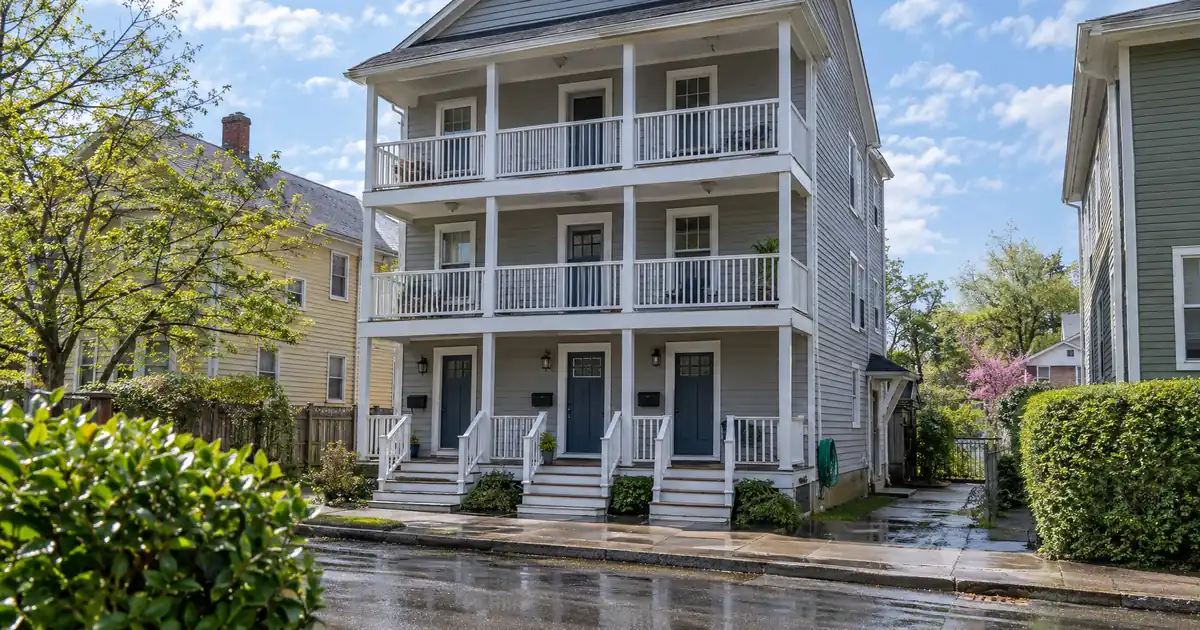
The Quick Read: Yes, as long as you live in one of the units and your income fits under the program’s cap. Fannie Mae does not require HomeReady borrowers to be first-time buyers, and the program covers one- to four-unit principal residences. Buyer history is not the gate. Occupancy and income are. Leverage on a 2-4 unit tops out at 95%, not the 97% a one-unit first-time buyer can reach, subject to lender guidelines and full file review.
Why Repeat-Buyer Status Doesn’t Disqualify You
HomeReady is not a first-time-buyer program. Fannie Mae’s Selling Guide defines it as a first-lien purchase or limited cash-out refinance on a one- to four-unit principal residence. Nothing in that definition asks about your ownership history. Fannie Mae’s HomeReady page describes the ideal borrower as a first-time or repeat homebuyer.
Conventional payment estimate
The starting figures are an example price at the first-time buyer’s minimum down payment. Replace them with yours.
Editable benchmark: 7.32% as of October 22, 2026 · Freddie Mac 30-year average via FRED®. A conventional market reference, not a conventional loan quote.
Estimate seeded at the low end of Fannie Mae’s published range (0.58%–1.86% a year); the insurer prices the actual premium on the score and the leverage. Applies only above 80% loan-to-value.
Illustrative starting assumptions: a $350,000 price, the first-time buyer’s minimum down payment, a thirty-year term at the current Freddie Mac benchmark, mortgage insurance at the low end of Fannie Mae’s published range, and property taxes and insurance estimated at typical national rates. Every field is editable.
Illustrative estimate only — not a Loan Estimate, approval, quote, or commitment to lend. The rate field carries the weekly Freddie Mac thirty-year conventional benchmark, a market reference and not a conventional loan quote; your rate is set by the lender at lock. The mortgage insurance figure is an editable estimate seeded from Fannie Mae’s published typical range, not a premium quote; the insurer prices the actual premium, and the cancellation month assumes scheduled payments with no extra principal and no change in value. Taxes, insurance and dues are editable estimates; closing costs are not included. Conforming loan limits apply by county. Licensed in sixteen states for consumer mortgages.
It is also a standard product. You don’t need special approval, and it is available to Fannie Mae lenders generally. A broker like Lendmire arranges these files through wholesale lenders, and the lender decides whether the loan fits.
One wrinkle: the 97% leverage tier is a different thing. Across the wholesale programs placed through Lendmire, 97% is for a one-unit principal residence when at least one borrower is a first-time buyer. That means no ownership interest in a residence in the previous three years. If you owned a home recently, you are a repeat buyer by that definition, and standard leverage applies. Terms vary by lender guidelines, property type, leverage, credit profile, and full file review.
What Changes When the Property Has 2-4 Units
The short answer: you get less leverage, a small contribution rule, and an appraisal that looks at rent. Here is how the three property sizes compare.
| Factor | One unit | Two to four units |
|---|---|---|
| Occupancy | You live there | You live in one unit |
| Maximum leverage | Up to 97% (first-time buyer) | Up to 95% |
| Own-funds contribution above 80% LTV | None required | 3% from your own funds |
| Appraisal form | Form 1004 | Form 1025 |
| Rent from other units | Generally not usable | Can count if documented |
Treat the table as a map, not a promise. Fannie Mae’s Eligibility Matrix carries footnotes and exceptions. For example, it lists a lower limit for manufactured housing on 2-4 units. Manual underwriting also carries lower leverage than automated underwriting.
Three details matter most:
- Leverage. On a standard purchase, 95% LTV (5% down) is the ceiling for a two- to four-unit principal residence. 3% down on a duplex is a myth. The 97% tier is one-unit only.
- Your own money. Above 80% LTV on a 2-4 unit, the Selling Guide asks for 3% from your own funds, unless a grant is involved. A one-unit HomeReady loan has no such minimum. So a buyer leaning entirely on gift funds should expect this to bite.
- Property type. Fannie Mae’s HomeReady product sheet describes 2-4 unit principal residences as excluding condos, co-ops and manufactured housing. Confirm against the current Selling Guide with your loan officer. Exact terms depend on the lender’s guidelines, property type, leverage, and a full review of the borrower’s file.
How the Income Cap Works With Rental Units
HomeReady has an income limit of 80% of area median income for the property’s location, per Fannie Mae’s capital markets product sheet. It applies to the total qualifying income of everyone on the loan. Fannie Mae offers an area median income lookup tool on its site. Use it before you fall in love with a building.
Here is the tension. Rent from the other units can help you qualify. It lowers your debt-to-income ratio. But it may also push your measured income toward the cap. Ask your lender whether and how rent counts in the cap test. Don’t assume.
Rent is not counted in full automatically. On a purchase, the lender uses the appraiser’s rent figure from Form 1025, plus current leases if they transfer to you. If the building is vacant or the leases don’t transfer, leases aren’t required. The amount you can use may also depend on whether you already have a housing expense and on any rental or property-management history. Fannie Mae’s rules on this are detailed, so verify the current wording in Selling Guide section B3-3.1-08.
This is where repeat buyers often hold an edge. A current owner or renter already has a housing expense. A past landlord has a track record. First-time buyers with no history can usually count rent only up to a limit.
Which Buyers Fit and Which Don’t
Picture a repeat buyer with a solid score, a home they are selling, and a fourplex they want to live in. If their income sits under the cap, the fit is good. They put at least 5% down, bring 3% of it from their own funds, and the lender counts documented rent from the three other units. Every figure here varies by lender and program — guidelines, property type, leverage, and credit profile all apply.
Now picture a second buyer with the same plan and income above 80% of area median income. HomeReady is off the table, whatever their buying history. The standard conventional route may still work. Across the wholesale programs we place files with, two- to four-unit principal residences reach 95% LTV on a regular purchase, with no income cap. Mortgage insurance applies above 80% LTV either way. Final terms depend on lender guidelines, property type, leverage, and the borrower’s complete credit picture.
Honestly, this is a close call for many middle-income buyers. HomeReady’s cancellable mortgage insurance and flexibility are nice. But the income test can cut off the buyer who benefits most from rental income. Running both paths side by side is the sensible move.
What Happens to Your Current Home
Selling it first keeps the file simplest. Keeping it as a rental is possible, but it adds a second housing payment to your ratios and shifts how the lender treats that income. Many repeat buyers sit in the middle: the old home is under contract but hasn’t closed. The lender will want to see how that plays out on paper.
One firm rule: HomeReady requires you to occupy the new property as your principal residence. It is an occupancy commitment, not a flexible one. You can’t plan to rent every unit later and still use the program as written.
Mortgage Insurance and Credit Basics
Mortgage insurance is required above 80% LTV. You can request cancellation at 80% of the original value with a good payment history, no subordinate liens and no decline in value. The servicer must end it automatically at 78%. HomeReady’s version carries its own restrictions. Published typical annual premiums run 0.58% to 1.86% of the balance. That is a range, not a quote. These specifics are subject to lender guidelines and a full review of property, leverage, and credit.
On credit, the wholesale conventional programs start at a 620 decision score. Automated findings govern most files, with a total ratio ceiling of 50%. Some lenders set higher floors on multi-unit files, so a lender’s overlay can matter more than the agency minimum.
Education: Usually Not Your Problem
Homeownership education is required only on HomeReady purchases where every occupying borrower is a first-time buyer. A repeat buyer generally skips the course. Counseling completed within 12 months before closing may qualify for a loan-level price credit but you don’t need it.
What About Freddie Mac’s Version?
Freddie Mac runs a sister program, Home Possible. It is also owner-occupied only, with an 80% area median income limit, per Freddie Mac’s fact sheet. Rental income from a 2-4 unit primary residence may count toward qualifying if it meets Freddie Mac’s guide requirements. Leverage limits on 2-4 units are best confirmed in Freddie Mac’s Seller/Servicer Guide. Your lender decides which investor the loan goes to, and a broker can compare both.
Common Mistakes and Myths
- “HomeReady is for first-time buyers only.” It isn’t. Repeat buyers can use it too.
- “It only works on single-family homes.” It covers one to four units, so that claim doesn’t hold.
- “3% down works on a duplex.” No. It is 95% LTV at most on 2-4 units.
- “I can rent every unit later.” No. You must live in one.
- “All the rent counts in full.” Not necessarily. History and documentation shape the amount.
- “Education is always required.” Only when all occupants are first-time buyers.
- “Owned recently means I’m first-time.” The opposite. Ownership in the past three years makes you a repeat buyer for leverage purposes. Terms depend on the lender’s guidelines, the property type, the leverage, and a full review of the credit profile.
Questions to Ask Your Lender Before You Write an Offer
1. Is the building’s location under the income cap for my household?
2. Does rent from the other units count toward the cap test, or only toward qualifying?
3. Will the file be run through automated underwriting?
4. How is the 3% own-funds rule handled on my file?
5. Do any lender overlays apply to 2-4 unit purchases?
6. Is the building a condo, co-op, or something else that is excluded?
Bring tax questions to a professional.
If you are buying a home and want to see whether a conventional loan fits your file, Lendmire can help you compare the options and what each one asks of the file. You can start with its conventional loan programs page.
Frequently Asked Questions
Do I have to be a first-time buyer to use HomeReady?
No. Fannie Mae says first-time status isn’t required, and its product page names repeat buyers as an intended borrower. Income relative to area median income and owner occupancy are the real tests. Final eligibility is subject to lender guidelines and full file review.
Can I buy a duplex, triplex or fourplex with HomeReady?
Yes, if you live in one unit as your principal residence. Leverage tops out at 95% on 2-4 units. Above 80% LTV, the Selling Guide asks for 3% from your own funds unless a grant is involved. Condos, co-ops and manufactured housing have separate limits. The exact numbers vary by lender and program and follow a full review of property, leverage, and credit.
Will rent from the other units help me qualify?
It can, if documented with an appraisal on Form 1025 and, where leases transfer, the current leases. The amount you can use may depend on your housing expense and rental or property-management history. Whether that rent also counts toward the income cap is a question for your lender.
What if my income is over the HomeReady limit?
Then HomeReady is out, but standard conventional financing may still fit. Across the wholesale programs we place files with, a two- to four-unit principal residence can reach 95% LTV on purchase. Mortgage insurance applies above 80% LTV. Final terms depend on the lender’s guidelines, the property type, and the borrower’s complete credit picture.
Do I need homeownership education as a repeat buyer?
Generally no. The requirement applies only when all occupying borrowers on the purchase are first-time buyers.
For your own numbers, request a scenario review with Lendmire.
About Lendmire
Lendmire is a mortgage brokerage (NMLS# 2371349) licensed for consumer mortgage lending in 16 states, arranging FHA, VA, conventional and jumbo purchase and refinance loans through a wholesale lending network. Eligibility is determined by the lender on each file. Scotsman Guide named Lendmire a Top Mortgage Workplace in both 2025 and 2026.
Get Started
Ready to find the right loan for you?
In about 30 seconds you can review financing options available for your home or investment property. No commitment required.
Informational only. Not a Loan Estimate, approval, or commitment to lend. Program availability and eligibility are subject to lender guidelines, credit approval, property review, and underwriting.
References
1. Fannie Mae Selling Guide B5-6-01: HomeReady Mortgage Loan and Borrower Eligibility
2. Fannie Mae HomeReady Mortgage Product Page
3. Fannie Mae Eligibility Matrix
4. Fannie Mae Capital Markets HomeReady Product Sheet
5. Freddie Mac Home Possible Fact Sheet
This article is part of Lendmire’s conventional loan program — full qualification details, guidelines, and scenarios live on the program page.
Related reading: Conventional Loan Reserve Requirements for a 2-4 Unit Property · Conventional Loan Documentation for a Buyer Using Gift Funds · Homeready Condo Requirements for a Conventional Loan
Brandon Miller
Founder & CEO, Mortgage Loan Originator, Lendmire LLC
- Mortgage Loan Originator · NMLS# 1129696 · Verify on NMLS Consumer Access
- North Carolina Real Estate Broker · License# 343312 · Verify on NCREC
- North Carolina Insurance Producer · License# 19053198 · Property, Casualty, Life, Health · Verify on NAIC SBS
- Lendmire LLC · Firm NMLS# 2371349 · Verify firm licensure
Disclosures. The information presented in this article is general market commentary, not financial, legal, or tax advice. Lendmire is a mortgage brokerage (NMLS# 2371349) — not a direct lender or depository institution — and loan placement is subject to lender underwriting. Nothing in this content represents a commitment to lend. Loan terms, pricing, and program availability vary based on borrower qualifications, property characteristics, and state of subject property, and are subject to change at any time. Lendmire complies with Equal Housing Opportunity requirements. Consumer access: nmlsconsumeraccess.org.