
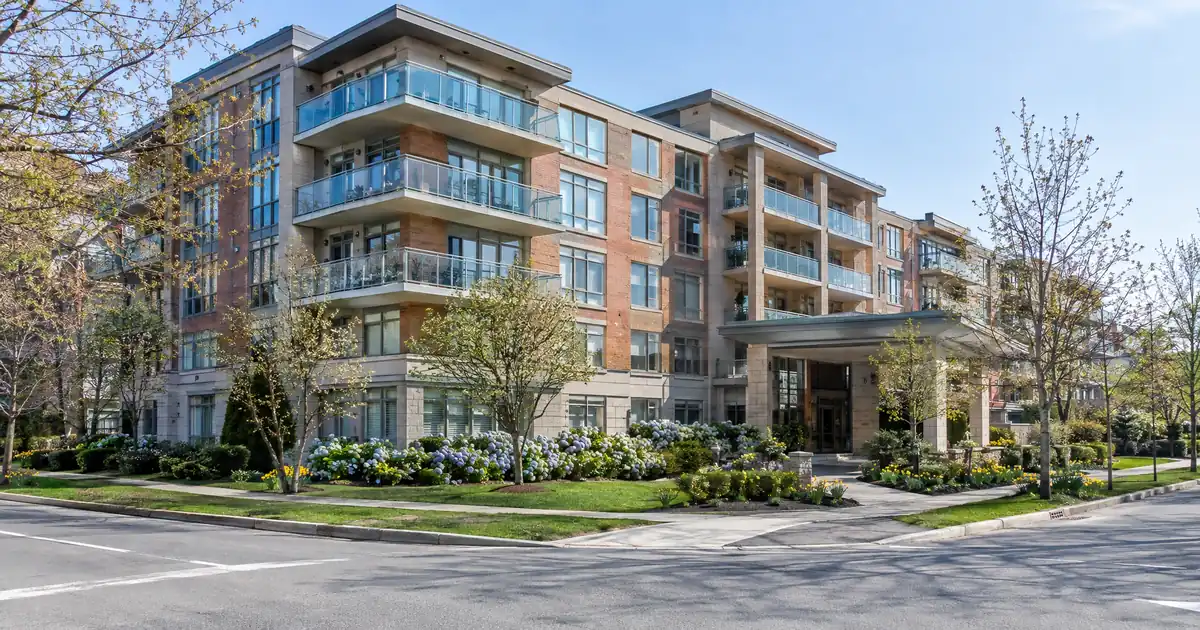
The Quick Read: A conventional condo loan has two approvals: yours and the building’s. The building review is the part first-time buyers miss. Across the wholesale programs placed through Lendmire, a first-time buyer can reach 97% LTV on an eligible one-unit condo used as a primary residence, subject to lender guidelines and full file review. That only works if the project itself passes the lender’s review.
Key Takeaways
- The borrower layer covers credit, ratios, down payment, and mortgage insurance. The building layer covers reserves, delinquent dues, insurance, litigation, and commercial space.
- A first-time buyer with a fixed rate on a one-unit primary residence can reach 97% LTV. Others reach 95%.
- The building review rules changed in 2026. Older lender pages and blog posts may describe rules that are retired.
- There is no public approved-condo list. The lender checks the project, so ask early.
- A buyer who qualifies can still be turned down if the project fails. Leverage, reserves, and pricing vary by lender and program; the final terms follow the full file review.
What Makes a Condo Eligible for a Conventional Loan?
A condo is eligible when the project meets the standards Fannie Mae or Freddie Mac set for the building, not only for the buyer. Fannie Mae’s Selling Guide requires that units in a condo, co-op, or PUD project meet its project standards. Freddie Mac has its own version, covered in its Guide Chapter 5701.
Conventional payment estimate
The starting figures are an example price at the first-time buyer’s minimum down payment. Replace them with yours.
Editable benchmark: 7.32% as of October 22, 2026 · Freddie Mac 30-year average via FRED®. A conventional market reference, not a conventional loan quote.
Estimate seeded at the low end of Fannie Mae’s published range (0.58%–1.86% a year); the insurer prices the actual premium on the score and the leverage. Applies only above 80% loan-to-value.
Illustrative starting assumptions: a $350,000 price, the first-time buyer’s minimum down payment, a thirty-year term at the current Freddie Mac benchmark, mortgage insurance at the low end of Fannie Mae’s published range, and property taxes and insurance estimated at typical national rates. Every field is editable.
Illustrative estimate only — not a Loan Estimate, approval, quote, or commitment to lend. The rate field carries the weekly Freddie Mac thirty-year conventional benchmark, a market reference and not a conventional loan quote; your rate is set by the lender at lock. The mortgage insurance figure is an editable estimate seeded from Fannie Mae’s published typical range, not a premium quote; the insurer prices the actual premium, and the cancellation month assumes scheduled payments with no extra principal and no change in value. Taxes, insurance and dues are editable estimates; closing costs are not included. Conforming loan limits apply by county. Licensed in sixteen states for consumer mortgages.
On files placed through the wholesale network, this is the split that matters. The loan is sold to one of the agencies. They will not buy a loan secured by a unit in a project they have flagged. So a lender checks the building before a file moves forward, even when your credit and income are clean.
Lenders call a building that passes “warrantable.” A building that fails is “non-warrantable.” Those loans don’t go to the agencies and typically move to portfolio or other channels with different terms.
The Two Approvals: Borrower and Building
| Layer | What is checked | Common failure point |
|---|---|---|
| Borrower | Credit, ratios, down payment, reserves | Ratios pushed up by HOA dues |
| Building | Reserves, dues, insurance, litigation | Low reserves or a critical repair |
| Appraisal | Unit value, project condition | Special assessments affecting value |
The borrower layer is the one you control. For a first-time buyer on a primary residence, the program envelope looks like this, subject to lender guidelines:
- 97% LTV (3% down) on a one-unit principal residence with a fixed rate, when at least one borrower has had no ownership interest in a residence in the previous three years.
- 95% LTV (5% down) for other buyers on a one-unit primary residence.
- A 620 decision score as the wholesale floor. The automated finding governs most files.
- A total ratio ceiling of 50% on automated findings. Manually underwritten loans run to 36% or 45% with added reserve and score factors.
- Mortgage insurance above 80% LTV.
HOA dues count as housing expense and feed the debt-to-income ratio. A buyer who pencils the budget without dues can land above the ratio ceiling with a building that is otherwise fine. Fannie Mae’s Eligibility Matrix lists leverage by occupancy and unit count, and a condo used as a primary residence gets the most favorable treatment.
HomeReady and Home Possible carry an income limit of 80% of area median income. That is a separate screen from the building review.
How Is the Building Reviewed, Step by Step?
The lender runs the review, usually through the agency’s own tool. The steps below describe the typical sequence.
1. Contract and status check. The lender looks up the project in the agency system. Fannie Mae’s guide on ineligible projects says loans on units in projects with an “Unavailable” status are ineligible for purchase. Everything stops there if that flag shows.
2. Review path. The lender decides between a Full Review and a waiver of review. Limited Review, the lighter path, has been retired (details below).
3. Full Review. The lender examines the budget, reserves, delinquency, insurance, litigation, ownership mix, and physical condition. The lender needs the HOA’s documents for this.
4. Insurance review. The lender confirms the master policy meets property, flood, liability, and fidelity coverage standards.
5. Appraisal. The appraiser uses the condo unit report form, which captures project condition, common elements, and special assessments. If critical repairs or large special assessments exist, an appraisal may be needed to measure the effect on marketability.
6. Underwriting. The loan runs through automated underwriting. The file carries the project certification along with your documents.
A project review has a shelf life. Freddie Mac’s Condo Project Advisor FAQ confirms project reviews expire after one year.
What Does the Lender Look for in the HOA?
Reserves, delinquent dues, critical repairs, insurance, and the building’s use. Each has a documentation trail, and gaps in that trail are what stall files.
Reserves and budget. The lender reads the HOA budget, balance sheet, and reserve study. Fannie Mae’s current guide tests the annual budgeted replacement reserve allocation against annual budgeted assessment income. A published letter raises that reserve requirement for later applications. A reserve study can support the file, but it can’t be used to dodge the percentage test through a baseline funding method. In practice, a building that has underfunded its reserves is a building that may raise dues or levy special assessments, and the lender is screening for that. Terms vary by lender guidelines, property type, leverage, credit profile, and full file review.
Delinquent dues. Freddie Mac’s condo fact sheet says no more than 15% of the units in a project may be 60 or more days delinquent on HOA assessments. High delinquency means the association is short on cash.
Critical repairs and special assessments. Fannie Mae’s FAQ says any project that fails state, county, or other mandatory inspections or certifications tied to structural soundness, safety, and habitability is not eligible. The rule traces to a 2023 update directed by the FHFA. Lenders also look at unfunded repairs against a per-unit dollar threshold, and at recent structural or mechanical inspection reports.
Building use. The ineligible list includes timeshare or fractional ownership, hotel or motel operation, continuing care facilities, and mandatory third-party recreational memberships. It also includes an HOA getting more than 10% of budgeted income from non-incidental business arrangements, and projects with more than 35% commercial or mixed-use space.
Ownership mix. Lenders limit how many units one owner can hold. Some also set their own caps on investor-owned units. A building heavy with renters can run into lender-specific limits even where the agency rule has been loosened.
Insurance. The master policy must meet agency standards for property, flood, liability, and fidelity coverage. Separately, you carry an HO-6 policy on the unit interior.
What Changed in the Rules (and What Hasn’t Taken Effect)
The current regime is newer than much of what’s online. Fannie Mae’s Lender Letter LL-2026-03 retired the Limited Review process, expanded the waiver of project review, retired the 50% investor concentration limit for established projects on investor loans, and tightened reserve requirements. Freddie Mac issued a parallel bulletin the same day, though not one joint rulebook. Exact terms depend on the lender’s guidelines, property type, leverage, and a full review of the borrower’s file.
Limited Review let an attached unit in an established project skip budget review, with a lower leverage cap. That shortcut is gone for applications dated after the effective date set in the letter. A first-time buyer reading an older blog post may expect a lighter review that no longer exists.
The reserve increase is staged. The higher replacement reserve percentage applies to applications dated at a later effective date than the Limited Review retirement. That means a building can pass today and fail a later test. Dues in buildings under the new line will likely face upward pressure.
Two points for a buyer:
- Ask the lender which rules apply to your application date. Don’t rely on a page that doesn’t show its own date.
- The investor-concentration change matters little to an owner-occupant. It mostly affects buildings with many rentals.
When Does the Review Get Lighter?
The general rule is Full Review for an attached unit. These are the named exceptions.
Waiver of Project Review. Fannie Mae’s waiver provision covers detached condo units, meaning units that share no walls, ceilings, floors, or attached architectural elements with a neighbor. It also covers certain refinances. The lender letter expands the waiver to new and established projects with ten or fewer units. A waiver doesn’t remove everything: the project still can’t be “Unavailable,” and it can’t be a condo hotel or timeshare. Freddie Mac exempts 2-4 unit projects and detached units from review.
New or newly converted projects. These need a Full Review, and the project or legal phase must be substantially complete. Freddie Mac requires at least 50% of units conveyed or under contract to buyers who will occupy them as primary residences or second homes. A new building is not an easier building. It carries more requirements and a shorter review life.
FHA-approved status. For conventional loans, FHA condo approval is not acceptable on units in new or newly converted projects. On established projects it can help at Fannie Mae. Don’t assume it carries over.
Fee-simple PUDs versus condos. A planned unit development with fee-simple lots usually doesn’t get a lender budget review. A townhouse platted as a condo does. Check how the property is legally structured, not how the listing describes it.
Occupancy. Second homes and investment properties face lower leverage under the matrix. HomeReady excludes condos in 2-4 unit structures. If your plan changes from living in the unit to renting it, the program and the leverage change with it.
How Does a Low Down Payment Change the Picture?
A smaller down payment leaves less cushion, so lenders want the building to be sound. At 97% LTV, mortgage insurance applies. The wholesale programs require it above 80% LTV. You may request cancellation at 80% of the original value with good payment history, no subordinate liens, and no decline in value. The servicer must terminate it automatically at 78% under the Homeowners Protection Act. Published typical annual premiums run from 0.58% to 1.86% of the balance. That is a range, not a quote, and the actual figure depends on the file. Every figure here varies by lender and program — guidelines, property type, leverage, and credit profile all apply.
A building decline can hurt on the back end. If a building is later flagged ineligible, the pool of buyers who can finance a unit shrinks at resale. That is a risk, not a prediction. It matters most for a buyer who expects to sell in a few years.
Worked Scenario: One Buyer, One Building
Say a first-time buyer finds a one-unit condo in an attached, established building. The plan is 3% down on a fixed-rate loan, with the unit as a primary residence. Final terms depend on lender guidelines, property type, leverage, and the borrower’s complete credit picture.
Before making an offer, the buyer asks the loan officer to check the project status. The lender confirms the building isn’t flagged “Unavailable” and says a Full Review is required. The buyer asks the listing agent for the HOA budget, reserve study, balance sheet, delinquency report, insurance certificate, and recent board minutes.
The documents show reserves funded below the line and a recent engineer’s report noting facade repairs, with no funding plan. Three paths follow:
- Walk away. The cleanest option if the repairs look large.
- Negotiate. The buyer can ask the seller for a price reduction and wait for the HOA to approve a funding plan, though that doesn’t guarantee the review changes.
- Change the structure. A larger down payment doesn’t fix a project failure, since a failed project is ineligible regardless of leverage. A non-warrantable path would run through different lenders and different terms.
Now the other branch. Suppose the documents are clean and dues are in line. The buyer’s ratios include the HOA dues, and they land under the 50% ceiling on the automated finding. The deal works to appraisal on the condo unit form. Both approvals are in, subject to full file review.
If the Condo Isn’t Warrantable
You have four realistic options:
| Option | Trade-off |
|---|---|
| Pick another building | Lose time spent on the first |
| Wait for the HOA to fix the issue | Outcome uncertain, no control |
| Non-warrantable loan | Different lender terms and eligibility |
| Different loan type | Rules for FHA or VA differ and have their own project approval |
Sources note that failing project standards can limit lender participation. Compare these options before the earnest-money deadline, not after.
Questions to Ask Before You Make an Offer
To the lender: Is the project eligible today? Which review path applies? Does the file need a full questionnaire?
To the listing agent: Can you send the budget, reserve study, delinquency report, and insurance certificate? Are there special assessments planned or pending? Is there litigation?
To the HOA or management company: What percentage of units are delinquent? When was the last inspection or engineer’s report? Is the association planning a dues increase?
Dues are also a budget question. Confirm with your Loan Estimate and escrow setup how dues are handled. The CFPB has a consumer page on whether condo and HOA fees are included in your monthly mortgage payment.
Key Terms Defined
Warrantable condo: a building that meets the agency project standards, so loans on its units can be sold to Fannie Mae or Freddie Mac.
Full Review: the lender’s detailed check of a project’s finances, insurance, ownership mix, and condition.
Waiver of Project Review: an agency exception that skips the project review for certain unit types or transactions.
Reserve study: an engineer’s or specialist’s plan for funding future repairs to common elements.
Special assessment: a one-time charge to unit owners to cover a repair or shortfall.
HO-6 policy: the insurance a condo owner carries on the unit interior, separate from the HOA master policy.
Frequently Asked Questions
Can I use a conventional loan on any condo?
No. The building has to pass the agency’s project standards, and a project flagged “Unavailable” makes every unit ineligible for Fannie Mae purchase. There is no public approved list, so the lender checks it. Ask early.
Does a low down payment change the building review?
The review path depends on the project and transaction type, not on your leverage. But at 97% or 95% LTV the file carries mortgage insurance, and the building needs to be sound for the loan to be sold. A bigger down payment doesn’t rescue an ineligible project. These specifics are subject to lender guidelines and a full review of property, leverage, and credit.
What if the condo is FHA approved?
It helps in limited cases only. It can apply to established projects at Fannie Mae. Confirm with the lender rather than assuming.
Do HOA dues affect how much I can borrow?
Yes. Dues count as housing expense and enter the debt-to-income calculation. On automated findings the total ratio ceiling is 50%, and higher dues push you toward it. Run your budget with the dues included before you shop.
Does a lawsuit against the HOA stop the loan?
Not automatically, but the lender reviews it. The kind of litigation matters, and structural or safety problems are the sensitive ones. Ask the lender to review it before you commit.
Next Steps
If you are buying a home and want to see whether a conventional loan fits your file, Lendmire can help you compare the options and what each one asks of the file. Lendmire’s conventional loan programs are arranged through wholesale lenders, and every parameter is subject to lender guidelines and full file review. Nothing here is a commitment to lend.
For your own numbers, request a scenario review with Lendmire.
About Lendmire
Lendmire — NMLS# 2371349 — is a mortgage broker that arranges FHA, VA, conventional and jumbo home purchase and refinance financing in 16 states through wholesale lenders. Every option is subject to the lender’s guidelines and full underwriting. Scotsman Guide named Lendmire a Top Mortgage Workplace in both 2025 and 2026.
Get Started
Ready to find the right loan for you?
In about 30 seconds you can review financing options available for your home or investment property. No commitment required.
Informational only. Not a Loan Estimate, approval, or commitment to lend. Program availability and eligibility are subject to lender guidelines, credit approval, property review, and underwriting.
References
1. Fannie Mae Selling Guide B2-3-01, General Property Eligibility
2. Fannie Mae Eligibility Matrix
3. Fannie Mae Selling Guide B4-2.1-03, Ineligible Projects
4. Freddie Mac Condo Project Advisor FAQ
5. Freddie Mac Condo Mortgages and Project Reviews fact sheet
6. Fannie Mae Condo Project FAQ
7. Fannie Mae Lender Letter LL-2026-03
8. Fannie Mae Selling Guide B4-2.1-02, Waiver of Project Review
9. CFPB: Are condo/co-op fees or HOA dues included in my monthly mortgage payment?
This article is part of Lendmire’s conventional loan program — full qualification details, guidelines, and scenarios live on the program page.
Related reading: Can You Avoid PMI on a Conventional Loan Without a Fifth Down? · Does a Conventional Loan Let You Take Cash Out When You Refinance? · Can a Repeat Buyer Get a Conventional Loan With Little Down?
Brandon Miller
Founder & CEO, Mortgage Loan Originator, Lendmire LLC
- Mortgage Loan Originator · NMLS# 1129696 · Verify on NMLS Consumer Access
- North Carolina Real Estate Broker · License# 343312 · Verify on NCREC
- North Carolina Insurance Producer · License# 19053198 · Property, Casualty, Life, Health · Verify on NAIC SBS
- Lendmire LLC · Firm NMLS# 2371349 · Verify firm licensure
Legal disclosures. Lendmire (NMLS# 2371349) is a state-licensed mortgage brokerage that arranges financing through wholesale lender relationships. Lendmire is not a direct lender, depository institution, or registered financial advisor. The discussion above is general informational content about real estate financing — it is not financial, legal, or tax advice, and readers should consult licensed professionals for guidance on their individual circumstances. Loan inquiries are subject to lender underwriting; this article does not represent a commitment to lend. Loan terms, rates, and qualification standards vary by borrower, property, and state, and are subject to change at any time. Equal Housing Opportunity. NMLS Consumer Access: nmlsconsumeraccess.org.