
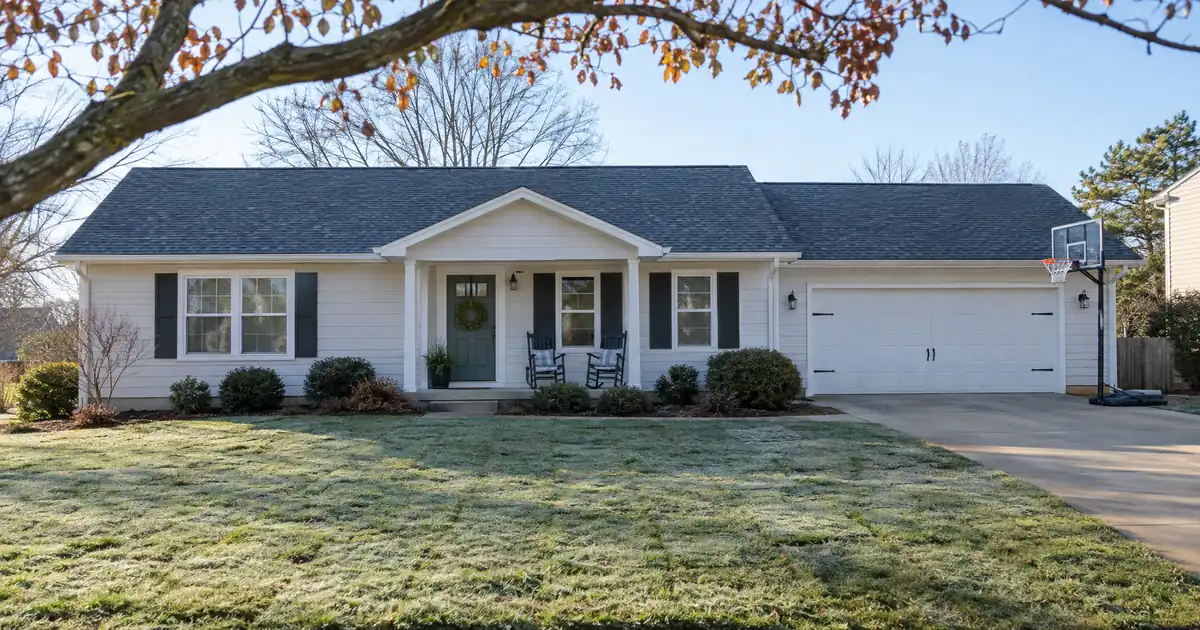
The Quick Read: It depends, and you do not make the call. On a conventional purchase, the lender’s automated underwriting system decides whether your loan and home earn an appraisal waiver. Being new to buying does not rule you out, since each file is reviewed on its own merits. You can’t request a waiver, but you can ask what your file is likely to get.
Three Things People Mean by “Skipping the Appraisal”
People use one phrase for three different things. Only the first one is what this article is about. Mixing them up is how buyers end up with the wrong expectations.
Conventional payment estimate
The starting figures are an example price at the first-time buyer’s minimum down payment. Replace them with yours.
Editable benchmark: 7.32% as of October 22, 2026 · Freddie Mac 30-year average via FRED®. A conventional market reference, not a conventional loan quote.
Estimate seeded at the low end of Fannie Mae’s published range (0.58%–1.86% a year); the insurer prices the actual premium on the score and the leverage. Applies only above 80% loan-to-value.
Illustrative starting assumptions: a $350,000 price, the first-time buyer’s minimum down payment, a thirty-year term at the current Freddie Mac benchmark, mortgage insurance at the low end of Fannie Mae’s published range, and property taxes and insurance estimated at typical national rates. Every field is editable.
Illustrative estimate only — not a Loan Estimate, approval, quote, or commitment to lend. The rate field carries the weekly Freddie Mac thirty-year conventional benchmark, a market reference and not a conventional loan quote; your rate is set by the lender at lock. The mortgage insurance figure is an editable estimate seeded from Fannie Mae’s published typical range, not a premium quote; the insurer prices the actual premium, and the cancellation month assumes scheduled payments with no extra principal and no change in value. Taxes, insurance and dues are editable estimates; closing costs are not included. Conforming loan limits apply by county. Licensed in sixteen states for consumer mortgages.
| What it is | Who decides | What it does |
|---|---|---|
| Lender appraisal waiver | The automated system, then the lender | Replaces the appraisal on an eligible loan |
| Waiving the appraisal contingency | You, in the purchase contract | Removes your contract exit if value comes in low |
| Government refinance streamlines | The program rules | Applies to refinances of existing FHA or VA loans |
The first is a lender-side decision. Your contract says nothing about it. The second is a contract decision and has nothing to do with whether an appraisal happens. A buyer can waive the contingency and still get a full appraisal ordered by the lender. The third only applies to refinances, so it does not help someone buying a home.
Here is the part that trips people up. A lender waiver does not take away your protections in the contract. A contingency waiver does. Keep them separate when your agent brings up either one.
How Does an Appraisal Waiver Actually Work?
An appraisal waiver is an offer from Fannie Mae or Freddie Mac, delivered through the lender’s underwriting software. Fannie Mae calls it value acceptance. It means Fannie Mae will accept the value the lender submits, with no appraisal required on eligible transactions. On a purchase, that submitted value must be the contract price.
The system builds the offer from a large database of past appraisals plus its own analytics. Freddie Mac runs its own version, called Automated Collateral Evaluation. The two systems are separate. A file can get an offer from one and not the other.
Here is the sequence, step by step:
1. You sign a contract and apply. The lender enters the contract price as the value.
2. The lender submits the loan to the automated system. It returns a decision on the loan and a recommendation on how to value the home.
3. The system returns one of three paths. Those are a full appraisal, value acceptance with no visit, or value acceptance with property data collection.
4. The lender decides whether to use the offer. An offer is an option, not an order. A lender can still choose to order an appraisal.
5. If property data is required, someone visits the home. A trained data collector, not necessarily a licensed appraiser, looks at the interior and exterior. One visit is all it takes.
6. The offer is confirmed or lost. If the file changes, the system can pull the offer, and the lender may fall back to an appraisal.
The offer also has a shelf life. Fannie Mae’s Selling Guide says the offer must be no more than four months old on the note date and the data must be submitted before closing. It also lays out which transactions are ineligible. A stale offer does not carry the loan.
Treat a waiver as a bonus, not a promise. Brokers who arrange conventional loans every week see this constantly. A strong borrower with a clean file can still get no offer. The system also looks at the property, and it needs history to judge.
Why First-Time Buyers Are Part of the Conversation
Recent changes opened waivers to buyers with small down payments. The cap on inspection-based waivers rose from 80% to 97% (HousingWire). Loan-to-value, or LTV, is the loan amount as a percentage of the home’s value.
That matters because first-time buyers often put little down. Across the wholesale programs a broker works with, a first-time buyer on a one-unit primary home with a fixed rate can reach 97% LTV, which is 3% down. Other conventional buyers on a primary home reach 95%, which is 5% down. Subject to lender guidelines and full file review, those buyers now sit inside the range where a waiver is possible.
HousingWire reported that a spokesperson for the Federal Housing Finance Agency (FHFA) said this is not an expansion of the credit box. It lets more first-time and low- and moderate-income buyers see the benefit of waivers. You still need to qualify for the loan itself.
So the old idea that you need 20% down to get a waiver is out of date. The reverse idea, that first-time buyers get waivers automatically, is also wrong. The exact numbers vary by lender and program and follow a full review of property, leverage, and credit.
What Makes a Waiver More or Less Likely?
Nobody outside the system can predict it. But the factors that tend to matter are known.
| Factor | Helps or hurts | Why |
|---|---|---|
| One-unit primary home | Helps | Core eligible case |
| Prior appraisal on file | Helps | The system has data to judge |
| Lower LTV | Helps | Less risk for the system to weigh |
| Two- to four-unit home | Hurts | Excluded from the property data path |
| Gift of equity | Hurts | Disqualifies the property data offer |
| Unusual or rural property | Mixed | Thin data can mean no offer |
Fannie Mae’s guide also excludes co-ops, manufactured homes, proposed construction, leasehold properties and manually underwritten loans from the property data path. It lists a price ceiling, too. For the live and complete list, check the Selling Guide section rather than relying on a summary.
Condos can be eligible, but the lender must still confirm the condo project is not ineligible. Occupancy matters too. Waivers fit primary homes and second homes. A rental purchase follows different rules, and occupancy sets the leverage on the loan.
A gift of equity deserves its own note. If a family member is selling you the home at a discount, that discount can remove the offer. Tell your loan officer up front.
When You Will Almost Certainly Still Need an Appraisal
Plan on a full appraisal when any of these apply:
- You are buying a two- to four-unit home.
- The home is new construction or a manufactured home.
- Your loan is manually underwritten.
- The system returns an “appraisal required” result.
- You use an FHA or VA loan. Waivers apply to conventional loans, and those programs run their own appraisal rules.
- The home is in a recent disaster area. The lender keeps responsibility for condition even with value acceptance.
There is also a middle option. Fannie Mae allows a desktop appraisal on a one-unit primary home at 90% LTV or less, when the system returns an approve/eligible result. It is still an appraisal, but with less friction. Ask whether it is available on your file. Final terms depend on the lender’s guidelines, the property type, and the borrower’s complete credit picture.
Should You Accept a Waiver If You Get One?
Accept it when you are confident in the price and your reserves are solid. Think twice when you feel any doubt about what the home is worth.
The upside is real. The appraisal fee line disappears from your Loan Estimate, which helps buyers who are stretching to reach closing. There is no appraisal visit to schedule. And no low appraisal can blow up your deal or force you to renegotiate or bring more cash.
The downside is just as real. Without an appraisal, nobody independent confirms the home is worth the contract price. Appraiser groups raise this point, and it is a fair one. You rely on your inspection, your agent’s comparable sales and your own judgment.
This is where lender behavior matters. When a lender uses the offer, Fannie Mae relieves the lender of responsibility for value and marketability. With plain value acceptance, the lender is also relieved of responsibility for physical characteristics and eligibility. With the property data version, the lender keeps responsibility for those. The lender must still warrant that the property is adequately insured. Lenders weigh that, which is one reason they may still order an appraisal.
Think about three questions:
- How sure am I of the price? Recent sales of similar homes nearby should support it, not just the listing.
- How thin is my cushion? At 97% LTV you have little equity. If the price is too high, you start underwater.
- Is my inspection thorough? With no appraiser, the inspector is the only one looking closely.
The equity point also touches mortgage insurance. Mortgage insurance is a monthly cost that applies above 80% LTV. You can ask to cancel it at 80% of the original value, with good payment history and no decline in value. The servicer must end it automatically at 78%. If you overpaid, you reach those thresholds sooner. Typical annual premiums run 0.58% to 1.86% of the loan balance, a published range and not a quote. Leverage, reserves, and pricing vary by lender and program; the final terms follow the full file review.
Many buyers take the waiver, and it is often reasonable. A buyer who would rather have the check of an appraisal can tell the loan officer. Whether the lender honors that is the lender’s call.
Three Illustrative First-Time Buyer Scenarios
These are simple pictures, not predictions. Every outcome stays subject to lender guidelines and full file review.
| Situation | Likely result |
|---|---|
| One-unit home, 3% down, fixed rate, strong file, system offers value acceptance with property data | Data collector visits, no appraisal if the offer holds |
| Same file, buyer worried the price is high, asks for an appraisal | Lender decides whether to order one |
| Two-unit home, 5% down, first-time buyer | Appraisal, because the property type is excluded |
In the first case, the buyer saves the appraisal fee and the offer must still be valid on the note date. If something changes in the file, the lender may order a hybrid appraisal as a fallback. Budget for that possibility.
In the second case, the buyer is not locked into the waiver. Raise the concern early.
In the third case, a first-time buyer on a small multi-unit home can still buy with conventional financing at 95% LTV on a primary residence. But the property type is not eligible for the property data path. Terms vary by lender guidelines, property type, leverage, credit profile, and full file review.
Questions to Ask Your Loan Officer and Agent
Bring this list to your first conversation:
- Does my file look likely to get a waiver offer from either system?
- If I get one, will you use it, or order an appraisal anyway?
- Can I ask for a full appraisal instead?
- Does a gift of equity or my property type change anything?
- What happens if the offer is withdrawn before closing?
- What valuation documents will exist for my file?
That last question matters for your paperwork rights. Under the federal valuation rules, the lender must notify you promptly after you apply that you will get a free copy of any appraisal. You can receive copies of valuations the lender developed. You can waive the timing requirement for receiving copies ahead of closing, but the copies must still be delivered at or before closing. Whether a given waiver creates a document you are entitled to is a compliance question, so ask.
Ask your agent two things. How strong are the comparable sales? And what is their read on the price? When no appraiser checks the number, the agent’s comparable sales are the main check you have.
If an Appraisal Happens and Comes in Low
A low appraisal does not end the deal. Common options are:
- Ask the seller to lower the price.
- Split the gap with the seller.
- Bring more cash to cover the difference.
- Ask for a reconsideration of value if the appraiser missed comparable sales.
- Walk away, if your contract contingency allows it.
This is also where the contingency matters. If you waived it earlier to win the home, your exit is gone. Think hard before giving that up.
Key Terms Defined
Appraisal waiver: An offer from Fannie Mae or Freddie Mac to accept the contract price as the home’s value, with no appraisal.
Value acceptance: Fannie Mae’s name for its waiver. It can come with or without a property data visit.
Property data collection: A visual check of the home’s interior and exterior by a trained collector. It is not an opinion of value.
Hybrid appraisal: An appraisal that uses data gathered by someone else. It can serve as a fallback if the offer is lost.
Appraisal contingency: A clause in your contract that lets you renegotiate or exit if the home appraises low.
Loan-to-value (LTV): The loan amount as a percentage of the home’s value.
Mortgage insurance: A cost on low-down-payment loans, required above 80% LTV, that cancels at 80% on request and ends automatically at 78%. Exact terms depend on the lender’s guidelines, property type, leverage, and a full review of the borrower’s file.
Where to Go From Here
If you are buying a home and want to see whether a conventional loan fits your file, Lendmire can help you compare the options and what each one asks of the file. A good place to start is its conventional loan programs page.
Frequently Asked Questions
Can I ask my lender to waive the appraisal?
No. The automated underwriting system generates the offer, and the lender decides whether to use it. You can ask your loan officer whether your file looks likely to get one. You cannot force it, and a strong credit profile does not guarantee an offer.
Can I decline a waiver and get a full appraisal?
Often you can raise the request, but the lender makes the final call. An offer is an option for the lender, not an obligation. If you are unsure about the price, tell your loan officer early, before the file is locked into one path.
Does skipping the appraisal save money?
Usually, because the appraisal fee line is removed from your closing costs. Savings vary by property and area. Fannie Mae has said appraisal alternatives have saved borrowers billions of dollars in total (Scotsman Guide). You still pay for your home inspection, which matters more when no appraiser looks at the home.
Is a lender waiver the same as waiving the appraisal contingency?
No. A lender waiver is the lender’s choice, made through the automated system. The contingency is a clause in your contract. You can waive the contingency and still get an appraisal. You can also get a waiver and keep the contingency, though it would have no appraisal to act on.
Does this work on FHA or VA purchase loans?
Generally no. Appraisal waivers apply to conventional loans backed by Fannie Mae or Freddie Mac. FHA and VA purchase loans follow their own appraisal rules, so confirm with your loan officer. Streamlined FHA and VA refinances can skip an appraisal, but those are refinances, not purchases.
For your own numbers, request a scenario review with Lendmire.
About Lendmire
Lendmire (NMLS# 2371349) is a mortgage brokerage serving homeowners and home buyers in 16 states. FHA, VA, conventional and jumbo purchase and refinance loans are arranged through wholesale lending channels; Lendmire brokers the financing and the lender underwrites each application. Scotsman Guide named Lendmire a Top Mortgage Workplace in both 2025 and 2026.
Get Started
Ready to find the right loan for you?
In about 30 seconds you can review financing options available for your home or investment property. No commitment required.
Informational only. Not a Loan Estimate, approval, or commitment to lend. Program availability and eligibility are subject to lender guidelines, credit approval, property review, and underwriting.
References
1. Fannie Mae – Value Acceptance
2. Fannie Mae Selling Guide B4-1.4-11
3. HousingWire – FHFA expands alternative appraisal on purchases
4. CFPB – ECOA appraisals rule: what it means for consumers
5. Scotsman Guide – FHFA announces appraisal process updates
This article is part of Lendmire’s conventional loan program — full qualification details, guidelines, and scenarios live on the program page.
Related reading: Should You Wait to Avoid PMI or Buy Now With a Conventional Loan? · How an Appraisal Changes What a Conventional Cash-Out Refinance Lends · Electronic vs Paper Verification for a First-Time Conventional Cash-Out
Brandon Miller
Founder & CEO, Mortgage Loan Originator, Lendmire LLC
- Mortgage Loan Originator · NMLS# 1129696 · Verify on NMLS Consumer Access
- North Carolina Real Estate Broker · License# 343312 · Verify on NCREC
- North Carolina Insurance Producer · License# 19053198 · Property, Casualty, Life, Health · Verify on NAIC SBS
- Lendmire LLC · Firm NMLS# 2371349 · Verify firm licensure
Disclosures. The information presented in this article is general market commentary, not financial, legal, or tax advice. Lendmire is a mortgage brokerage (NMLS# 2371349) — not a direct lender or depository institution — and loan placement is subject to lender underwriting. Nothing in this content represents a commitment to lend. Loan terms, pricing, and program availability vary based on borrower qualifications, property characteristics, and state of subject property, and are subject to change at any time. Lendmire complies with Equal Housing Opportunity requirements. Consumer access: nmlsconsumeraccess.org.