
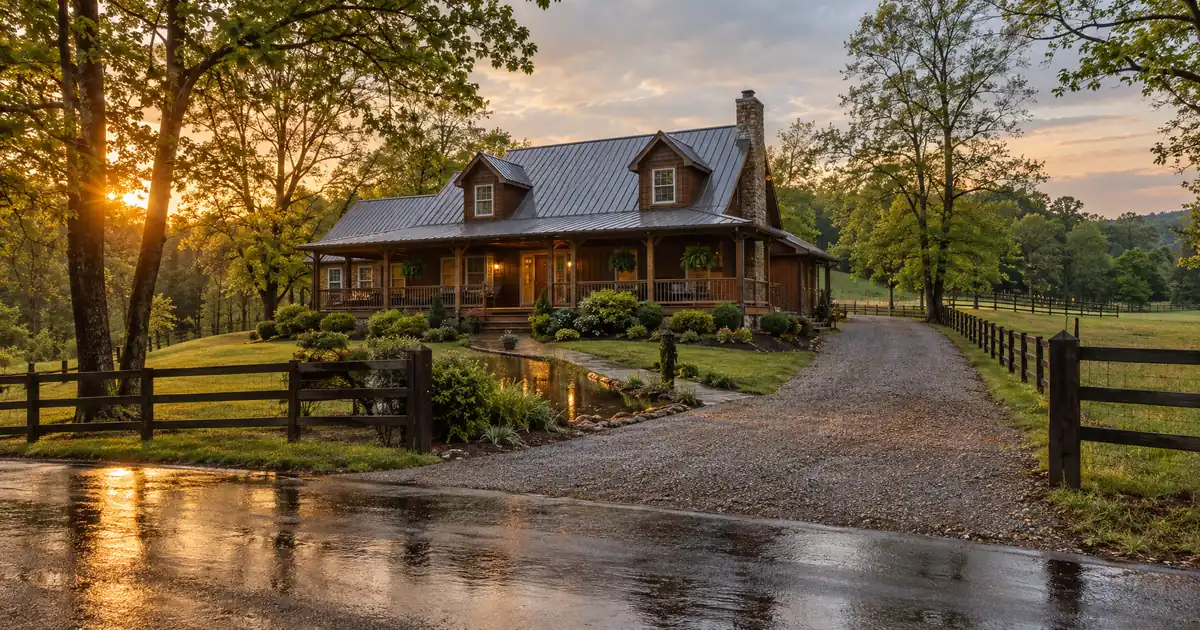
The Quick Read: Yes, when the cabin is a year-round house and the land is secondary to it. Fannie Mae and Freddie Mac finance property that is residential in nature, so the cabin must be livable in winter, reachable by a proper road, and served by utilities. Acreage alone does not disqualify a file. A seasonal-only camp, vacant land, or a working farm usually does.
Most people assume the number of acres decides this. It doesn’t. What decides it is how the property is used, whether the cabin is a real home, and what the appraisal says. This page walks through those pieces, the exceptions, and how to decide which path fits you.
Conventional payment estimate
The starting figures are an example price at the first-time buyer’s minimum down payment. Replace them with yours.
Editable benchmark: 7.32% as of October 22, 2026 · Freddie Mac 30-year average via FRED®. A conventional market reference, not a conventional loan quote.
Estimate seeded at the low end of Fannie Mae’s published range (0.58%–1.86% a year); the insurer prices the actual premium on the score and the leverage. Applies only above 80% loan-to-value.
Illustrative starting assumptions: a $350,000 price, the first-time buyer’s minimum down payment, a thirty-year term at the current Freddie Mac benchmark, mortgage insurance at the low end of Fannie Mae’s published range, and property taxes and insurance estimated at typical national rates. Every field is editable.
Illustrative estimate only — not a Loan Estimate, approval, quote, or commitment to lend. The rate field carries the weekly Freddie Mac thirty-year conventional benchmark, a market reference and not a conventional loan quote; your rate is set by the lender at lock. The mortgage insurance figure is an editable estimate seeded from Fannie Mae’s published typical range, not a premium quote; the insurer prices the actual premium, and the cancellation month assumes scheduled payments with no extra principal and no change in value. Taxes, insurance and dues are editable estimates; closing costs are not included. Conforming loan limits apply by county. Licensed in sixteen states for consumer mortgages.
Is There an Acreage Cap on Conventional Loans?
No agency cap exists that we can point to, but individual lenders sometimes set their own. Freddie Mac says in its Rural Properties FAQ that it has no site size or acreage limitations. Fannie Mae’s Selling Guide pages on property eligibility do not set one either.
That is the agency position. The lender position can differ. Across the wholesale programs we place files with, some lenders add their own limits on acreage, outbuildings, or property type on top of the agency rules. The agencies call these “overlays.”
Three layers decide your outcome:
| Layer | Who decides | What it covers |
|---|---|---|
| Agency rule | Fannie Mae / Freddie Mac | Residential use, habitability, access |
| Lender overlay | The individual lender | Extra limits on acres, outbuildings |
| Appraiser judgment | The appraiser | Value, comps, how much land counts |
Freddie Mac also says the lender, not the appraiser, decides whether a property is eligible. The appraiser reports facts and value. The lender reads the report against the rules.
If you want the program side first, Lendmire’s conventional loan programs page lays out how these loans are arranged through wholesale lenders.
What Makes a Cabin Count as a Residence?
A cabin counts when it works as a year-round home. Fannie Mae’s general property eligibility rules list properties “not suitable for year-round occupancy” as ineligible. Cabin is not the problem word. Seasonal is.
Here is what a lender and appraiser look for in practice:
- Reliable heat and insulation that make winter occupancy realistic
- Working plumbing, a kitchen, and a bathroom
- A permanent foundation
- One dwelling on the property
- Legal use under local zoning, either conforming or legal non-conforming
- Roads that meet local standards and are readily accessible
- Utilities that meet community standards
A hunting shack with a wood stove and an outhouse fails this list. A well-built log home with a furnace and a septic system passes it. Many cabins sit in between, and those are the files where details matter.
Residential Use vs. Farm Use
The land must serve the house, not the other way around. Fannie Mae’s Selling Guide says loans must be secured by residential property, and it treats vacant land and property used primarily for agricultural or commercial purposes as not residential. Freddie Mac draws the same line.
Some surprises on this front:
- A barn does not automatically sink the loan. Freddie Mac allows agricultural-type outbuildings when the primary use is residential. Silos, animal facilities, and very large barns can suggest a working farm, so the lender has to judge it.
- A little farming is fine. Freddie Mac treats insignificant activity, like a small roadside stand, as acceptable. Primary farming or ranching is not.
- Leasing the land counts. Freddie Mac says a property leased out for farming or ranching is ineligible even if you don’t farm it yourself.
- Agricultural zoning is not a dealbreaker by itself. The lender has to confirm that residential use is legal there and the property is not primarily farmed.
Picture a three-bedroom cabin on 40 wooded acres with a detached garage and a woodshed. That reads as residential. Now picture the same cabin with a hay lease on 30 of those acres. The file changes character.
How the Appraisal Handles a Cabin on Acreage
The appraisal is where most cabin files get tested. Rural homes often have large lots and few similar sales. The appraiser may use older or more distant comparable sales, as long as the choices are justified and adjusted. Freddie Mac expects the appraiser to have knowledge and experience with the property type.
The report covers zoning, highest and best use, utilities, access, outbuildings, and what the land contributes. Fannie Mae wants the existing use reported as highest and best use only when the improvements are typical and add value above the vacant site.
This matters to you in a specific way. The appraised value sets the maximum loan through LTV (loan-to-value, the loan as a percentage of value). The appraiser decides how much of your acreage the market actually pays for. Suppose you buy a cabin with a large parcel and the comps support little value for the extra land. The appraisal may come in below the price. You would then cover that gap with cash, because the loan is sized to value, not to what you agreed to pay.
Rural appraisals can also cost more and take more effort to complete. No official figure exists for that, so treat it as something to ask about early.
Wells, Septic, Roads, and Power
Without public water and sewer, you need a working well and septic. Fannie Mae’s site section guidance requires a community or private well and septic to be available and in use. They must sit on the property or fall under a legally binding access and maintenance agreement.
Roads need to be legal and reliable. The Fannie Mae wording is “readily accessible by roads that meet local standards.” That is a local test, not a paving rule. A maintained gravel road can work in some places. A road that washes out each spring is a different story.
These items stall more rural files than acreage does. Check them before you fall in love with a listing.
Primary Home, Second Home, or Rental?
Occupancy decides your down payment, and it is the first choice to make. The same cabin is financed differently depending on how you will use it. Across the programs we place, purchase leverage looks like this:
| Occupancy | Maximum purchase LTV |
|---|---|
| Principal residence, first-time buyer (fixed rate) | 97% |
| Principal residence, other buyers | 95% |
| Second home | 90% |
| Investment property, one unit | 85% |
Those are program maximums, subject to lender guidelines and full file review. Credit score, ratios, and reserves still apply.
If the cabin is your main home, you get the best leverage. If it’s a getaway, Fannie Mae’s second-home rules require that you occupy it part of the year, that it be a one-unit dwelling suitable for year-round use, that you keep exclusive control, and that it not be a rental or timeshare. Rental income cannot be used to qualify. Freddie Mac allows short-term renting only without rental pools, management control, or revenue sharing.
Planning to rent it out most of the year? Then the loan is not a second-home loan, and occupancy choice matters. Answer that honestly up front.
The Seasonal Cabin Exception
Fannie Mae treats seasonal-only property as ineligible, and Freddie Mac has a narrow second-home exception. Freddie Mac’s second-home guide section allows seasonal limitations, such as lack of winter access. The appraiser must include at least one comparable sale with similar seasonal limits.
That exception is not a general door. Don’t assume it works for any cabin. Whether a given lender will use it is a separate question, and many lenders stay with the stricter reading.
When the Land Comes in Pieces
Several parcels can work if they act as one property. Acreage often arrives as multiple parcels. Fannie Mae’s special eligibility rules say each parcel must be conveyed whole, the parcels must adjoin, they need the same basic zoning, and the whole property may contain only one dwelling. The mortgage must be a valid first lien on every parcel.
A road can divide parcels in some cases, but only when the parcel without the house cannot be built on, and the file must show that. Freddie Mac has comparable rules.
Buying vs. Building
This article covers buying an existing cabin. Vacant land is not eligible for a conventional purchase loan, so land with no home on it needs a different product. Building a cabin involves construction financing, which is its own topic. If you are buying a finished, habitable cabin, the rules above apply.
When Conventional Isn’t the Fit
Sometimes the answer is a different loan. If the cabin is seasonal, the acreage works as a farm, or the price runs above conforming limits, other paths exist.
Above the conforming limit, jumbo loans take over. Lendmire’s piece Can a Jumbo Loan Finance a High-Value Home on Large Acreage? covers that route. Some lenders also keep rural loans on their own books with their own rules. Terms vary by lender.
This one is a genuine judgment call. A conventional loan usually offers the strongest leverage options for a primary home. But if the property fails the residential test, forcing it into a conventional file wastes time.
Will Your Cabin Qualify? A Self-Check
Answer yes or no:
1. Can you live there in winter, with heat and working plumbing?
2. Is it one dwelling on land that mainly supports the house?
3. Is it free of leased farmland or primary farm use?
4. Is road access legal and reliable year-round?
5. Does it have a working well and septic, or public service?
6. Will you live there full-time, or part of the year as a second home?
7. Can the appraisal reasonably support the price?
Seven yeses put you in good territory. A no on questions 1 through 4 is where files usually break.
Beyond the property, the borrower side follows ordinary conventional rules. The wholesale conventional programs start at a 620 decision score, and the automated finding governs most files, with a total ratio ceiling of 50%. Mortgage insurance is required above 80% LTV. You can ask to cancel it at 80% of the original value, and the servicer must end it automatically at 78%. Premiums vary by file, and pricing is shown on the Loan Estimate.
Key Terms Defined
LTV (loan-to-value): The loan amount as a percentage of the appraised value or price, whichever is lower.
Overlay: An extra rule a lender adds on top of Fannie Mae or Freddie Mac requirements.
Highest and best use: The appraiser’s finding of the most appropriate legal use of the property.
Comparable sales: Recent sales of similar homes that the appraiser uses to estimate value.
Second home: A one-unit home you occupy part of the year, kept for your own use and not rented.
Legal non-conforming: A use that was legal when built but no longer matches current zoning.
Frequently Asked Questions
Is there a maximum number of acres for a conventional loan?
The agencies don’t set one. Freddie Mac says it has no acreage limitations. Individual lenders may set their own, so ask early. The bigger factor is whether the property reads as residential and whether the appraisal supports its value.
Can I use a conventional loan if the land is zoned agricultural?
Possibly. Freddie Mac does not require specific zoning classes. The lender must confirm that residential use is permitted, the property is residential in nature, and it is not primarily farmed or ranched.
Does a log cabin qualify?
Yes, if it works as a year-round home. Construction type is less important than habitability. The practical challenge is finding comparable sales for the appraisal, and some lenders are more comfortable with that than others.
Can I rent the cabin out and still use a second-home loan?
No. Fannie Mae’s second-home rules bar rentals and do not allow rental income to qualify the loan. Freddie Mac permits short-term renting only without rental pools, management control, or revenue sharing. Planned regular rental use puts you in a different occupancy category.
What if the appraisal comes in low because of thin comps?
The loan is sized to the appraised value, so you may need to cover the difference in cash or renegotiate the price. Rural appraisers can use older or distant sales if they justify them. Asking for an experienced rural appraiser helps.
If you are buying a home and want to see whether a conventional loan fits your file, Lendmire can help you compare the options and what each one asks of the file. Every program figure here is subject to lender guidelines and full file review, and nothing is a commitment to lend.
For your own numbers, request a scenario review with Lendmire.
About Lendmire
Lendmire, NMLS# 2371349, is a mortgage brokerage with consumer lending licenses in 16 states. FHA, VA, conventional and jumbo purchase and refinance loans are arranged through wholesale lending partners, and each application is reviewed individually by the lender. Scotsman Guide named Lendmire a Top Mortgage Workplace in both 2025 and 2026.
Get Started
Ready to find the right loan for you?
In about 30 seconds you can review financing options available for your home or investment property. No commitment required.
Informational only. Not a Loan Estimate, approval, or commitment to lend. Program availability and eligibility are subject to lender guidelines, credit approval, property review, and underwriting.
References
1. Freddie Mac Rural Properties FAQ
2. Fannie Mae Selling Guide B2-3-01 General Property Eligibility
3. Fannie Mae Selling Guide (Charter Act residential requirement)
4. Fannie Mae B4-1.3-04 Site Section
5. Fannie Mae’s second-home rules
6. Freddie Mac Guide §4201.12 Second Homes
This article is part of Lendmire’s conventional loan program — full qualification details, guidelines, and scenarios live on the program page.
Related reading: Conventional Cash-Out Refinance Total Cost Over the Life of the Loan · Can You Avoid PMI on a Conventional Loan Without a Fifth Down? · Conventional Cash-Out Refinance for Homeowners Replacing a Loan to Get Cash
Brandon Miller
Founder & CEO, Mortgage Loan Originator, Lendmire LLC
- Mortgage Loan Originator · NMLS# 1129696 · Verify on NMLS Consumer Access
- North Carolina Real Estate Broker · License# 343312 · Verify on NCREC
- North Carolina Insurance Producer · License# 19053198 · Property, Casualty, Life, Health · Verify on NAIC SBS
- Lendmire LLC · Firm NMLS# 2371349 · Verify firm licensure
Disclosure information. Lendmire is a state-licensed mortgage brokerage under NMLS# 2371349. Lendmire is not a depository institution, direct lender, or financial advisor — all loans referenced are placed through wholesale lender partners and are subject to each lender's underwriting standards. This article is provided for general informational purposes and is not a commitment to lend, nor does it constitute financial, legal, or tax advice. Loan programs, terms, rates, and qualification standards change without notice and depend on borrower profile, property type, and the state in which the subject property is located. Equal Housing Opportunity provider. NMLS Consumer Access: nmlsconsumeraccess.org.