
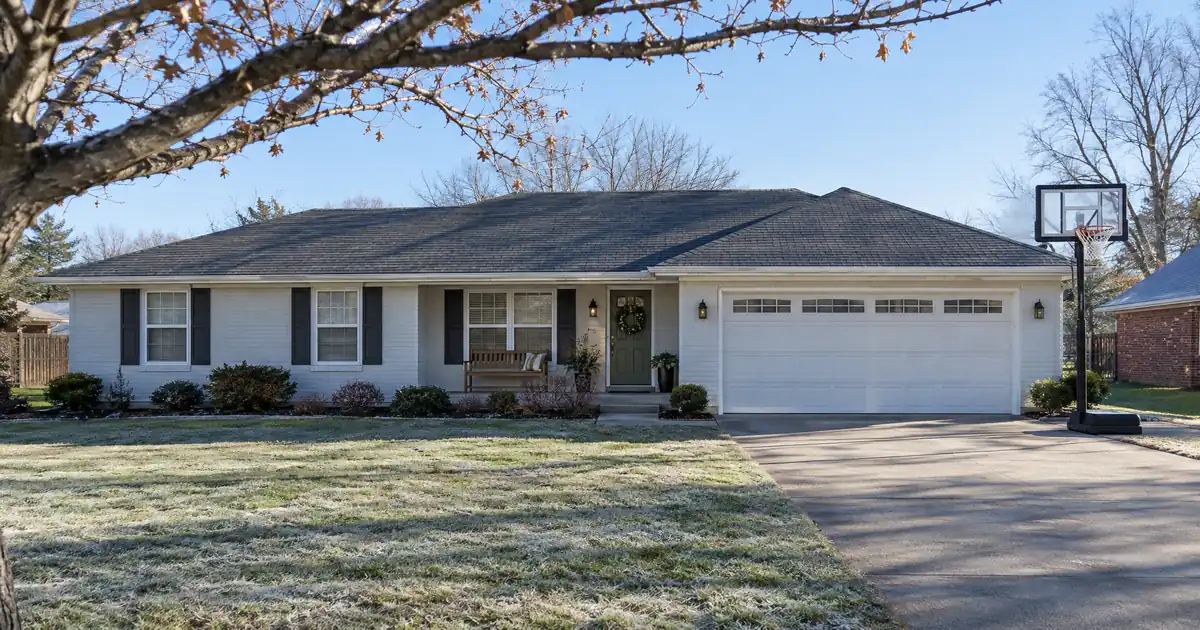
The Quick Read: A “first-time buyer” in down payment assistance usually means someone with no ownership interest in a home during the past three years. It does not mean someone who has never owned. Each program picks its own definition, and across the wholesale programs Lendmire places files with, no option requires first-time status at all.
Key Takeaways
- The common test is a three-year lookback, not “never owned.”
- Repeat and move-up buyers qualify for every assistance option we arrange, though the grant also requires an income limit, a qualifying category, or an underserved tract.
- Only the grant carries an income test, and a first-time buyer is just one of several ways to pass it.
- Assistance is for an owner-occupied primary residence only.
- A recorded lien is a loan, even when it is forgiven later. It is never a gift.
What Does “First-Time Buyer” Actually Mean?
There is no single federal definition. The program that hands out the money decides which one applies.
The most borrowed version comes from HUD’s housing rules. 24 CFR 93.2 describes a first-time homebuyer as an individual and his or her spouse who have not owned a home during the three years before purchase. The definition asks for no ownership interest in residential property in the prior three years, and the buyer must live in the home as a primary residence.
The IRS uses a different lookback, for retirement-account withdrawals. Same phrase, different rulebook. That is why a buyer can be “first-time” under one program and not another.
Does Anyone Have to Be a First-Time Buyer?
No. Nothing in the assistance options we arrange requires it. Repeat buyers and move-up buyers qualify.
Many public programs do impose a first-time test, so the confusion is understandable. Urban Institute research found that 62.1% of programs require a first-time buyer, which means a large minority do not (Urban Institute). Check the provider’s wording before you assume you are out.
FHA works the same way. FHA itself does not require first-time status. Some programs paired with it do.
How Assistance Is Underwritten, Step by Step
The first mortgage sets the rulebook, and the assistance sits on top. Here is how a file moves.
1. Pick the first lien. FHA, USDA, or HUD-184 (the Section 184 Indian Home Loan Guarantee). The grant pairs with FHA only. The forgivable and repayable seconds also pair with USDA and HUD-184.
2. Test the borrower. Credit floor, income test, unit count, and counseling depend on the option chosen.
3. Match the structure to the first lien. Not every shape fits every first mortgage.
4. Underwrite. The automated underwriting finding on the first loan drives the decision. A repayable second adds a monthly payment, and FHA counts that payment in the housing payment it evaluates. A forgivable second adds no payment.
5. Gather documents. Expect the application, income and household records, an assistance commitment, the second-lien note if there is one, an occupancy certification, and proof of homebuyer education when the grant requires it.
6. Close. Assistance funds go toward the down payment, and in some cases closing costs. A second lien is recorded behind the first.
7. Live there. Occupancy and forgiveness terms run after closing.
Everything above is through wholesale lenders, subject to program guidelines and full underwriting. Lendmire is the broker, not the lender, and none of this is a commitment to lend.
The FHA Foundation Underneath
FHA’s minimum required investment is 3.5% of the lesser of price or appraised value, which means first-lien leverage of 96.5%. That minimum applies at a representative credit score of 580 or higher. The assistance options carry their own higher credit floors, covered below. Leverage, reserves, and pricing vary by lender and program; the final terms follow the full file review.
The upfront mortgage insurance premium is a percentage of the base loan and can be financed. Annual mortgage insurance is charged on top, set by loan size, leverage, and term. FHA loan limits for one-unit properties vary by county, so the applicable limit depends on where the property is located.
HUD revises its lending handbook periodically; its FHA INFO page tracks the updates. That is one reason a program that worked last season may read differently now.
The Four Shapes of Assistance
| Shape | Size | Repayment | Credit floor |
|---|---|---|---|
| Grant | 2% or 3.5% of price | Nothing to repay | 620 |
| Forgivable second | 3.5% of price or value | Forgiven after 36 or 60 on-time payments | 640 |
| Repayable second | 3.5% or 5% of price or value | Monthly payment, balloon in year 10 | 660 |
| Refinance-cost second | 1% to 3.5% of balance | Same terms as repayable | 660 |
The grant
The grant is 2% or 3.5% of the purchase price, applied toward the FHA minimum investment. There is nothing to repay. It releases at closing with no lien, no payment, and no interest. It pairs with FHA first liens at 96.5% loan-to-value on one to four units.
Eligibility has one gate with several doors. Household income at or below 140% of area median income qualifies. So does any one qualifying category: first responder, educator, medical worker, civil servant, military personnel, a first-time buyer, or a home in an underserved census tract. An HUD-approved homebuyer education course is required. The grant is not offered in Washington.
The forgivable second
This is 3.5% of the lesser of price or appraised value. It has no interest and no monthly payment. It is fully forgiven after the first 36 or 60 on-time first-lien payments, with no delinquency of 90 days or more. There is no income limit beyond USDA’s own on a USDA loan, and no counseling requirement. It covers one to two units.
The repayable second
This is a real second loan. It is 3.5% or 5% of the lesser of price or value. At 5%, it also covers closing costs and prepaid items. It carries interest, a monthly payment, and 30-year amortization with a balloon due in year 10. It comes with its own disclosure, separate from the first mortgage. Manual underwriting is not allowed, and high-balance first liens are.
The refinance-cost second
For an FHA refinance, this second covers 1% to 3.5% of the lesser of the balance or value toward closing costs, with combined leverage up to 104%. It never applies to a streamline refinance. Terms vary by lender guidelines, property type, leverage, credit profile, and full file review.
A Forgivable Loan Is Still a Loan
HUD’s own definition treats any financing that creates a lien as secondary financing, and it is not considered a gift even when it is forgiven. The name on the brochure does not control. The note does.
That matters for your budget and your exit. A forgivable second adds no payment, but it sits on the title until the schedule runs out. Sell or refinance early, and the unforgiven balance may come due. A repayable second raises your monthly cost every month, and the year-10 balloon needs a plan.
A true gift has no lien and no expectation of repayment. The grant fits that description: it is 2% or 3.5% of the purchase price, with nothing to repay. Most public programs are second mortgages rather than grants, according to Urban Institute and Down Payment Resource data (Urban Institute and Down Payment Resource).
Where the Definition Gets Tricky
Edge cases decide more files than the headline rule.
Spouses count together. The HUD wording covers “an individual and his or her spouse.” If your spouse owned a home inside the window, the household can fail the test. Some lenders read it more loosely, so ask which version applies.
Single parents and displaced homemakers. If your only ownership was with a former spouse, you can still count. Federal statute protects this group (National Affordable Housing Act §956), and the grant’s first-time category says the same.
Homes that do not count. Prior ownership may be disregarded if the dwelling was not on a permanent foundation, or if it violated building codes and could not be fixed for less than the cost of a permanent structure (24 CFR Part 92).
Do not assume another program agrees.
Rentals and second homes. Assistance is for an owner-occupied primary residence only. Never a second home, vacation home, or rental.
Stacking. The assistance options described here are not combined with another assistance program, and a mortgage credit certificate is not paired with the second-lien options.
USDA refinance. USDA’s rules say an assistance second cannot be rolled into a new guaranteed refinance. It must be subordinated or paid off.
HUD-184. The program itself provides no down payment help or grants. Assistance comes from a third party, such as a tribe, which is why a second-lien option matters on that first lien.
Does This Person Count? Five Quick Scenarios
- Sold a home four years ago. Passes the three-year test. Qualifies as a first-time buyer for programs that use it, and can qualify for any second-lien option regardless.
- Sold a home last year, buying a bigger one. Fails a first-time test. Still eligible for the second-lien options, which have no first-time rule. The grant needs another door: income, a qualifying category, or an underserved tract.
- Divorced, owned only jointly with a former spouse. Counts as first-time under the displaced-homemaker and single-parent language.
- Owned only a rental. Rules vary by provider on whether a non-primary property counts against you. Get the provider’s wording in writing.
- A teacher earning above the income line. The grant’s educator category can open the door. The income test does not apply once a category fits.
How to Check Your Own Status
Work through this list before you talk to a lender.
1. Write down every property you or your spouse owned in the last three years, with dates. 2. Note whether each was a primary residence and who was on title. 3. Ask which definition the specific provider uses. 4. Check your household income against the grant’s 140% area median income test, and check whether a category applies. 5. Pull your credit and compare it to the floor for the shape you want. 6. Gather proof of ownership dates, such as a closing statement or a deed.
If you want independent advice first, HUD-approved housing counselors are available, often at little or no cost.
Tax treatment can depend on your situation; buyers should speak with a qualified tax professional before relying on any deduction or credit.
Which Shape Fits You?
A renter with thin savings and a steady credit file usually looks at the grant first, since nothing is repaid. A public-service worker may pass on category alone. A repeat buyer above the income line, or one with a higher price, leans toward a second lien. Compare how much monthly payment you can carry against how long you plan to stay. Details on the structures live on Lendmire’s down payment assistance programs page.
Key Terms Defined
Down payment assistance: Money or financing from a program that helps cover a home’s down payment and sometimes closing costs.
First lien: The main mortgage, which gets paid first if the home is sold or foreclosed.
Second lien: A loan recorded behind the first mortgage, secured by the same home.
Forgivable loan: A second lien that is wiped out if you meet its terms, such as making on-time payments for a set period.
Balloon payment: A large lump sum due at the end of a loan term, after smaller payments that did not pay it off.
Area median income: The midpoint household income for a local area, used to set program income limits.
Frequently Asked Questions
Can I still be a first-time buyer if I owned a home before?
Usually yes, if it was more than three years ago. The common definition is a lookback, not “never owned.” Even if you fail it, the forgivable and repayable seconds we arrange do not require first-time status.
Does my spouse’s ownership history matter?
Often, yes. The HUD wording tests you and your spouse together, so a recent home owned by your spouse can disqualify the household. Some lenders read it differently, so confirm with the provider.
Is a forgivable second the same as a gift?
No. A lien-secured second is a loan for FHA purposes, even when it is forgiven later. A true gift has no lien and no expectation of repayment, which describes the grant.
Do I need to meet an income limit?
Only for the grant, and only if you do not fit a qualifying category. The test is 140% of area median income. The second-lien options have no income limit beyond USDA’s own on a USDA first mortgage.
Can I use assistance on a rental or second home?
No. Assistance is for an owner-occupied primary residence only.
Next Step
If you are buying a primary home and want to see whether a down payment assistance option fits your file, Lendmire can help you compare the grant, forgivable and repayable structures alongside an FHA, USDA or HUD-184 first mortgage. Call 828-256-2183.
Investors who want the broader program framework can review how DSCR loans work.
About Lendmire
Lendmire — NMLS# 2371349 — is a mortgage broker that arranges FHA, USDA and HUD-184 home purchase financing with grant-style, forgivable and repayable down payment assistance options in 16 states through wholesale lenders. Every option is subject to the lender’s guidelines and full underwriting. Scotsman Guide named Lendmire a Top Mortgage Workplace in both 2025 and 2026.
Get Started
Ready to find the right loan for you?
In about 30 seconds you can review financing options available for your home or investment property. No commitment required.
Informational only. Not a Loan Estimate, approval, or commitment to lend. Program availability and eligibility are subject to lender guidelines, credit approval, property review, and underwriting.
References
3. USDA
5. Urban Institute and Down Payment Resource
This article is part of Lendmire’s down payment assistance program — full qualification details, guidelines, and scenarios live on the program page.
Related reading: Open Vs First-time-only Down Payment Assistance For A Move-up Buyer · How Much Down Payment Assistance Can You Get? · How to Qualify for Down Payment Assistance When You’re Self-Employed
Brandon Miller
Founder & CEO, Mortgage Loan Originator, Lendmire LLC
- Mortgage Loan Originator · NMLS# 1129696 · Verify on NMLS Consumer Access
- North Carolina Real Estate Broker · License# 343312 · Verify on NCREC
- North Carolina Insurance Producer · License# 19053198 · Property, Casualty, Life, Health · Verify on NAIC SBS
- Lendmire LLC · Firm NMLS# 2371349 · Verify firm licensure
Important disclosures. Lendmire (NMLS# 2371349) is a licensed mortgage brokerage. Lendmire is not a direct lender, depository institution, or financial advisor. All loan inquiries are subject to lender underwriting; this article does not constitute a commitment to lend. Rates, terms, and program guidelines are subject to change without notice and vary by borrower profile, property type, and state. Information in this article is general in nature and is not financial, legal, or tax advice. Equal Housing Opportunity. NMLS Consumer Access: nmlsconsumeraccess.org.