
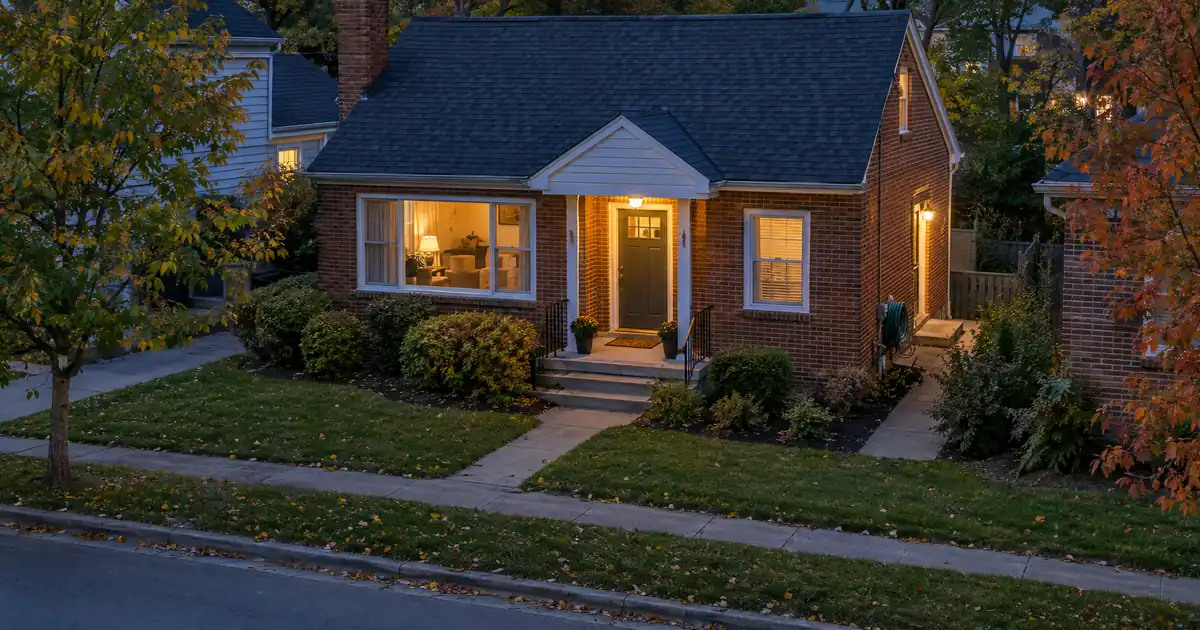
The Quick Read: A move-up buyer can use down payment assistance, because none of the options Lendmire arranges requires a first-time buyer. The new home must be your primary residence, and the assistance must fit your first mortgage. Selling your current home changes the paperwork and the timing, not your right to apply. Each option has its own credit floor and rules, all subject to program guidelines and full underwriting.
Do Move-Up Buyers Qualify at All?
Yes. Plenty of buyers assume assistance is for renters buying their first place. It isn’t. Across the wholesale programs Lendmire places files with, repeat buyers qualify, and so do people still living in a home they are about to sell.
The “first-time buyer” idea does show up in one place. The grant option lists it as one of several qualifying categories. It is a way in, not a gate. If you owned a home within the last three years, you simply use a different category or the income test.
What does matter is what you are buying. The home must be an owner-occupied primary residence. A second home, vacation home, or rental does not qualify. Nothing about selling your old house changes that.
Key Takeaways
- No option requires a first-time buyer. Repeat and move-up buyers qualify.
- The new home must be your primary residence, never a rental or second home.
- The grant has an income test or a qualifying category. The second-lien options have no income limit of their own (a USDA first mortgage brings USDA’s limits).
- Assistance is a percentage of price or value, and no option stacks with another assistance program.
- The sale of your old home drives the paperwork: proceeds, payoff, and any remaining liability.
The Four Shapes of Assistance
Assistance comes in four shapes. Which one fits depends on your credit, your income, and your first mortgage. Credit floors below are the lowest representative score among all borrowers, and every figure is subject to program guidelines.
| Shape | Size | Repay? | Credit floor |
|---|---|---|---|
| Grant | 2% or 3.5% of price | Nothing to repay | 620 |
| Forgivable second | 3.5% of lesser of price or value | Forgiven after 36 or 60 on-time payments | 640 |
| Repayable second | 3.5% or 5% of lesser of price or value | Monthly payment, balloon in year 10 | 660 |
| Refinance-cost second | 1% to 3.5% of balance | Same terms as repayable | 660 |
The grant is released at closing. No lien, no payment, no interest. It pairs with FHA first mortgages only, and it is not offered in Washington.
The forgivable second is a loan, even though it carries no interest and no payment. If you make the first 36 or 60 on-time payments on your first mortgage (depending on the version, and with no 90-day delinquency), it is forgiven. Leave the home or fall behind before then, and the story changes.
The repayable second is a real second loan. It has interest, a monthly payment, a 30-year amortization, and a balloon due in year 10. At 5%, the extra 1.5% covers closing costs and prepaid items. It has its own disclosures, separate from the first mortgage. This is the one that adds to your monthly obligations when the lender checks your debt load.
The refinance-cost second only applies to an FHA refinance, not a purchase. It is not relevant to most move-up buyers, so the rest of this piece focuses on the three purchase shapes.
For a fuller look at how these shapes work, see Lendmire’s overview of down payment assistance programs.
What Sits Underneath: The First Mortgage
The assistance rides on top of a government-backed first mortgage. The grant pairs with FHA. The forgivable and repayable seconds also pair with USDA and HUD-184.
FHA is the most common base. Here is how it works for a move-up buyer:
- Minimum investment: 3.5% of the lesser of price or appraised value, with a representative credit score of 580 or higher. The assistance options carry their own higher credit floors.
- Leverage: 96.5% first-lien loan-to-value (LTV, the loan as a share of the home’s value).
- Mortgage insurance: an upfront premium of 1.75% of the base loan, which can be financed, plus an annual premium that depends on your loan size and LTV.
- Loan limits: one-unit FHA limits run from $541,287 to $1,249,125 depending on the county.
Move-up buyers often target larger homes, so the county limit matters. A grant cannot be paired with a high-balance first lien. The repayable second can.
HUD’s FHA guidance says at least one borrower must occupy the home as a principal residence within 60 days of signing, and intend to stay at least a year. That is the rule that makes your timing matter. You cannot buy the new place and keep living in the old one as if the new one were an investment.
USDA has its own version. USDA’s guaranteed loan program requires income eligibility, primary-residence occupancy, and a property that is not income-producing. For a current homeowner, USDA adds conditions: you cannot remain financially responsible for another USDA-backed loan at closing, and your current home must no longer meet your needs.
How the Lender Underwrites the Combined Picture
Here is the process, step by step.
1. Pick the first mortgage. FHA, USDA, or HUD-184. Its occupancy and eligibility rules govern, even if the assistance is looser.
2. Pick the assistance shape. Grant, forgivable second, or repayable second.
3. Test the assistance rules. Credit floor, income test (grant only), property type, and unit count.
4. Run the combined payment. The lender counts the first mortgage, any repayable second, taxes, insurance, and your recurring debts. Forgivable seconds and grants add no payment.
5. Document the sale. More on this below.
6. Close. If a second lien is involved, it is signed and recorded at closing.
Step 4 is where move-up buyers get surprised. If your old home is still yours at closing, its mortgage payment generally stays in your debt load until the sale closes. Two payments at once can limit what you qualify for. Confirm this with your loan officer early.
Debt ratios depend on the file. FHA manual underwriting uses 31/43 ratios, and automated approvals commonly allow more. The assistance options follow the automated finding. The repayable second does not allow manual underwriting at all, and the forgivable second does.
The credit score has a wrinkle too. On the second-lien options, a lower-scoring co-borrower’s score can be blended in when the primary wage earner earns at least 60% of household income and holds the higher score. Minimums then become 660 for the forgivable second and 670 for the repayable second, and automated approval is required.
Selling Your Current Home: Timing and Paperwork
You do not have to sell first, but your path changes the file. Think of three scenarios.
| Scenario | What the file looks like |
|---|---|
| Old home already sold | Cleanest. Proceeds are cash; no old payment. |
| Both close together | Proceeds can fund cash to close; need executed documents. |
| Buying before selling | Old payment counts in debt load until sale closes. |
Already sold. You have an executed settlement statement, the old mortgage is paid off, and your debt load reflects just the new home. This is the easiest file to underwrite.
Closings close together. Legacy HUD handbook guidance says net proceeds from an arm’s-length sale of a home you own can serve as your cash investment in the next one, documented with a fully executed settlement statement. Current FHA rules are similar in spirit, and your lender will confirm the exact documents. The catch: if your sale slips, your purchase can slip with it.
Buying before selling. This works for some buyers, but you carry two housing obligations for a while. Your income has to support both on paper. If you plan to rent out the old home instead of selling, that is a different conversation. USDA, for instance, has its own tight rules on rental income and on whether your current home still meets your needs. And for the new home, assistance is for primary residences only.
Liability on the old mortgage. Selling a home does not always end your liability. If a buyer assumes your mortgage, you can stay on the hook unless the lender releases you. HUD’s Section 184 application addendum even warns about this directly. Ask for a release of liability in writing if your sale involves an assumption. Most ordinary sales pay off the old loan, which closes the issue.
Where the General Rule Breaks
Some situations catch move-up buyers off guard. Here they are.
A forgivable second is a lien, not a gift. HUD’s FHA Connection help describes secondary financing as any financing other than the first mortgage that creates a lien, and says it is not treated as a gift even with no monthly payment or with forgiveness terms. That affects combined leverage and paperwork. The grant has no lien, so it is different.
HUD-184 does not hand out assistance. The program guarantees the first mortgage. Help with the down payment comes from a separate source. The forgivable and repayable seconds we arrange pair with HUD-184, but the guarantee itself is not assistance.
The grant’s income test is not universal. The 140% of area median income test applies unless you fit a qualifying category: first responder, educator, medical worker, civil servant, military, first-time buyer, or a home in an underserved census tract. Many move-up buyers qualify by occupation or location even above the income line.
Relocation can change FHA’s one-home logic. FHA generally insures one principal residence per borrower. Older HUD handbook language carves out a relocation exception for a genuine move outside commuting distance. Treat that as a conversation for your lender, because current handbook rules govern.
No stacking. No option combines with another assistance program. A mortgage credit certificate is not permitted with the second-lien options. If you were hoping to layer a local program on top, plan on choosing one.
Rental use disqualifies. Primary residence only. If the new home will be a rental or second home, assistance does not apply.
What Happens Later When You Sell the New Home
The next move matters too. Each shape behaves differently.
- Grant: nothing to repay, because it was released at closing with no lien.
- Forgivable second: it is fully forgiven after the 36 or 60 on-time first-lien payments. Sell or refinance before then, and the balance is generally due.
- Repayable second: it is a loan with a balloon in year 10. Selling or refinancing pays it off along with the first mortgage.
Many public programs also add occupancy covenants or recapture periods. Missouri’s housing agency, for example, notes that a recapture tax can apply if a home is disposed of within a set period. That is a public-program example, not a term of the options described here. Read the terms of whatever you choose.
A Move-Up Buyer’s Decision Path
Run these questions in order.
1. Will the new home be your primary residence? If not, stop. Assistance does not apply.
2. Which first mortgage fits? FHA for the grant. FHA, USDA, or HUD-184 for the seconds.
3. Does a qualifying category or the income test apply? That decides whether the grant is open.
4. Do you want no payment, or can you handle one? A grant or forgivable second adds no payment. A repayable second adds one.
5. What is your credit tier? 620 for the grant, 640 for the forgivable second, 660 for the repayable second, with blended-score rules for co-borrowers.
6. Can your debt load carry two payments until the sale closes? If not, line up the sale first.
7. Do you need homebuyer education? The grant requires an HUD-approved course. You pay up front and the cost is credited back at closing.
One honest toss-up: the grant looks best on paper, but the forgivable second often reaches buyers the grant can’t, since it has no income limit of its own. The right pick depends on your credit and your first mortgage. A repayable second costs more over time but can cover closing costs at the 5% level.
Documents a Move-Up File Typically Needs
Expect the usual application items plus sale paperwork:
- The purchase contract for your old home
- The executed settlement statement showing net proceeds
- Proof the old mortgage was paid off
- Evidence of a release of liability if anyone assumed the loan
- Proof of your new occupancy plans
- Homebuyer education certificate, if you are using the grant
Key Terms Defined
Combined loan-to-value (CLTV): the first mortgage plus any second liens, divided by the home’s value.
Forgivable second: a second mortgage with no interest or payment that is erased if you keep the first loan current for a set period.
Balloon payment: a large lump sum due at the end of a loan term, here in year 10 on the repayable second.
Representative credit score: the middle score used to qualify, taken from the borrower credit reports.
Principal residence: the home where you live most of the year and plan to stay.
Release of liability: a lender’s written statement that you are no longer responsible for a mortgage after a sale.
Frequently Asked Questions
Do I have to sell my current home before using down payment assistance?
No. Plenty of buyers close on the new home before the sale. The catch is underwriting: your old mortgage payment generally stays in your debt load until the sale closes, which can limit what you qualify for. Selling first or closing together makes the file cleaner.
Can I use sale proceeds as my cash investment along with assistance?
Generally yes. Net proceeds from an arm’s-length sale can count toward your required investment when documented with an executed settlement statement. The assistance options sit alongside that cash, subject to program guidelines and your lender’s review.
Does my income matter if I already own a home?
It depends on the shape. The grant requires income at or below 140% of area median income, unless you fit a qualifying category such as an educator or a first responder. The forgivable and repayable seconds carry no income limit of their own, though a USDA first mortgage brings USDA’s limits.
Can I use assistance if I plan to keep my old home as a rental?
You can keep the old home, but the new one must be your primary residence. Assistance never applies to a rental, second home, or investment property. Keeping the old home also affects your debt load, and USDA has added conditions for current owners.
Is a forgivable second the same as a grant?
No. A grant is released at closing with nothing to repay and no lien. A forgivable second is a loan secured by a lien, with no interest or payment, that is forgiven after 36 or 60 on-time first-lien payments. Sell or fall behind earlier, and it may come due.
If you are buying a primary home and want to see whether a down payment assistance option fits your file, Lendmire can help you compare the grant, forgivable, and repayable structures alongside an FHA, USDA, or HUD-184 first mortgage. Programs change, and every file is reviewed individually under lender guidelines.
Investors who want the broader program framework can review how DSCR loans work.
About Lendmire
Lendmire — NMLS# 2371349 — is a mortgage broker that arranges FHA, USDA and HUD-184 home purchase financing with grant-style, forgivable and repayable down payment assistance options in 16 states through wholesale lenders. Every option is subject to the lender’s guidelines and full underwriting. Scotsman Guide named Lendmire a Top Mortgage Workplace in both 2025 and 2026.
Get Started
Ready to find the right loan for you?
In about 30 seconds you can review financing options available for your home or investment property. No commitment required.
Informational only. Not a Loan Estimate, approval, or commitment to lend. Program availability and eligibility are subject to lender guidelines, credit approval, property review, and underwriting.
References
1. HUD FHA Answers – owner occupant definition
2. USDA Rural Development – Single Family Housing Guaranteed Loan Program
3. Missouri Housing Development Commission – Homebuyer Programs Overview
This article is part of Lendmire’s down payment assistance program — full qualification details, guidelines, and scenarios live on the program page.
Related reading: Can a Six-Figure Earner With Student Loans Get Down Payment Assistance? · How To Qualify For Down Payment Assistance As A Repeat Buyer · Does Down Payment Assistance Have an Income Limit?
Brandon Miller
Founder & CEO, Mortgage Loan Originator, Lendmire LLC
- Mortgage Loan Originator · NMLS# 1129696 · Verify on NMLS Consumer Access
- North Carolina Real Estate Broker · License# 343312 · Verify on NCREC
- North Carolina Insurance Producer · License# 19053198 · Property, Casualty, Life, Health · Verify on NAIC SBS
- Lendmire LLC · Firm NMLS# 2371349 · Verify firm licensure
Compliance and disclosures. Lendmire (NMLS# 2371349) is a licensed mortgage broker and is not a direct lender, depository institution, financial advisor, or tax professional. Content in this article is general market analysis and educational information — not financial, legal, or tax advice for any specific situation. Lendmire does not guarantee loan approval; every transaction is subject to underwriting by the funding lender. Mortgage pricing and loan program guidelines are subject to change at any time without notice and vary by borrower characteristics, property type, and state regulations. Lendmire complies with Equal Housing Opportunity. Licensure verification: NMLS Consumer Access.