
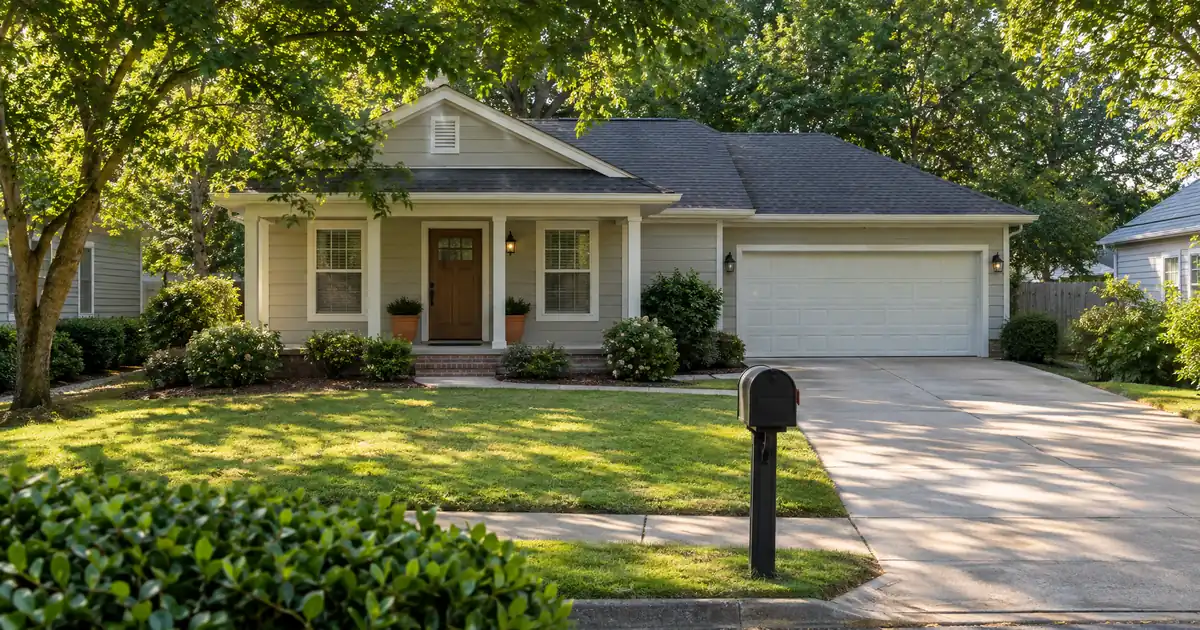
The Quick Read: Most buyers miss out because the help is scattered across many agencies and lenders, and nobody owns the job of telling them. A buyer who is turned away at the first conversation for lack of savings often never learns that a layer of help exists. That help comes in four shapes, and each one sits on top of an FHA, USDA or HUD Section 184 first mortgage.
The Short Version
- Eligibility runs well ahead of use. Many buyers could qualify and never ask.
- Assistance comes in four shapes: a grant, a forgivable second lien, a repayable second lien, and a second lien for refinance costs.
- No option requires a first-time buyer. Repeat and move-up buyers qualify.
- The help is for an owner-occupied primary residence only. It is never available for a rental or a second home.
- The grant carries nothing to repay. The second liens are real loans, and they come due at some point.
- Which option fits depends on credit score, income, the type of first mortgage, and the property.
What Down Payment Assistance Is, in Plain Words
Down payment assistance is money layered on top of a government-backed first mortgage to cover the cash a buyer must bring to closing. It is not part of the first loan. The first loan follows its own agency rules, and the assistance follows its program’s rules.
Through wholesale lenders, Lendmire arranges these down payment assistance programs alongside FHA, USDA and HUD-184 purchases. The assistance is always a percentage of the price or value. It is never a fixed dollar promise.
The FHA first mortgage underneath sets the baseline. FHA requires a 3.5% minimum investment, which means 96.5% first-lien leverage. It also charges an upfront mortgage insurance premium, which buyers can finance into the loan. Annual mortgage insurance varies by loan tier. FHA loan limits for one-unit homes vary by county.
Assistance typically fills some or all of that minimum investment. Some options also reach closing costs.
Why Most Buyers Never Hear About It
The gap between eligibility and use is large and well documented. The Urban Institute’s Urban Wire reports that government assistance among FHA borrowers has risen sharply since 2010. Even so, the large majority of FHA borrowers use none.
Nobody has proven one single cause. But the pieces are visible, and they stack up.
The programs are scattered. State agencies, counties, cities, tribes and nonprofits each run their own. Rules differ from one to the next. Finding and comparing them is hard work, which is why even the mortgage industry has built lookup tools.
Many programs are tied to one product. The FDIC’s guide to housing finance agency assistance notes that this help is often limited to use with the agency’s own first mortgage. It also says funding is subject to availability. A lender who is not approved for a given program cannot offer it.
The conversation ends too early. A buyer who tells a loan officer they have little saved may hear “come back when you have more.” The assistance question never gets asked. This is an observation about how the process tends to break, not a claim that anyone hides information.
Buyers rule themselves out. Many assume they earn too much, that they are not first-time buyers, or that the help is only for poor credit. Most of those assumptions are wrong, as the myths section below shows.
Not every file fits every option. A grant has a different credit floor than a second lien. A property type or loan size can exclude a buyer from one option and leave another open. Matching takes someone who knows all four shapes.
Here is the catch. Honest advice means admitting the help is not free in every case. Only the grant is not a loan; the other second liens are loans. A buyer who only hears the good news can end up surprised later.
How a File Works, Step by Step
Across the wholesale programs Lendmire places files with, the sequence is consistent, even though the details change by option.
1. Pre-screen. The loan officer checks income, credit score, property type and location against each option’s rules. All of the options also require primary-residence use.
2. Pick the first mortgage. FHA, USDA or HUD-184. The grant pairs only with FHA. The forgivable and repayable seconds also pair with USDA and HUD-184.
3. Pick the assistance shape. This depends on credit score, income, property and how the buyer feels about a second loan.
4. Run the first mortgage through automated underwriting. The assistance options follow the finding. The repayable second does not allow manual underwriting. The forgivable second does.
5. Complete the program requirements. The grant requires an HUD-approved homebuyer education course. The buyer pays up front, and the cost is credited back at closing. The second-lien options carry no counseling requirement.
6. Document the second lien, if there is one. A second lien is recorded, and the buyer receives its own disclosures. A repayable second also gets a separate balloon disclosure.
7. Close. The assistance is released at closing. The first lien is funded alongside it.
One point trips up buyers. A second lien is a separate loan. A repayable second adds a monthly payment, which affects the debt-to-income ratio. A forgivable second has no payment, so it does not.
The Four Shapes, Side by Side
| Shape | Size | Repayment | Credit floor |
|---|---|---|---|
| Grant | 2% or 3.5% of price | Nothing to repay | 620 |
| Forgivable second | 3.5% of lesser of price or value | Forgiven after 36 or 60 on-time payments | 640 |
| Repayable second | 3.5% or 5% of lesser of price or value | Monthly payment, balloon in year 10 | 660 |
| Refinance-cost second | 1% to 3.5% of loan balance | Same terms as repayable | 660 |
All figures are subject to program guidelines, full underwriting and lender approval. Credit floors are the lowest representative score among borrowers.
The grant
The grant covers 2% or 3.5% of the purchase price toward the FHA minimum investment. It is released at closing. No lien, no payment, no interest. It pairs with FHA first liens only, including the 203(b) and the 203(k) renovation products, at 96.5% loan-to-value on one to four units. It is not offered in Washington.
The income test is household income at or below 140% of area median income. A buyer can skip that test by fitting a qualifying category:
- first responders (police, fire, public safety, paramedics, EMTs), current, former or entering service
- educators
- medical personnel
- civil servants at the federal, state or local level
- military personnel, current, retired or volunteer
- first-time buyers
- buyers purchasing in an underserved census tract
A buyer with no category and income above the limit does not qualify for the grant. That buyer should look at the second-lien options.
The forgivable second
The forgivable second equals 3.5% of the lesser of price or appraised value. It has no interest and no monthly payment. It is fully forgiven after the first 36 or 60 on-time first-mortgage payments, depending on the version. A delinquency of 90 days or more breaks that clock.
It works with FHA, USDA and HUD-184 first liens on one- and two-unit homes. It has no income limit beyond USDA’s own limits on a USDA first lien.
The repayable second
The repayable second is 3.5% or 5% of the lesser of price or value. At 5%, it covers the 3.5% minimum investment plus 1.5% toward closing costs and prepaid items. It is a real second loan. It carries interest and a monthly payment, with a 30-year amortization and a balloon due in year 10.
It allows high-balance first liens, which the other two options do not. Manual underwriting is not allowed.
The refinance-cost second
An existing FHA borrower can use a second lien of 1% to 3.5% of the balance toward the closing costs of an FHA 203(b) refinance. Combined leverage can reach 104%. It is never used on a streamline refinance, and it cannot refinance an existing assistance loan.
Key Terms Defined
First lien: The main mortgage, which gets paid first if the home is sold or foreclosed.
Second lien: A separate loan recorded behind the first mortgage, used here to supply the assistance.
Balloon payment: A lump sum due at a set point, in this case year 10 of the repayable second.
Area median income: The middle household income for the county or metro, used to set program income limits.
Blended credit score: A score that averages in a lower-scoring co-borrower when the primary earner holds the higher score and earns at least 60% of household income. It applies to the second-lien options.
Recapture or forgiveness period: The stretch of on-time payments or occupancy a buyer must complete before a forgivable loan is erased.
Where the General Rule Breaks
“There is help for most buyers” is roughly true. Here is where it gets less true.
Housing finance agency money can be tied to its own loan. A buyer who wants a different first mortgage may find that agency’s help does not come along. The FDIC guide above says this is common.
A “grant” is not always a gift. Some public programs use the word “grant” for a forgivable loan that must be repaid if the buyer moves out early. Read the paperwork. The grant described above carries nothing to repay, but that is specific to that option.
A forgivable second can still come due. If the buyer sells, refinances out of an accepted loan type, or stops living in the home before forgiveness, the loan may need repayment.
USDA refinances. On a later USDA refinance, an assistance second generally cannot be rolled into the new guarantee. It must be paid off or subordinated.
HUD-184 has no help built in. The program guarantees the first mortgage. HUD’s Section 184 borrower page tells buyers to check with their tribe or state housing agency for down payment help. The forgivable and repayable seconds arranged through Lendmire can still pair with an HUD-184 first lien, subject to program guidelines.
USDA already finances most of the price. USDA’s guaranteed loan fact sheet describes the program as built for no money down, with no limit on gift funds. Assistance there helps with closing costs and with buyers who need extra room in the budget.
Nothing stacks. No option combines with another assistance program. A mortgage credit certificate is not allowed with the second-lien options. A buyer holding other assistance has to pick one.
Rentals and second homes are out. The help is for the home the buyer lives in as a primary residence.
Myths That Make Buyers Rule Themselves Out
“It’s only for first-time buyers.” No option in this lane requires it. Repeat and move-up buyers qualify. The three-year first-time definition is only one of the grant’s qualifying categories.
“I earn too much.” The second-lien options carry no income limit beyond USDA’s on a USDA first lien. The grant does carry an income test of 140% of area median, but a qualifying category can waive it.
“It’s only for weak credit.” Credit floors exist, and they run from 620 to 660 depending on the option. These are minimums, not targets for troubled files.
“It’s free money.” Not quite. Only the grant is nothing to repay. The forgivable second is a loan that is forgiven only if the borrower keeps making on-time first-lien payments for the required period, and the other second liens are loans that must be repaid.
“My lender would have told me.” Maybe. Maybe the lender does not offer these options at all. That is a reason to ask directly, not an accusation.
“FHA and USDA already cover the down payment.” USDA comes close. FHA still requires a 3.5% minimum investment, and closing costs sit on top.
What the Decision Looks Like in Practice
Picture a renter with steady income, a credit score in the mid-600s and thin savings. The grant fits if the credit score reaches 620 and the buyer matches an income or category test. If the score is 640 or higher and the buyer wants no monthly payment, the forgivable second is a candidate. The tradeoff is staying in the home for the forgiveness period.
Now picture a repeat buyer selling one home to buy another. Not a first-timer, and the household income runs above the grant limit. The grant likely does not fit. A second lien might, because there is no income cap. This buyer should weigh the extra payment and the year-10 balloon against the cash saved at closing.
Or consider a public-service worker, say a nurse or teacher, with a higher income. The category carve-out can turn an income-limited grant into an open door.
If the home price is high enough to need a high-balance first lien, the grant and forgivable options do not apply. Only the repayable second allows it.
The honest flip point: if a buyer has the cash and strong credit, skipping a second lien may be the right call. A repayable second adds a payment and a balloon. A buyer who plans to stay under five years may find the forgivable option’s clock ill-suited. This is a toss-up for many files, and the numbers decide it.
Questions worth asking any loan officer:
- Which of these four shapes do you offer?
- Which first mortgages does each pair with?
- Does the second lien have a payment, and when does a balloon or repayment come due?
- What happens if I refinance or sell early?
- Does the assistance change my debt-to-income ratio?
Next Step
If you are buying a primary home and want to see whether a down payment assistance option fits your file, Lendmire can help you compare the grant, forgivable and repayable structures alongside an FHA, USDA or HUD-184 first mortgage. Reach the team at 828-256-2183. Program details change, funding is limited, and every file is underwritten individually, so nothing here is a commitment to lend.
Frequently Asked Questions
Do I have to be a first-time buyer to get down payment assistance?
No. None of the options Lendmire arranges require it. Repeat and move-up buyers qualify, subject to program guidelines. The first-time definition (no ownership in the prior three years) is only one of several categories that satisfy the grant’s income test.
Is the assistance a gift I never pay back?
Only the grant is nothing to repay. It is released at closing with no lien, no payment and no interest. The forgivable second is erased after 36 or 60 on-time first-mortgage payments. The repayable second is a true loan with a monthly payment and a balloon in year 10.
Can I use it to buy a rental or a vacation home?
No. Every option is limited to an owner-occupied primary residence.
What credit score do I need?
It depends on the option. The grant starts at 620, the forgivable second at 640, and the repayable and refinance-cost seconds at 660. Blended scores can help a household when a co-borrower scores lower, within program rules and subject to full underwriting.
Where else can I look if my lender does not offer these options?
State and local housing finance agencies run many programs. An HUD-approved housing counselor can point out what exists locally, and HUD’s housing counseling page lists a referral line. Ask a second lender whether it offers any of the four shapes before giving up.
Investors who want the broader program framework can review how DSCR loans work.
About Lendmire
Lendmire (NMLS# 2371349) is a mortgage brokerage serving home buyers in 16 states. Down payment assistance programs are arranged with FHA, USDA and HUD-184 first liens through wholesale lending channels; Lendmire brokers the financing and the lender underwrites each application. Scotsman Guide named Lendmire a Top Mortgage Workplace in both 2025 and 2026.
Get Started
Ready to find the right loan for you?
In about 30 seconds you can review financing options available for your home or investment property. No commitment required.
Informational only. Not a Loan Estimate, approval, or commitment to lend. Program availability and eligibility are subject to lender guidelines, credit approval, property review, and underwriting.
References
1. HUD Section 184 borrower resources
2. Urban Institute, Urban Wire on down payment assistance awareness
3. FDIC Affordable Mortgage Lending Center, housing finance agency down payment assistance
This article is part of Lendmire’s down payment assistance program — full qualification details, guidelines, and scenarios live on the program page.
Related reading: Down Payment Assistance Programs for High Earners With Student Debt · Should You Take Down Payment Assistance If You Plan to Refinance? · Down Payment Assistance Occupancy Rules for Relocating Buyers
Brandon Miller
Founder & CEO, Mortgage Loan Originator, Lendmire LLC
- Mortgage Loan Originator · NMLS# 1129696 · Verify on NMLS Consumer Access
- North Carolina Real Estate Broker · License# 343312 · Verify on NCREC
- North Carolina Insurance Producer · License# 19053198 · Property, Casualty, Life, Health · Verify on NAIC SBS
- Lendmire LLC · Firm NMLS# 2371349 · Verify firm licensure
Compliance and disclosures. Lendmire (NMLS# 2371349) is a licensed mortgage broker and is not a direct lender, depository institution, financial advisor, or tax professional. Content in this article is general market analysis and educational information — not financial, legal, or tax advice for any specific situation. Lendmire does not guarantee loan approval; every transaction is subject to underwriting by the funding lender. Mortgage pricing and loan program guidelines are subject to change at any time without notice and vary by borrower characteristics, property type, and state regulations. Lendmire complies with Equal Housing Opportunity. Licensure verification: NMLS Consumer Access.