
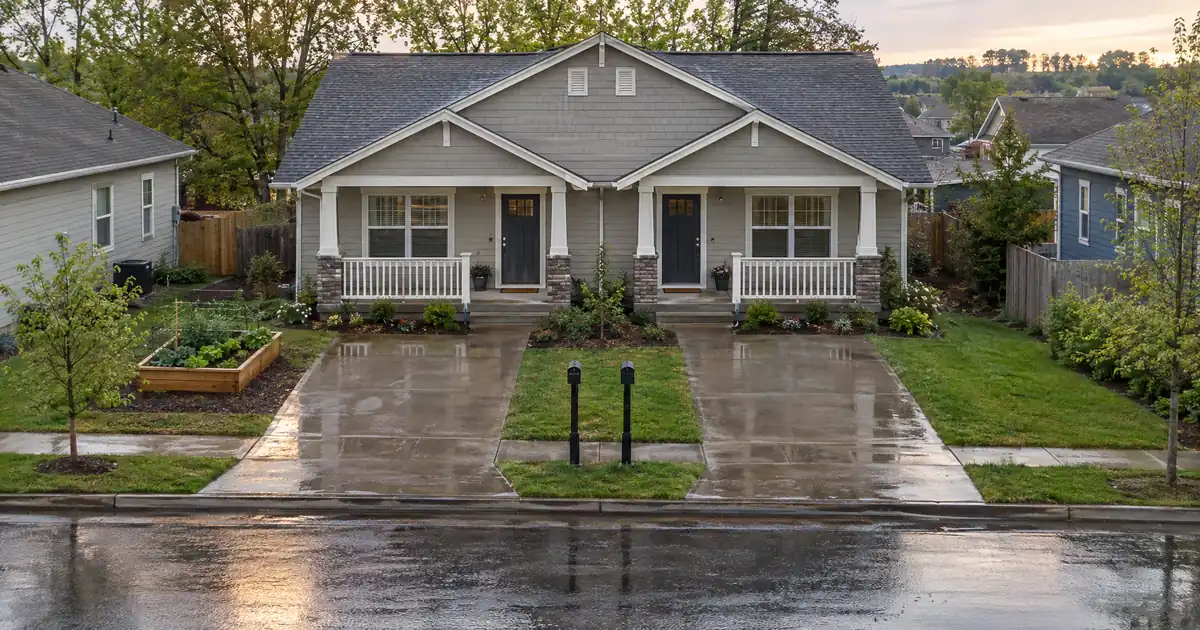
The Quick Read: Entitlement a VA loan uses on a 2-4 unit house hack is driven by the loan amount and the one-unit county limit, not by how many units the building has. A fourplex does not burn four times the entitlement of a single-family home. With full entitlement, there is no VA loan limit, so the question is mostly about what stays available for your next purchase. With partial entitlement, the math can call for a down payment.
Key Takeaways
- VA says to use the one-unit county limit for entitlement math, even when the property has two, three, or four units.
- Full entitlement carries no VA loan limit. The lender still decides how large a loan it will make.
- Partial entitlement shrinks your no-down-payment range. Your Certificate of Eligibility shows how much is already charged.
- Only part of the rent counts toward qualifying, and you must live in one of the units.
- Entitlement stays tied to the house until the loan is paid off and the entitlement is restored.
Key Terms Defined
Entitlement: the amount of the loan VA promises to back if you default. It is what lets lenders offer a VA purchase with no down payment, as long as the price is not above the appraised value.
Guaranty: the dollar amount of that promise, set as 25% of the loan for borrowers with full entitlement.
Full entitlement: you have never used your VA benefit, or all of it has been restored. There is no VA-imposed loan limit.
Partial entitlement (bonus entitlement): part of your benefit is still tied up in a prior VA loan. The county limit now matters.
Certificate of Eligibility (COE): the VA document that shows your eligibility and the entitlement already charged to prior loans.
Residual income: what is left of your monthly income after taxes, debts, and the new housing costs. On VA loans it is the controlling test.
VA payment estimate
Starting assumptions reflect an example price with no down payment and a first-use funding fee. Replace them with your own figures.
Editable benchmark: 7.32% as of October 22, 2026 · Freddie Mac 30-year average via FRED®. A conventional market reference, not a VA loan quote.
Illustrative starting assumptions: a $350,000 price, no down payment with full entitlement, a first-use funding fee financed into the loan, a thirty-year term at the current Freddie Mac benchmark, and property taxes and insurance estimated at typical national rates. Every field is editable.
Illustrative estimate only — not a Loan Estimate, approval, quote, or commitment to lend. The rate field carries the weekly Freddie Mac thirty-year conventional benchmark, a market reference and not a VA loan quote; your rate is set by the lender at lock. The funding fee follows VA’s published table for the use and down payment entered; the residual-income figure is VA’s guideline for the region and family size, and the rough residual shown subtracts only the housing payment and the debts entered, while VA also deducts taxes, maintenance and utilities. Taxes, insurance and dues are editable estimates; closing costs are not included. Licensed in sixteen states for consumer mortgages. Lendmire is not affiliated with or acting on behalf of the Department of Veterans Affairs.
How Does a 2-4 Unit Purchase Use Entitlement?
It uses entitlement based on the loan amount, measured against the one-unit county limit. Unit count never enters the formula. VA’s loan limits and entitlement page says to use the one-unit limit for the county even when the property has more than one unit.
Here is the confusion that trips people up. Federal housing agencies publish higher limits for two-, three-, and four-unit homes. Those figures are real, and VA’s limit values match the conforming loan limits set by the Federal Housing Finance Agency. But the higher multi-unit figures are not used in VA entitlement math. They feel relevant. They are not.
So a duplex and a fourplex are treated the same way at the entitlement step. A bigger loan amount ties up more guaranty. A bigger building does not, unless the price rises with it.
What Changes If You Have Full Entitlement?
With full entitlement, nothing about the county limit applies to you. The guaranty is 25% of the loan, so a larger loan simply means a larger guaranty. Across the wholesale programs Lendmire places VA loans with, full entitlement means 100% financing with no down payment as long as the price is not above the appraised value. It also means no mortgage insurance and no VA loan limit. Those programs serve loan amounts up to $4,000,000 with full entitlement. All of it is subject to lender guidelines and full file review.
Two points keep this from sounding too easy.
First, “no VA limit” does not mean “no lender limit.” The lender decides how much it will lend on a given file, and the appraisal still has to support the price. A 2-4 unit appraisal looks at each unit and adds a rent analysis.
Second, using full entitlement on a house hack changes what you have left. The portion charged to this loan stays attached to the house. If you want another VA purchase later, your remaining entitlement is what you have after this loan’s share is set aside.
Picture a veteran with full entitlement who buys a fourplex with nothing down. The loan went through without a county cap. Afterward, that veteran holds partial entitlement. The next purchase is run through the county math below.
How Is Remaining Entitlement Calculated?
VA publishes the steps on its loan limits page. They apply when you already have some entitlement in use:
1. Find the one-unit loan limit for the county where you are buying.
2. Multiply that limit by 0.25.
3. Subtract the entitlement already charged on your COE.
4. The result is your remaining bonus entitlement.
Your lender then compares your loan amount to what that remaining guaranty supports. Most lenders want the guaranty, your down payment, or a combination of the two to cover at least 25% of the loan. The usual zero-down ceiling is your remaining entitlement times four.
If the price is above that ceiling, the gap comes out of your pocket as a down payment. The county limit that applies depends on where the property sits, so ask a loan officer to run the number for your county and your COE. That is the only reliable way to get it.
VA’s own example is useful. It shows a COE with $50,000 already charged and a county one-unit limit of $900,000. The 25% figure is larger than what is charged, so the math leaves bonus entitlement to work with. The example is VA’s illustration of the steps, not a forecast for your file.
Does the Unit Count Change Anything at All?
Yes, but not in the entitlement formula. Unit count changes the price, the appraisal, the income you can document, and the reserves a lender may ask for. Here is how the three property types compare:
| Factor | Duplex | Triplex | Fourplex |
|---|---|---|---|
| Entitlement formula | One-unit limit | One-unit limit | One-unit limit |
| Loan amount | Usually smallest | Middle | Usually largest |
| Rent that may count | One rented unit | Two rented units | Three rented units |
| Appraisal work | Two units plus rent analysis | Three units plus rent analysis | Four units plus rent analysis |
The pattern is simple. More units usually means a higher price, and a higher price means more guaranty used or a larger gap. The unit count itself is not charged.
Worked Scenarios (Percentages, No Dollar Math)
These are modeled situations, not market data.
Scenario one: full entitlement, fourplex. A veteran with full entitlement buys a fourplex with no down payment, because the price is not above the appraised value. No VA county cap applies. The lender sizes the loan, the appraisal must support the price, and the guaranty is 25% of the loan. The veteran lives in one unit and rents three. Afterward, part of the entitlement is charged to this house.
Scenario two: partial entitlement, duplex. A veteran still has a prior VA loan open. Her COE shows entitlement charged. The lender takes 25% of the county’s one-unit limit, subtracts the charged amount, and multiplies what remains by four. If the duplex price is at or below that figure, she can buy with no down payment. If the price is above it, she puts down enough to cover the shortfall in the 25% coverage. A higher multi-unit limit for her county does not help her.
Scenario three: a second house hack while the first is still held. A veteran bought a triplex, moved out after living there, and now rents all three units. That loan is still open, so its entitlement stays charged. For the next house hack, the same four steps apply. His remaining entitlement depends on the first loan’s balance of use and the new county’s limit. If it falls short, a down payment fills in. Lendmire’s piece Can a Veteran House Hack a 2-4 Unit With a Second VA Loan? goes deeper on that sequence.
How Does Rental Income Count?
Only part of it. The VA Lenders Handbook, Chapter 4 sets effective rental income at 75% of the lease or rental agreement for an existing property. For a property that is not yet built, it is 75% of the appraiser’s opinion of fair monthly rent. A higher percentage is allowed only when it is documented.
A few practical points follow from that.
- Income must be verifiable, stable, and reliable. The lender records its judgment on VA’s loan analysis form.
- If the lender counts the rent, any shortfall against the housing payment becomes a debt in the file.
- Qualification runs through residual income. Across the wholesale programs Lendmire works with, the 41% debt-to-income figure is a guideline, not a cap. A ratio above it needs residual income well above the table.
- Counting rent helps you qualify. It does not make the property pay for itself. Vacancy, repairs, utilities, and management are still your costs.
Some lenders choose not to count rent on owner-occupied multi-unit loans at all. Others add tests on 3-4 unit properties that VA itself does not impose. Those are lender overlays, not VA rules.
What About Occupancy, Reserves, and the Appraisal?
You must occupy one unit as your primary residence. The rule applies to one unit only, and you may rent the others. VA’s Lenders Handbook index points to Chapter 3 for the occupancy rules. Have the lender walk you through the exact certification and timing for your loan.
Reserves are the cash left in your accounts after closing. Chapter 4 ties reserve rules on owner-occupied 2-4 unit loans to the unit count, your landlord or management experience, and whether rent is used. Expect the lender to tell you whether reserves are required and how many months apply to your loan. Two rules are clear: reserve funds must be in the account before closing, and cash-out refinance proceeds cannot count as required reserves.
The appraisal is more involved than on a single-family home. The appraiser looks at each unit’s condition and habitability and adds a rent analysis. VA’s minimum property requirements apply to the building.
What Happens to Your Entitlement Over the Life of the House Hack?
Entitlement follows the loan, not your address. Here is the timeline.
1. Purchase. The COE shows what is already charged. The new loan charges part of your entitlement against the house.
2. Living there. Entitlement stays charged. You are living in one unit and renting the others.
3. Moving out and renting the whole building. Nothing is released. The loan is still open, so the entitlement stays charged.
4. Buying the next home. You use the remaining-entitlement math from above. The county limit now matters, since you hold partial entitlement.
5. Sale or payoff. Charged entitlement is released only when the prior loan is restored. VA’s loan limits page confirms that this is what frees it up.
That is why this decision has a long tail. Buying the biggest building you can afford with no money down may leave you with little room on the next one.
On the refinance side, the program parameters cover two VA refinance types. The IRRRL refinances an existing VA loan with no VA appraisal, and the VA cash-out can reach 100% of the appraised value, including the financed fee. How entitlement works on a refinance of a 2-4 unit is a detail to confirm with a licensed loan officer before you rely on it.
Common Mistakes and Misconceptions
“A fourplex uses four times the entitlement.” It does not. VA computes against the one-unit limit regardless of units.
“The 2-4 unit conforming limits apply to VA.” They do not. Those higher figures are not used in entitlement math.
“Everyone has a VA loan limit.” Full entitlement has none. County limits matter only when you hold partial entitlement.
“All the rent counts.” Only 75% does, and only when it is documented or appraised.
“This is an investment property loan.” It is not. You have to live in one unit.
“VA requires a self-sufficiency test.” Some lenders add one. That is an overlay, not a VA rule.
“Rent can wipe out reserves.” Reserve rules vary by situation. Check Chapter 4 with your lender.
One more limit: VA finances one to four units. Five or more is not eligible.
The Funding Fee on a House Hack
The VA funding fee is a one-time charge that you can finance into the loan. It is waived for veterans receiving compensation for a service-connected disability and for the other exempt groups. Across the wholesale programs Lendmire works with, the schedule runs as follows on a purchase:
| Use | Down payment | Fee |
|---|---|---|
| First use | Under 5% | 2.15% |
| First use | 5% to under 10% | 1.5% |
| First use | 10% or more | 1.25% |
| Subsequent use | Under 5% | 3.3% |
| Subsequent use | 5% to under 10% | 1.5% |
| Subsequent use | 10% or more | 1.25% |
Notice what this means for a second house hack. If you buy with little down on your second use, you land in the highest tier, unless you are exempt. A larger down payment, which the partial-entitlement math may require anyway, lowers the fee tier.
Before You Make an Offer: A Checklist
- Get your COE and find the entitlement-already-charged line.
- Ask the loan officer to run the remaining-entitlement steps for your target county.
- Compare your target price to your zero-down ceiling.
- Ask whether the lender counts rent, and whether it adds its own tests on 3-4 units.
- Ask whether reserves or landlord-experience documentation will be required.
- Check your credit and income. The wholesale programs Lendmire places VA loans with start at a 580 decision score, though VA itself sets no minimum.
- Plan for the next purchase before you spend this one’s entitlement.
Lendmire arranges VA loan programs through wholesale lenders, and the team can lay out the entitlement math with your COE in hand.
Frequently Asked Questions
Does a fourplex use more entitlement than a duplex?
Only if the loan amount is larger. VA measures against the one-unit county limit no matter how many units the building has. A fourplex usually costs more, so it usually charges more guaranty. The extra units themselves are not charged.
Do the higher 2-4 unit loan limits help me if I have partial entitlement?
No. Those figures exist, but they are not used in VA entitlement math. VA says to use the one-unit limit for the county. If your price is above what your remaining entitlement supports, the gap is covered with a down payment.
How much entitlement do I have left after a house hack?
Your COE tells you. Look at the entitlement-charged section, then run VA’s steps: take 25% of the county one-unit limit and subtract what is charged. Because loan amounts and counties differ, a loan officer should run the number on your file.
Can I buy a second house hack while I still own the first?
Often yes, but it depends on remaining entitlement. The first loan keeps its entitlement charged until it is repaid and restored. The second purchase then follows the partial-entitlement math, with a down payment if the price runs past your zero-down ceiling. Subject to lender guidelines and full file review.
Does all the rent count toward qualifying?
No. VA’s Lenders Handbook sets effective rental income at 75% of the lease, or of the appraiser’s fair-rent opinion on a property not yet built. The lender must also find the income stable and reliable. Rent helps you qualify but does not guarantee a result.
For your own numbers, request a scenario review with Lendmire.
About Lendmire
Lendmire — NMLS# 2371349 — is a mortgage broker that arranges FHA, VA, conventional and jumbo home purchase and refinance financing in 16 states through wholesale lenders. Every option is subject to the lender’s guidelines and full underwriting. Scotsman Guide named Lendmire a Top Mortgage Workplace in both 2025 and 2026.
Get Started
Ready to find the right loan for you?
In about 30 seconds you can review financing options available for your home or investment property. No commitment required.
Informational only. Not a Loan Estimate, approval, or commitment to lend. Program availability and eligibility are subject to lender guidelines, credit approval, property review, and underwriting.
References
1. VA.gov – VA home loan entitlement and limits
3. VA Lenders Handbook index (WARMS)
This article is part of Lendmire’s VA loan program — full qualification details, guidelines, and scenarios live on the program page.
Related reading: How a VA Loan Counts Reserves on a 2–4 Unit House Hack · How Much a VA Loan Lends When You Have Partial Entitlement · How Much Down Payment a VA Loan Needs With Partial Entitlement
Brandon Miller
Founder & CEO, Mortgage Loan Originator, Lendmire LLC
- Mortgage Loan Originator · NMLS# 1129696 · Verify on NMLS Consumer Access
- North Carolina Real Estate Broker · License# 343312 · Verify on NCREC
- North Carolina Insurance Producer · License# 19053198 · Property, Casualty, Life, Health · Verify on NAIC SBS
- Lendmire LLC · Firm NMLS# 2371349 · Verify firm licensure
Important disclosures. Lendmire (NMLS# 2371349) is a licensed mortgage brokerage. Lendmire is not a direct lender, depository institution, or financial advisor. All loan inquiries are subject to lender underwriting; this article does not constitute a commitment to lend. Rates, terms, and program guidelines are subject to change without notice and vary by borrower profile, property type, and state. Information in this article is general in nature and is not financial, legal, or tax advice. Equal Housing Opportunity. NMLS Consumer Access: nmlsconsumeraccess.org.