
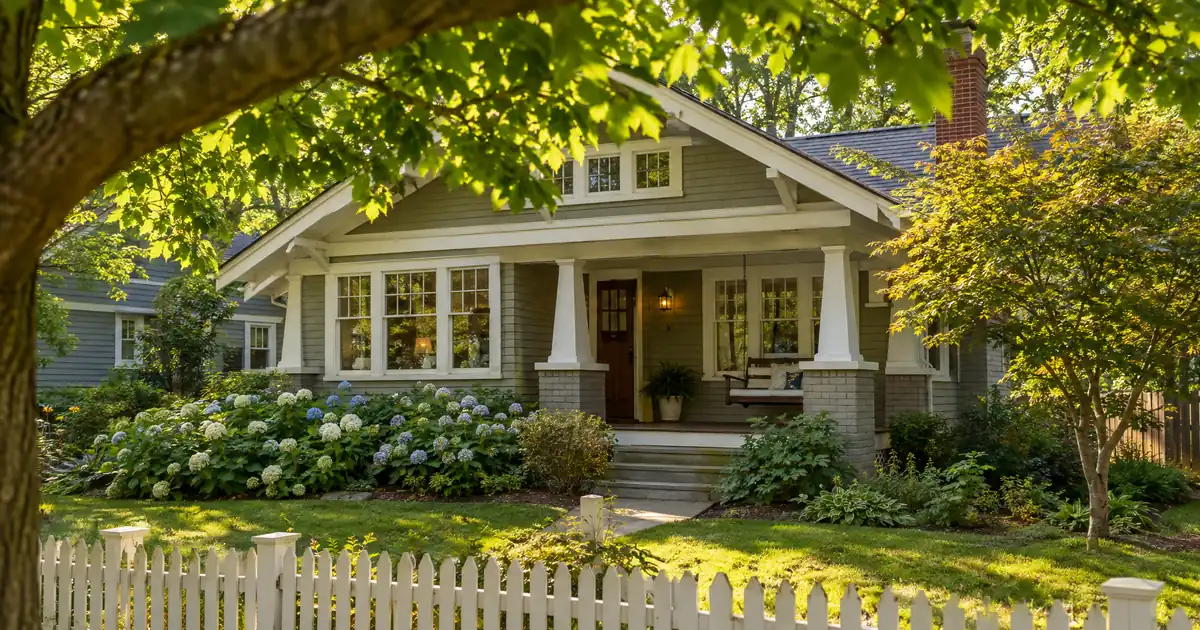
The Quick Read: You can use your VA benefit more than once, and there is no lifetime cap on how many times. What changes the second time is how much of your guaranty is still free. If your first VA loan is paid off and your entitlement is restored, you are back to full benefits. If you still own the first home with its VA loan attached, you buy with whatever guaranty remains. The new home has to be a place you will live in.
Key Takeaways
- There is no limit on the number of VA loans in a lifetime. There is a limit on how much guaranty you have free at any one moment.
- Full entitlement means no VA loan limit and no down payment. Partial entitlement can mean a down payment on a higher-priced home.
- The funding fee is higher on subsequent use with little down. It drops sharply at 5% and again at 10% down.
- You can keep the first home as a rental after a move. The second home still has to be your primary residence.
- Pull your certificate of eligibility before you write an offer, not after. Terms vary by lender guidelines, property type, leverage, credit profile, and full file review.
Why the Second VA Loan Feels Harder Than the First
The second VA loan feels harder because the guaranty is no longer untouched. A VA loan is not a loan from the VA. The VA guarantees part of it to the lender. That guaranty is your entitlement, and a prior loan can still be using some of it.
VA payment estimate
Starting assumptions reflect an example price with no down payment and a first-use funding fee. Replace them with your own figures.
Editable benchmark: 7.32% as of October 22, 2026 · Freddie Mac 30-year average via FRED®. A conventional market reference, not a VA loan quote.
Illustrative starting assumptions: a $350,000 price, no down payment with full entitlement, a first-use funding fee financed into the loan, a thirty-year term at the current Freddie Mac benchmark, and property taxes and insurance estimated at typical national rates. Every field is editable.
Illustrative estimate only — not a Loan Estimate, approval, quote, or commitment to lend. The rate field carries the weekly Freddie Mac thirty-year conventional benchmark, a market reference and not a VA loan quote; your rate is set by the lender at lock. The funding fee follows VA’s published table for the use and down payment entered; the residual-income figure is VA’s guideline for the region and family size, and the rough residual shown subtracts only the housing payment and the debts entered, while VA also deducts taxes, maintenance and utilities. Taxes, insurance and dues are editable estimates; closing costs are not included. Licensed in sixteen states for consumer mortgages. Lendmire is not affiliated with or acting on behalf of the Department of Veterans Affairs.
First-time buyers rarely think about entitlement because all of it is available. On the second purchase, the question becomes: how much is free?
Lendmire is a mortgage broker. Across the wholesale lenders it places VA loan programs with, this is the most common point of confusion for repeat VA buyers. Most veterans assume the benefit is one-time, or assume it always works the same way twice. Neither is right.
Two myths are worth clearing up first:
- “VA is a one-time benefit.” That’s not true: VA News says plainly that veterans can use the benefit more than once.
- “I have to sell the first home to buy the second.” This is also not true, because remaining entitlement can support a second loan while you keep the first home.
What Does the VA Require for a Second Loan?
Three conditions apply to any VA purchase, first loan or fifth. Per VA News, the home must appraise at value, you must intend to occupy it, and you must meet the lender’s underwriting requirements.
Here is how each one plays out for a repeat buyer.
Appraisal. The VA appraisal produces a Notice of Value. If the home appraises below the contract price, you renegotiate or bring cash for the difference. The VA Buyer’s Guide says the same thing.
Occupancy. The new home must be your primary residence. This is where “second home” and “second VA loan” get mixed up. A second VA loan is fine. A second home, such as a vacation place, is not what the benefit is for. If the home you are buying is a multi-unit property, occupancy still decides the leverage: you live in it.
Underwriting. The lender checks credit, income, debts and residual income. The wholesale programs Lendmire places VA loans with start at a 580 decision score. VA itself sets no minimum score, and some lenders set a higher floor.
How Does Entitlement Work the Second Time?
Entitlement is the guaranty, not a borrowing cap. That one idea clears up most of the confusion.
With full entitlement, there is no VA loan limit. The Buyer’s Guide states this directly. You can buy for any amount the lender will lend. Across the wholesale programs Lendmire works with, VA purchase loans go up to $4,000,000 with full entitlement.
With partial entitlement, the guaranty shrinks. The VA Lenders Handbook, Chapter 3 lays out the formula. Your remaining guaranty is 25% of the county’s one-unit conforming loan limit, minus any entitlement still charged to earlier loans.
Then lenders generally allow a zero-down loan up to four times your remaining guaranty. That is the “zero-down ceiling.”
You do not need county dollar figures to see how it works. The math scales with the share of your guaranty already used:
1. Start with the one-unit county limit for the new home’s county. For a multi-unit home, the calculation still uses the one-unit limit.
2. Take 25% of that limit. This is the full guaranty.
3. Subtract the guaranty still tied up in earlier loans.
4. Multiply what is left by four.
Say your first loan is still open and uses about a third of your full guaranty. You have about two-thirds left. Your zero-down ceiling is about two-thirds of the county limit.
If the new home costs more than that ceiling, you do not lose the loan. You bring a down payment to cover the gap. Lenders generally want your remaining guaranty plus your down payment to equal 25% of the loan, so the down payment is about a quarter of the amount above the ceiling. Because the exact figure depends on the county and your file, speak with a loan officer before assuming a number.
The VA Buyer’s Guide adds one more point. If you keep the earlier VA-guaranteed home, you stay subject to the county conforming limits on the new purchase. If you sell it, or restore your entitlement, you are back to full benefits.
Which Route Fits Your Situation?
Your route depends on what happened to the first home. This table is the decision tree in one place.
| Your situation | Entitlement | Likely route | Down payment? |
|---|---|---|---|
| Still own it, loan open | Partial | Use remaining entitlement | Maybe |
| Sold it, paid VA loan off | Restorable | File for restoration | Usually no |
| Paid it off, kept the home | Restorable once | One-time restoration | Usually no |
| Another veteran assumed it | Restored by substitution | Substitution of entitlement | Usually no |
| Non-veteran assumed it | Stays tied up | Use remaining entitlement | Maybe |
| Foreclosure or short sale | Reduced by the claim | Check the COE first | Depends |
“Usually no” means no down payment is required on the entitlement side. Credit, appraisal and underwriting still have to work, and everything is subject to lender guidelines and a full file review.
Route 1: Keep the first home and buy again
This is the common route after a PCS move. You keep the old home, perhaps as a rental, and buy at the new duty station with remaining entitlement.
The catch is the ceiling. If the new home is priced above it, you bring a down payment. If it is below, you can still buy with nothing down.
Active-duty buyers should expect the lender to look at remaining time in service when counting military income. Your loan officer will tell you what documentation applies.
Route 2: Sell the first home and restore entitlement
Sell the home and pay the VA loan off in full. Then request restoration with VA Form 26-1880. Restoration is requested, not automatic.
One blocker to know about: the Lenders Handbook says entitlement cannot be restored while a debt to VA is unpaid. A debt to VA generally arises only after a VA claim payment, so most sellers never hit this.
Route 3: Pay it off but keep the home
If you paid the VA loan off but kept the house, a one-time restoration may be available. It is once in a lifetime and you have to request it. VA’s eligibility page is the place to confirm the details for your case.
A refinance into a non-VA loan does not restore entitlement by itself. The old VA loan has to be paid off, and then you request restoration.
Route 4: Let another veteran assume the loan
An eligible veteran who intends to live in the home can assume your loan and substitute their own entitlement for yours. If that happens, your entitlement comes back.
An assumption by a non-veteran works differently. Your entitlement generally stays tied up until the loan is paid off. A release of liability protects you from the debt, but it does not restore entitlement. These are separate things, and they get confused often.
Route 5: After a foreclosure or short sale
A VA claim reduces your available entitlement. How much depends on the claim. Pull your certificate of eligibility and read the “entitlement charged to previous VA loans” line before you plan anything. Do not rely on waiting-period rumors from forums.
What Will the Funding Fee Look Like?
The funding fee is higher on a second use when little is down, and it falls as the down payment grows. The fee is reviewable, and it is waived for veterans receiving compensation for a service-connected disability and for the other exempt groups.
Here are the tiers for a subsequent-use purchase, from VA Circular 26-23-06, Exhibit B:
| Down payment | Subsequent-use fee |
|---|---|
| Less than 5% | 3.3% |
| 5% to under 10% | 1.5% |
| 10% or more | 1.25% |
For comparison, first use with less than 5% down is 2.15%. The 1.5% and 1.25% tiers are the same for both. Exact terms depend on the lender’s guidelines, property type, leverage, and a full review of the borrower’s file.
Because the fee is usually financed, it raises the loan balance. That raises the monthly payment, though the size of the effect depends on your file.
A down payment that lands you in a lower tier can matter. Putting 5% down on a home above your ceiling, for example, does double duty. It covers part of the guaranty gap and lowers the fee percentage. Run both effects with your loan officer before you settle on a number. Every figure here varies by lender and program — guidelines, property type, leverage, and credit profile all apply.
How Do Lenders Qualify You for Two Payments?
Residual income is the controlling test on a VA loan. Residual income is what is left of your monthly income after taxes, debts and the new housing payment. The lender compares it to a VA table that varies by region and family size.
The 41% debt-to-income figure is a guideline, not a cap. A ratio above it needs residual income well above the table.
When you keep the first home, its payment counts as a debt. Chapter 4 of the Lenders Handbook governs how rental income can offset it. The rules on documentation and how much counts are specific. Ask your loan officer how they apply to your lease and your history.
Lenders also weigh compensating factors. These include high residual income, significant liquid assets, a low debt ratio, long-term employment and a small increase in payment from your current housing cost. None of them is a promise. They can strengthen a file that is close to a line.
What Goes Wrong Most Often?
Most problems come from skipping a step. These are the ones that show up repeatedly in repeat-VA files:
- Not pulling the certificate of eligibility first. The COE shows your available entitlement, your funding fee status and your disability compensation. It is the document that decides your route. Check the line for entitlement charged to prior loans.
- Assuming a refinance or a sale restores entitlement. Restoration needs a payoff and a request.
- Assuming a non-veteran assumption frees your guaranty. It generally does not.
- Writing an offer before knowing the ceiling. A surprise down payment requirement is the most avoidable problem in a second-VA purchase.
- Misstating occupancy. Intent to occupy is required. If your move-in will be delayed, such as by orders or renovation, say so and document it.
- Forgetting the appraisal gap. If the Notice of Value comes in low, you may need cash to cover the difference.
What Does the Process Look Like in Order?
The sequence matters more than any single step. Here is how a repeat buyer typically moves through it:
1. Pull your certificate of eligibility and read the entitlement lines. 2. Decide what happens to the first home: keep, sell or hand to an eligible veteran. 3. If you are selling or paying off, file for restoration with VA Form 26-1880. 4. Find the one-unit county limit for the new home’s county and work out your ceiling. 5. Plan any down payment and the funding fee tier you want to land in. 6. Get the file underwritten, including both housing payments if you are keeping the first home. 7. Order the VA appraisal and review the Notice of Value.
Key Terms Defined
Entitlement: The amount of guaranty the VA will back on your loans. It is not a cap on what you can borrow.
Certificate of Eligibility (COE): The VA document showing your available entitlement, funding fee status and disability compensation.
Restoration of entitlement: A request to the VA, made with Form 26-1880, to free the guaranty tied to a paid-off loan.
Residual income: The money left each month after taxes, debts and the new housing payment. It is the controlling VA underwriting test.
Notice of Value: The VA appraisal result stating what the home is worth for the loan.
Funding fee: A one-time VA fee, reviewable and waived for exempt veterans, that varies by use and down payment.
Frequently Asked Questions
Is there a limit on how many times I can use a VA loan?
No. There is no lifetime cap on the number of VA loans. What limits you is the guaranty you have free at any given time. Full entitlement removes the VA loan limit. Partial entitlement sets a zero-down ceiling, and a down payment covers anything above it, subject to lender guidelines.
Can I keep my first home and buy again with VA?
Yes, if your remaining entitlement and your income support it. The first home can stay as a rental, and lenders have rules on how that income is counted against its payment. A PCS move is the most common version of this.
Do I need a down payment on a second VA loan?
Not always. With full entitlement, no down payment is required as long as the price is not above the appraised value. With partial entitlement, you may need one if the price is above your zero-down ceiling. Speak with a loan officer about your own county and entitlement.
Does refinancing my VA loan into a conventional loan restore my entitlement?
Not by itself. The refinance pays off the VA loan, but you then have to request restoration with Form 26-1880. Restoration is not automatic. If a non-veteran assumes the loan instead, your entitlement generally stays tied up.
Can I use a second VA loan for a vacation home or investment property?
No. The VA loan is for a home you will occupy as your primary residence. Occupancy decides the leverage, and buying a multi-unit home you live in is a different matter from buying one to rent out entirely.
For your own numbers, request a scenario review with Lendmire.
About Lendmire
Lendmire (NMLS# 2371349) is a mortgage brokerage serving homeowners and home buyers in 16 states. FHA, VA, conventional and jumbo purchase and refinance loans are arranged through wholesale lending channels; Lendmire brokers the financing and the lender underwrites each application. Scotsman Guide named Lendmire a Top Mortgage Workplace in both 2025 and 2026.
Get Started
Ready to find the right loan for you?
In about 30 seconds you can review financing options available for your home or investment property. No commitment required.
Informational only. Not a Loan Estimate, approval, or commitment to lend. Program availability and eligibility are subject to lender guidelines, credit approval, property review, and underwriting.
References
1. VA News: Veterans can use their VA home loan benefit more than once
2. VA Home Loan Guaranty Buyer’s Guide
3. VA Lenders Handbook, Chapter 3: The VA Loan and Guaranty
4. VA Circular 26-23-06, Exhibit B: Funding Fee Table
5. VA Lenders Handbook, Chapter 4: Credit Underwriting
This article is part of Lendmire’s VA loan program — full qualification details, guidelines, and scenarios live on the program page.
Related reading: Should a Veteran Use the VA Loan on a First Home or Save It? · VA Loan Partial Entitlement Rules for a Second Purchase · VA Loan Entitlement Rules for Veterans Buying Again After Prior Use
Brandon Miller
Founder & CEO, Mortgage Loan Originator, Lendmire LLC
- Mortgage Loan Originator · NMLS# 1129696 · Verify on NMLS Consumer Access
- North Carolina Real Estate Broker · License# 343312 · Verify on NCREC
- North Carolina Insurance Producer · License# 19053198 · Property, Casualty, Life, Health · Verify on NAIC SBS
- Lendmire LLC · Firm NMLS# 2371349 · Verify firm licensure
Required disclosures. Lendmire (NMLS# 2371349) operates as a licensed mortgage broker, not a direct lender or depository. The discussion in this article is general in nature and should not be relied upon as financial, legal, or tax advice — every investment scenario is unique and should be reviewed by a qualified professional. Any loan inquiry is subject to lender underwriting, and this article is not a commitment to lend or a guarantee of approval. Mortgage rates, loan terms, and program guidelines vary by borrower, property, and state, and may change without notice. Equal Housing Opportunity. Verify licensure at NMLS Consumer Access.