
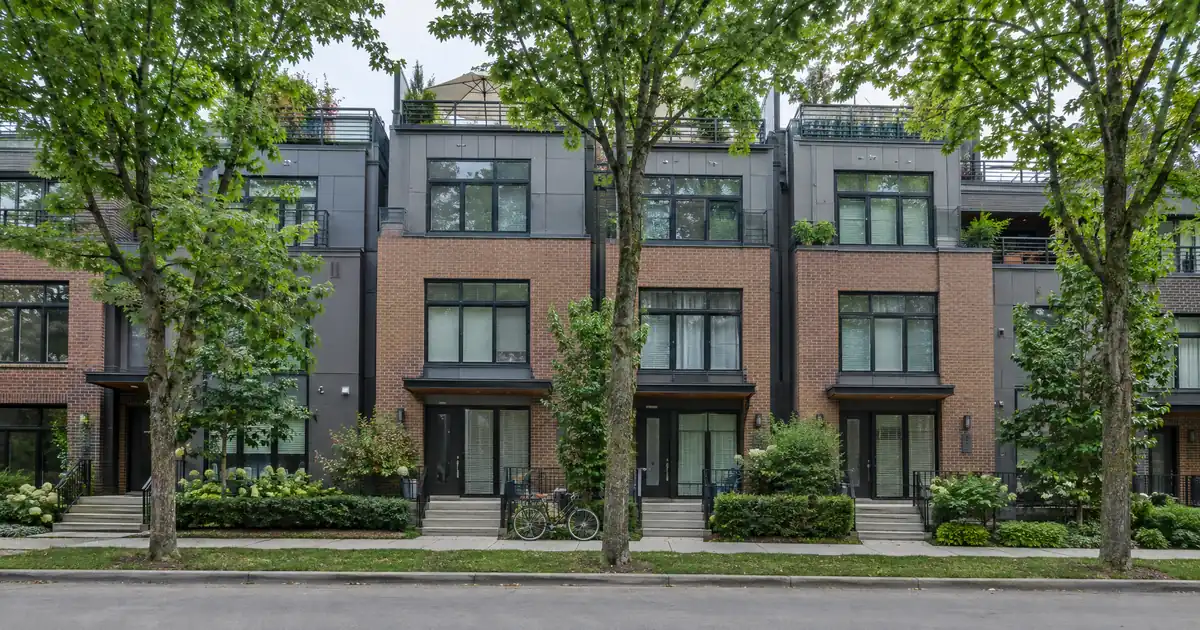
The Quick Read: The VA approves the whole condo project, not just your unit. If the project is already on the VA’s accepted list, you move on to your own loan file. If it is not, your lender has to request a project review, and that step depends on the HOA. Active duty adds two extra pressures: your orders and the building’s leasing rules.
Here is the plain version. A condo is the one property type where the building gets vetted before you do. Everything else on a VA purchase works the way you have heard: 100% financing when the price is not above the appraised value, no mortgage insurance, and residual income as the deciding test. The condo layer sits on top of all that.
VA payment estimate
Starting assumptions reflect an example price with no down payment and a first-use funding fee. Replace them with your own figures.
Editable benchmark: 7.32% as of October 22, 2026 · Freddie Mac 30-year average via FRED®. A conventional market reference, not a VA loan quote.
Illustrative starting assumptions: a $350,000 price, no down payment with full entitlement, a first-use funding fee financed into the loan, a thirty-year term at the current Freddie Mac benchmark, and property taxes and insurance estimated at typical national rates. Every field is editable.
Illustrative estimate only — not a Loan Estimate, approval, quote, or commitment to lend. The rate field carries the weekly Freddie Mac thirty-year conventional benchmark, a market reference and not a VA loan quote; your rate is set by the lender at lock. The funding fee follows VA’s published table for the use and down payment entered; the residual-income figure is VA’s guideline for the region and family size, and the rough residual shown subtracts only the housing payment and the debts entered, while VA also deducts taxes, maintenance and utilities. Taxes, insurance and dues are editable estimates; closing costs are not included. Licensed in sixteen states for consumer mortgages. Lendmire is not affiliated with or acting on behalf of the Department of Veterans Affairs.
This article walks the process in order. First, why the VA looks at the project. Then how to check status, what the labels mean, and what the VA reviews. After that come the active-duty issues, the not-listed path, and how to decide whether to push on or walk.
Key Terms Defined
Project approval: The VA’s decision that the whole condominium community meets its rules, so loans on units inside it can be guaranteed.
Condo Report: The VA’s online lookup that shows whether a project is currently accepted.
Entitlement: The portion of the VA benefit that backs your loan. A first-time user normally has full entitlement.
Certificate of eligibility (COE): The VA’s document confirming you qualify for the benefit. The VA decides this, and service requirements are the VA’s rules.
Residual income: What is left of your monthly income after taxes, debts, and housing costs. It is the controlling test on a VA file.
PCS: A permanent change of station, meaning orders to a new duty location.
Minimum Property Requirements (MPR): The VA’s condition standards. The home must be safe, sound, and sanitary.
Why Does the VA Approve the Building and Not Just My Unit?
The VA treats a condo as a shared asset. You own your unit’s airspace plus an undivided share of the common elements, such as the roof, hallways, and grounds. The VA’s regulations define a condo that way in 38 CFR 36.4301. If the shared parts fail, every owner’s collateral suffers.
The rule itself is stated plainly in the VA Lenders Handbook, Chapter 16. Condominiums, but not PUDs, must be approved by the VA before any unit is eligible for a VA loan guaranty. The same chapter says the VA reviews the organizational documents and notifies the requesting lender or sponsor.
One more regulatory point helps. 38 CFR 36.4360 confirms a loan to an eligible veteran for a one-family unit in a condo project is eligible for guaranty on the same terms as other VA loans. So the loan product is the same. The gate is the building.
Borrowers who check the building first rarely lose time. Borrowers who fall in love with a unit and check later often do.
Step 1: How Do I Check Whether the Project Is Approved?
Check before you make an offer. The VA’s lookup is the Loan Guaranty Condo Report. Search by project name or address, and ask your lender to run it too. Project status can change between offer and closing, so a good lender rechecks it before the file goes to final review.
Status labels vary in wording, so read them as outcomes. This table gives the practical meaning.
| What the lookup shows | What it means | What you do next |
|---|---|---|
| Accepted, no conditions | Project is currently approved | Move to appraisal and underwriting |
| Accepted with conditions | Approved, but conditions apply | Have your lender read the conditions |
| Not listed | No current approval on record | Ask the lender about a project review |
| Rejected or expired | Project does not meet VA rules now | Pick another building, or ask what changed |
Two rules of thumb. Never write an offer with a contract date that assumes the building is approved when it is not listed. And never rely on a seller’s or agent’s statement that a building is “VA approved” without seeing the lookup result.
Does Approval of the Project Mean My Loan Is Approved?
No. Project approval only clears the community-level hurdle. You still need the certificate of eligibility, a VA appraisal, and a unit that meets the Minimum Property Requirements. You still have to qualify.
This is where VA mechanics help you. As a first-time user with full entitlement, you can buy with no down payment as long as the price is not above the appraised value. There is no mortgage insurance of any kind, and there is no VA loan limit on full entitlement. The wholesale programs Lendmire works with start at a 580 decision score. Some lenders set a higher floor, and every figure is subject to lender guidelines and full file review.
Underwriting turns on residual income. The 41% debt-to-income figure is a guideline, not a cap. A ratio above it needs residual income well above the VA table. For a condo buyer, HOA dues count as part of your housing cost, so they feed directly into that test.
The VA funding fee is a one-time charge, and you can finance it. For a first-time user it is 2.15% with less than five percent down, 1.5% with five to under ten percent down, and 1.25% with ten percent or more down. It is waived for veterans receiving compensation for a service-connected disability and the other exempt groups. If you are active duty and not yet exempt, expect the fee to apply.
Many buyers find the condo gate is the deciding factor.
What Does the VA Look at in a Condo Project?
The VA reviews the project’s legal documents and overall health. The Handbook confirms every condo and PUD must have fee simple title and no unreasonable restrictions on use and occupancy. Beyond that, these items commonly decide the outcome:
- HOA finances. Reserves, budget health, and delinquent dues.
- Insurance. Coverage on the building and common areas.
- Owner and investor mix. How many units are owner-occupied versus rented.
- Litigation. Pending lawsuits against the association.
- Leasing and resale clauses. Right-of-first-refusal language is a frequent problem. The VA will not approve a project unless the association waives it for VA borrowers.
- Completion status. New or unfinished projects face extra hurdles.
Thresholds for these items vary by lender and source. Ask your lender to explain what applies to your specific building.
New construction adds engineering and warranty requirements. Under 38 CFR 36.4365, engineer or architect statements must estimate the useful life of the roof, elevators, and other systems. The regulation also calls for a one-year warranty on the unit and a two-year warranty on the common elements.
What Active Duty Changes
Active duty is where condo buying gets personal. Two issues matter most: occupancy and leasing rules.
Occupancy. A VA purchase is owner-occupied. The VA Lenders Handbook, as mirrored by a third-party site, treats a spouse’s or dependent child’s occupancy as satisfying the requirement when the service member cannot personally move in within a reasonable time. Service members deployed from their permanent duty station are considered in temporary duty status. Occupancy more than 12 months after closing generally is not considered reasonable. A move-in date beyond the usual window generally requires a specific, documented reason. Confirm the exact wording with your loan officer before you rely on it.
PCS after closing. Orders that arrive after you close do not automatically force a sale. This is where the building’s leasing rules matter. If the bylaws restrict renting, a PCS can leave you stuck with a unit you cannot rent and cannot afford to carry. Read the leasing language before you offer, not after orders arrive.
Separate living costs. If you buy at one duty station while your family stays elsewhere, the handbook says the cost of maintaining separate living arrangements should be considered in underwriting. Raise that with your lender early.
Remote or deployed closing. A deployed borrower can use a power of attorney, but it has to meet VA requirements. Get your lender’s approval of the document before you sign it.
For documentation, expect the usual active-duty items: proof of service, your earnings statement, and allowances. Your lender will list what applies.
What If the Condo Isn’t on the List?
Then the lender starts a project review, and you wait on a third party. Under Handbook section 16-A.02, the lender sends a written request for VA approval, plus the condo’s organizational documents, to the VA Office of Jurisdiction. The HOA or its management company supplies those documents. You cannot produce them yourself.
The Handbook encourages lenders and sponsors to include an attorney’s opinion that the project meets VA requirements, which reduces how much the VA has to read. Who pays for HOA documents or an attorney’s opinion varies and can be negotiated. Do not assume a fee either way.
Timing is the real risk. The VA publishes no review-time figure, and law-firm commentary describes full project reviews as potentially taking months. For a buyer working to a report date, that is a serious problem. The lender cannot order the appraisal until approval is in hand, so delays here push everything else back.
Is there a single-unit approval? Treat it as unconfirmed. Some lender sites describe a one-unit path, but the VA’s own handbook and regulations frame approval at the project level. Confirm any “spot approval” in writing with your lender and the VA rather than treating it as an established option, and do not build a contract around it.
Does FHA approval carry over? Not automatically. The Handbook says there is no formal VA approval letter for projects the VA accepted based on HUD or USDA approval. A VA training deck says the VA stopped accepting HUD/FHA project approvals in place of its own review on December 7, 2009, with earlier acceptances staying valid. That is old history. Check the building’s current status in the lookup.
New projects. A new or developer-controlled project faces extra tests, including a sales-level requirement before the first loan is guaranteed. Ask your lender how that applies to your project.
Where the General Rule Breaks
- PUDs. A planned unit development does not need VA project approval the way a condo does. Title and lien requirements still apply. Confirm how the project is classified.
- Site condos. These are houses on individually owned lots, sometimes called horizontal condos. A Michigan law-firm note says one VA circular did not require approval for site condominiums, and 38 CFR 36.4365 addresses horizontal condos under single-family construction policies. Whether a given project is exempt is project-specific.
- Multi-unit purchases. For condos, the dwelling is limited to one single-family unit, so owner-occupied multi-unit purchases do not apply here.
- Unapproved buildings. Lendmire’s article on whether an active-duty first-time user can buy in an unapproved condo goes deeper on that exact situation.
Should I Wait, Switch Buildings, or Walk?
Use the building’s status and your calendar to decide. Here is how it usually shakes out in practice.
Listed building, no conditions. Proceed. Your contract needs normal appraisal and underwriting time, not a condo-specific cushion.
Listed with conditions. Have the lender read them before you remove contingencies. Some are routine. Some, such as unfinished common areas, can stall a file.
Unlisted building, soft deadline. You can ask the HOA to cooperate. Write the contract with an approval contingency and an extension option tied to the VA’s decision, not a fixed date. Ask your agent to draft it.
Unlisted building, hard deadline. If you have a firm report date, the safest move is usually a different building that is already approved. Waiting on a third party that owes you nothing is a risk you cannot control.
Building with restrictive leasing rules. Even an approved project can carry bylaws that hurt you after a PCS. Read them before you offer.
Screen before spending money on an offer. Look at the listing, the HOA budget, the resale package, and any pending litigation. If the building looks shaky, move on. Lendmire’s page on VA loan programs outlines how these loans are arranged if you want the full program picture.
Common Misconceptions
- “FHA-approved means VA-approved.” Not automatically.
- “The VA approves my unit.” Approval is framed at the project level.
- “A condo works like a house.” A house has no pre-approval list. A condo does.
- “Active duty means I can’t occupy it.” The handbook accommodates spouse and dependent occupancy and temporary duty status, within a reasonable window.
- “A PUD needs the same approval.” It does not.
- “Project approval means my loan is approved.” Underwriting, appraisal, and MPR still apply.
What to Line Up in Parallel
While the building question plays out, handle your own file. Request your COE. Gather service and income documents. Pick a lender who handles VA condos regularly. If you are buying a home in one of the 16 states where Lendmire arranges consumer loans, you can compare options through a broker working with several wholesale lenders.
If you are buying a home and want to see whether a VA loan fits your file, Lendmire can help you compare the options and what each one asks of the file.
Frequently Asked Questions
Can I use my first VA loan on a condo while on active duty?
Yes, if the project is VA-accepted and you meet the occupancy rules. Your eligibility comes from your certificate of eligibility. The building needs its own approval, and the loan still has to pass appraisal and underwriting, subject to lender guidelines.
Who pays to get a condo project approved?
It varies and is often negotiable. The lender starts the request, and the HOA supplies the documents. Who covers HOA document costs or an attorney’s opinion depends on the deal. Ask your lender and agent before you rely on anyone else paying.
What if I get PCS orders after closing?
Orders after closing do not automatically force a sale. The handbook’s occupancy rules and your lender’s guidance control the details. Check the building’s leasing rules first, because restrictive bylaws can limit your ability to rent the unit.
Is there a one-unit approval if the building isn’t listed?
Treat it as unconfirmed. Some sources claim a single-unit path exists. Get any such option confirmed in writing by your lender and the VA before you plan around it.
Does FHA approval make a condo VA-eligible?
No, not automatically. The VA stopped accepting HUD/FHA project approvals in place of its own review years ago, and earlier acceptances stay valid. The VA’s own lookup is the answer for current status.
For your own numbers, request a scenario review with Lendmire.
About Lendmire
Lendmire is a mortgage brokerage (NMLS# 2371349) licensed for consumer mortgage lending in 16 states, arranging FHA, VA, conventional and jumbo purchase and refinance loans through a wholesale lending network. Eligibility is determined by the lender on each file. Scotsman Guide named Lendmire a Top Mortgage Workplace in both 2025 and 2026.
Get Started
Ready to find the right loan for you?
In about 30 seconds you can review financing options available for your home or investment property. No commitment required.
Informational only. Not a Loan Estimate, approval, or commitment to lend. Program availability and eligibility are subject to lender guidelines, credit approval, property review, and underwriting.
References
2. VA Lenders Handbook (VA Pamphlet 26-7), Chapter 16
6. VA Condominium Approval Process training deck
This article is part of Lendmire’s VA loan program — full qualification details, guidelines, and scenarios live on the program page.
Related reading: VA Loan Reserve Requirements for a First-Time VA User on Active Duty · Can a First-Time VA Loan Buyer on Active Duty Have the Spouse Occupy? · VA Loan vs Conventional Loan for a First-Time Active-Duty Buyer
Brandon Miller
Founder & CEO, Mortgage Loan Originator, Lendmire LLC
- Mortgage Loan Originator · NMLS# 1129696 · Verify on NMLS Consumer Access
- North Carolina Real Estate Broker · License# 343312 · Verify on NCREC
- North Carolina Insurance Producer · License# 19053198 · Property, Casualty, Life, Health · Verify on NAIC SBS
- Lendmire LLC · Firm NMLS# 2371349 · Verify firm licensure
Legal disclosures. Lendmire (NMLS# 2371349) is a state-licensed mortgage brokerage that arranges financing through wholesale lender relationships. Lendmire is not a direct lender, depository institution, or registered financial advisor. The discussion above is general informational content about real estate financing — it is not financial, legal, or tax advice, and readers should consult licensed professionals for guidance on their individual circumstances. Loan inquiries are subject to lender underwriting; this article does not represent a commitment to lend. Loan terms, rates, and qualification standards vary by borrower, property, and state, and are subject to change at any time. Equal Housing Opportunity. NMLS Consumer Access: nmlsconsumeraccess.org.