
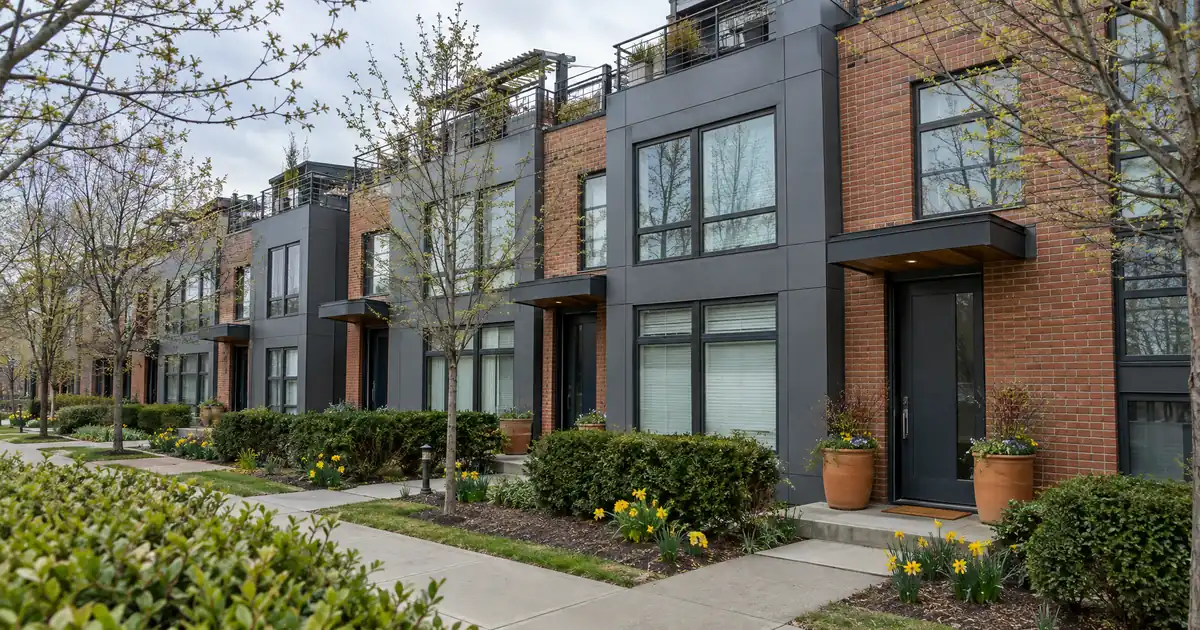
The Quick Read: The loan itself costs about the same on a condo as on a house. The extra money comes from the building: association dues, special assessments, and the tests the project must pass. Those dues also shrink how much you can borrow, because they count against your qualifying ratios. Plan around the building, not a surcharge.
Key Takeaways
- FHA’s mortgage insurance does not change because the home is a condo. It changes with loan term, loan amount, and loan-to-value.
- Dues are the biggest ongoing difference. They count in your debt ratios, and they are usually paid to the association, not through your mortgage payment.
- The building has to qualify too. A condo that fails the project tests can end a deal even when your credit is strong.
- The route matters. An FHA-approved building and a single-unit approval carry different paperwork and different risk.
- Special assessments, thin reserves, and heavy investor ownership are the red flags that turn a cheap unit into an expensive one.
Where the Extra Cost Really Hides
The extra cost sits in four places: dues, building risk, paperwork, and a smaller pool of eligible buildings. None of them shows up as a line called “condo fee” on FHA’s schedule.
FHA payment estimate
Starting assumptions reflect an example price and the FHA minimum investment. Replace them with your own figures.
Editable benchmark: 7.32% as of October 22, 2026 · Freddie Mac 30-year average via FRED®. A conventional market reference, not an FHA loan quote.
Illustrative starting assumptions: a $350,000 price, the FHA minimum investment as the down payment, a thirty-year term at the current Freddie Mac benchmark, and property taxes and insurance estimated at typical national rates. Every field is editable.
Illustrative estimate only — not a Loan Estimate, approval, quote, or commitment to lend. The rate field carries the weekly Freddie Mac thirty-year conventional benchmark, a market reference and not an FHA loan quote; your rate is set by the lender at lock. FHA mortgage insurance follows HUD’s published schedule for the term, leverage and loan size entered; taxes, insurance and dues are editable estimates; closing costs are not included; county loan limits are not checked here. Licensed in sixteen states for consumer mortgages. Lendmire is not affiliated with or acting on behalf of FHA, HUD, or the federal government.
Here is the side-by-side most buyers never see. It is how FHA loan programs treat the same price point on two kinds of homes.
| Cost layer | House on FHA | Condo on FHA |
|---|---|---|
| Upfront premium | 1.75% of base loan | Same |
| Annual premium | 0.15%-0.75% by term, amount, LTV | Same |
| Association dues | Often none | Monthly, paid to the association |
| Building review | None | Project approval or single-unit approval |
| Special assessments | Rare | Possible, set by the association |
| Eligible inventory | Broad | Narrower |
Read the table top to bottom. The first two rows are identical. The last four rows are where a condo buyer’s budget gets squeezed.
A buyer financing at 96.5% with the 3.5% minimum investment, at a decision score of 580 or higher, sees the same loan mechanics on both homes. The difference starts after the loan terms are set.
How an FHA Condo Loan Is Underwritten, Step by Step
Most of the delay and surprise lives in the building review, which is why the steps below mostly follow the building through underwriting.
1. The lender sorts the building. It is either already FHA-approved, or it is not. A non-approved building goes the single-unit route, if it qualifies.
2. The lender gathers building data. That means a project questionnaire built from information no older than 90 days. It comes from the association or its manager, public records, or independent third parties.
3. The building is scored. The review looks at how many units already carry FHA loans, how many owners live in their units, how many owners are behind on dues, and how healthy the association’s money looks.
4. You are underwritten as a borrower. Credit, income, assets, and ratios work as they would on any FHA purchase. The automated finding governs most files.
5. The unit is appraised. The usual FHA appraisal applies to the unit, on top of the building review.
6. The case number is assigned. If the building is over its limits, FHA can pause new case numbers there. Then no buyer in that building can use FHA until the numbers change.
(That last step is the one buyers never hear about until it hits them.)
Across FHA files arranged through wholesale lenders, the pattern is consistent. Borrower paperwork is rarely the problem on a condo. Building documents are. Association managers answer slowly, budgets are out of date, and a missing insurance certificate can stall the file. Asking the listing agent early whether the building has FHA history saves a lot of grief.
Is the Mortgage Insurance Higher on a Condo?
No. FHA’s Mortgagee Letter 2023-05 sets the upfront premium at 1.75% of the base loan amount for forward mortgages, with narrow exceptions for older streamline refinances and certain Hawaiian and Indian land loans. Nothing in it carves out condos.
Here is how the two premiums work.
- Upfront premium: 1.75% of the base loan, financed into the balance. You do not bring it to closing as cash.
- Annual premium: between 0.15% and 0.75% of the balance, depending on term, loan amount, and LTV.
- How long it lasts: on a thirty-year loan above 90% LTV, it lasts for the term. At or below 90% LTV, it ends after eleven years. The schedule follows term, loan amount, and LTV, not whether the home is a condo or a house, and every figure is subject to lender guidelines and a full review of your file.
Different lenders may price their own loans differently. That is a lender decision, separate from FHA’s premium schedule. And the premium is a government insurance charge, not private mortgage insurance. It is a different product with different cancellation rules.
Because the upfront premium is financed, it nudges the balance up a bit. On a condo or a house, the effect is the same.
How Dues Eat Your Buying Power
Dues are the real “how much more.” They do not raise your loan cost. They lower the loan you can qualify for.
FHA underwriting uses two ratios. The housing ratio compares your housing costs to income. The total ratio adds your other debts. The base pair is 31/43, with no compensating factors. Documented compensating factors, such as strong reserves, can stretch that to 40/50 at the top tier. Most files are decided by the automated finding.
Association dues count on the housing side. Picture two buyers with identical income, credit, and 3.5% investment. One is buying a house with no association. The other is buying a condo with monthly dues. The condo buyer’s dues use up part of the same ratio room. Less room means a smaller maximum loan, or a tighter file.
Here is the catch. The Consumer Financial Protection Bureau notes that condo and co-op fees are usually paid directly to the association, not through your mortgage servicer. So dues can hide. A buyer who compares only the mortgage payment on a condo and a house will underestimate the condo’s full monthly cost.
A condo often carries a lower price than a house. Dues narrow that gap. Sometimes they erase it. Run the full housing cost, not the loan payment alone.
Two Approval Routes, Two Kinds of Risk
A condo reaches FHA financing one of two ways: the building is already approved, or the unit goes through single-unit approval. Each route changes your risk, not your premium.
| Factor | Approved project | Single-unit approval |
|---|---|---|
| What is reviewed | Whole building | Unit plus a subset of building tests |
| Who it fits | Buildings with FHA status | Buildings without it |
| Building size | Varies | At least five units |
| Main risk | Approval lapsing | Failing a building test |
HUD’s FHA condominium page describes single-unit approval as the route for a unit in a project that is not FHA-approved. The project must be complete and ready for occupancy, have at least five units, and not be a manufactured home. It must also meet a subset of tests: FHA concentration, owner-occupancy, and financial condition.
That is not a loophole. It is a narrower test, and it can still say no.
The route exists because the rules tightened first and loosened later. The Federal Register final rule records HUD’s view that condo loans performed worse than other single-family loans before spot approval ended. The same rule brought spot approval back. The National Association of Realtors says the earlier elimination of spot approvals greatly reduced the supply of FHA-eligible condos. Fewer eligible buildings means fewer choices and more competition for the ones that qualify.
Exact concentration caps and owner-occupancy minimums are set by HUD notice and can change. Your lender checks the current numbers for the specific building.
Where the General Rule Breaks
The “same premium, higher building risk” rule holds most of the time. These cases bend it.
- Small buildings. Single-unit approval needs at least five units. A smaller building has fewer paths.
- Site condos. A project made entirely of detached homes with no shared buildings is treated differently from an attached condo.
- New construction and phased projects. Legal phasing rules apply. A building still being built in stages may not qualify yet.
- Leasehold, gut-rehab, and manufactured-home projects. These are separate categories on the project review, with their own questions.
- Concentration pauses. If too many units already carry FHA loans, new case numbers can be suspended. Your offer can die for reasons unrelated to you.
- Case-by-case exceptions. The final rule allows them, but you cannot plan around one.
- Special assessments. An association can bill owners for a big repair. That cost lands on you, whatever loan you used.
Weak reserves deserve a mention too. A building with thin reserves tends to raise dues or levy assessments later. You pay for it in monthly cost, not in loan terms.
The Down Payment Question
For most FHA condo buyers the minimum stays at 3.5%, at a decision score of 580 or higher. That is the same minimum as for a house. Maximum financing is 96.5%.
Some lenders add their own conditions on single-unit approvals, such as a higher score floor or a larger investment. Those are lender choices, not FHA’s. The wholesale programs Lendmire works with start at a 580 score, and every figure is subject to lender guidelines and full file review.
Seller or interested-party contributions can reach 6% of the price. In a condo deal, that can help cover closing costs, but it does not cover a building that fails review.
Occupancy matters here. FHA is for a principal residence. A condo you do not plan to live in does not fit.
What the Decision Looks Like in Practice
The honest answer to “is FHA worth it on a condo?” is a toss-up, and it turns on the building. The stronger play for a buyer with a modest down payment and a 580-plus score is often FHA, since low investment is the whole point. A buyer with a bigger down payment and stronger credit may find a conventional loan fits the building better. That is a comparison worth running, not a rule.
Before you make an offer, check these:
- Is the building already FHA-approved, or will it need single-unit approval?
- What are the monthly dues, and what do they cover?
- Has the association levied or discussed a special assessment?
- Are reserves healthy, and is the budget current?
- Do many owners rent out their units or sit behind on dues?
- Will the building still qualify when you sell?
That last question is the resale test. Future FHA buyers face the same building tests. A non-approved building narrows your buyer pool, which can matter when you sell or refinance.
Key Terms Defined
Upfront premium: a one-time mortgage insurance charge of 1.75% of the base loan, usually financed into the balance.
Annual premium: the ongoing mortgage insurance charge, between 0.15% and 0.75% of the balance, set by term, loan amount, and LTV.
LTV (loan-to-value): the loan balance divided by the home’s value or price, shown as a percentage.
Single-unit approval: the route that lets one unit in a non-approved building qualify for FHA, after a limited building review.
FHA concentration: the share of units in a building that already carry FHA loans.
Special assessment: a one-time charge an association bills owners for a large repair or shortfall.
Debt-to-income ratios: the housing and total-debt percentages a lender compares against your income, such as 31/43.
Frequently Asked Questions
Does FHA charge a higher mortgage insurance premium on a condo?
No. FHA’s premium depends on loan term, loan amount, and LTV, not property type. The upfront premium is 1.75% of the base loan, and the annual premium runs between 0.15% and 0.75%. A condo and a house at the same terms carry the same schedule.
Can I use FHA to buy any condo?
Usually not. The building must be FHA-approved, or the unit must pass single-unit approval. That route needs a completed project of at least five units that meets a subset of FHA’s building tests. A building outside both paths cannot take an FHA loan.
Do HOA dues count against me when I apply?
Yes, in practice. Dues count in your housing costs when the lender calculates ratios such as 31/43, or up to 40/50 with documented compensating factors. Higher dues mean less room for a loan payment, so a smaller maximum loan.
Why do dues get left out of my monthly mortgage payment?
Dues are usually paid straight to the association, not through your servicer’s escrow. That is why a loan quote can look cheaper than the real monthly cost. Add the dues to your housing costs before comparing a condo to a house.
What happens if my building’s FHA status runs out or is paused?
New FHA financing in that building can stall, even if you qualify. FHA can suspend case numbers when a project exceeds its concentration limit. Your lender may move you to a different route or a different loan type, if the file supports it.
Seeing Whether It Fits Your File
If you are buying a home and want to see whether an FHA loan fits your file, Lendmire can help you compare the options and what each one asks of the file. A condo adds a second review on top of yours, so it helps to begin with the building questions.
For your own numbers, request a scenario review with Lendmire.
About Lendmire
Lendmire (NMLS# 2371349) is a mortgage brokerage serving homeowners and home buyers in 16 states. FHA, VA, conventional and jumbo purchase and refinance loans are arranged through wholesale lending channels; Lendmire brokers the financing and the lender underwrites each application. Scotsman Guide named Lendmire a Top Mortgage Workplace in both 2025 and 2026.
Get Started
Ready to find the right loan for you?
In about 30 seconds you can review financing options available for your home or investment property. No commitment required.
Informational only. Not a Loan Estimate, approval, or commitment to lend. Program availability and eligibility are subject to lender guidelines, credit approval, property review, and underwriting.
References
1. HUD Mortgagee Letter 2023-05
2. Consumer Financial Protection Bureau: Escrow
4. Federal Register: Project Approval for Single-Family Condominiums
5. NAR: FHA Condominium Rule Assessment
This article is part of Lendmire’s FHA loan program — full qualification details, guidelines, and scenarios live on the program page.
Related reading: How Much More an FHA Loan Costs With Thinner Credit · How Much More an FHA Loan Costs a First-Time Buyer Over Time · How Much Cash an FHA Loan Takes on Thinner Credit
Brandon Miller
Founder & CEO, Mortgage Loan Originator, Lendmire LLC
- Mortgage Loan Originator · NMLS# 1129696 · Verify on NMLS Consumer Access
- North Carolina Real Estate Broker · License# 343312 · Verify on NCREC
- North Carolina Insurance Producer · License# 19053198 · Property, Casualty, Life, Health · Verify on NAIC SBS
- Lendmire LLC · Firm NMLS# 2371349 · Verify firm licensure
Disclosure information. Lendmire is a state-licensed mortgage brokerage under NMLS# 2371349. Lendmire is not a depository institution, direct lender, or financial advisor — all loans referenced are placed through wholesale lender partners and are subject to each lender's underwriting standards. This article is provided for general informational purposes and is not a commitment to lend, nor does it constitute financial, legal, or tax advice. Loan programs, terms, rates, and qualification standards change without notice and depend on borrower profile, property type, and the state in which the subject property is located. Equal Housing Opportunity provider. NMLS Consumer Access: nmlsconsumeraccess.org.