
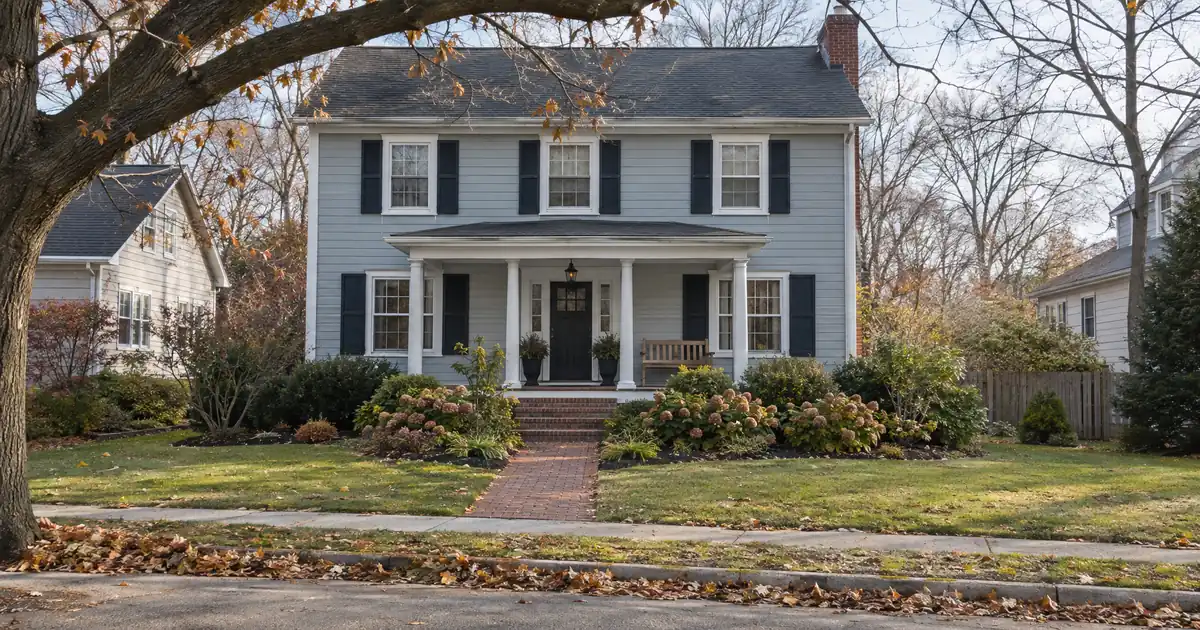
The Quick Read: A first-time buyer can use a standard conventional loan on a new build, because a new home is not a separate loan type. The house is valued differently, completion has to be proven, and the timeline runs longer than a resale purchase. On a one-unit primary residence with a fixed rate, first-time buyers can typically go to 97% LTV (3% down), subject to lender guidelines and full file review. Everything else is about timing, builder credits, and what happens between contract and closing.
What Makes a New Build Different From a Resale?
Three things change: how the home is appraised, how completion is verified, and how long your file stays open. The loan rules themselves (down payment, credit, ratios) are the same ones that apply to any conventional purchase.
Conventional payment estimate
The starting figures are an example price at the first-time buyer’s minimum down payment. Replace them with yours.
Editable benchmark: 7.32% as of October 22, 2026 · Freddie Mac 30-year average via FRED®. A conventional market reference, not a conventional loan quote.
Estimate seeded at the low end of Fannie Mae’s published range (0.58%–1.86% a year); the insurer prices the actual premium on the score and the leverage. Applies only above 80% loan-to-value.
Illustrative starting assumptions: a $350,000 price, the first-time buyer’s minimum down payment, a thirty-year term at the current Freddie Mac benchmark, mortgage insurance at the low end of Fannie Mae’s published range, and property taxes and insurance estimated at typical national rates. Every field is editable.
Illustrative estimate only — not a Loan Estimate, approval, quote, or commitment to lend. The rate field carries the weekly Freddie Mac thirty-year conventional benchmark, a market reference and not a conventional loan quote; your rate is set by the lender at lock. The mortgage insurance figure is an editable estimate seeded from Fannie Mae’s published typical range, not a premium quote; the insurer prices the actual premium, and the cancellation month assumes scheduled payments with no extra principal and no change in value. Taxes, insurance and dues are editable estimates; closing costs are not included. Conforming loan limits apply by county. Licensed in sixteen states for consumer mortgages.
Across the wholesale programs Lendmire places files with, the envelope is consistent. A first-time buyer, meaning no ownership interest in a residence in the previous three years, can go to 97% LTV on a one-unit principal residence with a fixed rate. Everyone else on that kind of home is typically capped at 95%. Mortgage insurance applies above 80% LTV. The wholesale conventional programs start at a 620 decision score, and the automated finding governs most files, with a total ratio ceiling of 50%.
Those numbers don’t change because the paint is fresh. What changes is the paperwork. For new or proposed construction, the appraisal must rest on plans and specifications, an existing model home, or other information sufficient to identify the home’s quality and character. Completion must then be verified before the loan can be sold, per the Fannie Mae Selling Guide on completion verification.
Lendmire is a mortgage broker, not a lender, and its conventional loan programs are arranged through wholesale lenders. Whether a given file fits is a lender decision.
Key Terms Defined
New build (new construction): A home that has not been lived in, either finished already, under construction, or not yet started.
Spec home: A home a builder constructs without a specific buyer, often sold while under construction or just completed.
Construction-to-permanent loan: A loan that finances the build and then becomes your long-term mortgage.
Interested-party contribution (IPC): Money toward your costs from someone with a stake in the sale, such as the builder.
Completion report: A document confirming the home was finished as planned, such as an appraiser’s update or a builder-and-borrower warranty of completion.
Loan-to-value (LTV): The loan amount as a percentage of the lower of price or appraised value.
Which Kind of New Build Are You Buying?
The structure you choose decides the loan path. Most first-time buyers fall into the first row below.
| Situation | Typical loan path | Main risk |
|---|---|---|
| Finished or nearly finished builder home | Standard purchase loan | Completion proof, appraisal |
| Builder home to be built from plans | Purchase loan, appraised on plans | Long lock, document aging |
| Build on your own lot, one closing | Construction-to-permanent | Re-underwriting at conversion |
| Build on your own lot, two closings | Construction loan, then permanent loan | Two sets of closing costs |
Buying from a builder. This is the common path. A finished or spec home is a normal purchase. A to-be-built home in a builder’s community is also a purchase, but the appraisal is done on plans and specs, and completion is verified afterward.
Building on your own land. This is a different animal. In a single-closing loan, the construction loan converts to a permanent mortgage when the work is done. Per the Fannie Mae guidance on single-closing loans, the lender underwrites it on the terms of the permanent financing, and Fannie Mae cannot purchase it until construction is complete and the loan has converted. If those terms change, the loan may need to be re-underwritten. Credit documents generally can’t be more than four months old on the note date.
In a two-closing structure, the first closing is the interim construction loan, which may include the lot. The second closing is the permanent mortgage. Fannie Mae does not purchase construction loans, but it does purchase the permanent loan, and the permanent lender can differ from the construction lender.
A dated Fannie Mae construction-to-permanent matrix also lists construction-period limits and says cash-out refinances aren’t eligible for single-closing construction-to-permanent loans. That document appears older, so treat its limits as a pointer and confirm current rules with your loan officer.
If you’re not sure which structure you’re in, ask the builder one question: “Is the house sold finished, or do I need a loan that funds the build?” The answer sorts you into the right lane.
How Is a Conventional Loan on a New Build Underwritten, Step by Step?
The underwriting is the same review any purchase gets, with completion steps added at the end. Here is the sequence.
1. Pre-approval before you tour models. Your income, assets, credit and ratios are reviewed first. A new build stretches the timeline, so a pre-approval gives you a realistic budget before you sign anything.
2. The builder contract. Read it for the estimated delivery date, delay language, and any incentive tied to a preferred lender. Know what you lose if you choose another lender.
3. Application and Loan Estimate. Once you apply, the lender issues a Loan Estimate. Compare it line by line against any other quote you collect.
4. Lock timing decision. The CFPB advises that a lock should be long enough to cover the time until you close, and warns that a lock may be expensive to extend. The Loan Estimate shows whether terms are locked but not what an extension would cost, so ask the lender in writing.
5. Appraisal on plans, specs or a model. The appraiser values the home as it will be, using the information the builder supplies.
6. Underwriting. The lender verifies income, assets, credit and the contract, and sets conditions. Credit-sensitive details like new debt matter right up to closing.
7. Completion verification. Fannie Mae accepts an appraisal update and completion report (Form 1004D) or a borrower-and-builder letter confirming the home was finished per the plans and change orders. The completion report may rest on an on-site or a virtual inspection. A certificate of occupancy is typically part of the picture too.
8. Final walkthrough and closing. You inspect the finished home, list any punch-list items, and sign.
One detail worth knowing: Fannie Mae’s C1 condition rating covers improvements that are very recently constructed and not previously occupied. That’s the rating a brand-new home typically gets.
What Does a First-Time Buyer Need to Qualify?
The same things as on any conventional purchase. Think of it as four checks.
- Occupancy and leverage. For a one-unit primary residence with a fixed rate, 97% LTV applies when at least one borrower is a first-time buyer. Two- to four-unit principal residences go to 95%. Second homes go to 90%. If you’re planning to rent the home out, occupancy changes the leverage, and the limits drop sharply.
- Credit. The wholesale conventional programs start at a 620 decision score. Some lenders set a higher floor, and your score also shapes mortgage insurance.
- Ratios. The automated finding governs most files, with a total ratio ceiling of 50%. Manually underwritten loans run tighter, at 36% or 45%, with reserve and score factors from the agency’s Eligibility Matrix.
- Income-limited programs. HomeReady and Home Possible carry an income limit of 80% of area median income. Fannie Mae’s HomeReady rules require homeownership education on purchase loans when all occupying borrowers are first-time buyers. For buyers above that income limit, Fannie Mae’s standard 97% product, summarized by the FDIC, covers first-time buyers.
A common misunderstanding: HomeReady is not “first-time buyers only.” The education step applies when all occupants are first-timers, but the program isn’t limited to them.
On mortgage insurance, the mechanics are the same as on a resale. It’s required above 80% LTV. You may request cancellation at 80% of the original value, given good payment history, no subordinate liens and no decline in value. The servicer must terminate it automatically at 78%. Published typical annual premiums run 0.58% to 1.86% of the balance, which is a range and not a quote. Leverage, reserves, and pricing vary by lender and program; the final terms follow the full file review.
How Do Builder Credits Work Under Conventional Rules?
Builder credits are capped, and they can’t replace your down payment. That surprises many first-timers who assume a big incentive covers everything.
Under Fannie Mae’s interested-party-contribution rules, the builder counts as an interested party. Contributions can’t fund the down payment, meet reserve requirements, or satisfy minimum borrower contribution requirements. They can go toward closing costs, including prepaids, and HOA assessments covering up to 12 months after settlement. Terms vary by lender guidelines, property type, leverage, credit profile, and full file review.
The cap depends on your LTV on a principal residence:
| Your LTV | Maximum contribution |
|---|---|
| Above 90% | 3% |
| 75.01% to 90% | 6% |
| 75% or less | 9% |
For a first-time buyer using 97% leverage, the 3% cap is usually the binding limit. If a builder offers more than the cap, the excess is treated as a sales concession. The sales price is adjusted downward by the excess and the LTV is recalculated, which can raise your mortgage insurance need. Undisclosed contributions make a loan ineligible for sale to Fannie Mae. A lender credit from premium pricing is excluded from the count.
So the real question is not “how big is the credit?” It’s “how much of it can the loan actually use?”
The preferred-lender decision
Builders often tie an incentive to using their affiliated lender. That is a choice, not a requirement. Usually you can finance elsewhere, but you may forfeit the incentive.
The tradeoff is simple to frame. A credit lowers what you pay upfront. A better loan from an outside lender can lower your monthly cost for as long as you hold the mortgage. Which one wins depends on how long you keep the home and how much of the credit the cap lets you use. Get a Loan Estimate from the builder’s lender and at least one other source, then compare total cost, not just closing-day savings.
If a builder’s offer includes a temporary buydown, compare it with and without the feature. Temporary buydowns typically last one to three years, and payments rise when they end.
How Does the Appraisal Work on a Home That Isn’t Built Yet?
The appraiser values the home from plans, specs or a comparable model, and the lender checks completion later. The loan uses the lower of the purchase price or appraised value.
That has two practical effects. First, if upgrades and lot premiums push your contract price above what comparable sales support, the appraisal may come in lower than the price. You then have to negotiate, bring more cash, or reconsider. Second, a credit that exceeds the cap lowers the recognized price, which raises LTV.
If the appraiser indicates value declined by completion, the lender may need a new appraisal and may have to requalify you at the updated LTV. That’s why a long build is a risk even when the file looked clean at the start.
Appraisal-waiver loans are rarely a normal path here. Fannie Mae’s value acceptance with property data option requires interior and exterior property data collection before the note date, which a not-yet-built home generally can’t provide.
Where Does the General Rule Break?
Conventional financing works on most new builds, but a few situations carry extra conditions.
Condo or townhome new builds. Fannie Mae requires a unit in a new condo project to sit in a project, or legal phase, that is “substantially complete,” meaning a certificate of occupancy or similar document has been issued, per its condo eligibility rules. Buyer-selection items like appliances or flooring don’t have to be installed, but selections that change the floor plan must be complete.
Manufactured homes. New construction requires photos of both the HUD Data Plate and the HUD Certification Label, per Fannie Mae’s factory-built housing rules.
Long builds and aging documents. On a single-closing construction loan, your income, credit and appraisal documents age while the home goes up. Requalification at conversion is a real risk. A job change or new debt during the build can derail a file that looked solid at the start.
Rate locks on delayed builds. Some lenders lock at the Loan Estimate and some don’t, so check page one. If the builder misses the delivery date and your lock expires, an extension costs money. Look for contract language on outside closing dates and delay remedies.
Property taxes after completion. The first-year tax bill may reflect land only, so escrow can adjust later. Check with the local assessor. Tax treatment can depend on your situation; borrowers should speak with a qualified tax professional before relying on any deduction or credit.
What Will Cash to Close Look Like?
Builder credits can reduce cash needed, but they can’t cover the down payment, and they’re capped by the table above. Beyond that, new builds can add builder, permit and utility fees, and design-center upgrades are often paid out of pocket rather than financed. A two-closing construction loan means two sets of closing costs.
Separate two things that get confused: a reservation deposit to hold the home, and your down payment at closing. They’re different. The deposit usually gets credited at closing, but the contract spells out terms, including what’s refundable.
For budgeting, build a cash-to-close estimate from your Loan Estimate, then add upgrades, window coverings, landscaping and moving costs that sit outside the loan. Mortgage insurance and any HOA dues belong in your monthly budget too.
What If Something Goes Wrong?
Most problems have a standard fix.
| Problem | What typically happens |
|---|---|
| Appraisal below contract price | Renegotiate, bring cash, or exit per contract |
| Completion delayed past lock | Ask about extension cost and contract remedies |
| Credit exceeds IPC cap | Price is adjusted down; LTV rises |
| New debt or job change during build | File may need to be re-reviewed |
| Punch-list items at walkthrough | Document in writing before closing |
The first-time buyer’s best protection is asking questions in writing before signing: What’s the estimated delivery date? What happens if it slips? What’s the outside closing date? Who pays for lock extensions? What do I lose by using a different lender?
Common Mistakes First-Time Buyers Make
- Assuming the builder’s incentive is free money. It’s capped, and its cost is often built into price or terms.
- Assuming the credit can cover the down payment. It can’t.
- Letting the lock expire without checking the extension cost.
- Taking on a car loan or new credit card mid-build.
- Skipping an independent inspection because the home is new.
- Comparing only the incentive, not the total cost of the loan.
Frequently Asked Questions
Can a first-time buyer put 3% down on a new build?
Yes, when the home is a one-unit principal residence with a fixed rate and at least one borrower is a first-time buyer. The conventional programs allow 97% LTV in that case, and 95% otherwise. All of it is subject to lender guidelines and full file review.
Do I have to use the builder’s lender?
Usually no. The contract often ties an incentive, not your right to finance, to the preferred lender. Ask what you’d forfeit by going elsewhere, then compare Loan Estimates from both sources.
Can the builder pay my down payment?
No. Interested-party contributions can’t fund the down payment or reserves. They can go toward closing costs and prepaids within the cap, which for a first-time buyer at high leverage is usually 3%.
What if the home isn’t finished when my lock expires?
You may need an extension, and extensions can cost money. The CFPB advises choosing a lock long enough to cover your build time. Review the contract for delay language and ask the lender about extension terms in writing.
Is a new build appraised before or after it’s built?
Both, in a sense. The appraisal reflects plans, specs or a model. After construction, the lender gets a completion report or builder-and-borrower warranty to confirm the home was finished as planned.
Next Step
If you are buying a home and want to see whether a conventional loan fits your file, Lendmire can help you compare the options and what each one asks of the file. A call to 828-256-2183 is a reasonable place to start, and you can request a quote when you’re ready. Program figures are subject to lender guidelines, and nothing here is a commitment to lend.
About Lendmire
Lendmire is a mortgage brokerage (NMLS# 2371349) licensed for consumer mortgage lending in 16 states, arranging FHA, VA, conventional and jumbo purchase and refinance loans through a wholesale lending network. Eligibility is determined by the lender on each file. Scotsman Guide named Lendmire a Top Mortgage Workplace in both 2025 and 2026.
Get Started
Ready to find the right loan for you?
In about 30 seconds you can review financing options available for your home or investment property. No commitment required.
Informational only. Not a Loan Estimate, approval, or commitment to lend. Program availability and eligibility are subject to lender guidelines, credit approval, property review, and underwriting.
References
1. Fannie Mae Selling Guide: completion verification
2. Fannie Mae Selling Guide: single-closing construction-to-permanent
3. Fannie Mae construction-to-permanent matrix
4. CFPB: What’s a lock-in or a rate lock
6. FDIC
7. Fannie Mae Selling Guide: interested party contributions
8. Fannie Mae Selling Guide B4-1.4-11
9. Fannie Mae Selling Guide condo section
10. Fannie Mae’s factory-built housing rules
This article is part of Lendmire’s conventional loan program — full qualification details, guidelines, and scenarios live on the program page.
Related reading: Conventional Loan Condo Requirements for a First-Time Buyer · Conventional Loan Requirements for a First-Time Buyer With Little Down · Can a First-Time Buyer Use a Co-Signer on a Conventional Loan?
Brandon Miller
Founder & CEO, Mortgage Loan Originator, Lendmire LLC
- Mortgage Loan Originator · NMLS# 1129696 · Verify on NMLS Consumer Access
- North Carolina Real Estate Broker · License# 343312 · Verify on NCREC
- North Carolina Insurance Producer · License# 19053198 · Property, Casualty, Life, Health · Verify on NAIC SBS
- Lendmire LLC · Firm NMLS# 2371349 · Verify firm licensure
Compliance and disclosures. Lendmire (NMLS# 2371349) is a licensed mortgage broker and is not a direct lender, depository institution, financial advisor, or tax professional. Content in this article is general market analysis and educational information — not financial, legal, or tax advice for any specific situation. Lendmire does not guarantee loan approval; every transaction is subject to underwriting by the funding lender. Mortgage pricing and loan program guidelines are subject to change at any time without notice and vary by borrower characteristics, property type, and state regulations. Lendmire complies with Equal Housing Opportunity. Licensure verification: NMLS Consumer Access.