
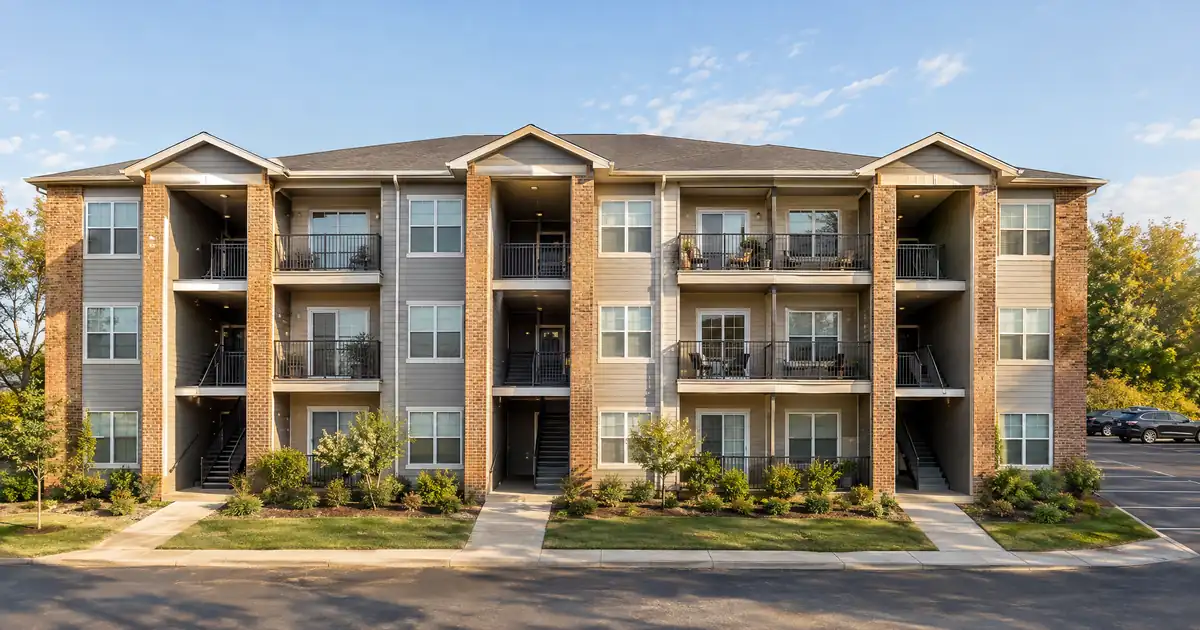
The Quick Read: On a multifamily purchase, assistance does not get divided among the units. The first mortgage sets the base loan, and the assistance fills part of the gap between that loan and the price. It arrives as a grant with nothing to repay or as a second lien, and the first lien, the assistance, and your own cash each fund separate lines at closing. Unit count decides which options are even available, so a duplex can work where a fourplex cannot.
What Does “Splitting Funds” Mean?
It means three different things, and buyers often mix them up. The split can be by source, by cost category, or by lien position. Each one answers a different question.
By source: the first mortgage, the assistance, your own cash, and any seller credit are separate pieces of money. Each has its own rules about what it can pay for.
By cost category: the down payment, closing costs, and prepaid items are different buckets. Some assistance can reach all three. Some covers only the minimum investment.
By lien position: the first mortgage sits in first position. A second-lien assistance loan is recorded behind it. A grant creates no lien at all.
Nothing about this is split by unit. The building has one price, one first loan, and one set of closing costs. The unit count matters because it changes eligibility, the loan limit, and how rental income is treated.
Which Assistance Shapes Exist?
Four shapes cover the programs Lendmire arranges through wholesale lenders. Each pairs with a government-backed first lien and is subject to program guidelines and full underwriting. If you want the full menu in one place, Lendmire’s down payment assistance programs page lays out the options side by side.
| Shape | Size | What you repay | Credit floor |
|---|---|---|---|
| Grant | 2% or 3.5% of price | Nothing | 620 |
| Forgivable second | 3.5% of lesser of price or value | Forgiven after 36 or 60 on-time payments | 640 |
| Repayable second | 3.5% or 5% of lesser of price or value | Loan with monthly payment, balloon in year 10 | 660 |
| Refinance-cost second | 1% to 3.5% of balance | Same terms as repayable | 660 |
The grant is released at closing. No lien, no payment, no interest. It applies toward the FHA minimum required investment.
The forgivable second carries no interest and no monthly payment. It is forgiven in full after 36 or 60 on-time first-lien payments, depending on the version, as long as there is no delinquency of 90 days or more.
The repayable second is a real loan. It has interest, a monthly payment, a 30-year amortization, and a balloon due in year 10. At 5%, it covers the 3.5% minimum investment plus 1.5% toward closing costs and prepaid items. It comes with its own loan disclosure, separate from the first mortgage.
The refinance-cost second applies to an FHA refinance, not a purchase. It is mentioned here only so the table is complete.
One point that surprises people: nobody has to be a first-time buyer. Repeat and move-up buyers qualify. The three-year no-ownership definition is only one of several categories under the grant’s eligibility test.
How Is the First Lien Underwritten?
The first mortgage is underwritten on its own, as if the assistance were a separate matter, and then the assistance is layered on. The base loan comes first.
For FHA, the minimum investment is 3.5% of the lesser of price or appraised value, which means first-lien leverage tops out at 96.5%. An upfront mortgage insurance premium applies to the base loan and can be financed into it. Annual mortgage insurance is set by tier, based on loan term, leverage, and loan size.
The loan limit applies to the first mortgage only. HUD set new limits for case numbers assigned on or after January 1, 2026, per HUD Mortgagee Letter 2025-23. One-unit limits run from $541,287 to $1,249,125 depending on the county. Limits rise with unit count, which is why multifamily buyers in high-cost counties can borrow more on a fourplex than on a single-family home.
Here is the step-by-step sequence on a typical file:
1. Pick the first lien. FHA, USDA, or HUD-184. This sets the unit-count eligibility and the county loan limit.
2. Find the gap. Take the price, or the appraised value if lower, and subtract the base loan. The gap is what your cash, closing costs, and any assistance must cover.
3. Layer the assistance. Choose a grant, a forgivable second, or a repayable second. The choice depends on credit, unit count, and which first lien you are using.
4. Run the combined leverage. The base loan plus the second lien, measured against value, is the combined loan-to-value. The second lien sits on top of the FHA base loan. It does not replace the first lien or its mortgage insurance.
5. Underwrite the payment. A repayable second adds a monthly payment, which counts in your debt-to-income ratio and can shrink the first loan you qualify for. A forgivable second or a grant adds no payment.
6. Check occupancy and eligibility. Owner-occupied primary residence only. The grant adds an income test or a qualifying category, plus homebuyer education.
7. Sign the closing documents. That means the second-lien note and security instrument, or the grant paperwork, plus the occupancy certification.
The automated underwriting finding drives the second-lien options. Manual underwriting is allowed on the forgivable second but not on the repayable one.
What Changes When the Property Has Two to Four Units?
Unit count is the main switch. It controls which assistance shape you can use and which first lien works.
The grant pairs with FHA first liens only, and it accepts one to four units. That makes it the widest option for a fourplex buyer. The forgivable and repayable seconds are limited to one-to-two-unit properties, so a three- or four-unit building rules them out.
FHA allows one to four units with owner occupancy, but there is an extra step on three- and four-unit buildings. The property has to show it can support itself, with rental income measured against the payment. This is a property-level test on top of your own income. The exact formula comes from HUD guidance and can vary by file, so ask your loan officer how it applies to the building you are looking at.
A duplex gets no such test.
Eligible property types are also narrower on the second-lien options. They cover single-family detached or attached homes, condominiums, and planned unit developments. Unique property types are excluded. The grant accepts one-to-four-unit primary residences, FHA-approved condominiums, and PUDs.
Where the General Rule Breaks
The general rule is that assistance fills the gap behind a government first lien. These are the named exceptions.
USDA and the duplex. USDA’s guaranteed program is built for a single-family home that you live in. A USDA loan-origination FAQ says one unit of a duplex may be eligible, but a buyer cannot purchase both units because that makes it an income-producing property, per USDA Rural Development. In practice, a split across a multifamily building mostly does not arise on USDA.
HUD-184 and four units. The Section 184 program allows up to four dwelling units. You must occupy one as your principal residence and may rent the others, per 24 CFR Part 1005. The program guarantees the first loan. It does not supply assistance itself, so any help is a separate layer, and the forgivable and repayable seconds apply only to one-to-two-unit properties.
Three- and four-unit buildings. Many buyers expect more options than exist. They find out at the application, after they have already picked a property.
Cash back. Government and nonprofit second liens generally cannot produce cash back to the borrower. Assistance pays for allowed costs. It does not hand you the difference.
Stacking. The grant, the forgivable second and the repayable second each stand alone, and none of them is meant to be paired with another down payment assistance program. A mortgage credit certificate is not permitted with the second-lien options. If a buyer wants to layer a city program on top, the answer is usually no.
High-balance loans. The grant cannot be used with an FHA high-balance first lien. The repayable second allows one. The forgivable second does not. In a high-cost county, this is the difference that sends a buyer to one structure over another.
Renting out the other units. Owner occupancy is a condition of every option. You live in one unit. The other units can produce income that the lender may count, but treating the purchase as an investment ends the eligibility. Assistance is for primary residences only.
How Do the Funds Move at Closing?
The title or settlement agent receives money from each source and applies it to the lines it is allowed to cover. Think of a settlement statement with several funding lines.
The first mortgage pays most of the price. The assistance pays a defined portion, expressed as a percentage of the price or value. Your own cash covers whatever is left, plus anything the assistance cannot reach, such as costs outside its scope.
On a grant, the money is released at closing and applied toward the minimum required investment. It leaves no lien, so the title shows only your first mortgage.
On a second lien, the loan is recorded behind the first mortgage. You sign a separate note and receive a separate loan disclosure. For the repayable second, that includes a balloon disclosure.
Some details matter here:
- Percent of price, not a dollar promise. Because assistance is a share of the price or value, a higher-priced building draws a larger dollar amount. Program limits on unit count and property type still apply.
- Lesser of price or value. On the second liens, the assistance is based on the lower of the two. If the appraisal comes in under the price, the assistance shrinks with it.
- Education before closing. The grant requires a HUD-approved homebuyer education course. You pay up front and the cost is credited back at closing.
- Minor repairs. On the second-lien options, minor non-structural repairs up to $5,000 can be handled with an escrow holdback. The lender escrows 150% of the estimate, and the work must be finished within the timeframe the lender sets, which varies by file and lender.
The closing-cost portion varies by shape. The grant and the 3.5% seconds focus on the minimum investment. The 5% repayable second adds 1.5% toward closing costs and prepaid items. You can see how that changes your cash to close without changing the first loan.
Forgivable, Repayable, or Grant: What the Decision Looks Like
Start with the unit count, then credit, then what you can carry monthly.
Picture a buyer eyeing a fourplex. Only the grant reaches four units, and only on an FHA first lien. The buyer needs a representative credit score of 620 or higher and has to meet the income test or a qualifying category, such as being an educator, a first responder, or a first-time buyer. If none fits, there is no assistance path on that building, and the buyer is better off knowing that before writing an offer. Exact terms depend on the lender’s guidelines, property type, leverage, and a full review of the borrower’s file.
Now picture a buyer choosing between two duplexes. All three structures are open, subject to credit. A credit score of 640 opens the forgivable second. A buyer who stays in the home through the forgiveness period owes nothing more on it. A buyer who sells or refinances early may owe a balance, so the plan to stay matters. Every figure here varies by lender and program — guidelines, property type, leverage, and credit profile all apply.
The repayable second suits a buyer who needs the extra closing-cost coverage at 5% and can carry a second payment. It also allows a high-balance first lien, which helps in costly counties. The cost is the payment and the year-10 balloon. If a buyer has no plan for that balloon, this is the wrong choice.
A thin-savings buyer usually looks at the grant first when eligible, since it adds no debt. Credit and the income test decide whether that door opens.
Here’s the catch on all of it. Structure matters more than amount. A larger assistance percentage with a payment attached can leave a buyer worse off than a smaller grant with nothing to repay. Urban Institute research found 1,676 funded government assistance programs as of June 2023, and most are second mortgages rather than grants. Programs differ widely, so compare the structure before the size.
What the File Needs
Documentation is where preventable delays come from. Most files that stall have a gap here, not a credit problem.
- Application and credit. The representative score must meet the floor for the option. Co-borrowers matter. On the second-lien options, a lower-scoring co-borrower’s score can be blended in when the primary wage earner earns at least 60% of household income and holds the higher score.
- Income documents. The grant needs household income or proof of a qualifying category. Keep the category evidence ready, such as employment verification for an educator or medical worker.
- Homebuyer education certificate. Required on the grant, not on the forgivable second.
- Occupancy intent. You will certify the building is your primary residence.
- Automated underwriting finding. The assistance follows the AUS result. A refer finding on a repayable second can end the file, since manual underwriting is not allowed there.
- Rental income evidence. On FHA three- and four-unit files, expect to document the leases or an appraiser’s rent schedule.
Key Terms Defined
Base loan: The first mortgage amount before any mortgage insurance premium is financed into it.
Combined loan-to-value: The base loan plus all second liens, divided by the property’s value.
Second lien: A loan recorded behind the first mortgage, paid after it if the home is sold or foreclosed.
Forgivable second: A second lien that is wiped out after a set number of on-time first-lien payments.
Balloon: A lump-sum balance due at a set date, in this case in year 10 on the repayable second.
Minimum required investment: The share of the price the buyer must put in, 3.5% for FHA at the standard score floor.
Frequently Asked Questions
Can assistance cover both the down payment and the closing costs on a duplex?
Partly, depending on the shape. Anything beyond that comes from your own cash.
Does assistance cover a fourplex?
Only the grant reaches three- and four-unit buildings, and only with an FHA first lien. The forgivable and repayable seconds are limited to one-to-two-unit properties. USDA does not generally allow a building where you would own multiple units, as the USDA Rural Development FAQ explains.
Can I rent out the other units?
Yes, on programs that allow it, as long as you live in one unit as your primary residence. The purchase cannot be a rental or investment, and assistance does not apply to second homes or rental properties.
Do I have to be a first-time buyer?
No. Repeat and move-up buyers qualify. The first-time definition is only one of several categories under the grant’s eligibility test, alongside the income test and categories such as educators, first responders, and medical workers.
Can I combine assistance with another program?
No. Nothing in the network combines with another down payment assistance program, and a mortgage credit certificate is not allowed with the second-lien options. The grant also cannot be used with FHA High Balance or FHA $100 Down.
If you are buying a primary home and want to see whether a down payment assistance option fits your file, Lendmire can help you compare the grant, forgivable and repayable structures alongside an FHA, USDA or HUD-184 first mortgage. Call 828-256-2183. Program terms are subject to lender guidelines and full underwriting. This is not a commitment to lend.
Investors who want the broader program framework can review how DSCR loans work.
About Lendmire
Lendmire, NMLS# 2371349, is a mortgage brokerage with consumer lending licenses in 16 states. Down payment assistance options are arranged alongside FHA, USDA and HUD-184 first liens through wholesale lending partners, and each application is reviewed individually by the lender. Scotsman Guide named Lendmire a Top Mortgage Workplace in both 2025 and 2026.
Get Started
Ready to find the right loan for you?
In about 30 seconds you can review financing options available for your home or investment property. No commitment required.
Informational only. Not a Loan Estimate, approval, or commitment to lend. Program availability and eligibility are subject to lender guidelines, credit approval, property review, and underwriting.
References
1. HUD Mortgagee Letter 2025-23
2. USDA Rural Development, Loan Origination FAQ
3. Urban Institute, Expanding Down Payment Assistance Awareness
This article is part of Lendmire’s down payment assistance program — full qualification details, guidelines, and scenarios live on the program page.
Related reading: Can You Use Down Payment Assistance on a Duplex? · Can You Get Down Payment Assistance After Owning a Home Before? · Does Using Down Payment Assistance Hurt Your Purchase Offer?
Brandon Miller
Founder & CEO, Mortgage Loan Originator, Lendmire LLC
- Mortgage Loan Originator · NMLS# 1129696 · Verify on NMLS Consumer Access
- North Carolina Real Estate Broker · License# 343312 · Verify on NCREC
- North Carolina Insurance Producer · License# 19053198 · Property, Casualty, Life, Health · Verify on NAIC SBS
- Lendmire LLC · Firm NMLS# 2371349 · Verify firm licensure
Compliance and disclosures. Lendmire (NMLS# 2371349) is a licensed mortgage broker and is not a direct lender, depository institution, financial advisor, or tax professional. Content in this article is general market analysis and educational information — not financial, legal, or tax advice for any specific situation. Lendmire does not guarantee loan approval; every transaction is subject to underwriting by the funding lender. Mortgage pricing and loan program guidelines are subject to change at any time without notice and vary by borrower characteristics, property type, and state regulations. Lendmire complies with Equal Housing Opportunity. Licensure verification: NMLS Consumer Access.