
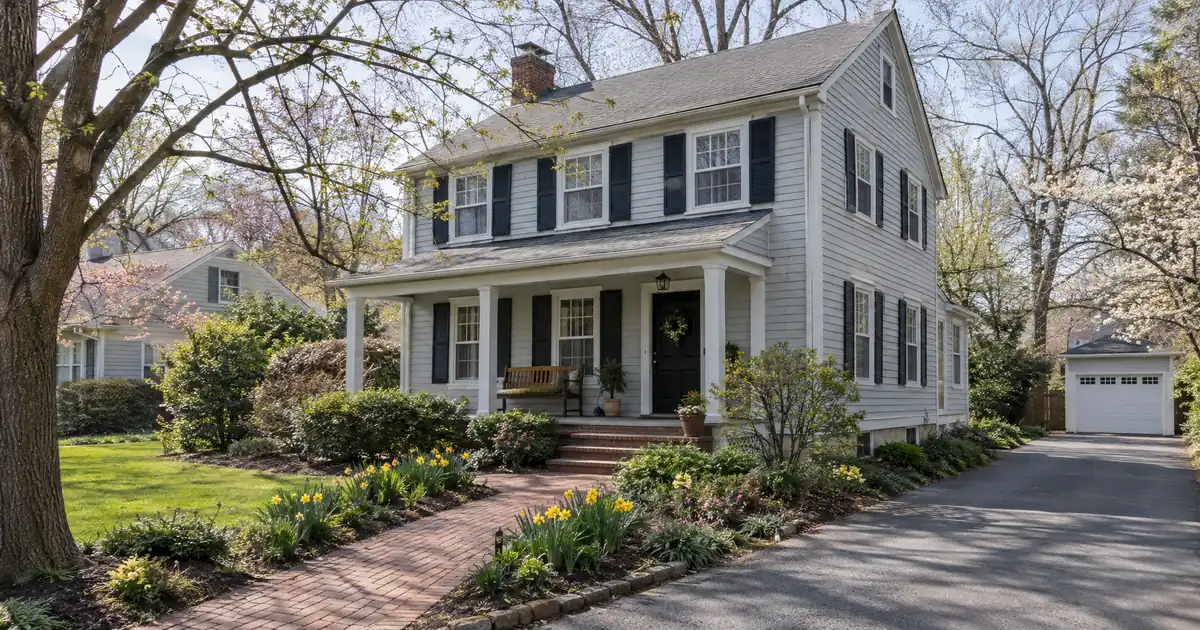
The Quick Read: A conventional second home loan finances a one-unit home you will use for personal enjoyment, not as a rental business. You must occupy it for part of the year, keep exclusive control of it, and qualify without counting its rent. No agency mileage rule exists, though underwriters ask whether the location makes sense as a second home. On a conventional purchase, a one-unit second home is capped at 90% of the value, subject to lender guidelines and full file review.
What Counts as a Second Home?
A second home is a one-unit property you own and use personally, in addition to your main residence. Think lake cabin, beach condo, or a small place near a job you work in part of the week. It is not a rental, and it is not a timeshare.
Conventional payment estimate
The starting figures are an example price at the first-time buyer’s minimum down payment. Replace them with yours.
Editable benchmark: 7.32% as of October 22, 2026 · Freddie Mac 30-year average via FRED®. A conventional market reference, not a conventional loan quote.
Estimate seeded at the low end of Fannie Mae’s published range (0.58%–1.86% a year); the insurer prices the actual premium on the score and the leverage. Applies only above 80% loan-to-value.
Illustrative starting assumptions: a $350,000 price, the first-time buyer’s minimum down payment, a thirty-year term at the current Freddie Mac benchmark, mortgage insurance at the low end of Fannie Mae’s published range, and property taxes and insurance estimated at typical national rates. Every field is editable.
Illustrative estimate only — not a Loan Estimate, approval, quote, or commitment to lend. The rate field carries the weekly Freddie Mac thirty-year conventional benchmark, a market reference and not a conventional loan quote; your rate is set by the lender at lock. The mortgage insurance figure is an editable estimate seeded from Fannie Mae’s published typical range, not a premium quote; the insurer prices the actual premium, and the cancellation month assumes scheduled payments with no extra principal and no change in value. Taxes, insurance and dues are editable estimates; closing costs are not included. Conforming loan limits apply by county. Licensed in sixteen states for consumer mortgages.
Lenders can disagree about details, but the agency backbone is consistent. The Fannie Mae Selling Guide section on occupancy types lists the conditions, and Freddie Mac’s second home section lines up closely with it. In plain English, the home must:
- Be occupied by you for some part of the year. Not rented out full time.
- Be one unit. No duplexes, triplexes, or fourplexes.
- Be suitable for year-round use. A seasonal-only cabin with no heat or insulation can fail this test.
- Stay under your exclusive control. No one else decides who stays there.
- Not be a timeshare. Shared ownership with fixed weeks is out.
- Not sit under a management agreement that controls occupancy. A rental pool or required-rental program disqualifies it.
The file also has to get an approve-type finding from the agency’s automated underwriting system. That is the software check lenders run before delivering a loan to Fannie Mae or Freddie Mac. Across the wholesale programs Lendmire places files with, that automated finding governs most conventional files.
This is a consumer purchase loan. If you want the baseline on how these loans work for a main home, start with Lendmire’s conventional loan programs page.
How Is a Second Home Loan Underwritten, Step by Step?
The loan follows the same path as any conventional purchase, with occupancy getting extra scrutiny. Here is the sequence.
1. You declare how you will use the home. The application asks for occupancy type: primary residence, second home, or investment. You answer, and you sign a statement under penalty of perjury.
2. The underwriter tests that answer against your file. Property type, location relative to your main home, your other properties, and any listing or rental history all get a look.
3. Automated underwriting runs. The system must return an approve-type result.
4. Income is calculated without the second home’s rent. Both agencies bar it. Freddie Mac’s rental income section says rent from a second home may not be used as stable monthly income.
5. Your debts include the full second home payment. You carry your main housing cost and this one together. The ratio ceiling for automated files in the wholesale programs is 50%.
6. The appraisal values it as a one-unit, year-round dwelling. Habitability and residential character matter here.
7. Closing documents reflect the occupancy type. The loan terms and paperwork follow what you declared.
Notice what is missing: any credit for the rent. Even if the cabin could rent for good money, the underwriter treats that income as zero.
How Much Down Do You Need?
Plan on at least 10% down on a one-unit conventional second home purchase. LTV, or loan-to-value, is the loan amount as a percentage of the home’s value. The Fannie Mae Eligibility Matrix sets the conventional maximum for a one-unit second home purchase at 90%. Exact terms vary by lender and program and follow a full review of property, leverage, and credit.
Compare that with the other occupancy types in the same conventional program. A principal residence can reach 95% LTV, or 97% with a fixed rate when at least one borrower is a first-time buyer. Investment property tops out at 85% on one unit. Occupancy is a leverage variable, which is why people are tempted to misstate it. More on that below. The exact numbers vary by lender and program and follow a full review of property, leverage, and credit.
Mortgage insurance applies above 80% LTV. You can request cancellation at 80% of the original value with good payment history, no subordinate liens, and no decline in value. The servicer must end it automatically at 78%. If your down payment is 20% or more, the issue disappears. Final terms depend on the lender’s guidelines, the property type, and the borrower’s complete credit picture.
On credit, the wholesale conventional programs start at a 620 decision score. Many second home files need more than the floor to get a clean automated finding, and individual lenders can set higher minimums. Reserves, meaning cash left after closing, are described in each lender’s guidelines and tend to matter more on a second home than on a main home. Everything here is subject to lender guidelines and full file review.
Is There a Distance Rule? (The 50-Mile Myth)
No. Neither Fannie Mae nor Freddie Mac sets a mileage test. Freddie Mac’s standard is that the property sits in a location that functions reasonably as a second home. That is a judgment call, not a number.
So where does “50 miles” come from? Usually from a lender overlay, which is a rule a lender adds on top of the agency minimum, or from folklore that spread across forums. Some people also confuse it with a tax-day-count test. The mortgage test and the tax test are different tests.
Here is how the three layers stack up:
| Layer | What it says about distance | Who sets it |
|---|---|---|
| Agency rule | No mileage number; location must make sense | Fannie Mae, Freddie Mac |
| Lender overlay | May add its own distance expectation | Individual lender |
| Underwriter judgment | Does a second home here have a logical purpose? | Reviewer on your file |
Underwriters get suspicious when the home sits near your primary residence with no vacation or work reason. A house 20 minutes from where you live looks more like a rental than a getaway. That is lender practice, not an agency rule.
If a lender tells you there is a distance rule, ask three things. Is this the agency’s rule or your own overlay? What is the exact number? What documentation would show a legitimate second-home purpose? A good loan officer can answer all three. If the answer is vague, another lender may read the same file differently. Lendmire brokers across wholesale lenders, so a distance overlay at one place does not end the conversation.
Can You Rent Out a Second Home?
Occasionally, yes. Counting on rent to carry the loan, no. This is the area where borrowers most often get tripped up.
Freddie Mac’s guidance, as summarized in secondary industry material, says the home must be available primarily for your own use and that short-term rental is acceptable unless the home sits in a rental pool or under an agreement that requires renting it. Fannie Mae’s guide says that if rental income is identified, the loan can still be delivered as a second home, but only if that income is not used to qualify. Confirm the exact wording with your lender before you rely on it.
Here is how common rental scenarios generally sort out:
| Scenario | Generally allowed? |
|---|---|
| Rent it a few weekends a year, you control it | Usually yes |
| Year-round long-term tenant | No, it looks like an investment property |
| Rental pool or required-rental program | No |
| Management company controls who stays | No |
| Using projected rent to qualify | No |
Check your HOA and condo rules before you buy. Some buildings run as rental programs, which can knock a unit out of second home eligibility entirely. Local ordinances and insurance policies may also limit renting. Those sit outside the loan itself, but they can change what you are allowed to do with the home.
The key point: rent that exists does not automatically reclassify the loan, but it also earns you nothing at the underwriting desk. If your plan depends on renting the home most of the year, a second home loan is the wrong tool. The honest path is to tell the lender what you plan so the file lands in the right category.
What Happens If You Misstate Occupancy?
You risk the loan itself. Fannie Mae’s Getting It Right occupancy bulletin explains that occupancy types carry different risk, and that the pricing and eligibility gap between them creates the incentive to misrepresent. Lenders do re-verify occupancy after closing as part of quality control.
Calling a second home your primary residence to get better leverage is misrepresentation. It can lead the agency to demand that the lender repurchase the loan, and false occupancy statements can carry criminal exposure under federal law. That is the general picture, not legal advice.
The reverse also matters. If your facts truly change, say you retire to the home and it becomes your main residence, occupancy can change because the facts changed. Relabeling a property just to get different terms is a different thing.
Where the General Rule Breaks
A few named edge cases come up often.
Duplexes and fourplexes. Second homes are one unit only. Freddie Mac treats a two-unit property used as a second home as an investment property, based on secondary industry material, so verify with your lender.
Number of financed properties. The agencies cap how many financed properties a borrower can carry when buying a second home, and credit expectations rise as the count climbs. If you already own several, ask your lender about the current limit.
Government loans. FHA, VA, and USDA loans are generally for primary residences, so they are not a path to a second home. Treat this as the general rule, since narrow exceptions exist.
Seasonal-only cabins. If the property cannot be lived in year-round, the appraisal and property eligibility rules can block it.
Condo-hotels and resort programs. If owning means joining a rental pool, the home usually fails the exclusive-control test.
Cash-out on a second home. A conventional cash-out refinance on a second home is capped at 75% LTV, lower than the purchase cap. Rate-and-term and cash-out rules differ, so ask about the specific transaction. Leverage, reserves, and pricing vary by lender and program; the final terms follow the full file review.
Four Scenarios, Worked Through
The nearby lake house. You live in a metro area and want a lake home a short drive away, with no work connection. An underwriter will ask why you need a second home that close. Verdict: it depends. Strong ties to the lake, such as family history or a documented purpose, help. A lender with a distance overlay may decline it. A different lender may not.
The commuter apartment. You work in a city three days a week and live elsewhere. You want a one-unit condo near the office. Verdict: usually a fit. The use is logical and personal. You occupy it part of the year, and you do not rent it out.
The seasonal rental. You buy a beach condo and rent it most summers, living there off-season. Verdict: risky. If rentals dominate the year, or the building is a rental program, it looks like an investment property. Keep personal use primary and do not count rent for qualifying.
The change of use after closing. You close as a second home, then decide to rent it year-round. Verdict: your facts changed, so talk to your servicer and your lender. Signing an occupancy certificate with no intent to honor it is the problem to avoid.
Your Pre-Application Checklist
- Decide honestly how many days you will use the home and whether you will rent it.
- Pull your HOA or condo rules on rentals.
- Confirm it is one unit and livable year-round.
- Plan for at least 10% down, plus reserves.
- Add the second home’s full payment to your ratio, with zero rent credit.
- Know your credit picture, since the wholesale floor is 620 but second homes often need a stronger score for a clean automated finding.
- Ask each lender whether it has distance or rental overlays.
If a seller is willing to help with costs, see Lendmire’s piece How Much a Seller Concession Saves on a Second Home Conventional Loan.
Key Terms Defined
Second home: A one-unit property you occupy for part of the year, separate from your main residence.
Occupancy type: The category you declare on the application: primary residence, second home, or investment property.
Overlay: A rule a lender adds on top of the agency minimum.
LTV: Loan-to-value, the loan amount as a percentage of the home’s value.
Rental pool: An arrangement where a manager rents your unit out with other owners’ units, which can disqualify a second home.
Automated underwriting: Software that reviews your file and returns an approve-type finding for the agencies.
Frequently Asked Questions
Is there a minimum distance between a second home and my main home?
No agency sets one. Fannie Mae and Freddie Mac ask whether the location functions reasonably as a second home. Some lenders add their own distance expectation, so ask whether a number you hear is agency policy or lender policy.
Can I rent my second home and still get a conventional second home loan?
Occasional rental can be acceptable if you keep control of the property and it is not in a rental pool. The rent cannot be used to qualify. Renting it most of the year points toward a different loan category.
How much down payment does a second home require?
At least 10% on a one-unit conventional purchase, per the agency eligibility matrix. Figures depend on lender guidelines and your full file.
Can I buy a duplex as a second home?
No. Second homes are limited to one unit. A two- to four-unit property is treated differently and carries its own leverage limits.
Can I use an FHA or VA loan for a second home?
Generally not. Those programs are built for primary residences. A conventional loan is the usual route for a second home.
If you are buying a home and want to see whether a conventional loan fits your file, Lendmire can help you compare the options and what each one asks of the file.
For your own numbers, request a scenario review with Lendmire.
About Lendmire
Lendmire (NMLS# 2371349) is a mortgage brokerage serving homeowners and home buyers in 16 states. FHA, VA, conventional and jumbo purchase and refinance loans are arranged through wholesale lending channels; Lendmire brokers the financing and the lender underwrites each application. Scotsman Guide named Lendmire a Top Mortgage Workplace in both 2025 and 2026.
Get Started
Ready to find the right loan for you?
In about 30 seconds you can review financing options available for your home or investment property. No commitment required.
Informational only. Not a Loan Estimate, approval, or commitment to lend. Program availability and eligibility are subject to lender guidelines, credit approval, property review, and underwriting.
References
1. Fannie Mae Selling Guide B2-1.1-01, Occupancy Types
2. Freddie Mac Seller/Servicer Guide 4201.12, Second Home Mortgages
3. Freddie Mac Seller/Servicer Guide 5306.1, Rental Income
4. Fannie Mae Eligibility Matrix
5. Fannie Mae, Getting It Right: Occupancy
This article is part of Lendmire’s conventional loan program — full qualification details, guidelines, and scenarios live on the program page.
Related reading: How Much Cash a Low Down Conventional Loan Takes on a 2-4 Unit Home · How Much a Second Home Conventional Refinance Can Finance · Piggyback Second vs PMI on a High-Balance Conventional Loan
Brandon Miller
Founder & CEO, Mortgage Loan Originator, Lendmire LLC
- Mortgage Loan Originator · NMLS# 1129696 · Verify on NMLS Consumer Access
- North Carolina Real Estate Broker · License# 343312 · Verify on NCREC
- North Carolina Insurance Producer · License# 19053198 · Property, Casualty, Life, Health · Verify on NAIC SBS
- Lendmire LLC · Firm NMLS# 2371349 · Verify firm licensure
Compliance and disclosures. Lendmire (NMLS# 2371349) is a licensed mortgage broker and is not a direct lender, depository institution, financial advisor, or tax professional. Content in this article is general market analysis and educational information — not financial, legal, or tax advice for any specific situation. Lendmire does not guarantee loan approval; every transaction is subject to underwriting by the funding lender. Mortgage pricing and loan program guidelines are subject to change at any time without notice and vary by borrower characteristics, property type, and state regulations. Lendmire complies with Equal Housing Opportunity. Licensure verification: NMLS Consumer Access.