
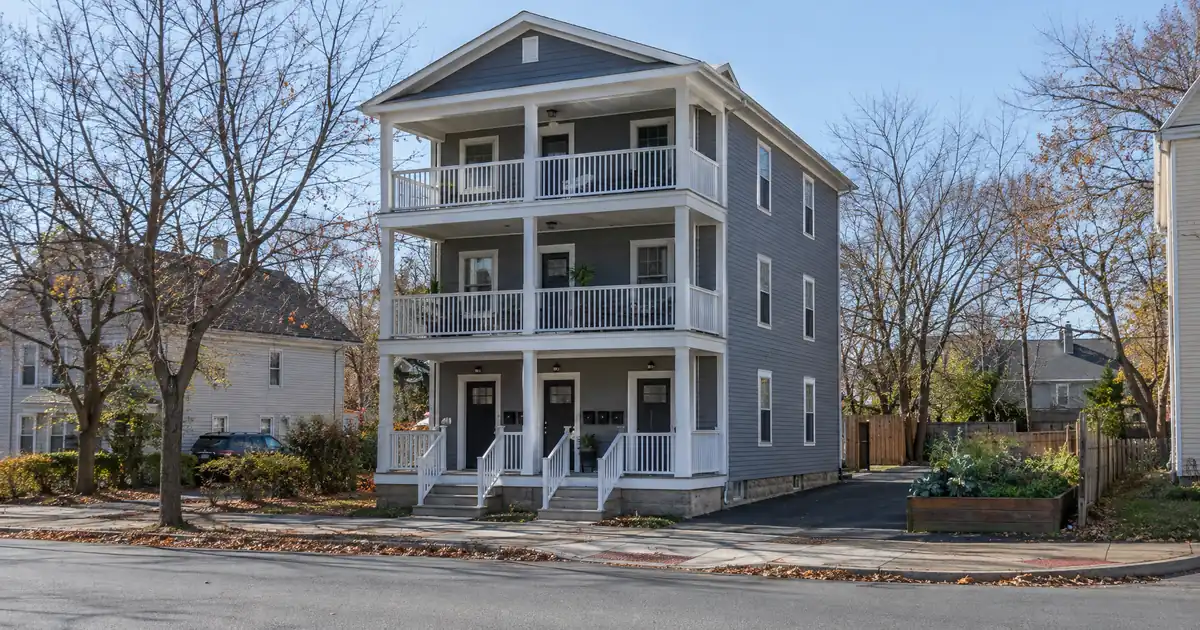
The Quick Read: On a conventional purchase of a rental you won’t live in, the minimum down payment is typically 15% on a one-unit property and 25% on a two-, three- or four-unit property. Those numbers are simply 100% minus the maximum loan-to-value ratio the agencies allow. Owner-occupied buyers can go far lower on the same building, so occupancy decides the number. Everything below is subject to lender guidelines and full file review.
Key Takeaways
- One unit bought as a rental: maximum 85% loan-to-value, so about 15% down.
- Two to four units bought as a rental: maximum 75% loan-to-value, so about 25% down.
- Units two, three and four are treated alike. The jump comes at the second unit, not the fourth.
- Down payment is only part of the cash you need. Closing costs and reserves come on top.
- Seller credits are capped low and cannot fund your down payment. Every figure here varies by lender and program.
What Does “Putting Down” Actually Mean Here?
The down payment is the part of the price you pay from your own money. The lender finances the rest. Lenders express that split as loan-to-value, or LTV: the loan balance divided by the property’s value.
Conventional payment estimate
The starting figures are an example price at the first-time buyer’s minimum down payment. Replace them with yours.
Editable benchmark: 7.32% as of October 22, 2026 · Freddie Mac 30-year average via FRED®. A conventional market reference, not a conventional loan quote.
Estimate seeded at the low end of Fannie Mae’s published range (0.58%–1.86% a year); the insurer prices the actual premium on the score and the leverage. Applies only above 80% loan-to-value.
Illustrative starting assumptions: a $350,000 price, the first-time buyer’s minimum down payment, a thirty-year term at the current Freddie Mac benchmark, mortgage insurance at the low end of Fannie Mae’s published range, and property taxes and insurance estimated at typical national rates. Every field is editable.
Illustrative estimate only — not a Loan Estimate, approval, quote, or commitment to lend. The rate field carries the weekly Freddie Mac thirty-year conventional benchmark, a market reference and not a conventional loan quote; your rate is set by the lender at lock. The mortgage insurance figure is an editable estimate seeded from Fannie Mae’s published typical range, not a premium quote; the insurer prices the actual premium, and the cancellation month assumes scheduled payments with no extra principal and no change in value. Taxes, insurance and dues are editable estimates; closing costs are not included. Conforming loan limits apply by county. Licensed in sixteen states for consumer mortgages.
An 85% LTV means you borrow 85% and pay 15%. A 75% LTV means you pay 25%. That is the whole conversion, and it is why the table below lists both numbers. Final terms depend on lender guidelines, property type, leverage, and the borrower’s complete credit picture.
| Property you’re buying | Max LTV | Minimum down |
|---|---|---|
| Rental, 1 unit | 85% | About 15% |
| Rental, 2 units | 75% | About 25% |
| Rental, 3 units | 75% | About 25% |
| Rental, 4 units | 75% | About 25% |
| Owner-occupied, 2-4 units | Up to 95% | About 5% |
The last row is the one that trips people up. It is a different loan, built for a buyer who lives in the building.
Why Do Rental Buyers Put Down More Than Homeowners?
Lenders price risk, and a rental carries more of it. An owner-occupant protects the roof over their own head. A landlord can walk away from a property that stops paying for itself.
So the agencies cap how much of the price a rental buyer can borrow. Fannie Mae’s Eligibility Matrix caps an investment-property purchase at 85% for one unit and 75% for two to four units. Freddie Mac’s Seller/Servicer Guide also lists 75% for a two- to four-unit investment property.
That ceiling explains the gap between one unit and two. Buyers who read “4-unit properties qualify for 5% down” online usually missed the word “owner-occupied.”
Picture the same building at the same price, with only occupancy changed:
- Buy it to live in one unit: up to 95% LTV on two to four units, about 5% down.
- Buy it purely as a rental: 75% LTV, about 25% down. Every figure here varies by lender and program — guidelines, property type, leverage, and credit profile all apply.
That is a gap of about 20 points of the purchase price, from occupancy alone. Specifics remain subject to lender guidelines and a full review of property, leverage, and credit.
How Is a Rental Purchase Underwritten, Step by Step?
Underwriting means the lender verifies your finances against the rules. For a rental purchase, the sequence looks like this.
1. Occupancy is set. The loan is labeled investment because you will own the property without living in it. That label carries into pricing.
2. The file runs through automated underwriting. The agencies’ leverage caps assume an automated approval. For two- to four-unit rentals, manual underwriting is generally not an option.
3. The appraisal includes a market rent schedule. The appraiser documents what each unit should rent for. The lender wants that figure on file even if you never use it to qualify.
4. Rent is weighed in your income, partially. Fannie Mae’s announcement on rental income ties full use of rental income to having a primary housing expense and a track record managing property. If you have never been a landlord, rent usually only offsets the property’s own payment. It does not raise your qualifying income. Even where rent counts, only a portion does, because the rules assume vacancy and upkeep.
5. Credit and debt ratios are checked. Across the wholesale conventional programs we place files with, the floor is a 620 decision score. The automated finding governs most files, with a total debt-to-income ceiling of 50%. A higher score and lower ratios give the file more room.
6. Reserves and cash to close are verified. More on this below, because it is where files stall.
Mortgage insurance rules apply when leverage goes above 80%. How that works on a one-unit rental at 85% depends on the lender and the file, so ask for it in writing rather than assuming. Mortgage insurance is a policy that protects the lender if you stop paying, and the borrower pays the premium.
What Changes the Number?
The 15% and 25% figures are floors, not promises. Several things can push the real number higher.
Transaction type. A purchase is one case. A limited cash-out refinance of a rental, where you take out little beyond closing costs, follows its own cap. A cash-out refinance on a rental sits at 75% LTV on two- to four-unit properties. The loan being paid off must be at least 12 months old, and you must have been on title for 6 months, with narrow exceptions. These specifics are subject to lender guidelines and a full review of property, leverage, and credit.
Lender overlays. An overlay is a lender’s own rule layered on the agency minimum. Some lenders set a higher credit floor or lower leverage on rentals. This is why you will see different numbers on different websites, and why a pre-approval matters more than a blog headline.
Credit and ratios. A thin credit score or heavy debt can make a file need more cash down or a lower price, even when the agency cap would allow more.
Number of financed properties. Owning several financed properties adds reserve requirements. The agencies tighten the file as your portfolio grows. The details change over time, so your loan officer should pull the current rules rather than rely on a rule of thumb. Terms depend on the lender’s guidelines, the property type, the leverage, and a full review of the credit profile.
What Does the Cash Picture Look Like for a Duplex, Triplex and Fourplex?
The cash you bring is more than the down payment. Closing costs come first, then reserves, which are months of housing payments you must hold in the bank after closing. These examples use percentages only, because dollars depend on the price and the lender.
Duplex at 75% LTV. Down payment: 25% of price. Closing costs: a further share of price. Reserves: several months of the full housing payment, held after closing. The exact numbers vary by lender and program and follow a full review of property, leverage, and credit.
Triplex at 75% LTV. Down payment: 25% of price. The higher price of a three-unit building means a larger dollar down payment, and the bigger payment makes the reserves larger too. Final terms depend on the lender’s guidelines, the property type, and the borrower’s complete credit picture.
Fourplex at 75% LTV. Down payment: 25% of price. Reserves scale with the payment, so a fourplex asks the most cash of the three at the same percentage. Each figure is subject to lender guidelines and a complete review of property type, leverage, and credit.
One-unit rental at 85% LTV. Down payment: 15% of price. Lower cash up front, but a single unit has one rent stream. A vacancy covers none of the payment. Leverage, reserves, and pricing vary by lender and program; the final terms follow the full file review.
Funds to close are counted before reserves. Savings you use for the down payment cannot also count as your reserves. A buyer with exactly enough for the down payment and nothing left is short, even if the down payment itself looks fine on paper.
Where Can the Down Payment Come From?
Your own funds are the cleanest source: savings, proceeds from selling another property, or money already in an account for the lender to review. Lenders want a paper trail. A large deposit with no explanation can stall a file because the underwriter must source it.
Seller credits are different on a rental. Fannie Mae’s interested-party contribution rules say seller and other interested-party money cannot fund the down payment, reserves or minimum borrower contribution. Credits on investment properties are capped at a low share of the price, well below owner-occupied levels. An excess credit is treated as a price reduction, and the LTV is recalculated. Your loan officer should confirm the current cap on the live guide.
Whether gift funds are allowed depends on the occupancy. They are far more limited on a rental than on a home you will live in, so ask before counting on them.
Should You Put Down More Than the Minimum?
This is the practical decision. The minimum gets you the building. A larger down payment changes the file.
- A bigger down payment lowers the loan balance. That generally means a smaller monthly obligation and more cushion if a unit sits empty.
- It can improve pricing. Rental loans are priced higher than owner-occupied loans, and the adjustments vary by credit score and leverage. More equity usually helps. Your Loan Estimate will show the actual terms.
- It drains liquidity. Cash you put into the building is cash you cannot use for repairs, vacancies or the next purchase.
- It can protect against a surprise. If your appraisal comes in low or the LTV lands barely over a cap, extra cash keeps the deal alive.
The stronger play for a first rental is often a down payment that keeps several months of spare cash in the bank. A thin cushion on a four-unit building is a common way a good deal turns stressful.
Where Does the General Rule Break?
Several edge cases change the answer. Know them before you submit an application.
You will live in one unit. The loan becomes an owner-occupied purchase, with leverage that can go well above the rental caps. You must truly occupy a unit. Lendmire’s article How Much Down Payment a Conventional 2-4 Unit Loan Needs covers that path.
A two-unit “second home.” Second homes are one-unit properties. A two-unit property used as a second home is treated as an investment property, so the investor limits apply.
Second-home rent. A second-home loan can have rental income, but that income cannot be used to qualify.
Accessory dwelling unit income. The rule that lets ADU income help you qualify applies only to a one-unit principal residence. It does not apply to rental loans.
Misstating occupancy. Calling a rental your primary home to get a lower down payment is misrepresentation. Fannie Mae’s quality-control bulletin names it as a risk area exactly because the better terms invite the temptation. Do not do it.
Moving in later, or moving out. Buying as an investor and later occupying a unit does not retroactively lower your down payment. If you plan to live there, say so at application. Occupancy is declared at closing and is part of the loan.
What Is the Process From Here?
Start by deciding what the building is for. A rental purchase and an owner-occupied purchase are different loans. Then add up total cash: down payment, closing costs and reserves. Compare that against your savings before you make an offer.
Next, ask a loan officer to run the file through automated underwriting with the property type and units you are considering. That shows how your credit and ratios affect the cash you need. The Loan Estimate then shows the actual terms and costs. If you are comparing programs, Lendmire’s conventional loan programs page lays out the options.
Key Terms Defined
Loan-to-value (LTV): the loan balance divided by the property’s value, expressed as a percentage.
Investment property: a home you own but do not occupy as your residence. Lenders classify it by how you will use it, not by what it looks like.
Overlay: a lender’s own rule added on top of the agency minimum, such as a higher credit floor.
Reserves: months of housing payments you must still hold in the bank after closing.
Interested-party contribution: money from the seller or another party with a stake in the sale, such as a seller credit toward your closing costs.
Frequently Asked Questions
Can I buy a duplex as a rental with 5% down?
Not as a pure rental on a conventional loan. The 5% figure belongs to an owner-occupied purchase, where you live in one unit. For a duplex you will not occupy, the maximum LTV is 75%, so expect about 25% down, subject to lender guidelines and full file review.
Does a triplex or fourplex need more down than a duplex?
No. The agencies treat two, three and four units alike for a rental, with a 75% LTV cap on each. The jump comes between one unit and two. A bigger building costs more in total dollars at the same percentage, and reserves usually scale with the payment.
Can my gift money or a seller credit cover the down payment on a rental?
Seller and other interested-party credits cannot fund the down payment or reserves, and they are capped at a low share of the price. Gift rules are stricter on rentals than on a home you will live in. Ask your loan officer what the lender will accept before you rely on a gift.
Does rent from the building help me qualify?
Partly. Only a portion of the market rent counts, because the rules assume vacancy and upkeep. If you have not managed rental property before, rent generally offsets the building’s own payment rather than adding to your qualifying income.
What if I plan to live in one unit later?
Tell the lender at application. If you will occupy a unit, the loan is an owner-occupied purchase with different leverage. Buying as an investor and moving in afterward does not lower the down payment you already paid.
If you are buying a home and want to see whether a conventional loan fits your file, Lendmire can help you compare the options and what each one asks of the file.
For your own numbers, request a scenario review with Lendmire.
About Lendmire
Lendmire, NMLS# 2371349, is a mortgage brokerage with consumer lending licenses in 16 states. FHA, VA, conventional and jumbo purchase and refinance loans are arranged through wholesale lending partners, and each application is reviewed individually by the lender. Scotsman Guide named Lendmire a Top Mortgage Workplace in both 2025 and 2026.
Get Started
Ready to find the right loan for you?
In about 30 seconds you can review financing options available for your home or investment property. No commitment required.
Informational only. Not a Loan Estimate, approval, or commitment to lend. Program availability and eligibility are subject to lender guidelines, credit approval, property review, and underwriting.
References
1. Fannie Mae Eligibility Matrix
2. Freddie Mac Seller/Servicer Guide §4203.1
3. Fannie Mae Selling Guide Announcement on Rental Income
4. Fannie Mae Quality Control Occupancy Bulletin
This article is part of Lendmire’s conventional loan program — full qualification details, guidelines, and scenarios live on the program page.
Related reading: Smaller vs Larger Down Payment on a Conventional Loan for a 2-4 Unit · How Much Cash a Low-Down-Payment Conventional Loan Takes With Gift Funds · How Much Cash a Low Down Conventional Loan Takes on a 2-4 Unit Home
Brandon Miller
Founder & CEO, Mortgage Loan Originator, Lendmire LLC
- Mortgage Loan Originator · NMLS# 1129696 · Verify on NMLS Consumer Access
- North Carolina Real Estate Broker · License# 343312 · Verify on NCREC
- North Carolina Insurance Producer · License# 19053198 · Property, Casualty, Life, Health · Verify on NAIC SBS
- Lendmire LLC · Firm NMLS# 2371349 · Verify firm licensure
Legal disclosures. Lendmire (NMLS# 2371349) is a state-licensed mortgage brokerage that arranges financing through wholesale lender relationships. Lendmire is not a direct lender, depository institution, or registered financial advisor. The discussion above is general informational content about real estate financing — it is not financial, legal, or tax advice, and readers should consult licensed professionals for guidance on their individual circumstances. Loan inquiries are subject to lender underwriting; this article does not represent a commitment to lend. Loan terms, rates, and qualification standards vary by borrower, property, and state, and are subject to change at any time. Equal Housing Opportunity. NMLS Consumer Access: nmlsconsumeraccess.org.