
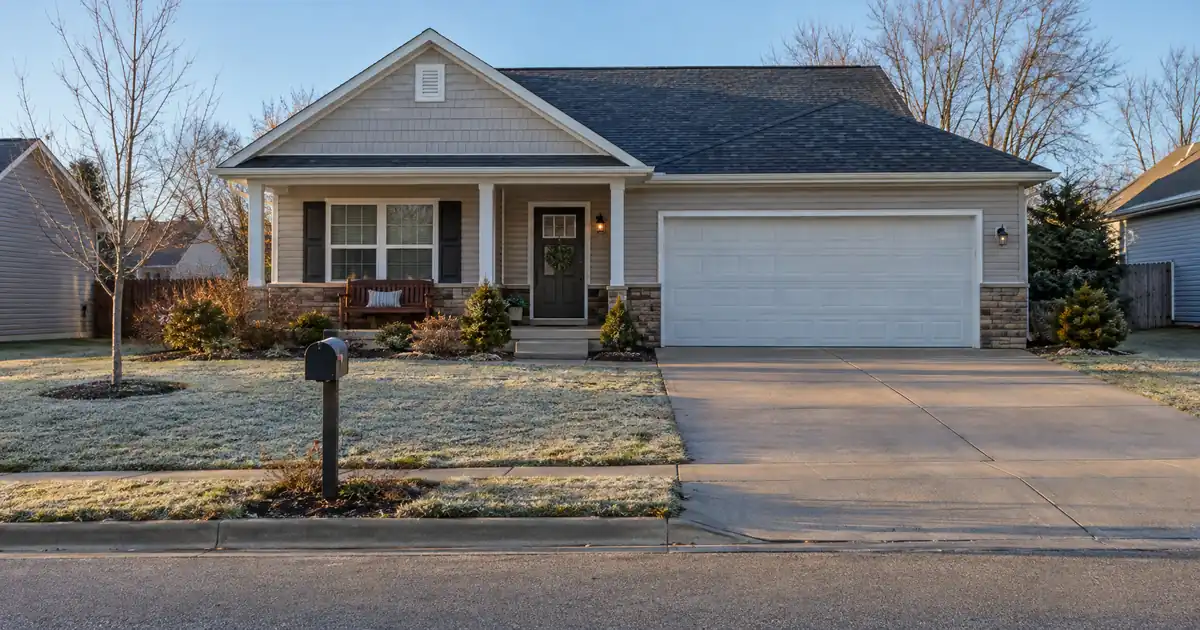
The Quick Read: Inheriting a home removes the usual six-month wait to be on title, but it does not remove anything else. You still qualify on your own income, credit and debts, the home still has to appraise, and a conventional cash-out on a one-unit primary residence is capped at 80% of the appraised value. The real gating item is usually title: the loan can’t move forward until the home is legally in your name.
Here is the plain version. The inheritance exception waives a title-seasoning rule. It doesn’t waive underwriting. Everything below walks through how the loan is built, where it bends, and where it breaks.
Cash-out refinance estimate
The starting figures are an example value with a balance and a cash request in proportion. Replace them with yours.
Editable benchmark: 7.32% as of October 22, 2026 · Freddie Mac 30-year average via FRED®. A conventional market reference, not a cash-out refinance quote.
Illustrative starting assumptions: a $350,000 home value, a $193,000 current balance, the agency cap on a one-unit principal residence, a thirty-year term at the current Freddie Mac benchmark, and property taxes and insurance estimated at typical national rates. Every field is editable.
Illustrative estimate only — not a Loan Estimate, approval, quote, or commitment to lend. The rate field carries the weekly Freddie Mac thirty-year conventional benchmark, a market reference and not a cash-out refinance quote; a cash-out loan is priced by the lender at lock. The cash available is the loan the program cap allows less the balances paid off, before closing costs, which are not included. The HELOC line is the program’s combined loan-to-value ceiling applied to the same value and balance. Taxes and insurance are editable estimates. Licensed in sixteen states for consumer mortgages.
What a Cash-Out Refinance Means on an Inherited Home
A cash-out refinance replaces your current mortgage with a new, larger one and pays you the difference in cash. On an inherited house, that definition has two versions.
In the first, the home still carries the decedent’s mortgage. The new loan pays off that balance, and the leftover equity comes to you.
In the second, the home is paid off. There’s nothing to replace, so the new loan is a fresh first lien on a house with no debt. Many heirs assume this is a “new mortgage,” not a refinance. It’s still a cash-out transaction. Across the wholesale programs Lendmire works with, a new first mortgage on a free-and-clear home is classified as cash-out, and it follows the cash-out leverage cap.
Lendmire’s cash-out refinance programs cover the owner-occupied version of this loan.
One more definition matters early. A cash-out refinance isn’t a home equity loan or a HELOC. Those are separate loans that sit behind a first mortgage. A cash-out replaces the first mortgage itself. The Consumer Financial Protection Bureau notes that a cash-out may be more or less expensive than a HELOC, depending on terms, so the comparison is worth running.
Key Terms Defined
Seasoning: The length of time you’ve owned the home, or held the loan, before a lender will allow a cash-out.
Limited cash-out refinance: A refinance that pays off the existing first mortgage and closing costs, with only incidental cash back. Also called rate-and-term.
Cash-out refinance: A refinance where the new loan is larger than what it pays off, and you receive the difference.
LTV (loan-to-value): The new loan amount divided by the appraised value of the home.
Probate: The court process that confirms a will, settles an estate and transfers assets to heirs.
Free and clear: A home with no mortgage or lien against it.
Does Inheriting Waive the Six-Month Wait?
Yes, for conventional loans. Conventional cash-out rules normally require at least one borrower to have been on title for six months. The Fannie Mae Selling Guide carves out an exception when the lender documents that you acquired the property through inheritance, or were legally awarded it in a divorce or similar proceeding.
What the exception does not do matters more. It waives the title wait only. Credit score, income, debt-to-income ratio, appraisal and leverage limits all still apply. Treat it as a door opener, not an approval.
A second seasoning rule sits in the background. When there’s an existing first mortgage being paid off, conventional cash-out generally expects that loan to have some age on it. Heirs who inherit a recent loan should ask a loan officer how that test reads for their file, since the exact application depends on lender guidelines.
Where Are You in the Process?
Your stage decides what’s possible. This is the table most heirs wish they’d seen first.
| Stage | Can you cash-out refinance? | What’s missing |
|---|---|---|
| Estate open, probate pending | Usually not yet | Legal authority and title in your name |
| Deed or court order recorded | Generally yes, under the exception | Appraisal, qualifying, payoffs |
| Living in the home | Yes, as owner-occupant | Standard underwriting |
| Rented since inheriting | Depends on the program | Occupancy history and documents |
The pattern: title comes first, everything else follows. Probate status often decides whether a lender can proceed at all, and that varies by state and by whether the home sat in an estate or a trust.
How the Loan Is Underwritten, Step by Step
Think of the process as seven steps. Lender specifics vary, and every program figure here is subject to lender guidelines and full file review.
1. Get title in your name. Agency rules count an owner on title or an inheritance the lender can document. If the home is still in the estate, finish that work first.
2. Document the inheritance. Expect to provide evidence such as the will, a probate or court order, or a recorded deed. The lender has to be able to show how you acquired the property.
3. Classify the loan. A new first lien on a paid-off house is cash-out. A refinance that only pays off an existing mortgage and costs, with incidental cash back, is rate-and-term. The classification sets the leverage cap.
4. Qualify personally. Your income, credit and debts are underwritten like any other loan. The inheritance itself is not income. Cash you inherit and keep in an account may help with reserves, but it doesn’t replace a paycheck. Most wholesale conventional programs start at a 620 decision score, with the automated finding governing most files and a total debt ratio ceiling around 50%. Some lenders set higher floors.
5. Appraise. The loan is sized off a new appraised value, not the value at the date of death and not what a sibling thinks the house is worth.
6. Apply the leverage cap. This is the number that decides how much cash you can reach.
7. Close. Occupancy and title are confirmed, liens are cleared, and any co-heirs are paid out or removed from title.
How Much Cash Can You Actually Reach?
Conventional cash-out on a one-unit principal residence caps at 80% LTV, and two- to four-unit principal residences cap at 75%, per the Fannie Mae Eligibility Matrix. That means you keep meaningful equity in the home by design. The exact numbers vary by lender and program and follow a full review of property, leverage, and credit.
The reachable-cash formula is simple:
- Start with the appraised value.
- Multiply by the leverage cap (80% for a one-unit primary residence).
- Subtract any mortgage payoff.
- Subtract closing costs.
- What’s left is the most you could receive.
Run it two ways. A paid-off home appraised at a given value can reach up to 80% of that value, less costs. A home with a remaining mortgage reaches the same ceiling, but the payoff eats into it first. The more of the home the old loan covers, the less cash comes out.
One wholesale lane extends conventional cash-out to 89.99% LTV with no mortgage insurance. It requires a 680 score, a 50% ratio ceiling, a thirty-year fixed rate, a primary residence, a conforming balance, and its own six months of seasoning. That is a narrow lane, not the norm, and it isn’t written on Texas homestead property, where state rules cap cash-out at the agency figure. Final terms depend on the lender’s guidelines, the property type, and the borrower’s complete credit picture.
If you can’t hit your target number at 80%, the answer is rarely to stretch the loan. It’s to reset the target.
Conventional, FHA and VA: Where the Rules Differ
| Program | Inherited home, cash out? | Key catch |
|---|---|---|
| Conventional | Yes, with title wait waived | 80% cap, full underwriting |
| FHA | Yes, principal residence only | Rental use can change the exception |
| VA | Only if a VA lien exists | No cash on the IRRRL |
Conventional is the most flexible path for most heirs, and it’s where the exceptions above come from.
FHA allows cash-out on an inherited principal residence. HUD’s archived Refinance Reference Guide describes inheritance within the past 12 months as eligible when the borrowers occupy the home as their primary residence, and says free-and-clear properties may be refinanced as cash-out. That page is archived, so treat it as background. The current rule lives in HUD Handbook 4000.1, and lenders read it in the file. Secondary sources describe the current text as waiving a minimum occupancy period, as long as the home was never treated as an investment after you inherited it. Confirm that against the handbook before planning around it.
FHA Streamline does nothing for a paid-off inherited home. It refinances an existing FHA loan only.
VA is narrow. The VA IRRRL can’t be used on an inherited home with no VA loan, and its proceeds can only pay off the existing VA loan and costs, so no cash comes to the borrower. A paid-off inherited home can’t use a VA cash-out. A home with a lien may be eligible, subject to VA and lender rules.
Where the General Rule Breaks
Inheritance rules are clean on paper. These cases are where files get stuck.
You rented it after inheriting. On FHA, renting the home can undo the inheritance exception, and the heir may then need to occupy it for a period before cash-out is possible. This is a qualitative point to confirm against Handbook 4000.1 for your situation. If you’re considering renting the house before you refinance, ask first. It can cost you the exception.
Occupancy isn’t primary. Everything here assumes the home you live in. A second home or rental inheritance carries lower leverage caps and is a different product. Occupancy decides leverage.
Co-heirs and sibling buyouts. Fannie Mae’s heirs’ property page covers refinances to buy out a co-owner, and says seasoning requirements don’t apply in that situation. A buyout is a common reason heirs refinance. Lendmire’s piece How to Cash-Out Refinance an Inherited Home to Pay Siblings as a Retiree walks through that version in detail.
Heirs’ property and unclear title. Informal inheritances often leave title muddled: no probate, a deceased relative still on the deed, several names at once. Lenders can’t close until title is clean. This is usually a legal fix, not a loan fix, and it’s where an estate attorney earns the fee.
Manufactured homes. Cash-out leverage caps for manufactured homes are much lower than for site-built homes.
Delayed financing. That is a different exception for cash buyers, requiring an arm’s-length purchase. It doesn’t apply to inheritances, so don’t mix them up.
Retirees living on assets rather than wages. If you’re past working years and your qualifying income is thin, the file looks different. Lendmire’s article on whether an asset-rich retiree can cash-out refinance an inherited home covers that profile.
Documents to Gather Before You Apply
Lenders vary, but a typical inherited-home file includes:
- Death certificate
- Will, probate order or court order showing authority
- Recorded deed or evidence the home is titled in your name
- Homeowners insurance in your name
- Existing mortgage statement, if there is a loan
- Agreement among heirs, if there are several
- Standard income, asset and credit documents
Missing paper, not weak credit, is a common reason inherited-home files stall.
What a Cash-Out Does to Your Budget
A cash-out replaces your mortgage with a larger one. The CFPB’s guide on using home equity says the monthly payment may rise and the time to pay off may lengthen. An heir who owns the home free and clear today would be adding a payment that doesn’t exist now.
Closing costs are real too. The CFPB notes you often pay them, and they vary by loan and lender. They come out of your cash, or they’re added to the balance.
Then there’s the reason for borrowing. CFPB research found that more than half of cash-out borrowers in each year from 2014 to 2019 cited paying off bills or debts, and noted that paying non-mortgage debts with mortgage debt can increase foreclosure risk. Turning credit-card debt into debt secured by the home you inherited is a real tradeoff.
Mortgage insurance matters at higher leverage. It’s required above 80% LTV on conventional loans, and it cancels at 80% on request and terminates automatically at 78%. At the 80% cash-out cap, it generally doesn’t enter the picture.
When Cash-Out Isn’t the Right Tool
Cash-out refinance is one option among several. It fits best when you want to keep the home, you can carry a larger payment, and you want a fixed structure.
A HELOC or home equity loan can fit better when you want a smaller amount and want to avoid replacing a first mortgage you already like. That mostly matters when the inherited home still carries a mortgage worth keeping.
Selling can be the right call if you don’t want the house, if a buyout can’t be financed, or if the carrying costs outweigh what the home gives you. A loan against an expected inheritance, sometimes called a probate loan, is a different product from a loan against the home itself.
Neither choice is wrong. The wrong choice is borrowing to solve a problem a smaller step would have fixed.
Frequently Asked Questions
Can I cash-out refinance before probate closes?
Usually not. The lender needs you to hold title or hold documented authority over the property, and an open estate often means neither. Once a deed or court order puts the home in your name, the inheritance exception applies. Rules differ by state and by whether the home is in an estate or a trust, so an estate attorney can tell you where your file stands.
Can I get cash out of an inherited home with no mortgage?
Yes. A new first mortgage on a paid-off home counts as a cash-out refinance, and conventional programs treat it that way. On a one-unit primary residence, the cap is 80% of appraised value. You’ll still qualify on your own income, credit and debts, and the home still has to appraise.
Do I have to live in the inherited home?
For the programs here, yes. They’re built for a principal residence. Second homes and rentals carry lower leverage caps and are a separate loan type. On FHA, the home must be your primary residence, and treating it as a rental after inheriting can change how the exception applies.
Does inherited money count as income?
No. Underwriters look at your recurring income, credit and debts. Inherited funds sitting in an account may count as assets or reserves, but they don’t replace a paycheck. If your income is thin, that affects how much you can borrow.
What if my siblings and I disagree about the house?
A lender can’t close until title is clear and every owner of record agrees or is paid out. A disagreement stalls the loan until it’s resolved, often through a buyout, a sale or a court process. Sort the legal side first, then look at financing.
Next Step
If you are weighing a cash-out refinance against keeping the loan you have, Lendmire can help you compare the programs and the equity each one reaches. Program details are subject to lender guidelines and full file review, and nothing here is a commitment to lend. The bigger decision for most heirs is not whether the exception exists. It’s whether the cash is worth a new loan on a home that may have come to them with no payment at all.
For your own numbers, request a scenario review with Lendmire.
For current guidelines and terms, see Lendmire’s refinance programs page.
About Lendmire
As a mortgage broker (NMLS# 2371349), Lendmire helps homeowners and home buyers in 16 states with FHA, VA, conventional and jumbo purchase and refinance loans arranged through wholesale lenders. Lendmire is never the lender; program terms are set by the lender and the agency guidelines. Scotsman Guide named Lendmire a Top Mortgage Workplace in both 2025 and 2026.
Get Started
Ready to find the right loan for you?
In about two minutes you can review financing options available for your home or investment property. No commitment required.
Informational only. Not a Loan Estimate, approval, or commitment to lend. Program availability and eligibility are subject to lender guidelines, credit approval, property review, and underwriting.
References
2. Fannie Mae Selling Guide B2-1.3-03, Cash-Out Refinance Transactions
3. Fannie Mae Eligibility Matrix
4. HUD Refinance Reference Guide (archived)
5. Fannie Mae, Addressing Heirs’ Property
6. CFPB Older Americans Housing Guide
7. CFPB: CFPB Report Finds Cash Out Mortgage Refinance Borrowers Improve Credit Scores
This article is part of Lendmire’s cash-out refinance program — full qualification details, guidelines, and scenarios live on the program page.
Related reading: How to Refinance a Second Home From an ARM to a Fixed · How Much a Refinance Can Finance on a Second Home or 2-4 Unit Home? · Is a Cash in Refinance Better Than a Cash Out Refinance?
Brandon Miller
Founder & CEO, Mortgage Loan Originator, Lendmire LLC
- Mortgage Loan Originator · NMLS# 1129696 · Verify on NMLS Consumer Access
- North Carolina Real Estate Broker · License# 343312 · Verify on NCREC
- North Carolina Insurance Producer · License# 19053198 · Property, Casualty, Life, Health · Verify on NAIC SBS
- Lendmire LLC · Firm NMLS# 2371349 · Verify firm licensure
Compliance and disclosures. Lendmire (NMLS# 2371349) is a licensed mortgage broker and is not a direct lender, depository institution, financial advisor, or tax professional. Content in this article is general market analysis and educational information — not financial, legal, or tax advice for any specific situation. Lendmire does not guarantee loan approval; every transaction is subject to underwriting by the funding lender. Mortgage pricing and loan program guidelines are subject to change at any time without notice and vary by borrower characteristics, property type, and state regulations. Lendmire complies with Equal Housing Opportunity. Licensure verification: NMLS Consumer Access.