
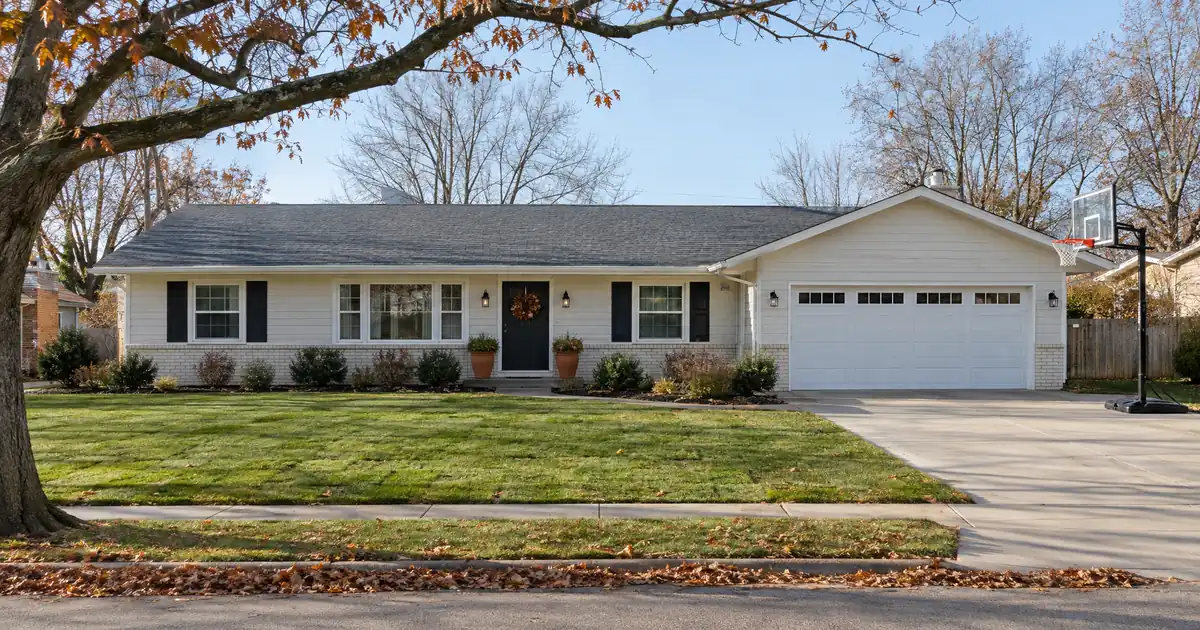
The Quick Read: A cash-out refinance is a loan you repay on a schedule. A shared equity contract hands a company a slice of your home’s future value in exchange for cash today. If you plan to stay, the loan is usually the more predictable fit, because the contract settles in one lump sum when you have no sale to fund it. Shared equity can still make sense when the monthly budget is the real constraint and a new mortgage doesn’t fit.
Key Takeaways
- A cash-out refinance replaces your current mortgage with a larger one. A shared equity contract leaves your mortgage alone and adds a separate claim on the home.
- The loan has a known repayment path. The contract’s cost depends on what the home is worth when it settles.
- If you stay, no sale funds the settlement. You pay from savings, a new loan, or you sell.
- Loans have published eligibility rules: seasoning, credit, ratios, and a leverage cap. Contracts are set company by company.
- Neither is cheap money. Each one costs you something, just in a different shape.
Who Each Option Is Really For
A cash-out refinance fits the homeowner with solid credit, steady income, and enough equity to stay under the leverage cap. You want a predictable path and don’t mind a larger loan. Lendmire’s cash-out refinance programs sit in that lane, and the mechanics are well documented.
Cash-out refinance estimate
The starting figures are an example value with a balance and a cash request in proportion. Replace them with yours.
Editable benchmark: 7.32% as of October 22, 2026 · Freddie Mac 30-year average via FRED®. A conventional market reference, not a cash-out refinance quote.
Illustrative starting assumptions: a $350,000 home value, a $193,000 current balance, the agency cap on a one-unit principal residence, a thirty-year term at the current Freddie Mac benchmark, and property taxes and insurance estimated at typical national rates. Every field is editable.
Illustrative estimate only — not a Loan Estimate, approval, quote, or commitment to lend. The rate field carries the weekly Freddie Mac thirty-year conventional benchmark, a market reference and not a cash-out refinance quote; a cash-out loan is priced by the lender at lock. The cash available is the loan the program cap allows less the balances paid off, before closing costs, which are not included. The HELOC line is the program’s combined loan-to-value ceiling applied to the same value and balance. Taxes and insurance are editable estimates. Licensed in sixteen states for consumer mortgages.
Shared equity fits a narrower person. You have equity, you want cash, and you can’t or won’t take on a bigger monthly obligation. Maybe the income file is thin. Maybe your current mortgage is one you want to keep untouched. You accept that the cost arrives later, and that it can be large.
Plans to stay change the math for both. A long hold gives interest time to accumulate on the loan. It gives the contract’s share of value time to grow. Neither side gets a free pass.
Side-by-Side
Here is how the two compare on the structural points a homeowner can actually verify. Loan figures reflect the wholesale conventional programs Lendmire arranges and are subject to lender guidelines and full file review.
| Factor | Cash-Out Refinance | Shared Equity Contract |
|---|---|---|
| What it is | New first mortgage | Contract for a share of future value |
| Your current mortgage | Paid off and replaced | Stays in place |
| Leverage | 80% LTV, one-unit primary home | Set by each company |
| Credit floor | 620 decision score on most programs | Set by each company |
| Mortgage insurance | Not at 80% LTV; see note below | Not applicable |
| Occupancy | Primary home fits by default | Company-specific |
| Documentation | Full: credit, income, ratios, appraisal | Varies; often lighter on income |
| How it’s repaid | Scheduled loan repayment | One lump sum at settlement |
| Waiting periods | 12 months on the loan being paid off | Company-specific |
Two notes on the table. First, the 80% cap is for a one-unit primary residence. Two- to four-unit homes, second homes, and investment property top out at 75%, but a homeowner who plans to stay is in the primary-residence lane.
Second, one wholesale lane reaches 89.99% LTV with no mortgage insurance. It requires a 680 score, a 50% ratio ceiling, a thirty-year fixed loan, a primary residence, and a conforming balance. It carries its own six months of seasoning. Seasoning is simply the waiting period before a lender lets you take cash out. Each figure is subject to lender guidelines and a complete review of property type, leverage, and credit.
What “Plans to Stay” Changes
The word “stay” is the whole story here. Most shared equity marketing assumes an exit: you sell, the company takes its share from the proceeds, and everyone moves on. A stayer has no exit event.
That leaves three ways to settle. You can pay from savings. You can refinance into a new loan large enough to pay the contract off. Or you can sell the home you planned to keep.
The CFPB’s issue spotlight on home equity contracts puts the risk plainly. These contracts can require a large single-payment repayment, sometimes in the hundreds of thousands of dollars. A homeowner who can’t pay may be forced to sell or face foreclosure. The same report says these products are often more expensive than traditional home-secured financing and that the lack of standard disclosures makes them hard to compare.
The loan carries a different kind of long-hold cost. A cash-out refinance can stretch out your payoff timeline, and the new, larger loan can raise the monthly payment, per the CFPB’s guide to using home equity. You feel it every month. You also know it up front, because the loan’s terms are written in the closing documents.
Think of it this way. The loan’s cost is a slow drip you can see. The contract’s cost is a bill you can’t fully see until it arrives. Neither is automatically better. Visibility matters most to people who plan to stay.
Three Home-Value Paths
Run the numbers on a homeowner who owes about half of the home’s value and wants cash worth roughly 20% of that value. All inputs here are modeled assumptions, not market data.
Path one: the home’s value stays flat. The loan route leaves you with a larger mortgage balance and a larger payment. The contract route leaves your mortgage alone. Because the home didn’t gain, the contract’s settlement is driven mostly by its terms rather than by appreciation. This is the scenario where the contract looks more affordable on paper.
Path two: the home gains strongly. The loan’s cost doesn’t change, because your balance isn’t tied to value. The contract’s settlement grows with the home. This is where long holds hurt: you pay a share of gains you never cashed in.
Path three: the home loses value. You still owe the loan in full. With the contract, you might expect to owe less. The CFPB’s advisory warns that homeowners will probably still owe more than they received even when the home loses value. Don’t count on the contract to absorb the drop.
Notice what stays constant across all three paths. The loan’s cost is knowable on day one. The contract’s cost depends on a future you can’t see. Someone planning a decade-long stay is making a bigger bet on the contract than the loan, whatever the upfront payment looks like.
When Shared Equity Is the Better Fit
Shared equity earns its place in a few specific situations.
The income file won’t support a new loan. A cash-out refinance requires full underwriting: credit, income, ratios, and an appraisal. On the programs Lendmire arranges, the automated finding governs most files, with a total ratio ceiling of 50%. If self-employment income is irregular or debt is heavy, a contract may be the only door open. Be honest with yourself about why the door is closed, though.
Your current mortgage is worth protecting. A cash-out refinance replaces your first mortgage. If that loan has terms you’d hate to lose, leaving it in place has real value. A contract does that. Just ask whoever holds the contract how it will interact with any future refinance, because the CFPB has flagged that a recorded contract can complicate refinancing the first mortgage.
You need breathing room now and expect a clean exit later. Say you plan to stay five more years, then downsize. A contract with a settlement tied to that sale might work. The risk is that “plans” change.
You can’t meet the waiting periods. Conventional cash-out requires the loan being paid off to be at least 12 months old, measured from note date to note date. A borrower also needs to have been on title for six months, with exceptions for delayed financing, inheritance, and legal awards. If you bought recently, a contract may be available sooner.
Even in these cases, the contract is the tool of last resort for a stayer. Treat it that way.
When a Cash-Out Refinance Is the Better Fit
For most homeowners who plan to stay, the loan is the sturdier choice. Here is why.
The rules are public and consistent. The Fannie Mae Selling Guide says equity can be taken out for any purpose. It allows you to finance closing costs into the new loan and to pay off the existing first mortgage and any subordinate liens. Fannie Mae introduced the 12-month note-date test for the loan being paid off in a Selling Guide announcement. That kind of written standard doesn’t exist for contracts.
You know when it ends. A loan amortizes. Each payment shrinks the balance. There’s no surprise lump sum waiting at the end, and no appraisal dispute over what you owe.
Mortgage insurance rarely enters the picture. On the standard programs, mortgage insurance applies above 80% LTV. You can request cancellation at 80% of the original value, and the servicer must end it automatically at 78%. A conventional cash-out at the 80% cap sits right at that line. The wholesale lane that reaches 89.99% LTV is built to avoid the premium, within the score and ratio limits noted above. Leverage, reserves, and pricing vary by lender and program; the final terms follow the full file review.
You have a clear use for the money. The CFPB found that paying off other debts was the top stated reason for cash-out refinancing, with more than half of respondents choosing it each year from 2014 to 2019, according to the CFPB report on cash-out borrowers. The same report warns that converting non-mortgage debt into mortgage debt can raise foreclosure risk. Fair warning. Putting credit card debt on your house turns an unsecured problem into a secured one.
You qualify cleanly. If your credit clears the 620 decision-score floor and your ratios fit, the loan route is usually the cheaper-feeling, clearer path. One caveat: your existing mortgage may have terms worth keeping, and a cash-out refinance gives those up. Weigh that before you sign.
The honest tradeoff is that a loan asks more of you at the start. Full documentation, an appraisal, closing costs, and a larger monthly obligation. A contract asks less now and more later.
A Third Option Worth a Look
Not every homeowner needs to pick between these two. A home equity loan or a line of credit leaves your original first mortgage in place, while a cash-out refinance replaces it, as the CFPB’s research blog explains. If you love your current mortgage and still want equity, that structure deserves a conversation. It’s a different product, and the right broker conversation should include it.
Key Terms Defined
Home equity contract: An agreement where a company pays you cash now in exchange for a share of your home’s future value. Also called a home equity investment or shared appreciation agreement.
Cash-out refinance: A new, larger first mortgage that pays off your old one and gives you the difference in cash.
LTV (loan-to-value): The loan balance as a percentage of the home’s value.
Seasoning: The waiting period a lender requires before you can take cash out.
Settlement: The moment a shared equity contract comes due and you owe the company its share.
Mortgage insurance: A premium that protects the lender when you borrow above 80% of the home’s value.
The Verdict
Here is the balanced read. For a homeowner who plans to stay, the cash-out refinance is usually the safer structure, because it has a known payoff path and no surprise settlement. It costs you more attention and paperwork now.
Shared equity is the better answer only in narrow cases. Your file can’t support a new loan, you must keep your current mortgage, or you need cash before waiting periods allow a refinance. Even then, you should know how you’ll settle before you sign.
Honestly, the stronger play for many stayers might be a smaller cash-out than the maximum, or a home equity loan if the first mortgage is worth keeping. Borrowers who want the contract’s no-monthly-payment feel could argue the other way. The right call depends on how long you stay and how steady your income is.
Frequently Asked Questions
Is a shared equity contract a loan?
Providers often say it isn’t, since there are no monthly payments or interest. The CFPB disagrees with the “not debt” label and notes that these contracts are often marketed as an alternative to a cash-out refinance, a HELOC, or a reverse mortgage. Ask for the settlement terms in writing and compare them with a loan’s closing documents.
Can I refinance my mortgage later if I take a shared equity contract?
It may be harder. The CFPB has flagged difficulty refinancing an existing loan without paying off the contract. Fannie Mae and Freddie Mac have no program built around these contracts, so ask any lender how it would treat yours before you sign.
How long must I own my home before a cash-out refinance?
On conventional programs, the mortgage being paid off must be at least 12 months old, measured note date to note date. A borrower must also have been on title for six months. Exceptions exist for delayed financing, inheritance, and legal awards, and lenders may apply their own overlays.
What if my home loses value?
With a loan, you still owe the full balance. With a contract, the CFPB advisory says you will probably still owe more than you received, even in a decline. Neither product shields you from a falling market.
Does a cash-out refinance require mortgage insurance?
Mortgage insurance applies above 80% LTV on standard programs. Conventional cash-out on a one-unit primary home caps at 80%. A wholesale lane reaches 89.99% with no mortgage insurance at a 680 score and 50% ratio, on a thirty-year fixed primary residence with a conforming balance. All of it is subject to lender guidelines.
Comparing Your Options
If you are weighing a cash-out refinance against keeping the loan you have, Lendmire can help you compare the programs and the equity each one reaches. As a mortgage broker, it arranges loans through wholesale lenders. Nothing here is a commitment to lend, and every program is subject to lender guidelines and full file review.
For your own numbers, request a scenario review with Lendmire.
For current guidelines and terms, see Lendmire’s refinance programs page.
About Lendmire
Lendmire, NMLS# 2371349, is a mortgage brokerage with consumer lending licenses in 16 states. FHA, VA, conventional and jumbo purchase and refinance loans are arranged through wholesale lending partners, and each application is reviewed individually by the lender. Scotsman Guide named Lendmire a Top Mortgage Workplace in both 2025 and 2026.
Get Started
Ready to find the right loan for you?
In about two minutes you can review financing options available for your home or investment property. No commitment required.
Informational only. Not a Loan Estimate, approval, or commitment to lend. Program availability and eligibility are subject to lender guidelines, credit approval, property review, and underwriting.
References
1. CFPB Issue Spotlight: Home Equity Contracts Market Overview
2. CFPB Guide to Using Home Equity
3. Fannie Mae Selling Guide B2-1.3-03: Cash-Out Refinance Transactions
5. CFPB: CFPB Report Finds Cash Out Mortgage Refinance Borrowers Improve Credit Scores
6. CFPB Office of Research Blog on Cash-Out Refinance Mortgages
This article is part of Lendmire’s cash-out refinance program — full qualification details, guidelines, and scenarios live on the program page.
Related reading: Is a Cash in Refinance Better Than a Cash Out Refinance? · 15-Year vs. 30-Year Refinance for a Homeowner Who Can Afford Either · Mortgage Recast vs Refinance for a Homeowner With a High Payment
Brandon Miller
Founder & CEO, Mortgage Loan Originator, Lendmire LLC
- Mortgage Loan Originator · NMLS# 1129696 · Verify on NMLS Consumer Access
- North Carolina Real Estate Broker · License# 343312 · Verify on NCREC
- North Carolina Insurance Producer · License# 19053198 · Property, Casualty, Life, Health · Verify on NAIC SBS
- Lendmire LLC · Firm NMLS# 2371349 · Verify firm licensure
Important disclosures. Lendmire (NMLS# 2371349) is a licensed mortgage brokerage. Lendmire is not a direct lender, depository institution, or financial advisor. All loan inquiries are subject to lender underwriting; this article does not constitute a commitment to lend. Rates, terms, and program guidelines are subject to change without notice and vary by borrower profile, property type, and state. Information in this article is general in nature and is not financial, legal, or tax advice. Equal Housing Opportunity. NMLS Consumer Access: nmlsconsumeraccess.org.