
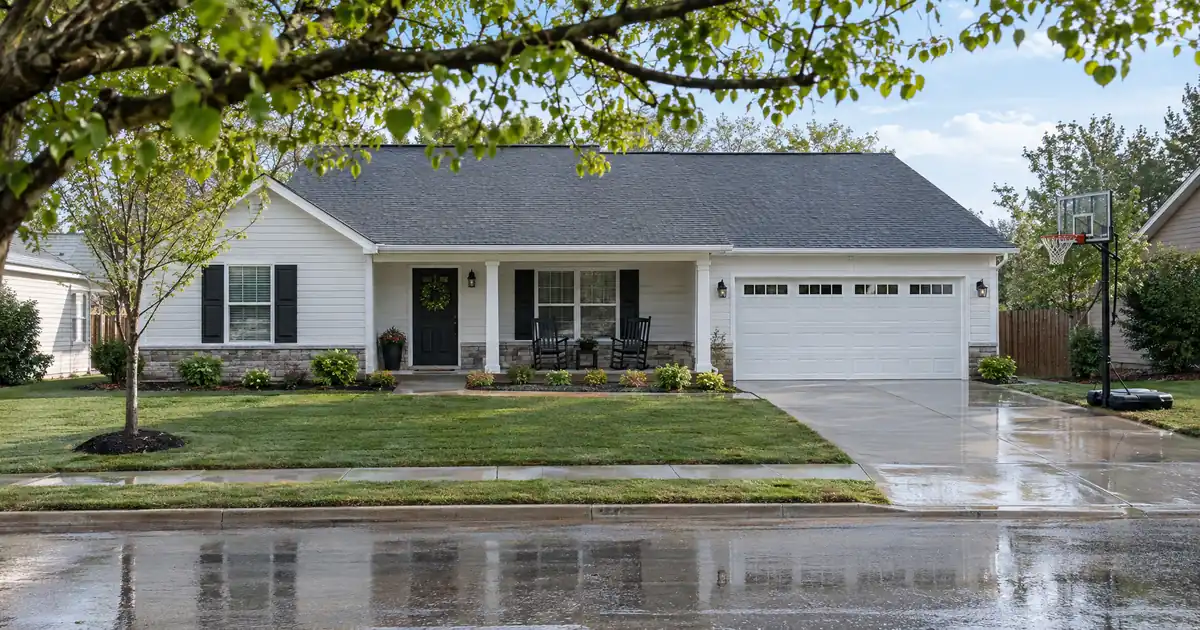
The Quick Read: Yes, with conditions. A primary residence is the most permissive occupancy for cash-out, but the new loan is capped at 80% of the home’s value on a one-unit property. The loan you are paying off must be at least 12 months old, and you generally must have been on title for six months. Those clocks are the part most homeowners miss.
What Does Fannie Mae Actually Do Here?
Fannie Mae writes the rules. It does not hand you the money. A lender originates your loan, and a mortgage broker like Lendmire arranges it through wholesale lenders in the 16 states where Lendmire is licensed for consumer lending. Lendmire brokers the loan and never lends it.
Cash-out refinance estimate
The starting figures are an example value with a balance and a cash request in proportion. Replace them with yours.
Editable benchmark: 7.32% as of October 22, 2026 · Freddie Mac 30-year average via FRED®. A conventional market reference, not a cash-out refinance quote.
Illustrative starting assumptions: a $350,000 home value, a $193,000 current balance, the agency cap on a one-unit principal residence, a thirty-year term at the current Freddie Mac benchmark, and property taxes and insurance estimated at typical national rates. Every field is editable.
Illustrative estimate only — not a Loan Estimate, approval, quote, or commitment to lend. The rate field carries the weekly Freddie Mac thirty-year conventional benchmark, a market reference and not a cash-out refinance quote; a cash-out loan is priced by the lender at lock. The cash available is the loan the program cap allows less the balances paid off, before closing costs, which are not included. The HELOC line is the program’s combined loan-to-value ceiling applied to the same value and balance. Taxes and insurance are editable estimates. Licensed in sixteen states for consumer mortgages.
A lender can also layer on stricter requirements of its own. That is why two lenders can give you different answers on the same file. Every program figure below is subject to lender guidelines and full file review, and none of it is a commitment to lend.
What Counts as a Cash-Out Refinance?
A cash-out refinance replaces your existing first mortgage with a new, larger one on the same home. Under the Fannie Mae Selling Guide, the new loan can pay off the first mortgage, pay off other liens, finance closing costs and prepaid items, and put equity in your hands “for any purpose.”
Two situations surprise people:
- A new mortgage on a home with no lien at all is treated as cash-out.
- Paying off a second lien, such as a home equity line, can be part of the deal. You do not have to walk away with a check.
The loan can also finance delinquent property taxes that are more than 60 days past due. Cash-out is the broad category. Limited cash-out, also called rate-and-term, is the narrow one. It pays off the existing first mortgage, closing costs, and a purchase-money second lien, with only incidental cash back. That route gets more generous leverage (95% on a one-unit principal residence), so it is worth asking whether you need cash at all.
How Much Can You Borrow on a Primary Home?
You can borrow up to eighty percent of the home’s appraised value on a one-unit primary residence. On a two- to four-unit principal residence, the cap drops to 75%. Those limits come from the Fannie Mae Eligibility Matrix.
The cap applies to the whole new loan, not just the equity. Here is how the cash is figured, in words:
1. Take the appraised value and multiply by the cap. That is the maximum new loan.
2. Subtract the balance of the loan you are paying off.
3. Subtract any second liens, financed closing costs, and past-due taxes being cleared.
4. What remains is your cash.
A lower appraisal shrinks every step. A home that appraises 5% below your estimate does not cost you 5% of your cash. It costs you more, because the payoff stays fixed while the cap moves with value. That is why equity on paper and cash in hand rarely match.
Wholesale lenders also have a conventional lane that reaches 89.99% LTV with no mortgage insurance. It requires a 680 score, a 50% ratio, a thirty-year fixed rate, a primary residence, a conforming balance, and its own six months of seasoning. Texas homestead cash-outs are capped by the state constitution at the agency figure, so that lane is not written there. Every figure here varies by lender and program — guidelines, property type, leverage, and credit profile all apply.
Many borrowers confuse “cash-out” with “leaving 20% equity.” On a one-unit home, the 80% cap does exactly that. The 75% cap on two- to four-unit homes also applies to second homes and investment property, but occupancy decides leverage. A one-unit primary home gets the best treatment. If you own a vacation property, Lendmire’s article comparing a vacation home cash-out with a primary home walks through the difference.
The Two Clocks: Why Timing Blocks So Many Files
Two separate waiting rules apply, and they measure different things. Per Fannie Mae’s Announcement SEL-2023-01:
| Clock | What it measures | Requirement |
|---|---|---|
| Loan age | Old note date to new note date | At least 12 months |
| Time on title | A borrower owning the home | At least 6 months |
Both must be met unless an exception applies. The loan-age rule applies only when you are paying off a first mortgage. The title rule asks that at least one borrower be on title for six months before the loan funds.
These are agency rules, not federal law. No federal waiting period exists for cash-out refinances.
The common exceptions:
- Delayed financing. If you bought with cash, you can refinance inside the six-month window if the purchase was documented and arm’s-length. The eligible original owners include individuals, certain trusts, and certain entities that individuals own outright. The conditions are specific, so confirm them against the current Selling Guide.
- Inheritance. An inherited home generally does not face the six-month title wait.
- Legal award. Property awarded in a divorce or legal settlement can qualify for an ownership exception.
A homeowner who closed on a purchase eight months ago, with a mortgage taken out at the same time, is stuck on the 12-month loan-age clock. The title clock is already satisfied, which is exactly the trap.
What Else Does the Lender Check?
Beyond the clocks and the cap, six factors decide the file:
- Occupancy. On a primary residence, at least one borrower must live in the home. A co-borrower who does not occupy it can change the answer.
- Credit score. Across the wholesale programs we place files with, conventional loans start at a 620 decision score. The automated finding governs most files, and scores affect both approval and pricing.
- Debt-to-income ratio. The automated ceiling is 50% on total ratio. Manually underwritten loans run tighter, at 36% or 45%, with reserve and score factors from the Eligibility Matrix.
- Reserves. Cash-out loans run through automated underwriting carry reserve requirements when the debt-to-income ratio is above 45%. The exact number of months depends on the file.
- Property type. Manufactured homes carry a lower cap, 65% on a one-unit primary residence.
- Appraisal. Value sets the cap, so a fresh appraisal drives everything.
Pricing also adjusts for cash-out. Cash-out loans carry price adjustments that limited cash-out loans do not, and the Selling Guide lists them as part of the topic. This article does not quote them.
Some transactions are ineligible. According to an archived version of the guide, those include loans with a temporary rate buydown and payoff of an installment land contract. Programs like HomeReady allow only limited cash-out refinances, so they are no help if you want cash.
Is It a Good Idea? The Borrower’s Decision
Eligible does not mean wise. A cash-out refinance replaces your entire first mortgage. The new balance, rate, and term apply to all of it, so you are resetting the whole loan, not just borrowing against equity.
The Consumer Financial Protection Bureau warns that turning credit card or other debt into mortgage debt secured by your home can put the house at risk if you fall behind. It also notes that cash-out draws down wealth you might need later. Paying off a card with a cash-out can carry real risk, because the debt may come with a bigger consequence if you fall behind.
The same agency found that paying off other debts was a common reason borrowers took cash out, with home repairs second. Its research also showed credit scores often improved sharply after a cash-out, then drifted downward over time, though they generally stayed above pre-refinance levels.
Here is a fair way to weigh it:
- Strong reasons: funding a renovation that adds value, clearing a high-cost second lien, or paying off eligible student loans (Fannie Mae waives the cash-out price adjustment for that use).
- Weak reasons: funding spending you cannot sustain, or refinancing a loan you just took out when a smaller limited cash-out would do.
Mortgage insurance matters too. Above 80% LTV, mortgage insurance is required, and the borrower may request cancellation at 80% of the original value. The servicer must end it at 78%. A cash-out at 80% sits right at that line. Final terms depend on lender guidelines, property type, leverage, and the borrower’s complete credit picture.
Key Terms Defined
Cash-out refinance: A new first mortgage, larger than your old one, that pays off the old loan and gives you the difference as cash or uses it to clear other debts.
Limited cash-out refinance: A refinance that pays off your existing first mortgage and costs with only incidental cash back. Also called rate-and-term.
LTV (loan-to-value): The loan balance divided by the home’s appraised value, shown as a percentage.
Seasoning: The waiting period a lender requires, here measured by loan age and by time on title.
Note date: The date you signed the mortgage note. The 12-month clock runs from one note date to the next.
Delayed financing: An exception that lets a cash buyer refinance and recover the purchase money inside the six-month window.
Common Mistakes
- Assuming the six-month and 12-month rules are the same test.
- Counting from the closing date instead of the note date.
- Ignoring that a lower appraisal cuts your cash faster than it cuts your value.
- Taking cash out when a limited cash-out would meet the need at higher leverage.
- Forgetting that an occupying co-borrower is required on a primary home.
What Should You Do Next?
Pull your current note date and your title date first. Those two dates answer most eligibility questions. Then decide how much cash you actually need, because the cap gives you a ceiling, not a target. Check your credit and total monthly debts, since the 50% automated ratio ceiling can bind before leverage does.
If you are weighing a cash-out refinance against keeping the loan you have, Lendmire can help you compare the programs and the equity each one reaches. You can review Lendmire’s cash-out refinance programs to see how the options line up.
Frequently Asked Questions
Can I take cash out of my primary home more than once?
Yes, but the clocks reset. Each cash-out replaces your first mortgage with a new loan, so the 12-month loan-age test starts over from the new note date. Leverage caps and reserve checks apply again each time. Subject to lender guidelines and full file review.
What if my home was inherited?
Inherited property generally does not face the six-month title wait. The loan still has to meet the leverage cap, credit, and ratio tests.
Does Fannie Mae allow cash-out on a two- to four-unit primary home?
Yes, at a lower cap: 75% LTV instead of 80%. At least one borrower must still occupy the property as a primary residence. Lenders may add their own conditions. These specifics are subject to lender guidelines and a full review of property, leverage, and credit.
How is cash-out different from limited cash-out?
Limited cash-out pays off your first mortgage, closing costs, and a purchase-money second, with only incidental cash back. It allows higher leverage, up to 95% on a one-unit primary home. Cash-out lets you take equity for any purpose but is capped at 80% on a one-unit home.
Guidelines can differ between loan programs and lenders, so a lender will confirm which program’s rules apply to your loan.
For your own numbers, request a scenario review with Lendmire.
About Lendmire
As a mortgage broker (NMLS# 2371349), Lendmire helps homeowners and home buyers in 16 states with FHA, VA, conventional and jumbo purchase and refinance loans arranged through wholesale lenders. Lendmire is never the lender; program terms are set by the lender and the agency guidelines. Scotsman Guide named Lendmire a Top Mortgage Workplace in both 2025 and 2026.
For the program’s current guidelines, see conventional loan programs.
Get Started
Ready to find the right loan for you?
In about two minutes you can review financing options available for your home or investment property. No commitment required.
Informational only. Not a Loan Estimate, approval, or commitment to lend. Program availability and eligibility are subject to lender guidelines, credit approval, property review, and underwriting.
References
1. Fannie Mae Selling Guide B2-1.3-03, Cash-Out Refinance Transactions
2. Fannie Mae Eligibility Matrix
3. Fannie Mae Announcement SEL-2023-01
4. CFPB, Cash-Out Refinances and Paydown Behavior of Non-Mortgage Debt Balances
This article is part of Lendmire’s cash-out refinance program — full qualification details, guidelines, and scenarios live on the program page.
Related reading: How to Refinance a 2-4 Unit Primary Home to Drop PMI · How to Refinance Out of PMI After Buying at the Wrong Time · Does a Fannie Mae No Cash Out Refinance Allow Any Cash Back?
Brandon Miller
Founder & CEO, Mortgage Loan Originator, Lendmire LLC
- Mortgage Loan Originator · NMLS# 1129696 · Verify on NMLS Consumer Access
- North Carolina Real Estate Broker · License# 343312 · Verify on NCREC
- North Carolina Insurance Producer · License# 19053198 · Property, Casualty, Life, Health · Verify on NAIC SBS
- Lendmire LLC · Firm NMLS# 2371349 · Verify firm licensure
Compliance and disclosures. Lendmire (NMLS# 2371349) is a licensed mortgage broker and is not a direct lender, depository institution, financial advisor, or tax professional. Content in this article is general market analysis and educational information — not financial, legal, or tax advice for any specific situation. Lendmire does not guarantee loan approval; every transaction is subject to underwriting by the funding lender. Mortgage pricing and loan program guidelines are subject to change at any time without notice and vary by borrower characteristics, property type, and state regulations. Lendmire complies with Equal Housing Opportunity. Licensure verification: NMLS Consumer Access.