
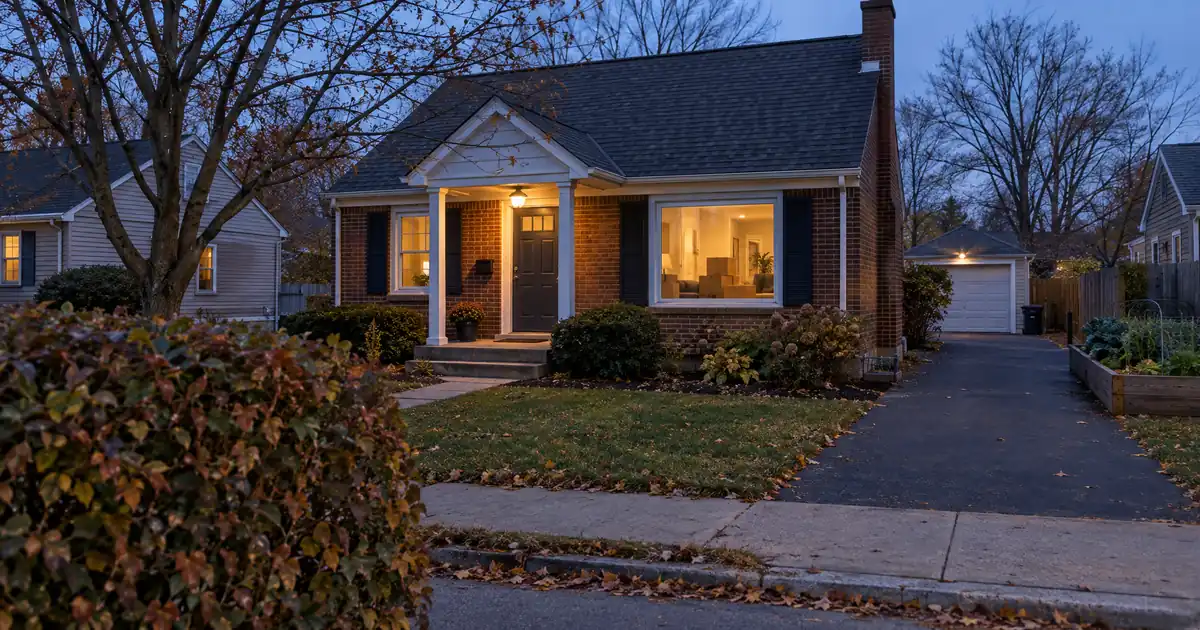
The Quick Read: Yes. The most you can borrow against your home’s value depends on how many units the property has and how you use it. A one-unit home you live in gets the highest cap, 80% loan-to-value. A two- to four-unit home you live in, or a second home, drops to 75%. Manufactured homes and condo or co-op units add their own limits.
Key Terms Defined
Cash-out refinance is a new mortgage that pays off your old one and hands you the extra equity as cash.
LTV (loan-to-value) is your loan balance divided by the home’s appraised value. An 80% LTV means the new loan equals 80% of the value. Terms vary by lender guidelines, property type, leverage, credit profile, and full file review.
CLTV is combined loan-to-value. It adds any second loan that stays on the property to the first loan before dividing by value.
Occupancy is how you use the home: your principal residence, a second home, or an investment property.
Limited cash-out refinance (also called rate-and-term) pays off the existing loan and costs, with only small incidental cash back. It carries higher leverage caps than a true cash-out.
Seasoning is the waiting period a lender wants before you can cash out, measured by how long you have owned the home and how old your current mortgage is.
Cash-out refinance estimate
The starting figures are an example value with a balance and a cash request in proportion. Replace them with yours.
Editable benchmark: 7.32% as of October 22, 2026 · Freddie Mac 30-year average via FRED®. A conventional market reference, not a cash-out refinance quote.
Illustrative starting assumptions: a $350,000 home value, a $193,000 current balance, the agency cap on a one-unit principal residence, a thirty-year term at the current Freddie Mac benchmark, and property taxes and insurance estimated at typical national rates. Every field is editable.
Illustrative estimate only — not a Loan Estimate, approval, quote, or commitment to lend. The rate field carries the weekly Freddie Mac thirty-year conventional benchmark, a market reference and not a cash-out refinance quote; a cash-out loan is priced by the lender at lock. The cash available is the loan the program cap allows less the balances paid off, before closing costs, which are not included. The HELOC line is the program’s combined loan-to-value ceiling applied to the same value and balance. Taxes and insurance are editable estimates. Licensed in sixteen states for consumer mortgages.
The Caps by Property Type
Fannie Mae publishes its caps in the Fannie Mae Eligibility Matrix. The matrix is incorporated by reference into the Selling Guide, so it is part of the rulebook, not a side document. It is updated periodically, so your loan officer confirms the current edition before you plan around a number.
| Property and occupancy | Max cash-out LTV |
|---|---|
| One-unit principal residence | 80% |
| Two- to four-unit principal residence | 75% |
| Second home (one unit) | 75% |
| Investment property | Lower tier; confirm by unit count |
That last row gets one sentence here because it is not the focus of this page. Occupancy decides the leverage, and a home you do not live in sits at the bottom of the ladder.
These numbers are ceilings. Across the wholesale programs Lendmire places files with, the lender’s own rules, your credit score, your reserves and your debt ratios can all pull the usable number below the cap. Treat 80% as the best case, not the promise.
Why Does the Cap Step Down?
Risk drives it. Lenders and the agencies behind them assume a cash-out loan is riskier than a purchase, because you are pulling equity out and leaving less cushion. They then rank property types by how likely a borrower is to keep paying if money gets tight.
A one-unit home you live in ranks safest. People protect the roof over their heads. A duplex or fourplex has more moving parts, including tenants in the other units and more to go wrong. A second home is a want, not a need, so it ranks lower again.
Equity cushion is the point of the lower caps. At 75% LTV, the value can fall further before the loan is underwater than at 80%. The step-down is a bigger safety margin for the property types that carry more risk. Exact terms depend on the lender’s guidelines, property type, leverage, and a full review of the borrower’s file.
Does Owner-Occupied Change Anything for a Duplex?
It does, but not as much as most people hope. Living in one unit of a two- to four-unit building earns you the principal-residence treatment on credit and pricing. It does not earn you the one-unit leverage cap. The cap for a cash-out refinance on a two- to four-unit principal residence is 75%.
This trips people up because of purchases. On a purchase, the program figures for two- to four-unit principal residences reach 95%. That is a different loan purpose with a different risk profile. The same building is capped at 75% once you take cash out.
Cash-Out vs. Limited Cash-Out: Don’t Mix the Numbers
Many pages online blur these two, so the numbers contradict each other. Here is the split.
| Loan purpose | One-unit principal residence |
|---|---|
| Cash-out refinance | 80% |
| Limited cash-out (rate-and-term) | 95% (97% in some agency-owned cases) |
Limited cash-out means the new loan pays off your existing first mortgage, closing costs and any purchase-money second lien. You get only incidental cash back. Because you are not pulling equity out, the agencies allow far higher leverage. If you see 95% or 97% quoted for a “refinance,” check which kind. Those figures belong to the limited version.
The Fannie Mae matrix lists both purposes side by side. If a number on a lender’s site does not match the cash-out row for your property type, it is probably describing the other loan.
Special Property Types
Condos and Co-ops
Condos follow the same occupancy ladder, but a second-home cash-out has a catch. Per the matrix, cash-out on a second home that is a co-op unit or an attached condo unit is not eligible. Co-op share loans also cannot be cash-out refinances on second homes, according to the matrix’s co-op notes. On a principal residence, project approval and the lender’s condo review matter as much as the headline cap.
Manufactured Homes
Manufactured housing has its own rulebook. Fannie Mae’s Manufactured Housing Product Matrix says a single-width manufactured home is not eligible for cash-out on a principal residence. If your home is manufactured, expect less cash than a site-built neighbor with the same equity, and ask early whether your home qualifies at all.
Renovation and Low-Down-Payment Programs
HomeReady and HomeStyle Renovation have their own matrices. They cover purchase and limited cash-out, not standard cash-out. Do not assume you can take cash out under either. Community Seconds, a form of down-payment assistance, cannot be used with cash-out refinances.
High-Balance Loans
Loans above the standard conforming limit can follow different caps in places. Your loan officer checks the high-balance rules for your county. They are not a simple copy of the standard table.
How the Math Actually Works
Cash out is roughly the cap times the appraised value, minus your payoff and your closing costs. That is the whole formula. Three things move it.
The appraisal. The appraised value is the denominator. If the appraisal comes in 5% lower than you expected, your maximum loan drops with it. Freddie Mac’s cash-out refinance page says it requires a new appraisal and inspection report. Plan for the value to be tested, not assumed.
Your second lien. The caps are written as LTV, CLTV and HCLTV, so a second mortgage or HELOC you keep counts toward the combined ratio. A homeowner with a large HELOC balance has less room under the cap than the first-mortgage balance alone suggests.
Closing costs. Costs, the appraisal and escrow set-up come out of your proceeds. The number on your Loan Estimate tells you the real net.
Picture a homeowner with a one-unit principal residence and a duplex owner with the same percentage of equity. The first can borrow up to 80% of value. The second is stopped at 75%. Five points of value separate them, and that gap comes straight out of the cash each can take.
Which Number Applies to You?
The matrix is not the final word. Four things decide your real number.
1. The matrix. This is the agency ceiling for your property type and occupancy.
2. The lender’s own rules. A wholesale lender can set a lower limit than the agency.
3. The automated underwriting finding. The system’s decision can add reserve requirements or lower the usable leverage.
4. The appraisal. It sets the value that every percentage is applied to. Every figure here varies by lender and program — guidelines, property type, leverage, and credit profile all apply.
The lowest of those four wins. That is why two borrowers with the same property type can get different answers from different lenders. Most wholesale conventional programs start at a 620 decision score, with a 50% total ratio ceiling on automated findings. Those are floors for getting in the door, not guarantees of the top cap. Every program figure is subject to lender guidelines and full file review.
Fannie Mae and Freddie Mac also run separate rulebooks. They match on many cash-out caps, but they differ in details such as manufactured housing, condos and co-ops. Freddie Mac says its LTV rules sit in Guide Chapter 4203, with super conforming loans covered in Chapter 4603. A property type that is awkward under one rulebook is sometimes easier under the other, and a broker working with multiple wholesale lenders can check both.
Other Rules That Hit the Same Borrowers
Leverage is only one gate. The same file also has to clear seasoning, credit and ratios.
- Seasoning. On the conventional cash-out programs Lendmire places, the first mortgage you are paying off must be at least 12 months old, measured note date to note date. A borrower must have been on title for 6 months. Exceptions exist for delayed financing, inheritance and legal awards. Delayed financing is the main route for someone who bought with cash and wants to pull money out soon after.
- Reserves. The matrix adds minimum reserve requirements on certain automated findings with higher debt ratios. The exact combinations are detailed, so your loan officer runs them for your file.
- Pricing. Fannie Mae’s loan-level price adjustment matrix varies with LTV, property type and occupancy, with a separate line for two- to four-unit properties. A lower-tier property type tends to cost more to finance, and the cost shows up on your Loan Estimate. Pricing is the lender’s call, so this page does not quote it.
- Credit events. Agency waiting periods apply after a bankruptcy, foreclosure or short sale. Those are four years from a chapter 7 discharge, seven from a foreclosure, and four from a short sale or deed-in-lieu, shorter with documented extenuating circumstances. Final terms depend on lender guidelines, property type, leverage, and the borrower’s complete credit picture.
What If the Cap Is Too Tight?
You have options, and the right one depends on what you need the money for.
If you have a one-unit principal residence with a 680 score and a 50% ratio, a wholesale lane reaches 89.99% LTV with no mortgage insurance. It requires a thirty-year fixed rate, a conforming balance and its own six months of seasoning. In Texas, a cash-out on the homestead is capped by the state constitution at the agency figure, so that lane is not written there. These specifics are subject to lender guidelines and a full review of property, leverage, and credit.
If you only need to lower your payment or change your term and do not need cash, a limited cash-out refinance allows much higher leverage. A HELOC or second mortgage can also pull equity without replacing a first mortgage you like. The tradeoff is a separate payment and, on a second mortgage, a combined ratio that still counts against the cap.
Lendmire’s cash-out refinance programs page lays out the conventional options. Lendmire is a mortgage broker licensed for consumer lending in 16 states. It arranges loans through wholesale lenders rather than lending directly.
Common Misconceptions
“It’s 80% for everyone.” That figure is the one-unit principal-residence cap only. Every other row in the table is lower.
“The 95% and 97% numbers apply to cash-out.” They belong to purchases and limited cash-out refinances.
“My owner-occupied duplex gets the 80% cap.” It gets 75%.
“The matrix is the final word.” The lender’s rules, the automated finding and the appraisal also set the outcome.
“A government agency sets these limits.” These are Fannie Mae and Freddie Mac policies. The caps live in their guides and matrices.
Frequently Asked Questions
Is the cash-out cap really lower for a duplex I live in?
Yes. A one-unit principal residence caps at 80%, and a two- to four-unit principal residence caps at 75%. Living in the building improves your credit and pricing treatment, but it does not lift the cash-out cap. The 95% figure you may have seen for two- to four-unit homes applies to purchases.
Can I take cash out of a second home?
Yes, on a one-unit second home, at a 75% cap. A co-op unit or an attached condo unit is not eligible for second-home cash-out under the matrix. Expect stricter treatment than a primary residence.
Does a HELOC count toward the limit?
Yes. The caps are stated as combined ratios, so a second lien you keep counts toward the total. If you are paying off the HELOC with the new loan, it drops out of the math. If it stays, the new first mortgage has less room.
How long must I own the home before a cash-out refinance?
On the conventional programs Lendmire places, a borrower must be on title for 6 months, and the first mortgage being paid off must be at least 12 months old. Delayed financing, inheritance and legal-award exceptions exist. Freddie Mac’s cash-out page states the six-months-on-title rule for its own loans.
How do I confirm the current number?
Ask your loan officer to check the live matrix against the lender’s own rules. The matrix is updated periodically, and a page that quotes a number without a source is a reason to double-check it. Program figures are subject to lender guidelines and full file review, and nothing here is a commitment to lend.
Next Step
If you are weighing a cash-out refinance against keeping the loan you have, Lendmire can help you compare the programs and the equity each one reaches. Bring your property type, your occupancy and your current loan terms, and the comparison starts from your actual cap.
For your own numbers, request a scenario review with Lendmire.
About Lendmire
Lendmire (NMLS# 2371349) is a mortgage brokerage serving homeowners and home buyers in 16 states. FHA, VA, conventional and jumbo purchase and refinance loans are arranged through wholesale lending channels; Lendmire brokers the financing and the lender underwrites each application. Scotsman Guide named Lendmire a Top Mortgage Workplace in both 2025 and 2026.
For the program’s current guidelines, see conventional loan programs.
Get Started
Ready to find the right loan for you?
In about two minutes you can review financing options available for your home or investment property. No commitment required.
Informational only. Not a Loan Estimate, approval, or commitment to lend. Program availability and eligibility are subject to lender guidelines, credit approval, property review, and underwriting.
References
1. Fannie Mae Eligibility Matrix
2. Fannie Mae Eligibility Matrix (media/20786)
3. Fannie Mae Manufactured Housing Product Matrix
4. Freddie Mac Cash-Out Refinance
5. Fannie Mae Loan-Level Price Adjustment Matrix
This article is part of Lendmire’s cash-out refinance program — full qualification details, guidelines, and scenarios live on the program page.
Related reading: How to Lower a High Payment With a Conventional Refinance · How to Refinance a Conventional Loan on Thin Equity in Year One · Does Fannie Mae Seasoning Apply to a Conventional Cash-Out Refinance?
Brandon Miller
Founder & CEO, Mortgage Loan Originator, Lendmire LLC
- Mortgage Loan Originator · NMLS# 1129696 · Verify on NMLS Consumer Access
- North Carolina Real Estate Broker · License# 343312 · Verify on NCREC
- North Carolina Insurance Producer · License# 19053198 · Property, Casualty, Life, Health · Verify on NAIC SBS
- Lendmire LLC · Firm NMLS# 2371349 · Verify firm licensure
Legal disclosures. Lendmire (NMLS# 2371349) is a state-licensed mortgage brokerage that arranges financing through wholesale lender relationships. Lendmire is not a direct lender, depository institution, or registered financial advisor. The discussion above is general informational content about real estate financing — it is not financial, legal, or tax advice, and readers should consult licensed professionals for guidance on their individual circumstances. Loan inquiries are subject to lender underwriting; this article does not represent a commitment to lend. Loan terms, rates, and qualification standards vary by borrower, property, and state, and are subject to change at any time. Equal Housing Opportunity. NMLS Consumer Access: nmlsconsumeraccess.org.