
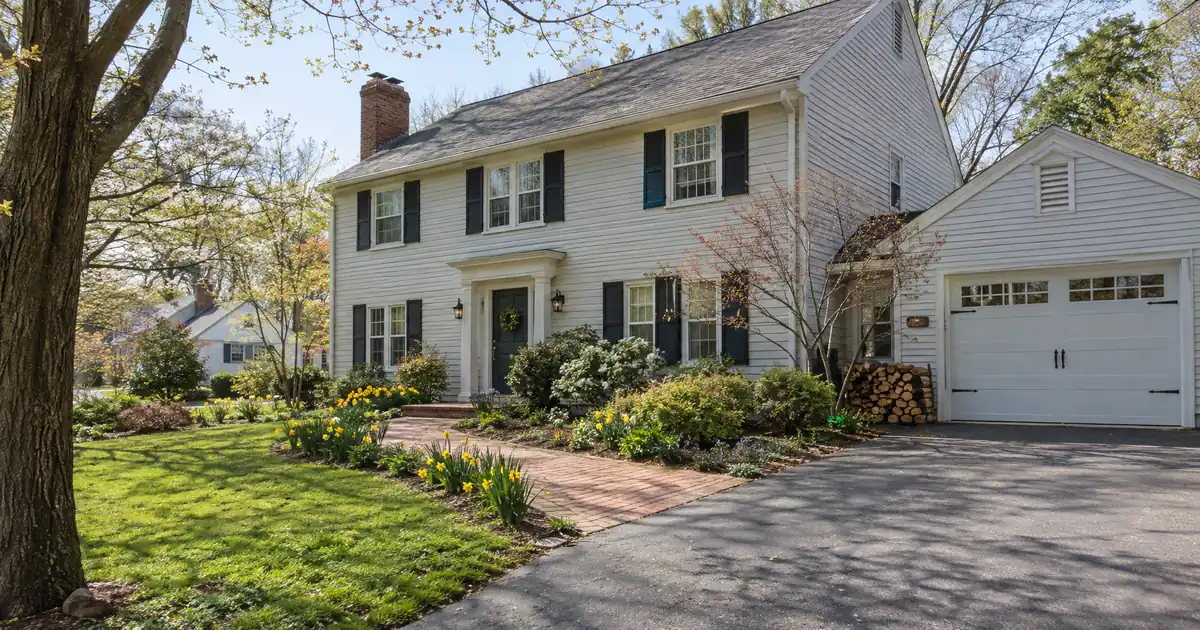
The Quick Read: The cap depends on what the home is, not just how much equity you have. A one-unit primary residence tops out at 80% loan-to-value (LTV), the new loan as a share of the appraised value. Two- to four-unit primary homes and second homes top out at 75%. Fannie Mae’s headline numbers match for owner-occupied homes.
Key Takeaways
- The cap steps down as unit count rises and as occupancy moves away from “I live here.”
- The ratio counts every lien that stays on the home, not only the new loan.
- The 80% figure is a ceiling on the total loan. It is not 80% of your equity.
- Time on title, the age of your current loan, credit, and debt-to-income ratio all sit alongside the cap.
What Is the Cap for Each Property Type?
The agency cash-out LTV limit is 80% for a one-unit primary residence and 75% for a two- to four-unit primary residence or a second home. Freddie Mac publishes these in its Seller/Servicer Guide, section 4203.1. They are agency program ceilings, not the top of what every lending lane allows, and they remain subject to lender guidelines and full file review.
Cash-out refinance estimate
The starting figures are an example value with a balance and a cash request in proportion. Replace them with yours.
Editable benchmark: 7.32% as of October 22, 2026 · Freddie Mac 30-year average via FRED®. A conventional market reference, not a cash-out refinance quote.
Illustrative starting assumptions: a $350,000 home value, a $193,000 current balance, the agency cap on a one-unit principal residence, a thirty-year term at the current Freddie Mac benchmark, and property taxes and insurance estimated at typical national rates. Every field is editable.
Illustrative estimate only — not a Loan Estimate, approval, quote, or commitment to lend. The rate field carries the weekly Freddie Mac thirty-year conventional benchmark, a market reference and not a cash-out refinance quote; a cash-out loan is priced by the lender at lock. The cash available is the loan the program cap allows less the balances paid off, before closing costs, which are not included. The HELOC line is the program’s combined loan-to-value ceiling applied to the same value and balance. Taxes and insurance are editable estimates. Licensed in sixteen states for consumer mortgages.
| Property type | Cash-out max LTV | What drives it |
|---|---|---|
| One-unit primary residence | 80% | You live there |
| Two- to four-unit primary residence | 75% | More units, more risk |
| Second home | 75% | You do not live there full time |
| Manufactured home (primary) | Lower than 80% | Confirm with the lender |
A rental follows the same logic in one sentence: occupancy decides leverage, and in these programs investment property also sits at 75% for cash-out.
Fannie Mae’s Eligibility Matrix lists the same 80% and 75% steps for owner-occupied homes and second homes. It shows a lower cash-out cap for manufactured housing. Lenders can also set limits tighter than the agency ceiling. Treat 80% as the most a program allows, not something you are owed.
Why Does the Same House Get a Different Cap?
The cap tracks risk. A home you live in tends to get paid first when money is tight. A second home gets paid after that. A building with several units adds complexity if a unit sits empty.
Say you own a duplex and live in one half. The agencies treat it as a two- to four-unit primary residence, so the ceiling is 75%, not 80%. Nothing is wrong with the duplex. The unit count alone moves the number.
Occupancy matters just as much. If you tell a lender you will live in the home and you will not, you have misrepresented the file. That is a serious problem, not a pricing tweak.
Freddie Mac’s page on mortgages for 2- to 4-unit properties says rental income from the other units can count toward your total income. It also confirms that maximum LTV for these homes follows Guide Chapter 4203. Condos and planned unit developments fall under the same chapter.
How Is the Cash-Out LTV Underwritten, Step by Step?
The lender runs the file in a set order. Knowing the order tells you where your number can shrink.
Step 1: A new appraisal sets the value. Freddie Mac’s cash-out refinance page says a new appraisal and inspection report is required. The appraised value is the bottom of the fraction. An online estimate does not count.
Step 2: The lender totals every lien. Freddie’s table uses the terms LTV, TLTV and HTLTV. In plain words, a second mortgage or HELOC that stays in place counts toward the cap. (A HELOC is a home equity line of credit.) Fannie Mae’s matrix uses LTV, CLTV and HCLTV the same way.
Step 3: The new loan is sized. The new loan must pay off your current first mortgage. It must also pay off any liens being retired and any financed costs. Whatever sits under the cap after those items is your cash.
Step 4: Seasoning is checked. Seasoning is the waiting period a lender wants before you can refinance. Across the wholesale programs Lendmire places files with, the first mortgage being paid off must be at least 12 months old, counted note date to note date. At least one borrower must also have been on title for six months. Freddie Mac’s Guide section 4301.5 sets the six-month title rule and its exceptions.
Step 5: Credit and ratios are tested. The wholesale conventional programs start at a 620 decision score. The automated finding governs most files, with a total debt-to-income ceiling of 50%. A manually underwritten loan runs on stricter ratios of 36% or 45%, tied to reserve and score factors in the Eligibility Matrix. Debt-to-income (DTI) is your monthly debts divided by your monthly gross income.
Step 6: Occupancy is confirmed. On a primary residence, you must intend to live there. Section 4301.5 covers this requirement.
How Do You Turn the Cap Into Cash?
Multiply the appraised value by the cap, then subtract what must be paid off. What is left is your cash. Costs financed into the loan come out of that room too.
Here is the method in percentages, using modeled assumptions. Picture a one-unit primary home that appraises at 100% of its value. Your first mortgage balance is 62% of that value, and you finance closing costs equal to 2%. The 80% cap leaves about 16% of the home’s value as cash.
Run the same home as a two- to four-unit primary residence and the cap is 75%. The room drops to about 11%. Same balance, same costs, less cash.
That is why the common belief that “80% LTV means I can take 80% of my equity” is wrong. The cap applies to the new total loan against value. Payoffs and financed costs come out first. If you owe a lot, the cash can be small even at the cap.
Now add a retained HELOC at 8% of value. The combined ratio counts it. With a one-unit primary home at an 80% cap, the first mortgage plus that HELOC cannot pass 80%. So the cash room shrinks by the size of the HELOC, unless it gets paid off in the new loan.
What Happens With a HELOC or Second Lien?
Any second lien that stays on the home eats into the cap. Two paths exist. You can pay it off with the new loan, which uses cash room. Or you can leave it and accept a smaller first mortgage.
The type of second lien matters for classification as well. A purchase-money second lien (a second loan used to buy the home) can be rolled into a higher-leverage refinance. A HELOC drawn for other uses generally cannot, and paying it off can make the refinance a cash-out.
Where Does the General Rule Break?
Several named situations bend the 80% and 75% figures. Each one changes either the cap or the clock.
Limited cash-out refinances. A limited cash-out loan (also called rate-and-term) pays off your first mortgage, closing costs and any purchase-money second lien, with only incidental cash back. Leverage is far higher: 95% on a one-unit primary residence, and 97% where the existing loan is agency-owned and the first-time-buyer program allows. Take more than incidental cash and the loan moves into the lower-cap cash-out category. Mortgage insurance applies above 80% on these loans.
Free-and-clear homes. If you own the home with no mortgage and want cash, that is a cash-out. No existing loan means no payoff to roll in, but the 80% or 75% cap still holds. Section 4301.5 has its own provision for these loans.
Manufactured housing. Fannie Mae’s matrix shows a cash-out ceiling well under 80% for a manufactured home on a principal residence. Ask your lender for the exact figure on your file.
Super conforming and high-balance loans. Freddie Mac points to Guide Chapter 4603 for these. High-balance loans may carry different limits, so do not assume the standard table fits. County loan limits are set by the FHFA, and your loan size against them matters here.
Title and seasoning exceptions. Some borrowers qualify for cash-out before the usual clocks run out. Delayed financing, inheritance and legal-award exceptions are the main ones in the programs Lendmire places files with. Freddie Mac’s cash-out page lists no seasoning requirement for eligible inherited properties. Leaseholds count time as the lessee, and co-ops count time holding the shares.
LLC or LP ownership. Time held in an LLC or LP can count if title moves into your name on or before the note date, per section 4301.5.
Texas homesteads. In Texas, the state constitution caps a cash-out on the homestead at the agency figure. The higher wholesale lane described below is not written there.
Is There a Way Past 80%?
One wholesale lane reaches 89.99% LTV with no mortgage insurance. It applies to a thirty-year fixed rate on a primary residence at a conforming balance. It needs a 680 score and a 50% ratio, and it carries its own six months of seasoning. It is a lender product, not Freddie Mac’s headline table, and it depends on lender guidelines and full file review.
Mortgage insurance is the usual cost of high leverage. It is required above 80% LTV. You can ask to cancel it at 80% of the original value with good payment history, no subordinate liens and no decline in value. The servicer must end it automatically at 78%. Published typical annual premiums run 0.58% to 1.86% of the balance. That is a range, not a quote. Each figure is subject to lender guidelines and a complete review of property type, leverage, and credit.
Why Your Actual Loan May Land Below the Cap
Hitting the cap does not mean approval. The cap is one gate among several. Across the wholesale programs Lendmire places files with, these are the usual reasons the number comes in lower:
- The appraisal comes in light. A lower value shrinks the cap in dollars even though the percentage holds.
- DTI runs tight. A bigger loan raises the payment, and DTI can limit the loan before LTV does.
- Credit sits near the floor. A 620 decision score gets a file looked at. It does not guarantee any outcome.
- A condo review flags an issue. Project problems can limit leverage or eligibility.
- A lender overlay applies. Some lenders set a higher credit floor or a lower cap than the agency.
- A second lien stays in place. It uses cap room before you see any cash.
The six-month title clock matters for recent buyers. If you closed on the home a few months ago, the cap is not your first problem. Title time is. The exceptions above may apply if you inherited the home or are in a delayed financing situation.
What Does the Decision Look Like in Practice?
Start with the cash you need and what it is for. Then work backward through the cap.
The Consumer Financial Protection Bureau (CFPB) guide on using home equity says a cash-out refinance may lengthen your payoff timeline. It also says your monthly payment may rise because the loan is larger. Replacing the mortgage also resets the interest rate and other terms across the whole balance, not just the new cash. That cost is the main reason a HELOC or home equity loan can be cheaper when your current first mortgage has good terms.
The same guide warns about turning credit card debt into debt secured by your home. Miss payments on unsecured debt and the damage is to your credit. Miss payments on a mortgage and the home is at risk. If you plan to pay off cards, ask whether the habit that built the balance has changed.
A few questions sharpen the choice:
1. Does the cash I can reach under the cap cover what I need?
2. Is my current first mortgage better than a new one would be? If so, a second loan beside it may fit better.
3. Do I meet the six-month title and 12-month loan-age clocks?
4. Can my budget carry a larger payment on a longer schedule?
5. Would a limited cash-out refinance, with only incidental cash back, meet my goal at higher leverage?
The CFPB also suggests talking to an HUD-approved housing counseling agency before borrowing against the home. That is sound advice for a large move.
If you want to see how Lendmire’s cash-out refinance programs fit your property type, start there. For owner-occupied homes specifically, Lendmire’s article Conventional Cash-Out Refinance LTV Limits for a Primary Home goes deeper.
Key Terms Defined
LTV (loan-to-value): The loan balance as a percentage of the home’s appraised value.
Combined LTV (CLTV, TLTV, HTLTV): The ratio that adds every lien on the home, including a second mortgage or a HELOC that stays in place.
Cash-out refinance: A new mortgage larger than what you owe, with the extra paid to you in cash.
Limited cash-out (rate-and-term) refinance: A refinance that pays off the existing loan, costs and certain liens, with only incidental cash back.
Seasoning: The waiting period a lender requires, such as time on title or the age of the loan being paid off.
Debt-to-income ratio (DTI): Your monthly debt payments divided by your gross monthly income.
Overlay: A lender rule tighter than the agency’s minimum.
Frequently Asked Questions
What is the highest cash-out LTV Freddie Mac allows?
It is 80%, and only on a one-unit primary residence. Two- to four-unit primary homes and second homes sit at 75%. Individual lenders may set lower caps, and your file still has to clear credit, DTI, appraisal and seasoning.
Does a second mortgage or HELOC count toward the limit?
Yes. The ratio is measured across all liens that remain on the home. A retained HELOC reduces the room available for the new first mortgage. Paying it off in the new loan uses that room instead.
Can I do a cash-out refinance right after buying a home?
Usually not. At least one borrower must have been on title for six months, and the first mortgage being paid off must be at least 12 months old in the programs Lendmire places files with. Exceptions exist for delayed financing, inheritance and legal awards, subject to lender guidelines.
Is limited cash-out the same as cash-out?
No. A limited cash-out refinance allows only incidental cash back and reaches much higher leverage, up to 95% on a one-unit primary home. Take more than incidental cash and the loan is classified as cash-out, with the lower cap.
Is a cash-out refinance a more affordable way to use home equity?
Not always. It resets the terms on your whole mortgage balance, while a HELOC or home equity loan leaves your first mortgage alone. The right choice depends on your current loan, the cash you need and your budget.
For your own numbers, request a scenario review with Lendmire.
About Lendmire
Lendmire, NMLS# 2371349, is a mortgage brokerage with consumer lending licenses in 16 states. FHA, VA, conventional and jumbo purchase and refinance loans are arranged through wholesale lending partners, and each application is reviewed individually by the lender. Scotsman Guide named Lendmire a Top Mortgage Workplace in both 2025 and 2026.
For the program’s current guidelines, see conventional loan programs.
Get Started
Ready to find the right loan for you?
In about two minutes you can review financing options available for your home or investment property. No commitment required.
Informational only. Not a Loan Estimate, approval, or commitment to lend. Program availability and eligibility are subject to lender guidelines, credit approval, property review, and underwriting.
References
1. Freddie Mac Seller/Servicer Guide, section 4203.1
2. Fannie Mae Eligibility Matrix
3. Freddie Mac 2- to 4-unit Properties page
4. Freddie Mac Cash-out Refinance product page
5. Freddie Mac Guide, section 4301.5, Cash-out refinance mortgages
6. CFPB, Using home equity to meet financial needs
This article is part of Lendmire’s cash-out refinance program — full qualification details, guidelines, and scenarios live on the program page.
Related reading: How to Lower a High Payment With a Conventional Refinance · How to Refinance a Conventional Loan on Thin Equity in Year One · Does Fannie Mae Seasoning Apply to a Conventional Cash-Out Refinance?
Brandon Miller
Founder & CEO, Mortgage Loan Originator, Lendmire LLC
- Mortgage Loan Originator · NMLS# 1129696 · Verify on NMLS Consumer Access
- North Carolina Real Estate Broker · License# 343312 · Verify on NCREC
- North Carolina Insurance Producer · License# 19053198 · Property, Casualty, Life, Health · Verify on NAIC SBS
- Lendmire LLC · Firm NMLS# 2371349 · Verify firm licensure
Important disclosures. Lendmire (NMLS# 2371349) is a licensed mortgage brokerage. Lendmire is not a direct lender, depository institution, or financial advisor. All loan inquiries are subject to lender underwriting; this article does not constitute a commitment to lend. Rates, terms, and program guidelines are subject to change without notice and vary by borrower profile, property type, and state. Information in this article is general in nature and is not financial, legal, or tax advice. Equal Housing Opportunity. NMLS Consumer Access: nmlsconsumeraccess.org.