
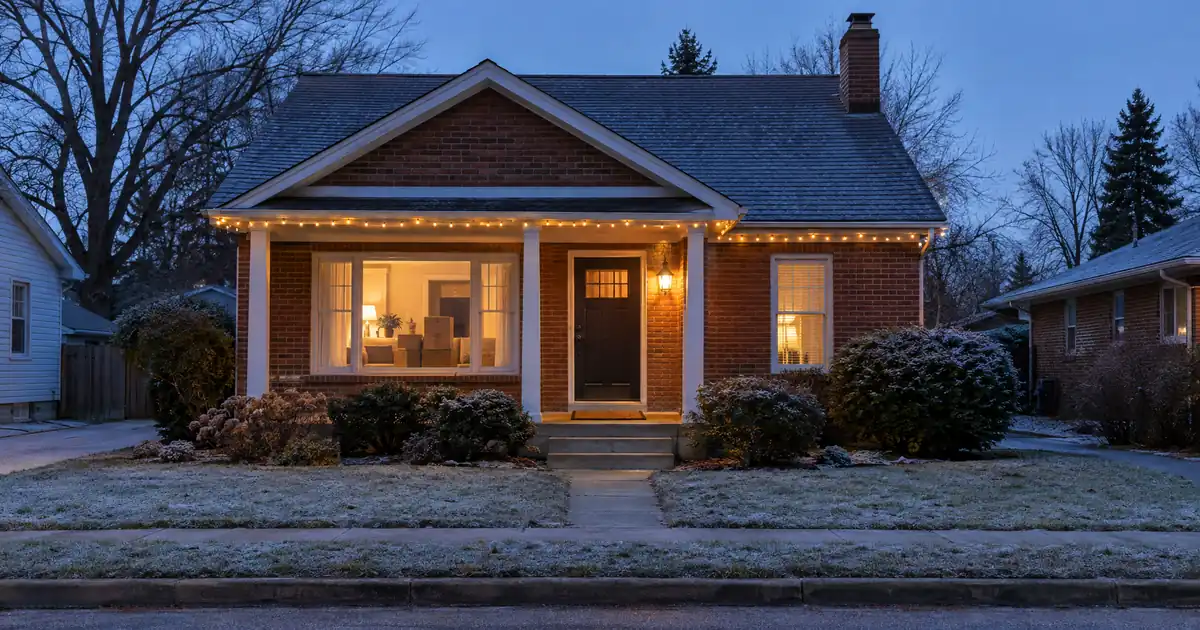
The Quick Read: Yes. First-time buyers are the core audience for FHA, but you do not have to be one to use the program. Across the wholesale programs Lendmire places FHA files with, a buyer with a decision score of 580 or higher can finance up to 96.5% of the price with a 3.5% minimum investment. The home must be your principal residence, and every number below stays subject to lender guidelines and a full file review.
What Counts as a First-Time Buyer for FHA?
HUD defines a first-time buyer as someone who has had no ownership interest in any property during the three years before the case number is assigned. The same definition covers a divorced or legally separated person whose only past ownership was joint with a spouse. HUD spells this out in its FHA FAQ on first-time homebuyers.
FHA payment estimate
Starting assumptions reflect an example price and the FHA minimum investment. Replace them with your own figures.
Editable benchmark: 7.32% as of October 22, 2026 · Freddie Mac 30-year average via FRED®. A conventional market reference, not an FHA loan quote.
Illustrative starting assumptions: a $350,000 price, the FHA minimum investment as the down payment, a thirty-year term at the current Freddie Mac benchmark, and property taxes and insurance estimated at typical national rates. Every field is editable.
Illustrative estimate only — not a Loan Estimate, approval, quote, or commitment to lend. The rate field carries the weekly Freddie Mac thirty-year conventional benchmark, a market reference and not an FHA loan quote; your rate is set by the lender at lock. FHA mortgage insurance follows HUD’s published schedule for the term, leverage and loan size entered; taxes, insurance and dues are editable estimates; closing costs are not included; county loan limits are not checked here. Licensed in sixteen states for consumer mortgages. Lendmire is not affiliated with or acting on behalf of FHA, HUD, or the federal government.
That three-year window matters. You may have owned a home years ago and still count. Someone who sold a house two years ago does not.
| Situation | Counts as first-time under HUD’s definition? |
|---|---|
| Never owned a home | Yes |
| Sold your last home more than three years ago | Yes |
| Owned a home within the last three years | No |
| Divorced, and only owned jointly with a spouse | Yes |
Here’s the part many buyers miss. HUD does not require first-time status to qualify for FHA. A few features, such as counting a positive rental payment history, may depend on it. Many down payment assistance programs also depend on it, and those often add income limits. Each assistance provider writes its own definition, so read it before you assume you qualify.
Why FHA Fits First-Time Buyers
FHA is built for buyers with smaller down payments and thinner credit files. HUD says that historically more than 80 percent of FHA-insured purchase mortgages go to first-time buyers, per its Single Family Housing page. That is where the program’s reputation comes from.
FHA does not lend the money. Private lenders make FHA loans, and the Federal Housing Administration insures them. The CFPB’s FHA loan overview says the same. In practice, a broker like Lendmire arranges your file through a wholesale lender that is approved to make FHA loans. Lendmire does not lend and does not approve the loan.
You can see how this works on Lendmire’s FHA loan programs page. The sections below walk through the mechanics a file runs on.
What Does the File Need? The Core Requirements
Across the wholesale programs Lendmire works with, these are the figures that drive an FHA purchase file. Treat them as typical guideline ranges, not promises.
| Item | Typical program figure |
|---|---|
| Maximum financing | 96.5% of price or value |
| Minimum investment | 3.5%, from a 580 decision score |
| Occupancy | Principal residence, 1 to 4 units |
| Base ratios | 31/43 (housing / total debt) |
| Ratios with compensating factors | Up to 40/50 at the top tier |
| Seller contributions | Up to 6% of the price |
| Non-occupant co-borrower | Allowed |
Two notes on that table.
First, 580 is where the wholesale programs start. HUD’s own rules reach lower, down to a 500-579 tier with a larger investment. The wholesale lenders Lendmire places FHA loans with do not go below 580. Some lenders set the floor even higher than that. If one lender turns you down on score, another may not, which is the practical reason to shop the file.
Second, the ratios. The 31/43 pair means your housing costs should fit within 31% of gross income, and all monthly debts within 43%. Documented compensating factors can stretch that to 40/50 at the top tier. Compensating factors are things like cash reserves, a strong payment history, or a small increase over your current housing cost. The automated underwriting finding governs most files, so the ratios are a starting frame, not a verdict.
County loan limits apply too. FHA limits are set by county and reset every year, with a floor and a ceiling. HUD posts the current numbers on its lender mortgage limits page. Look up your county before you shop for a price range.
How Credit Score and Down Payment Work Together
The score decides the leverage. At a 580 decision score or higher, the minimum investment is 3.5%. That is the 96.5% maximum financing figure seen from the other side.
The “decision score” is the score the lender uses after pulling credit. With more than one borrower, lenders typically use the lower middle score. Check that before you assume the higher score carries the file.
The 3.5% is a minimum on the lesser of the price or the appraised value. Say a home is under contract above what it appraises for. The investment is measured on the appraised value, and you cover the gap between price and value out of pocket unless the seller drops the price. Appraisal gaps trip up first-time buyers more often than the score does.
Credit events have waiting periods set by HUD, not by Lendmire. HUD’s rules call for two years from a Chapter 7 discharge and three years from a foreclosure. Lenders then look at what you rebuilt since.
What Does FHA Actually Cost to Carry?
The 3.5% is not your whole cash to close. Closing costs and prepaid items sit on top of it. Under TRID rules, your lender must give you a Loan Estimate and later a Closing Disclosure, and those show the real totals for your file.
Mortgage insurance is the ongoing cost that defines FHA. The CFPB notes it is required on all FHA loans. It protects the lender, not you, though the cost passes to the borrower. Two parts apply:
- Upfront premium: 1.75% of the base loan, usually financed into the balance. HUD charges first-time buyers the same upfront premium as everyone else.
- Annual premium: between 0.15% and 0.75% of the balance, depending on term, loan amount and LTV. It is collected monthly.
Duration matters for planning. On a thirty-year loan above 90% LTV, the annual premium lasts for the whole term. At or below 90% LTV, it ends after eleven years. A buyer who puts more down changes that picture. The exact numbers vary by lender and program and follow a full review of property, leverage, and credit.
The CFPB says FHA tends to cost more for borrowers with good credit and a 10-15% down payment. It can be a more affordable route for borrowers with lower scores or smaller down payments. In its words, there are no hard-and-fast rules. So compare total cost, not just the down payment, and ask more than one lender for a Loan Estimate.
Where Can the Down Payment Come From?
Savings, gifts and approved assistance programs all work. Gifts generally come from family, and the donor has to document the transfer. HUD’s rules allow close friends with a clearly documented interest, employers or unions, and charities or government agencies as donors. Sellers, agents and builders are not acceptable donors. Read the donor rules in HUD’s Handbook 4000.1 index rather than relying on a summary.
Large deposits that appear in your account need a paper trail. Lendmire’s piece How to Source a Large Deposit on an FHA Loan as a First-Time Buyer walks through what lenders ask for.
One warning from USA.gov: the federal government does not hand individuals grants or free money to buy a home. Ads that say otherwise are often scams. Real help comes through state and local assistance programs, which have their own first-time definitions and sometimes income limits.
Which Homes Qualify? (And the Appraisal Catch)
FHA is for a principal residence, and the home has to be one to four units. That covers single-family homes, townhomes, and two-to-four unit properties where you live in one of the units. A condo works only when the project is FHA-approved, so a unit in an unapproved building is not reviewable with FHA, however good the unit looks. Modular and manufactured homes can qualify under HUD’s property standards, per HUD’s homeownership month page, but they carry added requirements and not every lender offers them. Check with the lender before you write an offer.
The catch is the appraisal. The home has to meet FHA’s Minimum Property Requirements, meaning it must be safe, sound and secure. HUD defines this in its handbook glossary. Peeling paint on an older house, a bad roof, or a broken handrail can generate a repair requirement before closing. HUD is reviewing these standards, but nothing proposed is in force, so work from the current rules.
Second homes and rentals do not qualify for FHA. If occupancy changes the answer on your file, it changes the leverage too. Primary residence is where the program’s 96.5% figure lives.
Can I Still Qualify If…?
Real files rarely look clean. Here is how the common wrinkles play out.
Limited savings. Gift funds, seller contributions up to 6% of the price, and assistance programs can all cover cash to close. The 3.5% minimum investment still has to come from an acceptable source.
A recent credit hit. HUD’s waiting periods apply after a Chapter 7 or foreclosure. Late payments in the past year matter more than old ones. Lenders look at the pattern.
Thin or no credit. HUD allows manual underwriting with non-traditional credit history, such as rent and utility payments. Whether a given lender offers it varies, so ask early.
Self-employment or commission income. HUD’s materials say salary, commissions, self-employment, pensions, Social Security and other non-taxable income can all count with documentation. Self-employed buyers usually need to show a stable income pattern.
A co-borrower. A non-occupant co-borrower is allowed under the programs Lendmire places. Under HUD’s co-borrower guidance, co-borrowers take title and sign the security instrument, while co-signers do not. Non-occupying co-borrowers and co-signers must be U.S. citizens or have a principal residence in the U.S.
Active duty and also eligible for VA. That is a different decision. See Lendmire’s comparison of a VA loan versus an FHA loan for a first-time buyer on active duty.
Where Most First-Time Buyers Get Stuck
Here is what derails FHA purchase files most often. None of it is exotic.
1. Undocumented deposits. A big cash deposit with no source gets questioned. Season your funds or keep the paper trail.
2. New debt before closing. A car loan or new credit card between preapproval and closing can move the ratios.
3. Appraisal condition items. The home needs repairs the seller will not make. Negotiate this in the contract.
4. Job changes. Switching to a new pay structure mid-file means more documentation.
5. Assuming a score guarantees approval. A 580 meets the floor. Income, debts, the property and the appraisal still decide the outcome.
A short readiness check helps: pull your credit, list every monthly debt, gather two months of bank statements and your recent pay records, and know where your down payment is coming from. Then talk to a lender before you make an offer.
When FHA May Not Be the Best Fit
FHA is not always a more affordable route. Buyers with strong credit and a larger down payment can find that a conventional loan costs less over time, mainly because of how mortgage insurance behaves. The premium on a high-LTV FHA loan can stay for the full term.
A buyer who plans to stay many years, has good credit and can put down more than the minimum should compare both. A buyer with a lower score or a thin down payment often finds FHA is the stronger path. Eligible veterans should also compare VA financing, since it works differently.
Refinancing out of mortgage insurance later is a possible exit, depending on your equity and credit at that point. FHA streamline and cash-out refinances follow separate rules and need their own article.
Key Terms Defined
Decision score: The credit score the lender uses to set your program eligibility after reviewing your reports.
Minimum investment: The smallest amount of your own money the program requires toward the purchase, 3.5% at the 580 tier.
Upfront premium: A one-time mortgage insurance charge, 1.75% of the base loan, that is usually financed.
Annual premium: The ongoing mortgage insurance charge, collected monthly, that varies by term, loan amount and LTV.
Compensating factors: Documented strengths, like reserves or payment history, that let a file carry higher debt ratios.
Minimum Property Requirements: HUD’s standard that a home must be safe, sound and secure.
Frequently Asked Questions
Do I have to be a first-time buyer to get an FHA loan?
No. HUD does not require first-time status to qualify for an FHA loan. Repeat buyers can use it for a principal residence. First-time status matters mainly for certain assistance programs, which set their own definitions and sometimes income limits.
How much do I need to put down as a first-time buyer?
At a decision score of 580 or higher, the minimum investment is 3.5%, with maximum financing at 96.5%. Closing costs and prepaid items come on top of that. Gift funds and seller contributions up to 6% of the price can help cover them, subject to lender guidelines.
Does FHA require a certain credit score?
HUD has a tier below 580 that needs a larger investment, but the wholesale programs Lendmire places loans with start at 580. Some lenders set stricter minimums than HUD does. Thin credit may still be reviewed through manual underwriting with non-traditional history.
Can I buy a duplex with an FHA loan as a first-time buyer?
Yes, if you live in one of the units. FHA covers one to four units as a principal residence. It does not cover rentals or second homes. County loan limits apply and differ by area.
Is mortgage insurance forever on an FHA loan?
It depends on your LTV. On a thirty-year loan above 90% LTV, the annual premium lasts the full term. The 1.75% upfront premium is paid once and is usually financed.
Next Step
If you are buying a home and want to see whether an FHA loan fits your file, Lendmire can help you compare the options and what each one asks of the file.
For your own numbers, request a scenario review with Lendmire.
About Lendmire
Lendmire (NMLS# 2371349) is a mortgage brokerage serving homeowners and home buyers in 16 states. FHA, VA, conventional and jumbo purchase and refinance loans are arranged through wholesale lending channels; Lendmire brokers the financing and the lender underwrites each application. Scotsman Guide named Lendmire a Top Mortgage Workplace in both 2025 and 2026.
Get Started
Ready to find the right loan for you?
In about two minutes you can review financing options available for your home or investment property. No commitment required.
Informational only. Not a Loan Estimate, approval, or commitment to lend. Program availability and eligibility are subject to lender guidelines, credit approval, property review, and underwriting.
References
1. HUD FHA FAQ – How does HUD define a first-time homebuyer
2. HUD – Single Family Housing
4. HUD – FHA lender mortgage limits
6. USA.gov – Government-backed home loans
7. HUD’s homeownership month page
8. HUD – Handbook 4000.1 Glossary (Update 14/15)
This article is part of Lendmire’s FHA loan program — full qualification details, guidelines, and scenarios live on the program page.
Related reading: FHA Loan Limits by County for a Home Purchase · How to Choose an FHA Loan or Conventional as a First-Time Buyer · How Long an FHA Loan Takes to Close for a First-Time Buyer
Brandon Miller
Founder & CEO, Mortgage Loan Originator, Lendmire LLC
- Mortgage Loan Originator · NMLS# 1129696 · Verify on NMLS Consumer Access
- North Carolina Real Estate Broker · License# 343312 · Verify on NCREC
- North Carolina Insurance Producer · License# 19053198 · Property, Casualty, Life, Health · Verify on NAIC SBS
- Lendmire LLC · Firm NMLS# 2371349 · Verify firm licensure
Required disclosures. Lendmire (NMLS# 2371349) operates as a licensed mortgage broker, not a direct lender or depository. The discussion in this article is general in nature and should not be relied upon as financial, legal, or tax advice — every investment scenario is unique and should be reviewed by a qualified professional. Any loan inquiry is subject to lender underwriting, and this article is not a commitment to lend or a guarantee of approval. Mortgage rates, loan terms, and program guidelines vary by borrower, property, and state, and may change without notice. Equal Housing Opportunity. Verify licensure at NMLS Consumer Access.