
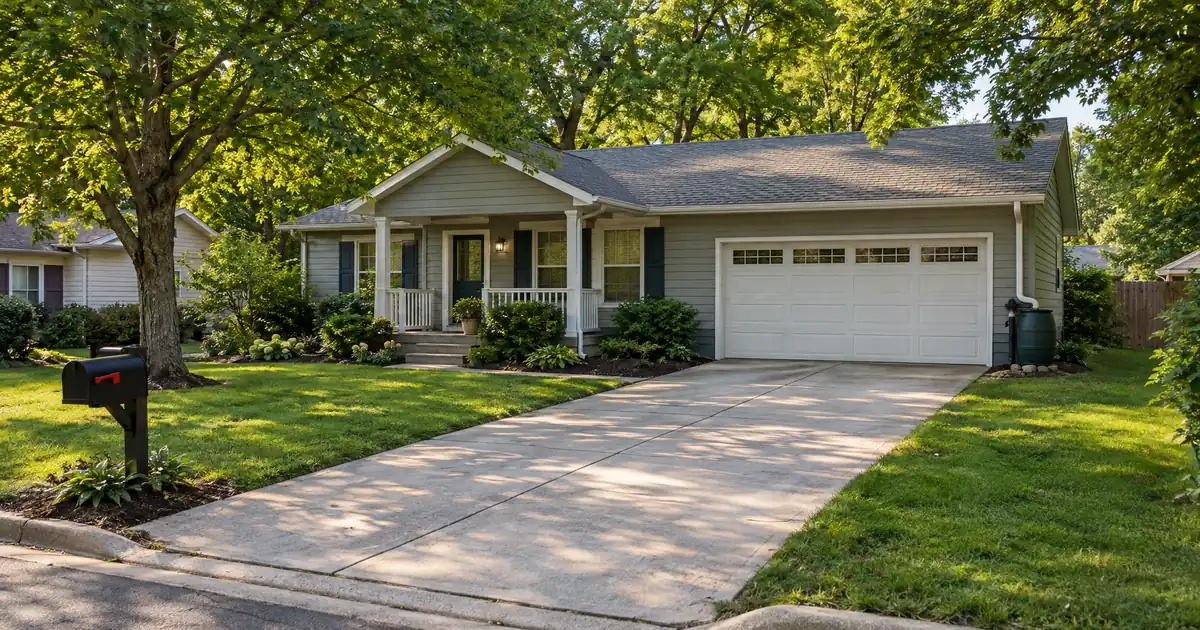
The Quick Read: On a primary home, a true cash-out refinance puts no restriction on how you spend the money. The limits sit in the loan itself: how much of the home’s value the new loan can reach, how long you have owned the home, and how old your current mortgage is. A “limited” refinance is the one that restricts proceeds, and it allows only small amounts of cash back.
Key Takeaways
- A cash-out refinance replaces your first mortgage with a bigger one and hands you the difference. The conventional cap on a one-unit primary home is 80% of the home’s value.
- Two clocks apply: the loan you are paying off must be at least 12 months old, and a borrower must have been on title for 6 months. Named exceptions exist.
- No rule tells you what to buy with the cash. Rules do govern how the loan is labeled, how much equity you can take, and which debts it can pay off.
- Moving credit card debt onto your house lowers the monthly strain but puts the home behind the debt. That tradeoff deserves a straight look.
What Counts as “Cash-Out” on a Primary Home?
A refinance is “cash-out” when the new loan is larger than what it must pay off, and the extra goes to you for any purpose. Lenders sort refinances into two buckets, and the label decides your rules.
Cash-out refinance estimate
The starting figures are an example value with a balance and a cash request in proportion. Replace them with yours.
Editable benchmark: 7.32% as of October 22, 2026 · Freddie Mac 30-year average via FRED®. A conventional market reference, not a cash-out refinance quote.
Illustrative starting assumptions: a $350,000 home value, a $193,000 current balance, the agency cap on a one-unit principal residence, a thirty-year term at the current Freddie Mac benchmark, and property taxes and insurance estimated at typical national rates. Every field is editable.
Illustrative estimate only — not a Loan Estimate, approval, quote, or commitment to lend. The rate field carries the weekly Freddie Mac thirty-year conventional benchmark, a market reference and not a cash-out refinance quote; a cash-out loan is priced by the lender at lock. The cash available is the loan the program cap allows less the balances paid off, before closing costs, which are not included. The HELOC line is the program’s combined loan-to-value ceiling applied to the same value and balance. Taxes and insurance are editable estimates. Licensed in sixteen states for consumer mortgages.
Limited cash-out (often called rate-and-term) pays off your first mortgage, closing costs and, in some cases, a second mortgage used to buy the home. Cash back is small and incidental. This is the lane for people who want a different payment or term, not spending money.
Cash-out lets the new loan exceed those items by whatever the leverage cap allows. Lenders price it and cap it more tightly because it carries more risk. Lendmire’s cash-out refinance programs sit in this second bucket.
Here is the wrinkle. A cash-out loan replaces your current mortgage. A home equity line leaves it in place. If your existing first mortgage carries a rate you like, that difference matters before you look at anything else.
In the conventional files Lendmire arranges through wholesale lenders, the caps on a primary residence are:
- 80% of value on a one-unit home.
- 75% of value on a two- to four-unit home you live in.
Those caps apply to the whole new loan. They are percentages of value, not of your equity. That distinction trips up many homeowners. Eighty percent of value is not “80% of what I own.”
Can You Spend the Money on Anything?
Yes, with a cash-out loan. A cash-out refinance carries no use-of-proceeds restriction, which is how Freddie Mac’s Guide section 4301.5 frames it. Kitchen, tuition, a business launch, a pile of credit cards: the loan does not care.
Two honest qualifiers.
No restriction is not the same as no questions. Lenders record a loan purpose on the application. Say you are doing a cash-out refinance, and take cash-out terms. Calling it a rate-and-term loan to dodge a cap is misrepresenting the file. It also tends to unravel at the appraisal and payoff stages.
Limited cash-out is different. On that product the proceeds are restricted. Cash back is held to a small cap, described in Fannie Mae’s SEL-2025-08 announcement as the greater of a small percentage of the new loan or a modest flat amount. Cross that line and the loan is reclassified as cash-out. It then gets cash-out leverage and cash-out pricing.
How the Loan Is Underwritten, Step by Step
The order below mirrors how a file actually moves.
1. Classify the transaction. The underwriter looks at what the proceeds do. Paying the first mortgage, eligible costs and a purchase-money second is limited. Anything beyond the cash-back cap is cash-out.
2. Check occupancy. On a primary-residence cash-out at Freddie Mac, every borrower must occupy the home. VA cash-out requires you to live there. FHA requires a principal residence. A co-borrower who does not live in the home can sink a file.
3. Check the ownership clock. Fannie Mae’s cash-out rules call for at least one borrower to be on title for six months before the new loan funds. Freddie Mac uses the same six months. FHA is stricter and ties ownership to a longer occupancy period.
4. Check the age of the loan you are paying off. The existing first mortgage must be at least 12 months old, measured from its note date to the new note date. Second mortgages being paid off are exempt from that test.
5. Order the appraisal. Freddie Mac’s cash-out product requires a new appraisal and inspection report. Because the cap is a percentage of value, a low appraisal lowers your ceiling directly.
6. Run the leverage test. The cap covers the entire new loan: payoff, any lien that stays, financed closing costs and your cash. Financed costs eat into your proceeds because they sit inside the cap.
7. Review credit, income and reserves. Full documentation applies. Wholesale conventional programs generally start at a 620 decision score, though the automated finding governs most files and some lenders set a higher floor. Fannie Mae asks for extra reserves when the debt-to-income ratio runs high on automated files.
8. Disclosures and closing. Closing costs can be financed, subject to the cap. A refinance of a primary home also carries a short right to cancel, and funds release after that window passes.
Everything above is subject to lender guidelines and full file review. It is not a commitment to lend.
Requirements at a Glance
| Requirement | What it means | Where it bites |
|---|---|---|
| Leverage cap | 80% of value (one unit), 75% (two to four units) | Low appraisal |
| Loan age | Paid-off first mortgage 12+ months old | Recent refinance or purchase |
| Time on title | Borrower on title 6 months | New owners |
| Occupancy | You live in the home | Co-borrowers who do not |
| Credit | 620 decision score on wholesale conventional | Higher floors at some lenders |
| Listing status | Home off the market by funding | Recent for-sale listing |
One wholesale lane stretches further. It reaches 89.99% of value with no mortgage insurance, at a 680 score and a 50% total ratio. It is limited to a 30-year fixed on a primary residence at a conforming balance, with its own six months of seasoning. It is not written on a Texas homestead.
How Much Cash Actually Reaches You
Less than the cap suggests. Take the cap, subtract everything the loan must pay, and what remains is yours.
Run this on a modeled one-unit primary home. Treat the home’s appraised value as 100%.
- Leverage cap: 80% of value.
- Existing first mortgage payoff: 55% of value (a modeled assumption).
- Financed closing costs: about 3% of value (also modeled).
- Cash to you: roughly 22% of value.
The number moves with the appraisal. If the home appraises 5% lower than you hoped, the cap shrinks by the same proportion and your cash shrinks faster. The payoff and costs do not change, so the shortfall comes out of your proceeds.
Another point: the new loan is larger and often resets the term. Your payment and total interest cost can rise even when you have not touched the interest-rate side of the deal. CFPB research on cash-out borrowers found payments and terms are likely to increase after a cash-out. Plan for that before you pick a number.
Where the General Rule Breaks
The six-month and 12-month clocks are rules of thumb. These cases bend them.
Recent all-cash purchase. Delayed financing is a named exception at Fannie Mae. It lets you refinance with cash out soon after buying with cash, without waiting out the usual clocks. The new loan is limited to the amount you documented investing plus financed costs, and it still sits under the leverage cap.
Inherited or divorce-awarded home. The title wait does not apply when you received the property through inheritance or a legal award in a divorce, separation or dissolution of a domestic partnership.
LLC- or trust-held title. Time in a revocable trust can count when you are the primary beneficiary. For an LLC, Freddie Mac requires title to move into your name by the note date. Fannie Mae likewise requires ownership to transfer into your personal name. If you set up an entity years ago, plan the title change before closing, subject to lender program requirements.
Paying off a HELOC. People assume this counts as rate-and-term. It does not, unless the second lien was used to buy the home. A line used to remodel the kitchen turns the deal into cash-out. Lenders classify the loan by what the second mortgage financed, not by its size.
Co-owner buyout. At Fannie Mae this falls under limited cash-out, with its own conditions on how long the co-owners held the home together. Ask your loan officer for the specifics, because they vary by program.
Home listed for sale. It must be off the market by the date the new loan funds.
Existing FHA or VA loans. The FHA Streamline and the VA IRRRL are designed to change the terms of the loan you already have. They are not cash-out products. A VA IRRRL generally needs no appraisal or underwriting. It carries a 0.5% funding fee unless exempt, a net tangible benefit test and a seasoning rule of the later of 210 days and six payments. If you want real cash, you move to the full VA or FHA cash-out product with a new appraisal and full underwriting. VA’s cash-out loan page also lets a non-VA loan be refinanced into a VA loan, with a Certificate of Eligibility and a net tangible benefit required.
Using the cash to buy another home. Occupancy decides the leverage: second homes cap at 75% on a cash-out.
What the Lender Looks At, Use by Use
The loan allows any purpose. These are the practical notes by use.
| Use of proceeds | What the lender notes | What helps the file |
|---|---|---|
| Home improvements | Loan purpose recorded | Contractor bids on hand |
| Paying off cards | Debts may be paid at closing | Current statements |
| Tuition or large expense | Cash-out purpose recorded | A plan for the payment |
| Reserves or savings | Cash-out purpose recorded | Clear sourcing of existing funds |
| Paying a second lien | Counts as cash-out unless purchase-money | Lien history |
| Buying another property | Occupancy and leverage rules apply | Clear plan for title and use |
| Co-owner buyout | Limited cash-out rules may apply | Written agreement |
Payoffs come out of the loan at closing, before you see cash. If your purpose is debt payoff, the lender may direct creditors to be paid straight from the closing. That is mechanics, not judgment.
Good Use, Risky Use
There is no rule here, only reasoning. A short test helps: does the use add lasting value, or does it replace a short-term cost with a thirty-year one?
Home improvements and paying off high-cost debt are the common reasons homeowners cite. A CFPB analysis found that more than half of cash-out borrowers named paying off debts as their top reason in each year from 2014 to 2019. That can work. The cards get cleared, and one payment replaces several.
Here is the catch. You have converted unsecured debt into debt secured by your house. CFPB research warns that doing so can put the home at risk of foreclosure if the payments become unsustainable. It also does nothing if the balances climb back up. A clean card is only a win if it stays clean.
Honestly, it is a genuine toss-up for many households. The monthly math favors consolidation. The risk math favors keeping the debts separate. If you cannot say what changes in your spending so the cards stay at zero, the cash is borrowed time.
If your goal is a vacation property rather than a primary-home project, Lendmire’s piece Vacation Home Cash-Out Refinance vs Primary Home for a Second-Home Owner covers how occupancy changes the picture.
Alternatives
If the loan you hold has terms you want to keep, a home equity line borrows against value without replacing your first mortgage. A smaller personal loan avoids putting the home behind the debt at all. Each has tradeoffs in cost and risk, and a loan officer can lay them side by side with your actual numbers.
Key Terms Defined
Cash-out refinance: a new, larger first mortgage that pays off the old one and gives you the difference in cash, for any purpose.
Limited cash-out refinance: a refinance that pays off your first mortgage, costs and certain second liens, with only small, capped cash back.
LTV (loan-to-value): the new loan balance divided by the home’s appraised value. It is a percentage of value, not of equity.
Seasoning: the waiting period a lender wants, either on how long you have held title or how old the loan being paid off is.
Delayed financing: an exception that allows cash out soon after an all-cash purchase, limited to what you documented investing.
Mortgage insurance: coverage the borrower pays for when a conventional loan exceeds 80% LTV. It cancels on request at 80% and ends automatically at 78%. Leverage, reserves, and pricing vary by lender and program; the final terms follow the full file review.
Compare Before You Commit
Start with three questions. What do you owe, and how old is that loan? How long have you been on title? What does the home appraise for against the cap?
If you are weighing a cash-out refinance against keeping the loan you have, Lendmire can help you compare the programs and the equity each one reaches. Lendmire is a mortgage broker, so it arranges these loans through wholesale lenders and does not lend directly. You can reach the team at 828-256-2183.
Frequently Asked Questions
Will the lender ask what the cash is for?
Usually yes, in the sense that a loan purpose is recorded on the application. On a cash-out refinance the stated purpose is simply cash-out, and the lender does not police how you spend it. Where the label matters is on limited cash-out, which restricts proceeds. Describing a cash-out as a limited refinance is a misstatement on the file.
Can I pay off my HELOC with a rate-and-term refinance?
Only if the second mortgage was used to buy the home. A line used for remodeling, cards or anything else turns the transaction into cash-out. That means the cash-out leverage cap and cash-out terms apply, subject to lender guidelines.
How long do I have to own the home before a cash-out?
Conventional cash-out generally requires a borrower on title for six months. The first mortgage being paid off must also be at least 12 months old. Inheritance, divorce awards and delayed financing after an all-cash purchase are named exceptions. FHA runs a longer owner-occupancy requirement, so check the specific program.
Can an FHA Streamline or VA IRRRL give me cash?
No. Both are built to change the terms of a loan you already hold, and cash back is capped at a nominal amount or limited to energy-efficiency improvements. Real cash means moving to the full FHA or VA cash-out product, with a new appraisal and full underwriting.
Does 80% mean I can borrow 80% of my equity?
No. The cap is 80% of the home’s value on the entire new loan, including your payoff and financed costs. With a low payoff the cap leaves room for more cash. With a larger balance it leaves less. Two-to-four-unit primary homes cap at 75%.
For your own numbers, request a scenario review with Lendmire.
For current guidelines and terms, see Lendmire’s refinance programs page.
About Lendmire
Lendmire (NMLS# 2371349) is a mortgage broker licensed for consumer lending in 16 states. Lendmire arranges FHA, VA, conventional and jumbo purchase and refinance loans through wholesale lenders; every file is underwritten by the lender under the applicable program guidelines. Scotsman Guide named Lendmire a Top Mortgage Workplace in both 2025 and 2026.
Get Started
Ready to find the right loan for you?
In about two minutes you can review financing options available for your home or investment property. No commitment required.
Informational only. Not a Loan Estimate, approval, or commitment to lend. Program availability and eligibility are subject to lender guidelines, credit approval, property review, and underwriting.
References
2. Fannie Mae announcement SEL-2025-08
3. Fannie Mae Selling Guide B2-1.3-03, Cash-Out Refinance Transactions
4. CFPB newsroom on cash-out borrowers
5. VA IRRRL
6. VA cash-out refinance loan page
7. CFPB research on cash-out refinances and non-mortgage debt
This article is part of Lendmire’s cash-out refinance program — full qualification details, guidelines, and scenarios live on the program page.
Related reading: Cash-Out Refinance Closing Timeline for a Primary Home · Can a Cash-Out Refinance on Your Primary Home Fund Big Goals? · How to Consolidate Debt With a Cash-Out Refinance on a Primary Home
Brandon Miller
Founder & CEO, Mortgage Loan Originator, Lendmire LLC
- Mortgage Loan Originator · NMLS# 1129696 · Verify on NMLS Consumer Access
- North Carolina Real Estate Broker · License# 343312 · Verify on NCREC
- North Carolina Insurance Producer · License# 19053198 · Property, Casualty, Life, Health · Verify on NAIC SBS
- Lendmire LLC · Firm NMLS# 2371349 · Verify firm licensure
Important disclosures. Lendmire (NMLS# 2371349) is a licensed mortgage brokerage. Lendmire is not a direct lender, depository institution, or financial advisor. All loan inquiries are subject to lender underwriting; this article does not constitute a commitment to lend. Rates, terms, and program guidelines are subject to change without notice and vary by borrower profile, property type, and state. Information in this article is general in nature and is not financial, legal, or tax advice. Equal Housing Opportunity. NMLS Consumer Access: nmlsconsumeraccess.org.