
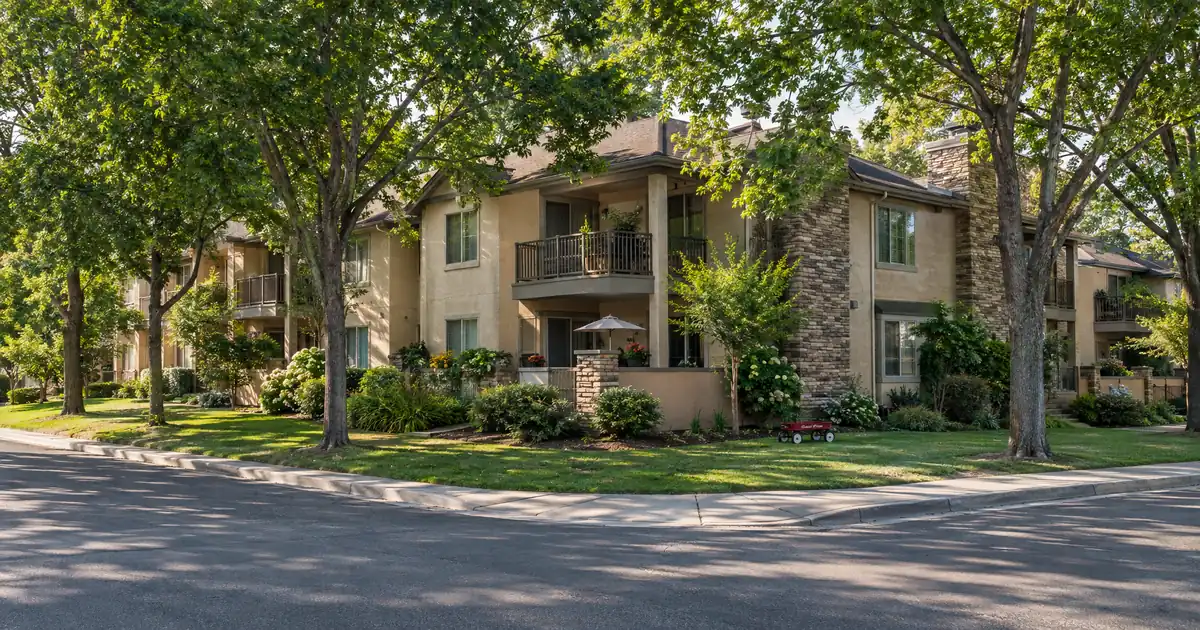
The Quick Read: Buying a condo with an FHA loan means two things must pass: you and the building. Your credit, income, and down payment follow normal FHA rules. The building must either be on HUD’s approved list or clear a one-time review of your single unit. Plenty of buyers have strong files and still hit a wall at the building.
The Two Things That Must Pass
Think of a condo purchase as two separate approvals stacked together. One is about you. The other is about the building you want to live in.
FHA payment estimate
Starting assumptions reflect an example price and the FHA minimum investment. Replace them with your own figures.
Editable benchmark: 7.32% as of October 22, 2026 · Freddie Mac 30-year average via FRED®. A conventional market reference, not an FHA loan quote.
Illustrative starting assumptions: a $350,000 price, the FHA minimum investment as the down payment, a thirty-year term at the current Freddie Mac benchmark, and property taxes and insurance estimated at typical national rates. Every field is editable.
Illustrative estimate only — not a Loan Estimate, approval, quote, or commitment to lend. The rate field carries the weekly Freddie Mac thirty-year conventional benchmark, a market reference and not an FHA loan quote; your rate is set by the lender at lock. FHA mortgage insurance follows HUD’s published schedule for the term, leverage and loan size entered; taxes, insurance and dues are editable estimates; closing costs are not included; county loan limits are not checked here. Licensed in sixteen states for consumer mortgages. Lendmire is not affiliated with or acting on behalf of FHA, HUD, or the federal government.
You control the first. You do not control the second. The HOA’s finances, the share of owners who rent, and how many neighbors already have FHA loans are all outside your hands. A clean file can fail on those.
| What gets checked | Who it’s about | What decides it |
|---|---|---|
| Credit, income, ratios | You | Your file and lender guidelines |
| Down payment | You | Program minimum |
| Project eligibility | The building | HUD approval or unit approval |
| Unit condition | The home | The FHA appraisal |
Key takeaways
- FHA insures a loan on a one-family condo unit, either in an approved project or through Single-Unit Approval.
- The building’s finances, owner mix, insurance, and legal status drive the outcome.
- Your own file follows the usual FHA rules for credit, ratios, and mortgage insurance.
- An “expired” listing may be paperwork, not a bad building.
How FHA Condo Approval Works
FHA can insure a mortgage on a one-family condo unit, and the unit comes with an undivided share of the common areas. HUD’s FHA condominium page describes this authority and the two routes. Loans run up to 30-year terms, to buy or refinance a unit.
Route one is an FHA-approved project. The building has already been reviewed and sits on HUD’s list. Every buyer in it can use FHA, within the project’s limits.
Route two is Single-Unit Approval, often shortened to SUA. The building is not approved, but your lender submits a one-time review of your unit. Single-Unit Approval was suspended after the Great Recession and came back under a 2019 rule, according to the National Association of Realtors’ assessment of the rule. That is why older advice saying “only approved condos qualify” is out of date.
| Factor | Approved project | Single-Unit Approval |
|---|---|---|
| Who gets reviewed | The whole building | Your unit in that building |
| Who submits | HOA, developer, or consultant | Your lender |
| FHA loan cap in building | Up to 50% of units | About 10%, or two units in small projects |
| Minimum size | Varies | Five or more units |
The reason FHA cares is simple. It insures the loan, so it wants the building to be stable enough to hold its value. A building full of unpaid dues and lawsuits is a risk to everyone, including you at resale.
What the Building Has to Show
A project must be complete and in good standing under state law. It also has to meet FHA standards on insurance, financial condition, title, pending legal action, and physical condition, per HUD.
Here is what that means in practice.
- Owner-occupancy. HUD generally wants at least half the units occupied by owners in an approved project, per HUD’s announcement of the 2019 rule. Some buildings with lower-risk indicators can go lower under HUD review. Why you care: a building full of renters is a weaker bet.
- FHA concentration. FHA will insure up to 50% of the units in an approved project, according to the same HUD release. Once a building hits its cap, new FHA loans stop. HUD can even suspend new case numbers when a project exceeds the maximum.
- Investor concentration. HUD’s processing guide limits how many units one investor or entity can own. Check the current Handbook, since that guide predates 2019.
- Financial health. Expect a cap on owners who are far behind on dues and a minimum reserve contribution in the budget. Lenders ask for the budget and the HOA questionnaire.
- Commercial space. Ground-floor shops are fine up to a limit. Extra documents are required when a building has non-residential space.
- Insurance and litigation. Required coverage must be in place, and certain lawsuits can sink a project.
- Completion. The building must be finished. HUD’s glossary defines existing construction as 100% complete for over one year, counting all phases for condos.
One practical point: don’t trust blog posts on thresholds. They often mix up the SUA numbers and the approved-project numbers, and the two sets differ.
Your Side of the File
Borrower rules are the same as for any FHA purchase. Across the wholesale programs Lendmire places FHA loans with, the envelope looks like this, subject to lender guidelines and full file review:
- Financing: up to 96.5% of the price or value, with a 3.5% minimum investment, at a decision score of 580 or higher.
- Occupancy: a principal residence only. A non-occupant co-borrower is allowed.
- Seller contributions: allowed up to 6% of the price.
- Ratios: the base pair is 31/43, housing to total debt. Documented compensating factors can stretch that toward 40/50 at the top tier, and the automated finding governs most files.
- Mortgage insurance: an upfront premium of 1.75% of the base loan, which can be financed, plus an annual premium that depends on term, loan amount, and LTV. On a 30-year loan above 90% LTV, the annual premium lasts the whole term. At or below 90%, it ends after eleven years.
- Loan limits: county loan limits apply and change every year.
The wholesale programs Lendmire works with start at 580, so scores below that are out of reach through this network. Credit events carry HUD’s own waiting periods: two years from a Chapter 7 discharge and three years from a foreclosure.
Condo buyers carry one extra line. HOA dues count in your housing payment, so they push your ratio up. Two condos at the same price can fit very differently if one has much higher dues. Ask for the dues early.
Lendmire’s FHA loan programs page walks through the borrower side in more detail.
How to Check Whether a Building Qualifies
Do this before you write an offer, not after.
1. Search HUD’s public condo list. It shows a project as approved, rejected, or expired. The list has been moved before, so confirm the current address through HUD.
2. Ask the HOA or management company. Request the budget, the questionnaire, the insurance certificates, and any lawsuit disclosures.
3. Ask your lender to review the building. A lender can tell you whether the project looks approvable or whether Single-Unit Approval is the realistic path.
4. Read an “expired” status carefully. Approval generally lasts three years under federal rules, and HUD may rescind it for non-compliance. An expired listing may simply mean the HOA never recertified. That is a paperwork fix, not necessarily a building problem.
Single-Unit Approval, Step by Step
The unit must sit in a project that is not FHA-approved, is complete and ready for occupancy, has at least five dwelling units, and is not a manufactured home. HUD lists these conditions.
The cap is tight. For projects of ten or more units, no more than 10% can be FHA-insured. Smaller projects may have no more than two. Both limits appear in HUD’s rule announcement.
Then the paperwork starts.
- Your lender completes Form HUD-9991 for the unit.
- HUD’s documentation checklist asks for the signed form, proof that legal and project documents were recorded, and recorded CC&Rs.
- If the building had a financial distress event, resolution documents are required.
- Buildings with commercial space need a current-year board-approved budget, a year-end income and expense statement, and a balance sheet dated within 90 days.
- The lender reviews everything to confirm FHA compliance.
Owner-occupancy gets a broader definition than most people expect. HUD’s form counts a unit the owner occupied for part of the year and did not rent for most of it. It also counts a former owner-occupied unit now listed for sale, not for rent.
Because SUA is document-heavy, build that into your contract. Ask for HOA documents early and keep the dates in the offer realistic.
Lendmire’s piece How to Get FHA Single-Unit Approval as a First-Time Condo Buyer goes deeper on this route.
Why a Condo File Stalls
| Problem | Likely cause | What you can do |
|---|---|---|
| Building not on the list | Never applied, or lapsed | Ask about SUA or recertification |
| SUA denied | FHA cap already reached | Pick another building or loan type |
| Mid-contract halt | Case numbers suspended | Ask about timing before you sign |
| Documents missing | HOA slow to respond | Request them on day one |
| Dues push ratios too high | High monthly dues | Compare other units or buildings |
Lawsuits, thin reserves, too many delinquent owners, and gaps in insurance also cause trouble. Your lender will flag these from the questionnaire.
FHA or Conventional for a Condo?
Neither wins everywhere. If the building is approved or eligible for SUA and your down payment is small, FHA often fits. If the building fails FHA review but suits another loan type, conventional rules look at the building differently, and your lender can compare them. Mortgage insurance also works differently by program, so ask to see both side by side.
An approved project also helps you later. A building on the FHA list has a bigger pool of buyers when you sell.
A Contract Checklist
- Check the building’s status before you make an offer.
- Request HOA documents as early as you can.
- Add a financing contingency that covers project approval.
- Ask your lender how a case-number suspension would affect your contract.
- Budget for monthly dues alongside the loan.
Key Terms Defined
FHA-approved project: A condo building HUD or an authorized lender has reviewed and listed as eligible.
Single-Unit Approval (SUA): A one-time review of one unit in a building that is not approved.
Owner-occupancy ratio: The share of units lived in by their owners.
FHA concentration: The share of units in a building with FHA-insured loans.
HOA questionnaire: A form the association completes about finances, insurance, and legal matters.
Mortgage insurance premium (MIP): The upfront and annual charges that fund FHA insurance.
Frequently Asked Questions
Can I use an FHA loan for any condo?
No. The building has to be on HUD’s approved list, or your unit has to pass Single-Unit Approval. Both routes look at the building, not just you.
What if the building isn’t approved?
Single-Unit Approval may be an option if the building has at least five units, is complete, and is under its FHA cap. Your lender submits the review, and it is subject to HUD’s requirements and a full file review.
What if the approval has lapsed?
It may only mean the HOA has not recertified. Ask the association whether it plans to renew, and ask your lender whether SUA fits.
Do HOA dues affect how much I can borrow?
Yes. Dues count in your housing payment, which feeds the ratios lenders review. Higher dues can reduce what fits.
Can I buy a condo to rent out with FHA?
Not as a standard purchase. FHA purchase loans require that you live in the home, and occupancy decides the leverage.
If you are buying a home and want to see whether an FHA loan fits your file, Lendmire can help you compare the options and what each one asks of the file. You can reach the team at 828-256-2183.
For your own numbers, request a scenario review with Lendmire.
About Lendmire
Lendmire — NMLS# 2371349 — is a mortgage broker that arranges FHA, VA, conventional and jumbo home purchase and refinance financing in 16 states through wholesale lenders. Every option is subject to the lender’s guidelines and full underwriting. Scotsman Guide named Lendmire a Top Mortgage Workplace in both 2025 and 2026.
Get Started
Ready to find the right loan for you?
In about two minutes you can review financing options available for your home or investment property. No commitment required.
Informational only. Not a Loan Estimate, approval, or commitment to lend. Program availability and eligibility are subject to lender guidelines, credit approval, property review, and underwriting.
References
2. National Association of Realtors – FHA Condo Rule Assessment
3. HUD Archives – FHA Issues New Condominium Approval Rule
5. HUD’s documentation checklist
This article is part of Lendmire’s FHA loan program — full qualification details, guidelines, and scenarios live on the program page.
Related reading: FHA Loan Requirements for a Second Loan After Payoff · FHA Loan Borrower Requirements for an LLC or Business · FHA Loan Requirements for Refinancing Out of Mortgage Insurance
Brandon Miller
Founder & CEO, Mortgage Loan Originator, Lendmire LLC
- Mortgage Loan Originator · NMLS# 1129696 · Verify on NMLS Consumer Access
- North Carolina Real Estate Broker · License# 343312 · Verify on NCREC
- North Carolina Insurance Producer · License# 19053198 · Property, Casualty, Life, Health · Verify on NAIC SBS
- Lendmire LLC · Firm NMLS# 2371349 · Verify firm licensure
Disclosure information. Lendmire is a state-licensed mortgage brokerage under NMLS# 2371349. Lendmire is not a depository institution, direct lender, or financial advisor — all loans referenced are placed through wholesale lender partners and are subject to each lender's underwriting standards. This article is provided for general informational purposes and is not a commitment to lend, nor does it constitute financial, legal, or tax advice. Loan programs, terms, rates, and qualification standards change without notice and depend on borrower profile, property type, and the state in which the subject property is located. Equal Housing Opportunity provider. NMLS Consumer Access: nmlsconsumeraccess.org.