
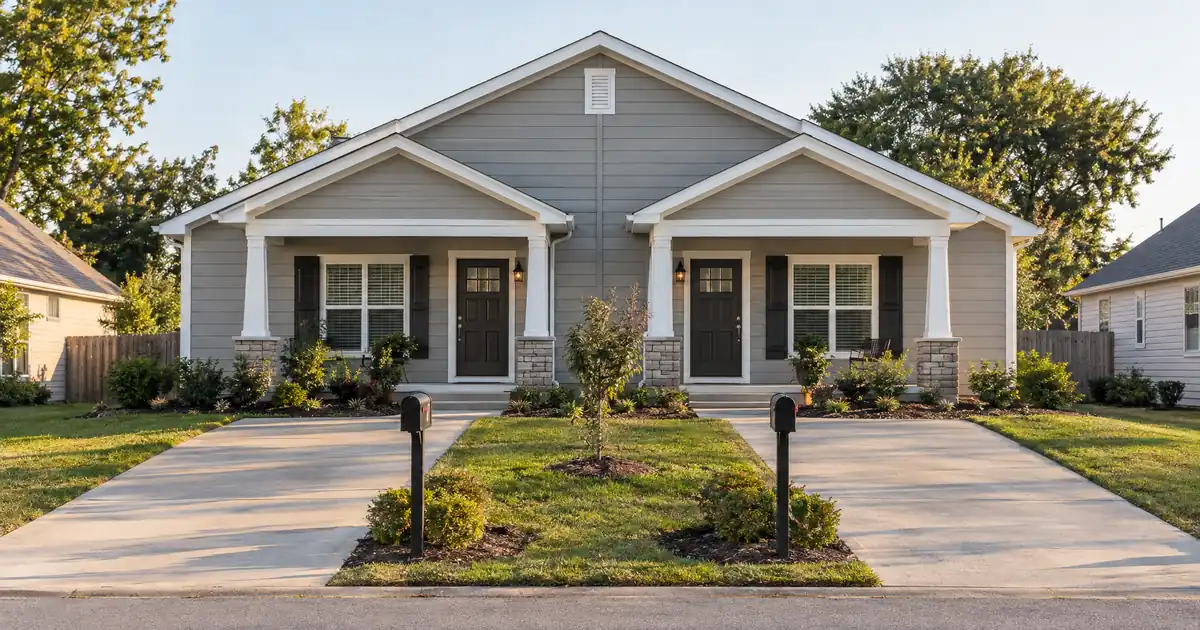
The Quick Read: Yes, as long as you live in one of the two units as your main home. The property counts as a one-to-four-unit home, and a duplex skips the extra rent test that applies to three- and four-unit buildings. Rent from the other unit can help you qualify, but only part of it counts. All of this is subject to lender guidelines and full file review.
Key Terms Defined
A few terms come up again and again. Here they are once, in plain words.
- Owner-occupant: a borrower who lives in the property as their principal residence.
- Principal residence: the home where you actually live most of the year, not a second home or a rental.
- Loan-to-value (LTV): the loan amount divided by the home’s value. A 96.5% LTV means a 3.5% down payment.
- Debt-to-income ratio (DTI): your monthly debts divided by your monthly income. Lenders look at a housing ratio and a total ratio.
- Fair market rent: what an appraiser says a unit would rent for in the local market.
- Overlay: a rule a lender adds on top of the program’s own rules.
- Mortgage insurance premium (MIP): FHA’s insurance on the loan. You pay it up front and then monthly. The exact numbers follow HUD’s published schedule for the loan term, leverage, and loan size.
FHA payment estimate
Starting assumptions reflect an example price and the FHA minimum investment. Replace them with your own figures.
Editable benchmark: 7.32% as of October 22, 2026 · Freddie Mac 30-year average via FRED®. A conventional market reference, not an FHA loan quote.
Illustrative starting assumptions: a $350,000 price, the FHA minimum investment as the down payment, a thirty-year term at the current Freddie Mac benchmark, and property taxes and insurance estimated at typical national rates. Every field is editable.
Illustrative estimate only — not a Loan Estimate, approval, quote, or commitment to lend. The rate field carries the weekly Freddie Mac thirty-year conventional benchmark, a market reference and not an FHA loan quote; your rate is set by the lender at lock. FHA mortgage insurance follows HUD’s published schedule for the term, leverage and loan size entered; taxes, insurance and dues are editable estimates; closing costs are not included; county loan limits are not checked here. Licensed in sixteen states for consumer mortgages. Lendmire is not affiliated with or acting on behalf of FHA, HUD, or the federal government.
What Does “Living in One Unit” Actually Require?
You must move into one unit, and you must mean it. HUD’s FHA Resource Center says at least one borrower must occupy the property as a principal residence within 60 days of signing the loan documents. That borrower must also intend to stay for at least one year.
Both parts matter. The 60 days is a deadline. The one year is a statement of intent that you sign at application.
Here is the timeline in one place:
| Stage | What the rule asks |
|---|---|
| Application | You certify you will live there |
| Move-in | One borrower occupies within 60 days |
| First year | You intend to stay at least one year |
| After that | Ask your lender before changing plans |
Which unit you pick is up to you. People often take the smaller or less private unit and rent the better one. Others do the reverse. The rule does not care, as long as one borrower really lives there.
What does not count? A purchase where you plan to rent both units from day one. That is an investment purchase, and FHA is built for people buying a home to live in. In the wholesale programs Lendmire places FHA files with, the loan is for an owner-occupied principal residence of one to four units. Occupancy decides the leverage, and a rental purchase belongs to different financing entirely.
A non-occupant co-borrower is allowed in these programs. A parent can co-sign, for example, so long as a borrower on the loan lives in the home.
Why a Duplex Is Easier Than a Triplex or Fourplex
A duplex avoids the extra rent test. A three- or four-unit building does not.
FHA groups one- to four-unit homes together as single-family property. That is why a duplex fits an FHA purchase at all. But the larger buildings face a self-sufficiency test. In plain words, the appraiser’s market rent from all the units, less a vacancy allowance, must cover the full housing payment. Your own unit’s rent is part of that math.
A duplex does not face that test. Your income, credit, and the property’s value decide the outcome. For three- and four-unit buildings, lenders also tend to look harder at cash reserves. Reserve rules differ by lender, so ask early.
If a fourplex is on your list, Lendmire’s piece Can a House Hacker Use an FHA Loan to Live in One Unit of a Fourplex? walks through that test in more detail.
Five or more units is a different world. Those buildings fall under separate multifamily programs, not this consumer loan.
What Do the FHA Loan Programs Ask for on a Duplex?
The basics match a one-unit purchase. Across the wholesale programs Lendmire works with, FHA loan programs allow financing up to 96.5% of the price or value. That means a 3.5% minimum investment, starting at a decision score of 580. Many lenders set their own higher floor, so a 580 does not automatically get you in the door.
The investment is measured against the lesser of the price or the appraised value. If the appraisal comes in low, your cash goes up, not the lender’s loan.
Seller and other interested-party contributions can run up to 6% of the price. That can help with closing costs.
Ratios work like this. The base pair is 31/43: your housing payment against income, and your total debts against income. Strong, documented compensating factors can push that up to 40/50 at the top tier. Compensating factors might be solid cash reserves or a long, stable job history. For most files, the automated underwriting finding governs, not a hand-calculated number.
Credit events carry waiting periods set by HUD. Two years from a Chapter 7 discharge and three years from a foreclosure are HUD’s rules, not a promise from any one lender.
Loan limits also apply. FHA limits are set by county, and a two-unit property has a higher limit than a one-unit home. The formula is spelled out in HUD Mortgagee Letter 2025-23. In a high-priced county the limit can cap the base loan, which matters if you are shopping where duplexes sell for a lot. Check the limit for your county before you fall for a listing.
How Does the Other Unit’s Rent Help You Qualify?
It counts as income, but only part of it. Here is the rule from HUD Mortgagee Letter 2023-17. If the property has no rental history since the last tax filing, the lender uses 75% of the lesser of two figures: the appraiser’s fair market rent or the rent in the lease.
Let’s run it in words. Say the appraiser puts the other unit’s market rent above what a signed lease shows. The lender uses the lease figure, then counts 75% of it. The missing 25% is a cushion for vacancy and upkeep.
For two- to four-unit properties, the appraisal includes a rent schedule on a specific form (Fannie Mae 1025 or Freddie Mac 72). Lenders also use a lease if one exists. Expect to hand over copies of any current leases.
That rent goes on the income side of your ratios. The lender does not simply subtract it from your payment. So the rent helps, though it does not make the loan pay for itself.
A vacant unit changes things less than people fear. With no lease, the appraiser’s market rent figure is what the lender works from. That is a reason to be honest about the unit’s condition. A unit that cannot be rented as it stands is a weak source of qualifying income.
One more thing: real life runs ahead of the formula. Vacancy, repairs, and landlord work land on you. Counting 75% of the rent for qualifying is not the same as budgeting that it all arrives on time.
What Does FHA Mortgage Insurance Cost You on a Duplex?
It adds a real line to your budget, and it comes in two parts. The Consumer Financial Protection Bureau says FHA mortgage insurance is required on all FHA loans. It has an upfront piece and a monthly piece.
The upfront premium is 1.75% of the base loan. An FDIC summary of the FHA 203(b) program confirms that figure. Most borrowers finance it into the loan. That keeps cash in your pocket at closing, but it raises the balance and the lifetime cost.
The annual premium runs between 0.15% and 0.75% of the balance. Where you land depends on the loan term, the loan amount, and your LTV. Two points to know:
- On a thirty-year loan above 90% LTV, the annual premium lasts for the full term.
- At or below 90% LTV, it ends after eleven years. Final terms depend on the lender’s guidelines, the property type, and the borrower’s complete credit picture.
So a 3.5% down payment typically means the premium stays. A larger down payment can change that.
Here is a myth worth killing. A higher credit score does not lower FHA mortgage insurance. The CFPB says the cost is the same regardless of credit score. A score helps you qualify and may help with the lender’s terms. It does not shrink the premium.
You will see these costs spelled out on your Loan Estimate and Closing Disclosure. Compare those documents line by line.
What Will the Appraisal and Property Standards Look Like?
Expect the home to be judged on safety, soundness, and sanitation, as well as value. A duplex gets a longer look because there are two homes in it.
Appraisers and lenders generally want each unit to function as a real dwelling. That usually means its own kitchen, its own bath, and a safe way in and out. A chopped-up house with an unpermitted second unit is a problem. If the second unit was never legally created, a lender may not treat it as a unit at all.
Structure type matters less than legality. Side-by-side, up-and-down, and two-family homes on one deed can all work. Condo and co-op ownership brings extra project rules, so ask before you fall for one.
Condition drives a lot of outcomes. Peeling paint on an older building, a failing roof, or a missing handrail can stall a file until the repair is done. A duplex that needs real work may point toward a renovation loan, which is a different FHA product. Ask your loan officer about it before you make an offer.
Existing tenants are another practical issue. You cannot assume the seller will deliver an empty unit. If a tenant is in place, you take the lease along with the building. Read it before closing, and know the rent, the end date, and any deposit.
Your Step-by-Step Path
1. Get pre-approved. Say up front that you are buying a duplex and will live in one unit. The lender needs to run the rent rules.
2. Check the county limit. Make sure your target price fits.
3. Shop with a duplex-savvy agent. Rent history and unit layout matter here.
4. Make an offer. Ask for the leases and rent roll with it.
5. Order the inspection. Look at both units, not just yours.
6. Go through appraisal and underwriting. The appraisal covers value, condition, and market rent.
7. Sign your occupancy certification. Then close, and move in within the window.
Is that a lot of steps? Yes. But the sequence is the same as any FHA purchase, with the rent paperwork added.
What Happens After You Move In?
You live there. That is the plain answer for the first year. After the one-year intent period, many owners choose to move out and rent both units, and the loan stays in place. HUD’s page does not address later moves, so treat this as a conversation to have with your lender, not a legal guarantee.
Do not rush it, though. Lenders and HUD take occupancy seriously. Telling a lender you will live in the home when you do not intend to is a misrepresentation. It can cause real trouble later, so be straight at application.
If you are a veteran, your options may differ. Lendmire’s piece Can You Get a VA Cash-Out on a Duplex If You Live in One Unit? covers that path for the reader with VA entitlement.
Refinancing a duplex you already live in follows its own rules. An FHA refinance has its own occupancy and equity requirements. Lendmire’s programs include the FHA Streamline for existing FHA loans, which has no appraisal and a limited credit review. It requires a net tangible benefit, and the premium continues. Ask about the specifics before you plan around one.
Is This Right for You?
FHA suits a buyer with a modest down payment who wants a tenant to help carry the home. The trade-offs are real, so weigh them.
| Factor | FHA duplex | Conventional duplex |
|---|---|---|
| Down payment | As low as 3.5% | Often higher |
| Mortgage insurance | Required, up front and monthly | Depends on your down payment |
| Rent counted | 75% of the lesser rent figure | Lender-specific rules |
| Credit | Lower floors possible | Often stricter |
| Loan limits | County limits apply | Different limits apply |
Conventional rules for two- to four-unit homes differ by lender and by borrower, so do not assume this table covers your situation. Ask for both quotes.
Consider the lifestyle too. You will share a wall or a yard with a tenant. You will field the repair calls. You will also need landlord basics: screening applicants, treating them fairly, and checking whether your area requires a rental license or specific insurance. Those rules vary by place.
It is a genuine toss-up for some buyers. The low down payment is a strong draw. But the insurance never goes away on a small down payment, so the cheaper door in can cost more over time. Run both paths before you choose.
Common Mistakes to Avoid
- Assuming all projected rent counts. Only 75% of the lesser figure does.
- Treating the duplex as an investment. FHA wants you in the home.
- Ignoring lender overlays. One lender can be stricter than the program. A different lender may not be.
- Skipping the unit-by-unit inspection. Your unit looks fine, and the other one has a bad furnace.
- Forgetting the county limit. A great listing is no use if the loan does not fit.
- Believing a better credit score cuts the insurance. It does not.
- Switching lenders to dodge a failed rent test. A three- or four-unit property that fails the test fails under the same HUD rules at any FHA lender.
Frequently Asked Questions
Can I buy just one side of a duplex with an FHA loan?
It depends on how the property is owned. If the duplex sits on one deed, you buy the whole building and live in one side. If the two sides are separate parcels or condo units, the lender treats each as its own property and the project rules apply. Ask the lender before you write an offer.
What if the other unit is empty when I close?
Your file can still work. With no lease, the lender uses the appraiser’s fair market rent and counts 75% of it as income. A unit in rentable condition matters more than a signed lease. Expect the lender to ask about your plan to fill it.
Can I use FHA again after I buy this duplex?
Usually one FHA loan on a principal residence at a time is the expectation, with exceptions for things like a job relocation. Moving out and renting the duplex later does not automatically bar you from another FHA loan, but the rules are specific. Ask a loan officer before you plan a second purchase.
Do I need landlord experience?
No. FHA does not ask for prior landlord experience on a duplex. It does look at your credit, income, and the property. Even so, learning screening, leases, and local rental rules before you close will save you grief.
Can I use FHA for a duplex that needs work?
Sometimes. A property that fails condition standards can stall the file until repairs are done. A renovation loan is a separate FHA product built for that case. Raise it at the start so the loan officer can sort out which fits.
Next Step
If you are buying a home and want to see whether an FHA loan fits your file, Lendmire can help you compare the options and what each one asks of the file. All program figures here are subject to lender guidelines and full file review, and nothing here is a commitment to lend.
For your own numbers, request a scenario review with Lendmire.
About Lendmire
Lendmire — NMLS# 2371349 — is a mortgage broker that arranges FHA, VA, conventional and jumbo home purchase and refinance financing in 16 states through wholesale lenders. Every option is subject to the lender’s guidelines and full underwriting. Scotsman Guide named Lendmire a Top Mortgage Workplace in both 2025 and 2026.
Get Started
Ready to find the right loan for you?
In about two minutes you can review financing options available for your home or investment property. No commitment required.
Informational only. Not a Loan Estimate, approval, or commitment to lend. Program availability and eligibility are subject to lender guidelines, credit approval, property review, and underwriting.
References
2. HUD Mortgagee Letter 2025-23 (Nationwide Forward Mortgage Loan Limits)
3. HUD Mortgagee Letter 2023-17 (Rental Income Policies and ADUs)
4. Consumer Financial Protection Bureau
5. FDIC – FHA 203(b) Mortgage Insurance Program summary
This article is part of Lendmire’s FHA loan program — full qualification details, guidelines, and scenarios live on the program page.
Related reading: Can You Choose a 15-Year Term on an FHA Loan? · Can an LLC Get an FHA Loan to Buy a Home? · Can You Get an FHA Loan and What Decides Approval?
Brandon Miller
Founder & CEO, Mortgage Loan Originator, Lendmire LLC
- Mortgage Loan Originator · NMLS# 1129696 · Verify on NMLS Consumer Access
- North Carolina Real Estate Broker · License# 343312 · Verify on NCREC
- North Carolina Insurance Producer · License# 19053198 · Property, Casualty, Life, Health · Verify on NAIC SBS
- Lendmire LLC · Firm NMLS# 2371349 · Verify firm licensure
Disclosure information. Lendmire is a state-licensed mortgage brokerage under NMLS# 2371349. Lendmire is not a depository institution, direct lender, or financial advisor — all loans referenced are placed through wholesale lender partners and are subject to each lender's underwriting standards. This article is provided for general informational purposes and is not a commitment to lend, nor does it constitute financial, legal, or tax advice. Loan programs, terms, rates, and qualification standards change without notice and depend on borrower profile, property type, and the state in which the subject property is located. Equal Housing Opportunity provider. NMLS Consumer Access: nmlsconsumeraccess.org.