
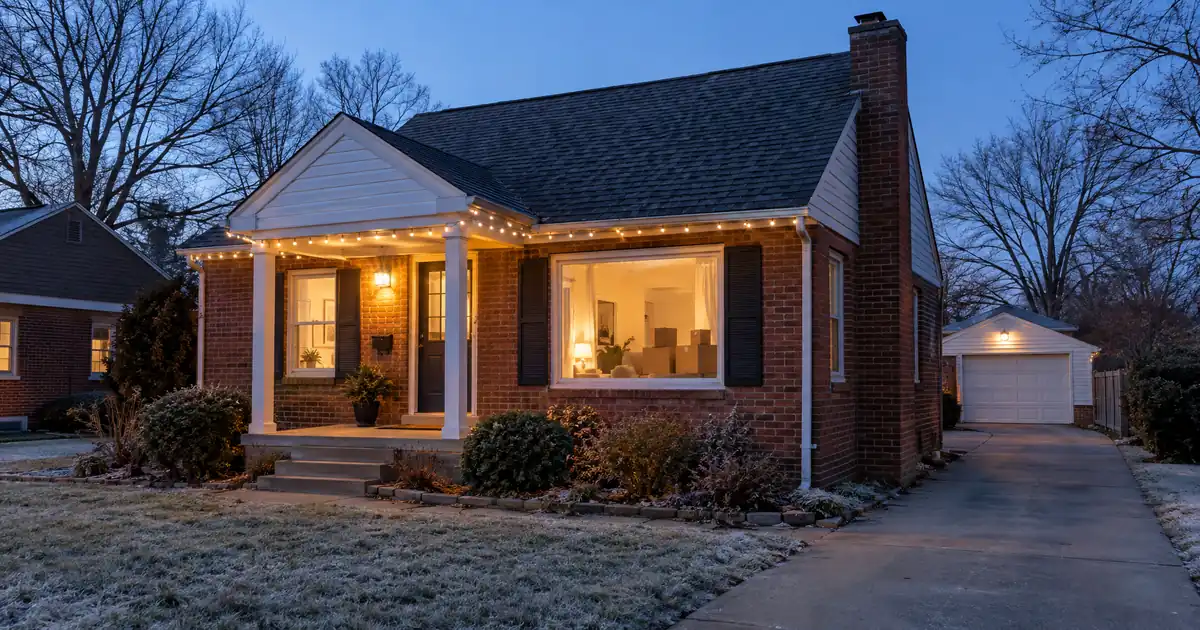
The Quick Read: Renting suits a veteran who expects to return, has a tenant-ready home, and still has enough entitlement left to buy again. Selling suits a veteran who is leaving for good, has thin equity to protect, or wants full entitlement back for the next purchase. Both are allowed. The real difference is what each choice does to your VA benefit and to your next loan file.
Think of it as a slice of the benefit parked inside your current loan. Sell the home, and the slice can come back. Rent the home, and it stays parked.
VA payment estimate
Starting assumptions reflect an example price with no down payment and a first-use funding fee. Replace them with your own figures.
Editable benchmark: 7.32% as of October 22, 2026 · Freddie Mac 30-year average via FRED®. A conventional market reference, not a VA loan quote.
Illustrative starting assumptions: a $350,000 price, no down payment with full entitlement, a first-use funding fee financed into the loan, a thirty-year term at the current Freddie Mac benchmark, and property taxes and insurance estimated at typical national rates. Every field is editable.
Illustrative estimate only — not a Loan Estimate, approval, quote, or commitment to lend. The rate field carries the weekly Freddie Mac thirty-year conventional benchmark, a market reference and not a VA loan quote; your rate is set by the lender at lock. The funding fee follows VA’s published table for the use and down payment entered; the residual-income figure is VA’s guideline for the region and family size, and the rough residual shown subtracts only the housing payment and the debts entered, while VA also deducts taxes, maintenance and utilities. Taxes, insurance and dues are editable estimates; closing costs are not included. Licensed in sixteen states for consumer mortgages. Lendmire is not affiliated with or acting on behalf of the Department of Veterans Affairs.
This article compares both sides of the choice for VA files placed through wholesale lenders. It lays out how each path works, who each one fits, and what to confirm before you commit.
Side-by-Side
| Factor | Rent It Out | Sell It |
|---|---|---|
| Existing VA loan | Stays in place | Paid off at sale |
| Entitlement | Stays tied to the old loan | Can be restored on request |
| Next VA purchase | Uses remaining entitlement only | Full entitlement can return |
| Down payment next time | May be needed if entitlement is short | Typically 0% with full entitlement |
| Mortgage insurance | None on the VA loan | None on the next VA loan |
| Credit floor | Next lender’s score minimum applies | Same |
| Rent counted for qualifying | Partial, with documents | Not applicable |
| Documentation | Lease, market rent data, landlord history | Payoff statement, closing papers, COE request |
| Effort after the move | Ongoing landlord duties | One-time sale |
| Reversible | Yes, you can sell later | No |
A quick note on the table. VA sets no minimum credit score. The wholesale programs Lendmire places VA loans with start at a 580 decision score, and lenders may set a higher floor. Every figure here is subject to lender guidelines and full file review.
Can You Rent a VA Home At All?
Yes, you can. The VA loan was built for a home you live in, so occupancy matters at the front end. When you buy, you certify that you intend to live there personally. After that, a move for work, orders, or family does not force a sale.
Here is the catch. Intent has to be real at closing. Buying a home you never plan to live in and renting it out is misrepresentation, and lenders treat it seriously.
You may hear that you must live in the home for 12 months before renting it. That is not a rule that appears in VA’s own text. Some lenders add their own waiting period as an overlay. Ask your lender what they require before you assume either way.
PCS orders (a permanent change of station, meaning an official relocation of a servicemember) do not cancel your mortgage. Per CFPB guidance on military relocations, orders do not relieve you of the loan obligation. The payment keeps coming due whether you sell, rent, or leave the house empty.
What Happens to Your Entitlement Under Each Path
Keeping the loan leaves your entitlement charged to it. Selling frees it up, though not automatically. You request an updated certificate of eligibility (COE, the VA document that shows your entitlement). Per VA’s eligibility page, you can ask your lender to submit an online request or file VA Form 26-1880.
Having an active VA loan does not block you from another one. VA News explains that lenders look for enough remaining entitlement to guaranty 25% of the new loan if you want zero down. If you fall short, a down payment may be required. The new home must also appraise at value, you must intend to live in it, and you must meet the lender’s underwriting.
With full entitlement, there is no VA loan limit. With remaining entitlement, limits can matter, and the right move is to speak with a loan officer about your specific numbers.
Two other routes exist, and both need verifying with your lender:
- One-time restoration while keeping the home. If you pay off the VA loan with cash or a non-VA refinance and keep the property, VA generally allows one restoration. The new home then becomes your primary residence.
- Substitution of entitlement. An eligible veteran assumes your loan and uses their own entitlement, which frees yours. A civilian can assume the loan, but your entitlement stays tied up until payoff. Release of liability and restoration are separate questions.
When Renting Out Is the Better Fit
Renting fits when the move is temporary or the future is open. A multi-year assignment with a likely return is the classic case. You keep the home, the loan terms, and the option to sell later. Renting now does not close the door on selling.
It also fits when you have plenty of equity and a home that rents well, and when your remaining entitlement can still support your next purchase. Many veterans in this spot buy the next home with a VA loan while the first one is tenant-occupied.
Renting does not make the next qualification easy, though. This is where veterans get surprised. Rent does not count dollar for dollar. Per VA’s Chapter 4 underwriting text, the amount counted is 75% of the lease unless a higher percentage can be documented. Rent from the home you moved out of is generally used to offset that home’s payment. It is not extra income to help you qualify.
Any shortfall between the counted rent and the old payment lands in your obligations. That can push up your debt-to-income ratio (DTI, your monthly debts compared with income) and cut into residual income. Residual income is the money left each month after major obligations, and it is the controlling test on VA loans. The 41% DTI figure is a guideline, not a cap. A ratio above it needs residual income well above the table.
Expect to document the lease and rental market data. Some situations also ask for landlord history. VA’s older Chapter 4 PDF describes a two-year history for established rental income and documented experience managing rentals or use of a property manager. Treat that as a concept to verify against the current handbook.
Then there is the cost of being a landlord at a distance. Vacancy, repairs, insurance, and management fees all come out of your pocket. If the home is far from your new one, a good manager is part of the plan, not a luxury.
Thinking about tapping equity instead of selling? Lendmire’s piece VA Cash-Out vs HELOC for a Veteran With a Paid-Off Home covers a related decision.
When Selling Is the Better Fit
Selling fits when the move is permanent and you do not want to be a landlord. It also fits when the home is worth little more than you owe. A rental that loses money every month is a slow leak, and a sale ends it.
The mechanics are simple. The sale pays off the VA loan. Then you request restored entitlement with a new COE. Supporting papers usually include a payoff statement and the closing statement.
Selling gives you a clean slate for the next VA loan. With full entitlement, the new purchase can be 100% financing with no mortgage insurance, as long as the price is not above the appraised value. A funding fee applies unless you are exempt. For a subsequent use with less than five percent down, it is 3.3%. It is 1.5% with five to under ten percent down, and 1.25% with ten percent or more down. Veterans receiving compensation for a service-connected disability, and other exempt groups, do not pay it.
Selling does carry costs. You pay sale costs, and taxes can come into play.
There is also the underwater case. If you owe more than the home is worth, selling means bringing cash to the table. The CFPB notes that some servicers offer programs letting servicemembers with PCS orders sell without repaying the remaining balance. Those are servicer or investor programs, not VA rules. Ask your servicer whether one applies to your loan.
Reaching for a larger equity pull instead? Lendmire’s piece VA Cash-Out vs Jumbo Cash-Out for a Veteran With a High-Value Home walks through that tradeoff.
Which Situation Fits Which Choice
| Your Situation | Leans Toward |
|---|---|
| Short assignment, likely return | Rent |
| Permanent move, no landlord appetite | Sell |
| Strong equity, home rents well | Rent |
| Thin or negative equity | Sell (ask about servicer programs) |
| Want full zero-down buying power next | Sell, or restore another way |
| Far-away market, no property manager | Sell |
| Unsure about the future | Rent, since you can sell later |
Honestly, the “unsure” row is a real toss-up. Renting keeps options open, but a bad tenant year can cost more than the flexibility is worth. Run the rent against the full cost of owning before you decide.
Consider a veteran moving for a civilian job in another state. No orders exist, so there is no PCS shortcut to cite. Occupancy was certified at purchase, and the move itself is a normal life event. The lender who handles the next loan will look at the whole file: entitlement, counted rent, residual income, and reserves.
Mistakes on Both Sides
Veterans make predictable errors here.
- Renting without a plan. No lease, no manager, no reserve for repairs. One vacancy can sink the budget.
- Assuming rent will qualify you. It is partial and document-heavy, and it mostly offsets the old payment.
- Assuming a sale restores entitlement automatically. It does not. You request it.
- Handing the loan to a civilian buyer and thinking you are free. A civilian assumption leaves your entitlement tied up.
- Waiting to check your COE. Know your remaining entitlement before you sign a lease or list the home.
- Skipping the lender conversation. Occupancy overlays and entitlement math differ by lender.
One practitioner point. Across the wholesale programs Lendmire places VA files with, the files that stall are almost never about the old home. They stall because the veteran assumed entitlement and rental income worked one way, and the next lender read the paperwork another way. A COE pulled early settles most of that.
If your old home was a 2-4 unit property and you lived in one unit, the rules differ from a single-family departing home. Per VA’s Chapter 4 text, the subject multi-unit calls for reasonable landlord success and six months of reserves from your own funds. That reserve figure belongs to the multi-unit case, not the departing single-family home.
A Balanced Verdict
Rent if the move is temporary, the numbers cover the full cost of ownership, and your remaining entitlement still supports your next purchase. Sell if the move is permanent, equity is thin, or you want full entitlement back without a workaround. Neither choice is the wiser one for everybody.
If you are buying a home and want to see whether a VA loan fits your file, Lendmire can help you compare the options and what each one asks of the file. The VA loan programs page explains the basics, and Lendmire arranges these loans as a mortgage broker through wholesale lenders, subject to lender guidelines and full file review. Nothing here is a commitment to lend.
Key Terms Defined
- Entitlement: the portion of your VA benefit the VA guarantees to a lender on your loan.
- Certificate of Eligibility (COE): the VA document that shows your eligibility and remaining entitlement.
- PCS: a permanent change of station, meaning an official relocation of a servicemember.
- Residual income: the money left each month after major obligations, which is the controlling VA underwriting test.
- Substitution of entitlement: an eligible veteran assumes your loan and uses their own entitlement, which frees yours.
Frequently Asked Questions
Do I have to live in my VA home for 12 months before renting it out?
There is no VA rule that sets a 12-month waiting period. Some lenders add a waiting period as their own overlay. What matters most is that you truly intended to live there when you closed. Ask your lender what applies to your loan.
Does a PCS or job move force me to sell?
No. Orders do not cancel the mortgage, and nothing forces a sale. The loan stays in place and the payment stays due. You choose whether to keep the home, rent it, or sell it.
Can I buy another home with a VA loan while still renting out the first?
Often yes, if enough entitlement remains. Lenders want remaining entitlement to cover 25% of the new loan for zero down. If it falls short, a down payment may be required. The new home must appraise at value and you must plan to live in it.
Does selling bring my entitlement back automatically?
No. You request an updated COE, either through your lender or with VA Form 26-1880. Confirm it shows restored entitlement before relying on zero down for your next home.
Does a buyer assuming my VA loan free up my entitlement?
Only if the buyer is an eligible veteran who substitutes their own entitlement. A civilian can assume the loan, but your entitlement stays tied to it until payoff.
For your own numbers, request a scenario review with Lendmire.
About Lendmire
Lendmire — NMLS# 2371349 — is a mortgage broker that arranges FHA, VA, conventional and jumbo home purchase and refinance financing in 16 states through wholesale lenders. Every option is subject to the lender’s guidelines and full underwriting. Scotsman Guide named Lendmire a Top Mortgage Workplace in both 2025 and 2026.
Get Started
Ready to find the right loan for you?
In about two minutes you can review financing options available for your home or investment property. No commitment required.
Informational only. Not a Loan Estimate, approval, or commitment to lend. Program availability and eligibility are subject to lender guidelines, credit approval, property review, and underwriting.
References
1. CFPB: Interagency PCS servicing guidance
2. VA.gov: Eligibility for VA home loan programs
3. VA News: Use your VA home loan benefit more than once
4. VA Pamphlet 26-7, Chapter 4: Credit Underwriting
5. VA Pamphlet 26-7, Chapter 4 underwriting PDF (benefits.va.gov)
6. CFPB
This article is part of Lendmire’s VA loan program — full qualification details, guidelines, and scenarios live on the program page.
Related reading: Can a Retiring Veteran Close a VA Loan With Income in Transition? · Can a Veteran With a VA Loan Still Buy Another Home With VA? · Can a Veteran Get Cash Out With a VA IRRRL Streamline?
Brandon Miller
Founder & CEO, Mortgage Loan Originator, Lendmire LLC
- Mortgage Loan Originator · NMLS# 1129696 · Verify on NMLS Consumer Access
- North Carolina Real Estate Broker · License# 343312 · Verify on NCREC
- North Carolina Insurance Producer · License# 19053198 · Property, Casualty, Life, Health · Verify on NAIC SBS
- Lendmire LLC · Firm NMLS# 2371349 · Verify firm licensure
Required disclosures. Lendmire (NMLS# 2371349) operates as a licensed mortgage broker, not a direct lender or depository. The discussion in this article is general in nature and should not be relied upon as financial, legal, or tax advice — every investment scenario is unique and should be reviewed by a qualified professional. Any loan inquiry is subject to lender underwriting, and this article is not a commitment to lend or a guarantee of approval. Mortgage rates, loan terms, and program guidelines vary by borrower, property, and state, and may change without notice. Equal Housing Opportunity. Verify licensure at NMLS Consumer Access.