
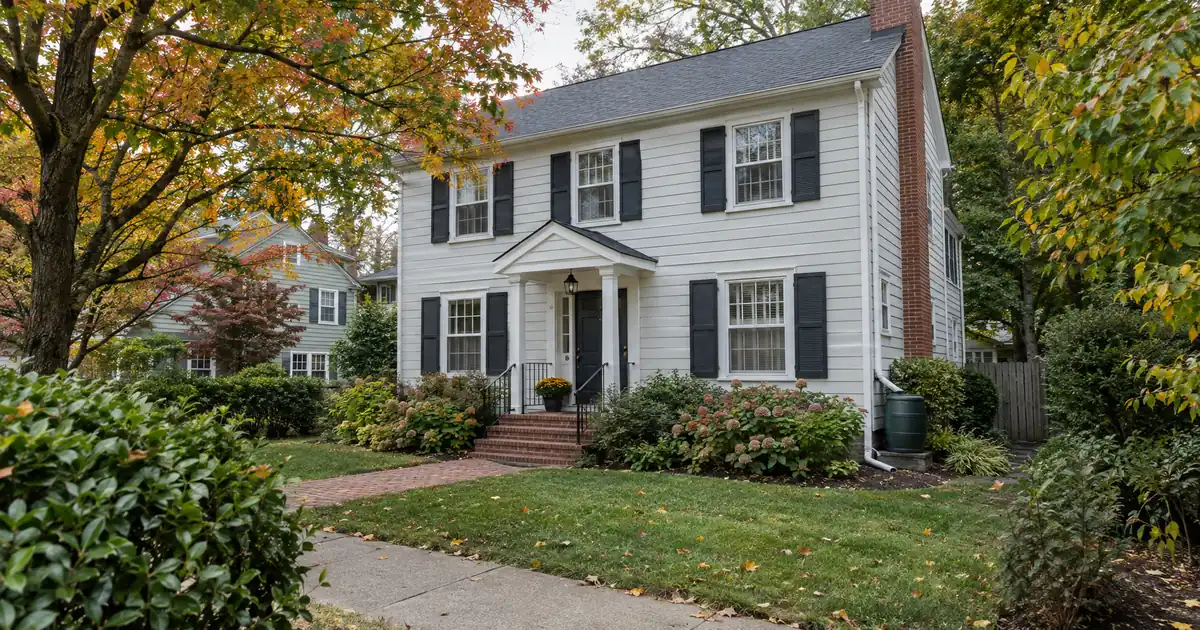
The Quick Read: You qualify by showing a decision score of 580 or higher, enough documented income to carry the payment and your other debts, a home you will live in, and a property that passes appraisal and fits the county loan limit. Across the wholesale programs Lendmire places FHA files with, 580 is the starting point for the 3.5% minimum investment. Everything here is subject to lender guidelines and full file review, and nothing is a commitment to lend.
What Is an FHA Loan, and Who Actually Lends It?
An FHA loan is a mortgage insured by the Federal Housing Administration and made by a private lender. FHA does not lend the money. The CFPB says the same: private lenders make these loans, and FHA insures them.
FHA payment estimate
Starting assumptions reflect an example price and the FHA minimum investment. Replace them with your own figures.
Editable benchmark: 7.32% as of October 22, 2026 · Freddie Mac 30-year average via FRED®. A conventional market reference, not an FHA loan quote.
Illustrative starting assumptions: a $350,000 price, the FHA minimum investment as the down payment, a thirty-year term at the current Freddie Mac benchmark, and property taxes and insurance estimated at typical national rates. Every field is editable.
Illustrative estimate only — not a Loan Estimate, approval, quote, or commitment to lend. The rate field carries the weekly Freddie Mac thirty-year conventional benchmark, a market reference and not an FHA loan quote; your rate is set by the lender at lock. FHA mortgage insurance follows HUD’s published schedule for the term, leverage and loan size entered; taxes, insurance and dues are editable estimates; closing costs are not included; county loan limits are not checked here. Licensed in sixteen states for consumer mortgages. Lendmire is not affiliated with or acting on behalf of FHA, HUD, or the federal government.
That insurance is why the rules are looser. The lender is protected if the loan goes bad, so it can accept lower scores and smaller down payments. HUD’s FHA help page confirms there is no maximum income limit. You just need enough income for the payment and your other debts.
Lendmire is a mortgage broker. It arranges FHA loan programs through wholesale lenders and does not lend directly. Consumer lending runs in 16 states.
The Requirements at a Glance
| Requirement | Program figure | What it means for you |
|---|---|---|
| Decision score | 580 or higher | Starting point for 3.5% minimum investment |
| Maximum financing | 96.5% LTV | You put in at least 3.5% |
| Occupancy | Principal residence, 1 to 4 units | You must live there |
| Ratios | 31/43 base, up to 40/50 | Higher ratios need documented factors |
| Upfront premium | 1.75% of base loan | Financed into the loan |
| Annual premium | 0.15% to 0.75% | Depends on term, amount, LTV |
HUD also has a 500-579 tier that requires 10% down. The wholesale programs Lendmire works with do not reach below 580, so for most files that tier is academic. Some lenders set a higher floor than 580 on their own. Two borrowers with identical scores can get different answers for that reason.
How Is an FHA Loan Underwritten, Step by Step?
Underwriting is a sequence, and each step can stall a file if the paperwork is thin. Here is the order the deal works in.
1. Credit pull and score. The lender pulls credit and gets a decision score. At 580 or higher, financing can reach 96.5% LTV. Final terms depend on the lender’s guidelines, the property type, and the borrower’s complete credit picture.
2. Income and employment. The lender verifies income, assets, liabilities and credit history for everyone on the loan. Expect pay stubs, tax documents and bank statements. Self-employed borrowers carry heavier documentation.
3. Debt review. Every monthly liability counts. That includes car payments, student loans, cards and the new housing payment with mortgage insurance. A debt that shows up late in the file can force a re-run.
4. Automated finding. Most files go through FHA’s automated scorecard. If it does not approve, the file can be manually underwritten against the base ratios.
5. Appraisal. The appraiser gives a value opinion and flags whether the home meets HUD’s minimum property standards.
6. Loan limit check. The loan must fit the county limit for the unit count.
7. Final review and closing disclosures. The lender gives you a Loan Estimate and later a Closing Disclosure. Compare them line by line.
How Do the Ratios Work?
Ratios compare your monthly obligations to your gross monthly income. The housing ratio counts the new payment, including taxes, insurance and mortgage insurance. The total ratio adds your other debts.
The base pair is 31/43. That means housing at 31% of income and total debt at 43%, with no compensating factors. With documented compensating factors, the limits can reach 40/50 at the top tier. Compensating factors might include cash reserves or a strong payment history. The automated finding often decides which ratios apply, not a flat cap.
Picture a borrower with steady traditional employment income, a 640 score and a car loan and student loan on the report. The lender adds the two debts to the proposed housing payment and divides by gross income. If the total lands above 43%, the file needs the automated approve or documented factors to carry it. Pay a card down before applying and the total drops, which can change the finding.
What About Credit Events and Residency?
Past credit problems do not end the conversation, but they set waiting periods. HUD’s rules are two years from a Chapter 7 discharge and three years from a foreclosure. Those are HUD rules, not a promise from any lender. Lenders review the full story, including what you did afterward.
Residency rules changed. HUD’s Mortgagee Letter 2025-09 updated borrower residency requirements for case numbers assigned on or after May 25, 2025, and reserves federal benefits, including FHA-insured mortgages, for U.S. citizens and lawful permanent residents. Check current handbook text with your loan officer before you apply, since HUD can update it.
A non-occupant co-borrower is allowed. That person helps with income and credit but does not have to live in the home.
Where Does the Basic Rule Break? Named Edge Cases
Occupancy. FHA is for your principal residence. A one-to-four-unit property works if you live in one unit. It does not work for a pure rental. If you are asking about a second home or rental, the answer is one sentence: occupancy decides the leverage, and FHA requires you to live there.
County loan limits. Limits are set by county and change every year. HUD’s announcement explains the structure: a floor applies where 115% of the median home price falls below it, and the ceiling for a one-unit home is 150% of the national conforming limit. Alaska, Hawaii, Guam and the Virgin Islands get further adjustments. Look up your county, because county loan limits apply to your file.
Seller contributions. Seller or interested-party contributions are allowed up to 6% of the price. That can offset closing costs, but only within that cap.
Appraisal failures. The appraisal is not a home inspection. It checks value and minimum standards around safety, security and soundness. If the appraiser notes needed repairs, they usually have to be fixed before closing. Buyers who expect a heavily worn home to pass tend to hit this wall. Ask an inspector for a separate look.
Gift funds. The down payment can come as a gift from a family member, employer or charitable organization. The gift needs a paper trail. Undocumented deposits are one of the most common reasons files stall.
What Does Mortgage Insurance Do to the Budget?
Mortgage insurance is required on every FHA loan, no matter how much you put down. The upfront premium is 1.75% of the base loan, and it is usually financed, which raises the balance. The annual premium runs between 0.15% and 0.75% of the balance, depending on term, loan amount and LTV. It is split into monthly amounts and counts in your housing ratio.
Duration matters. On a thirty-year loan above 90% LTV, the annual premium lasts for the term. At or below 90% LTV, it ends after eleven years. A larger down payment can shorten that. That is the mechanical trade-off: more cash in now, a shorter premium period later. Each figure is subject to lender guidelines and a complete review of property type, leverage, and credit.
The CFPB suggests asking for quotes on both FHA and conventional loans and comparing total cost. Good advice. A buyer with a higher score and a bigger down payment may find conventional cheaper over time. A buyer with a lower score may find FHA is the only path that works.
How Do You Check Yourself Before Applying?
Run this list before you talk to anyone.
- Score: Is your decision score 580 or higher? If not, which items on the report can you fix?
- Debts: Do all monthly debts appear on your report? Add the new payment and compare against 31/43.
- Income: Can you document two years of steady work, or a clear reason for gaps?
- Cash: Do you have the 3.5% minimum, plus closing costs, with a paper trail?
- Home: Will you live there, and is it within the county limit?
- Condition: Does the home look like it could pass minimum property standards?
Common denial causes are collections, disputed accounts, undocumented deposits, job gaps and failed appraisals. Most have a fix. Pay or document the account, source the deposit, or negotiate repairs.
Key Terms Defined
Decision score: The credit score the lender uses to set your leverage and down payment.
LTV: Loan-to-value, the loan amount divided by the lesser of price or appraised value.
Upfront premium: A one-time insurance charge, 1.75% of the base loan, usually financed.
Annual premium: Ongoing mortgage insurance, paid monthly as part of the payment.
Compensating factors: Documented strengths, such as reserves, that support higher ratios.
Overlay: A lender’s own rule that is stricter than HUD’s.
Refinancing Later
Refinances too. The Streamline refinances an existing FHA loan with no appraisal, limited credit review and a net tangible benefit. The rate-and-term refinance with an appraisal reaches 97.75% on a principal residence occupied for the previous twelve months. The cash-out reaches 80% LTV on a home owned and occupied for 12 months. All are subject to lender guidelines.
Related reading: if retirement savings are part of your file, see Lendmire’s piece How to Qualify for a Mortgage on a 401(k) Balance Under Age 59½.
If you are buying a home and want to see whether an FHA loan fits your file, Lendmire can help you compare the options and what each one asks of the file.
Frequently Asked Questions
Is there an income limit for an FHA loan?
No. HUD states there are no maximum income limits. You need enough documented income to cover the new payment and your other debts within the ratios the lender applies.
Can I qualify with a score below 580?
HUD has a tier for 500-579 with 10% down, but the wholesale programs Lendmire places files with start at 580. Some lenders set an even higher floor. Improving the score before applying often opens more options.
Do I have to be a first-time buyer?
The program is not limited to first-timers as far as the program parameters go. What matters is that you will live in the home as your principal residence and meet the credit, income and property requirements.
Can someone who won’t live in the home co-sign?
Yes. A non-occupant co-borrower is allowed. The lender evaluates that person’s income, debts and credit alongside yours, and current residency rules apply to them as well.
What makes a home fail the FHA appraisal?
Safety, security and soundness problems, such as a failing roof or exposed wiring, are common causes. The appraiser notes repairs and estimated cost, and they usually must be completed before closing. The appraisal is not a substitute for a home inspection.
For your own numbers, request a scenario review with Lendmire.
About Lendmire
As a mortgage broker (NMLS# 2371349), Lendmire helps homeowners and home buyers in 16 states with FHA, VA, conventional and jumbo purchase and refinance loans arranged through wholesale lenders. Lendmire is never the lender; program terms are set by the lender and the agency guidelines. Scotsman Guide named Lendmire a Top Mortgage Workplace in both 2025 and 2026.
Get Started
Ready to find the right loan for you?
In about two minutes you can review financing options available for your home or investment property. No commitment required.
Informational only. Not a Loan Estimate, approval, or commitment to lend. Program availability and eligibility are subject to lender guidelines, credit approval, property review, and underwriting.
References
3. HUD – ML 2025-09, Revisions to Residency Requirements
4. HUD – FHA loan limits announcement
This article is part of Lendmire’s FHA loan program — full qualification details, guidelines, and scenarios live on the program page.
Related reading: FHA Loan Requirements for a Second Loan After Payoff · FHA Loan Refinance Requirements for Removing a Borrower · Mortgage Insurance Premium Requirements for a 15-Year FHA Loan
Brandon Miller
Founder & CEO, Mortgage Loan Originator, Lendmire LLC
- Mortgage Loan Originator · NMLS# 1129696 · Verify on NMLS Consumer Access
- North Carolina Real Estate Broker · License# 343312 · Verify on NCREC
- North Carolina Insurance Producer · License# 19053198 · Property, Casualty, Life, Health · Verify on NAIC SBS
- Lendmire LLC · Firm NMLS# 2371349 · Verify firm licensure
Compliance and disclosures. Lendmire (NMLS# 2371349) is a licensed mortgage broker and is not a direct lender, depository institution, financial advisor, or tax professional. Content in this article is general market analysis and educational information — not financial, legal, or tax advice for any specific situation. Lendmire does not guarantee loan approval; every transaction is subject to underwriting by the funding lender. Mortgage pricing and loan program guidelines are subject to change at any time without notice and vary by borrower characteristics, property type, and state regulations. Lendmire complies with Equal Housing Opportunity. Licensure verification: NMLS Consumer Access.