
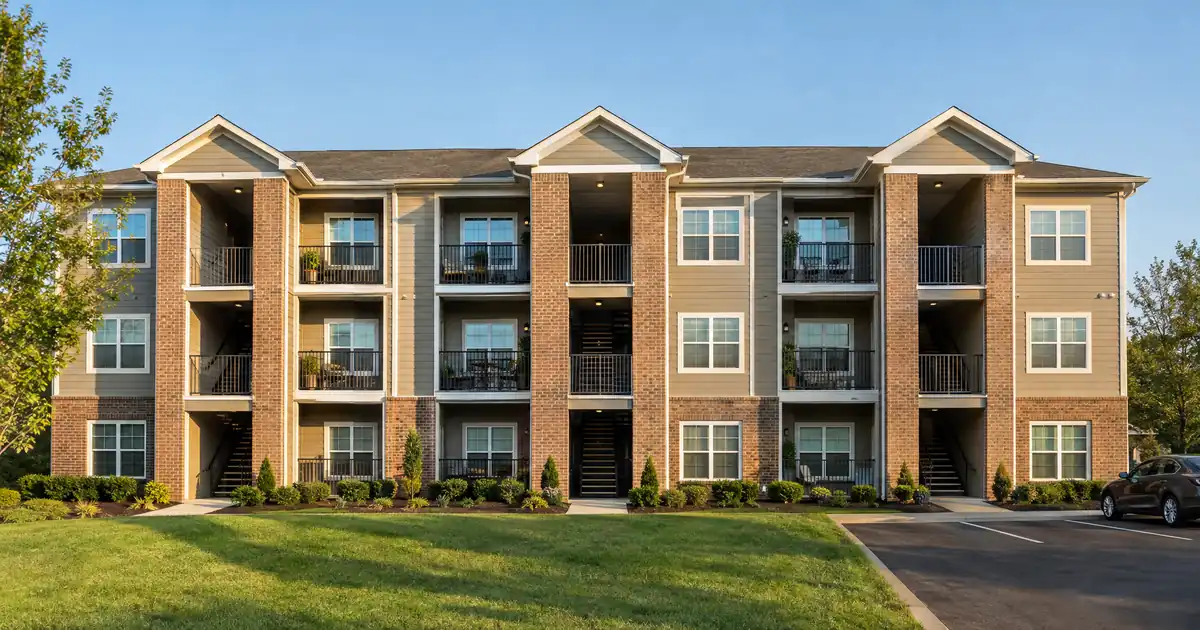
The Quick Read: FHA approval belongs to the whole building, not to the unit you want to buy. The official source of truth is HUD’s public condo search, and your lender should re-check the result on its own system. Read the status and the dates, not just the name. If the building is missing, a one-unit approval may still be possible.
Key Takeaways
- Approval is a building-level status. A great unit in an unapproved building can still be ineligible.
- HUD’s search tool is the authoritative check. A listing, a seller’s agent or a sales office is not.
- Approvals have an expiration date, so a building that was approved once may not be approved today.
- “Not found” can mean a naming problem, a lapsed approval or a true absence. Each has a different fix.
- Check before you make an offer, and check again before closing.
- Approval of the building does not approve you. Your credit, income and the unit’s appraisal still have to pass.
What “Approved” Actually Means
An approved condo project is one that has passed FHA’s review of the building as a whole. HUD’s own FHA Connection help page says a project must be approved before applications for mortgage insurance on individual units can be processed.
FHA payment estimate
Starting assumptions reflect an example price and the FHA minimum investment. Replace them with your own figures.
Editable benchmark: 7.32% as of October 22, 2026 · Freddie Mac 30-year average via FRED®. A conventional market reference, not an FHA loan quote.
Illustrative starting assumptions: a $350,000 price, the FHA minimum investment as the down payment, a thirty-year term at the current Freddie Mac benchmark, and property taxes and insurance estimated at typical national rates. Every field is editable.
Illustrative estimate only — not a Loan Estimate, approval, quote, or commitment to lend. The rate field carries the weekly Freddie Mac thirty-year conventional benchmark, a market reference and not an FHA loan quote; your rate is set by the lender at lock. FHA mortgage insurance follows HUD’s published schedule for the term, leverage and loan size entered; taxes, insurance and dues are editable estimates; closing costs are not included; county loan limits are not checked here. Licensed in sixteen states for consumer mortgages. Lendmire is not affiliated with or acting on behalf of FHA, HUD, or the federal government.
Think of it as two gates. The first gate is the building. The second gate is you and the unit.
The building review looks at the health of the association, not at your kitchen. The review covers insurance coverage, financial condition, the nature of title, pending legal action and physical condition. In practice, reviewers also look at how many units are owner-occupied, how many already carry FHA loans, how much space is commercial, and how many owners are behind on dues.
An approved project gets a unique seven-character Condo ID. That ID is the cleanest way to search later, so write it down when you find it.
Two routes can produce an approval. HUD can review the project itself, which is called HRAP. Or a lender with the right authority can review it, which is called DELRAP. The result lands in the same HUD database either way.
How Do You Look Up a Building Step by Step?
Start with HUD’s public condo search, and treat everything else as a second opinion. HUD’s condo search page lets you look up FHA-approved projects by location, name or status. Here is the walkthrough, in order.
1. Open the search tool. Use HUD’s own page, not a lookalike site. Third-party lookup sites may lag behind the official data.
2. Start broad. HUD’s own tip is that the less you enter, the larger the list. Begin with the state and city or ZIP.
3. Use a short piece of the name. Legal names rarely match the sign out front. “Maple Court Condominiums” may be filed as “Maple Court Condo Association, Phase I.” Try “Maple” alone.
4. Try a Condo ID if you have one. A seller’s agent or the association may know it. It is the most exact search there is.
5. Open the row and read it. Look at the status, the dates and the legal phase that matches your unit.
6. Save the proof. Take a dated screenshot or printout. Record the date you checked.
What a Result Looks Like
Here is an invented example. The labels on the real screen can differ, but these are the things to read.
- Project name: Maple Court Condominiums.
- Condo ID: seven characters, letters and numbers.
- Status: approved, expired, rejected or withdrawn.
- Approval and expiration dates: read both.
- Phase: confirm your unit’s phase.
That last field matters more than people expect. Some projects are built and declared in legal phases. Confirm that point with your lender rather than assuming either way.
How Do You Read the Result?
Read the status and the dates together. A status of “approved” with an expiration date already behind you is not a green light. The table below shows what each outcome usually means and what to do next. Status labels come from lender and industry guides, so have your lender confirm them.
| What you see | What it usually means | Next move |
|---|---|---|
| Approved, dates current | Building is eligible now | Ask lender to confirm in FHA Connection |
| Approved, date passed | Approval may have lapsed | Ask the HOA about recertification |
| Expired | Approval ended | Ask about renewal or one-unit approval |
| Rejected or withdrawn | Project did not clear review | Ask the lender about other options |
| No record found | Naming problem or never approved | Re-search; then see next section |
Approvals have an expiration date and must be renewed. Read the date on the HUD listing rather than relying on a general rule of thumb, since that date is what your lender will check.
Confirm With a Second Source (Ranked by Reliability)
The database is the starting point, but your lender is the one who has to sign off. FHA Connection is the system lenders use to search and manage condo projects. A good loan officer can run the building there and tell you what comes back.
Different people can help, but they are not equally reliable.
| Source | Good for | Risk |
|---|---|---|
| HUD search | Official status and dates | Name mismatches, phase gaps |
| Your lender | Confirming in FHA Connection | Only as current as the check |
| HOA or manager | Renewal status, documents | May be slow or unsure |
| Seller’s agent | Leads, history | Often outdated |
| Listing sheet | Nothing reliable | Stale or wrong |
Listings often go stale in a simple way: the approval lapsed after the listing was written. That is why the lender check comes before you spend money on inspections and appraisals.
Do not confuse FHA approval with VA approval. They are separate lists, and being on one does not put a building on the other.
What If the Sources Disagree or the Building Is Missing?
When sources conflict, HUD’s database and your lender’s check win. Everyone else is a lead to follow, not a verdict.
Run through this order when a search comes up empty.
1. Loosen the search. Drop words from the name, remove “condominium” and “association,” and search the city or ZIP instead.
2. Search by Condo ID if anyone can supply it.
3. Ask the lender to run it. Lenders can search by details you might not have.
4. Ask the HOA or management company whether the building has ever applied, and whether a renewal is in progress.
5. Treat it as not approved only after those steps fail.
“Not found” and “not eligible” are not the same thing. Not found often means the name did not match. Not eligible means the building truly has no approval and no workaround. Finding out which one you have is the job of this section.
If the database says approved and the HOA says it is not, ask for paperwork from both and let the lender sort it out. If the database says not approved and the agent says it is, believe the database.
Get Confirmation in Writing
A verbal “yes” does not protect you. Build a small paper trail.
- A dated screenshot or printout of the HUD result, showing the status and dates.
- The Condo ID, if the building has one.
- Your lender’s confirmation that the project is eligible, in an email or a note in your file.
- The HOA’s statement about renewal, if the approval is close to expiring.
- Your purchase contract, with a financing contingency that fits your situation.
A financing contingency is a clause that lets you exit the contract if your loan falls through. Ask your agent or attorney how it should read in your state. It matters here because a building’s status can change between offer and closing.
When to Check, and When to Check Again
Check before you make an offer. Not after.
A contract on an ineligible building can leave you with a deposit at risk and no loan. Doing the lookup first costs a few minutes. Here is a simple timeline.
- Before touring or offering: run the HUD search and note the status and dates.
- At contract: have your lender confirm the building in FHA Connection.
- Before closing: re-check, especially if an expiration date is near. A status that lapses mid-transaction can derail the file.
If a building is under review or renewal, ask what stage it is in and when a decision is expected. A pending application is not an approval, and the lender decides what it will accept.
What If the Building Is Not Approved?
You have four paths, and they are not equal in effort.
Path 1: Ask for Single-Unit Approval. HUD’s condo overview describes a way to get one unit approved when the project is not. The project must not be FHA-approved, must be complete and ready for occupancy, and must have at least five dwelling units. It cannot be a manufactured home. The project also has to meet a smaller set of requirements, including FHA concentration, owner-occupancy and financial condition. Your lender requests it using HUD Form 9991. The HOA still has to supply paperwork, and some associations are slow or unwilling.
Path 2: Ask the HOA to seek full approval. The association or developer applies using HUD Form 9992 and a list of documents HUD publishes. The form offers full, recertification and phasing reviews. A project with a Financial Distress Event in the past 36 months faces extra requirements. This path takes the association’s cooperation, which you do not control.
Path 3: Switch loan types. Another loan may allow the building. Whether it fits depends on your file. A loan officer can compare them.
Path 4: Switch buildings. Sometimes the cleanest answer is a different building on the approved list.
Rank them by cost to you. Single-Unit Approval is often the first thing to ask about, then another loan type, then a different building. Asking the HOA to apply is slow and uncertain.
Where the General Rule Breaks
Some situations do not fit the standard walkthrough.
- Who runs the review matters. The final rule says DELRAP lenders must be Direct Endorsement lenders. The Federal Register notice explains how that authority works. Not every lender has it, so the route open to you can depend on your lender.
- Manufactured-home condo projects must go through HRAP processing.
- Owner-occupancy history. HUD has used a general standard for existing projects, with room for a lower level when lower-risk indicators are present. Whether a specific building fits is a lender or HUD call. Do not assume.
- Commercial space. A building with shops on the ground floor can still qualify, but the share of commercial space is capped, and the cap has exceptions. Ask the lender how it reads your building.
- Reverse mortgages for seniors use the same project and single-unit forms.
- Rules change. HUD updates its Handbook from time to time. Read the current Handbook sections on condo projects, or ask the lender what applies today. Many online articles still repeat stale limits.
What the Loan Itself Looks Like
Building approval opens the door. It does not approve your loan. Across the FHA files Lendmire arranges, the program works like this, subject to lender guidelines and full file review.
For a purchase, maximum financing is 96.5% of the value, with a 3.5% minimum investment. That starts at a decision score of 580. The loan is for a home you will live in, one to four units. FHA charges an upfront mortgage insurance premium, which can be financed. It also charges an annual premium that depends on term, loan amount and LTV. LTV, or loan-to-value, is the loan balance as a share of the home’s value. For the exact premium on a specific file, ask the lender and a qualified insurance professional.
Debt ratios start at 31/43 for housing and total debt with no extra strengths. Documented compensating factors can stretch that to 40/50 at the top tier, and the automated finding governs most files. County loan limits apply and change each year.
Two budget points are specific to condos. Your HOA dues sit on top of your mortgage costs. And an association with thin reserves may turn to special assessments, which land in your household budget. Reserve health and the number of owners behind on dues are part of what HUD reviews, so a building that passes has at least cleared that bar.
If you are looking at FHA financing for a condo, Lendmire’s FHA loan programs page lays out the basics. And if the building is not yet approved, Lendmire’s article FHA Cash-Out Requirements for a Condo Project Not Yet Approved goes deeper for current owners.
Common Mistakes
- Trusting the listing. Listings go stale. Verify.
- Searching the full legal name. Narrow searches miss. Go broad.
- Mixing up FHA and VA. The lists are separate.
- Assuming approval lasts forever. It expires.
- Believing “not on the list” means “no FHA loan.” A one-unit approval may still work.
- Treating the building check as a loan approval. It is only the first gate.
- Waiting until after the offer. Check first.
Key Terms Defined
Approved condominium project: A building that has passed FHA’s project-level review and is listed in HUD’s database.
HRAP: HUD’s own review process for approving a condo project.
DELRAP: A review process run by lenders that have the authority to approve projects themselves.
Condo ID: The unique seven-character code HUD assigns to an approved project.
Single-Unit Approval: A lender-requested approval for one unit in a project that is not FHA-approved.
FHA Connection: The HUD system lenders use to search and manage condo projects.
Recertification: The renewal an approved project needs before its approval expires.
Frequently Asked Questions
How do I check whether a condo is FHA approved?
Use HUD’s public condo search and start with a broad search by state and city or ZIP. Open the row, read the status and the dates, and save a dated screenshot. Then ask your lender to confirm the building in FHA Connection, since the lender signs off on the loan.
Is approval for the building or for my unit?
For the building. A project is reviewed as a whole, then listed with a Condo ID. Your unit still has to pass the FHA appraisal and property standards, and you still have to qualify on credit and income. The building status does not replace either of those.
What does it mean if the approval is expired?
It means the project’s approval has ended and has not been renewed, so units are no longer eligible under that approval. Ask the HOA whether recertification is in progress. A one-unit approval may still be an option, depending on the lender and the building.
What should I do if I cannot find the building?
Search again with a shorter name, then by city, ZIP or Condo ID. If nothing appears, ask your lender to run it and ask the HOA whether it has ever applied. If the building truly is not approved, ask about Single-Unit Approval, a different loan type or a different building.
Can I get an FHA loan on a condo that is not approved?
Sometimes. Single-Unit Approval exists for projects that are not FHA-approved, are complete and ready for occupancy, and have at least five units. The project must also meet a smaller set of requirements. Whether it works for a given building is up to the lender and HUD.
Next Step
If you are buying a home and want to see whether an FHA loan fits your file, Lendmire can help you compare the options and what each one asks of the file. Bring the building name or Condo ID, and the check starts there.
All program details are subject to lender guidelines and full file review, and nothing here is a commitment to lend.
For your own numbers, request a scenario review with Lendmire.
About Lendmire
Lendmire, NMLS# 2371349, is a mortgage brokerage with consumer lending licenses in 16 states. FHA, VA, conventional and jumbo purchase and refinance loans are arranged through wholesale lending partners, and each application is reviewed individually by the lender. Scotsman Guide named Lendmire a Top Mortgage Workplace in both 2025 and 2026.
Get Started
Ready to find the right loan for you?
In about two minutes you can review financing options available for your home or investment property. No commitment required.
Informational only. Not a Loan Estimate, approval, or commitment to lend. Program availability and eligibility are subject to lender guidelines, credit approval, property review, and underwriting.
References
1. FHA Connection Condominiums help
2. HUD FHA Condominiums overview
4. Federal Register, Project Approval for Single-Family Condominiums
This article is part of Lendmire’s FHA loan program — full qualification details, guidelines, and scenarios live on the program page.
Related reading: Can You Get an FHA Loan and What Decides Approval? · FHA Loan Requirements for a Second Loan After Payoff · Can You Get an FHA Loan With Less Than Two Years of Employment?
Brandon Miller
Founder & CEO, Mortgage Loan Originator, Lendmire LLC
- Mortgage Loan Originator · NMLS# 1129696 · Verify on NMLS Consumer Access
- North Carolina Real Estate Broker · License# 343312 · Verify on NCREC
- North Carolina Insurance Producer · License# 19053198 · Property, Casualty, Life, Health · Verify on NAIC SBS
- Lendmire LLC · Firm NMLS# 2371349 · Verify firm licensure
Disclosure information. Lendmire is a state-licensed mortgage brokerage under NMLS# 2371349. Lendmire is not a depository institution, direct lender, or financial advisor — all loans referenced are placed through wholesale lender partners and are subject to each lender's underwriting standards. This article is provided for general informational purposes and is not a commitment to lend, nor does it constitute financial, legal, or tax advice. Loan programs, terms, rates, and qualification standards change without notice and depend on borrower profile, property type, and the state in which the subject property is located. Equal Housing Opportunity provider. NMLS Consumer Access: nmlsconsumeraccess.org.